
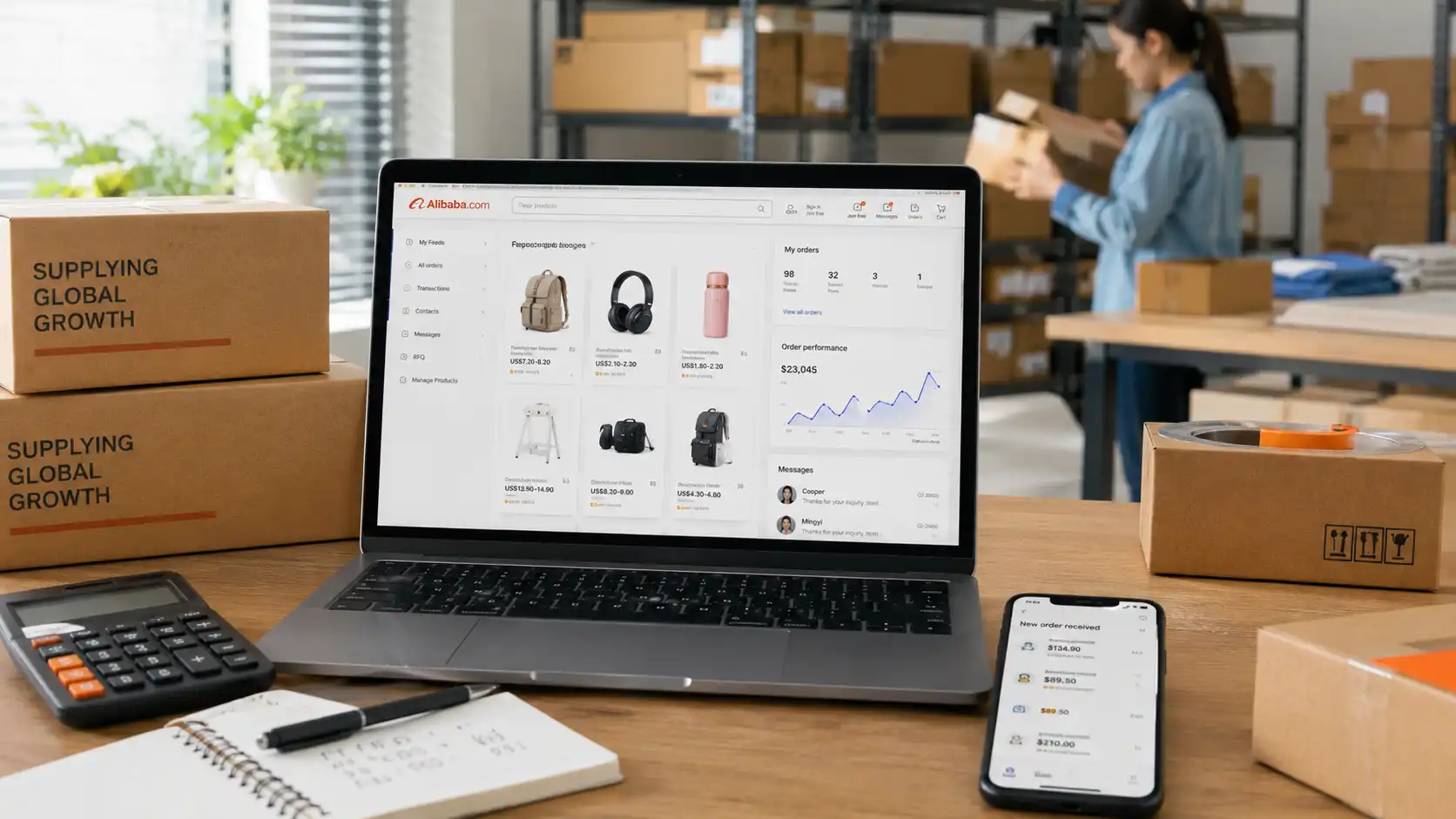
Alibaba dropshipping can work, but only when a supplier explicitly agrees to ship individual orders to your customers or you place stock with a team that can pick, pack, and dispatch each order for you.
Quick Answer: Alibaba.com is a business-to-business sourcing marketplace, so do not assume every listing supports one-unit fulfillment. Choose one of three setups: use a supplier that confirms direct single-unit shipping, buy a small batch and handle orders yourself, or send stock to a private dropshipping agent. Before you sell, confirm the minimum order quantity, sample quality, packaging, processing time, shipping method, tracking, returns, and the complete cost per delivered order.
A typical seller sees a low unit price, imports the product to a store, and expects the supplier to process each new order like a retail marketplace seller. Then the supplier requests a larger minimum order, quotes expensive single-parcel shipping, or cannot provide neutral packaging and reliable tracking. The solution is to define the operating model before listing the product, test the physical order journey, and assign responsibility for every step the customer will experience.
How Alibaba Dropshipping Works
Alibaba.com connects business buyers with manufacturers, wholesalers, trading companies, and other sellers. The platform can help you find products and negotiate with suppliers, but the supplier—not the marketplace as a whole—decides whether it will accept one-unit orders and ship directly to your customers.
The basic direct-shipping flow is simple:
- A customer orders from your store.
- You send the product, variant, address, and shipping requirements to the supplier.
- You pay the supplier for the item and agreed service.
- The supplier packs and dispatches the parcel to your customer.
- You send tracking updates and remain responsible for customer service.
The practical difficulty sits inside steps two through five. You need the correct variant, current stock, approved packaging, an agreed dispatch time, a suitable shipping route, usable tracking, and a remedy when the product or delivery does not match the agreement.
Alibaba.com also remains a wholesale sourcing channel. A listing may display a minimum order quantity, often shortened to MOQ, because the seller prices production or packing around a batch. An MOQ of 100 normally means you must buy at least 100 units for that quoted offer; it does not mean the supplier will automatically store those units and send them one by one.
Alibaba.com’s Dropshipping Center can be a useful starting point for finding products intended for dropshipping, but do not assume that every listing or supplier can support your exact workflow. Confirm one-unit fulfillment, expected order volume, target destinations, packaging requirements, processing time, and tracking in writing before you start selling the product.
Is Alibaba Good for Dropshipping Compared With AliExpress?
Alibaba can be a good fit for dropshipping, but it serves a different operating need from AliExpress. AliExpress is generally easier for testing ready-made products one order at a time, while Alibaba gives sellers more room to negotiate with suppliers, buy in batches, customize products or packaging, and build a more controlled supply chain.
The important distinction is that Alibaba is still primarily a B2B sourcing marketplace. Some suppliers support individual dropshipping orders and Alibaba provides a dedicated dropshipping portal, but you should not assume that every product listing can be sent directly to one customer at a time.
| Need | Alibaba | AliExpress |
|---|---|---|
| One-unit product testing | Possible with participating suppliers | Usually easier |
| Minimum order requirements | Common on many standard listings | Usually no wholesale MOQ |
| Product and packaging customization | Generally stronger | More limited |
| Supplier negotiation | More common | More standardized |
| Best fit | Sellers building a more controlled or scalable supply chain | Sellers testing ready-made products with low commitment |
The practical answer: use Alibaba when the supplier capability, delivered cost, and fulfillment workflow justify the extra coordination. Do not choose it only because the displayed unit price looks lower.
Step 1: Choose Your Alibaba Dropshipping Fulfillment Model
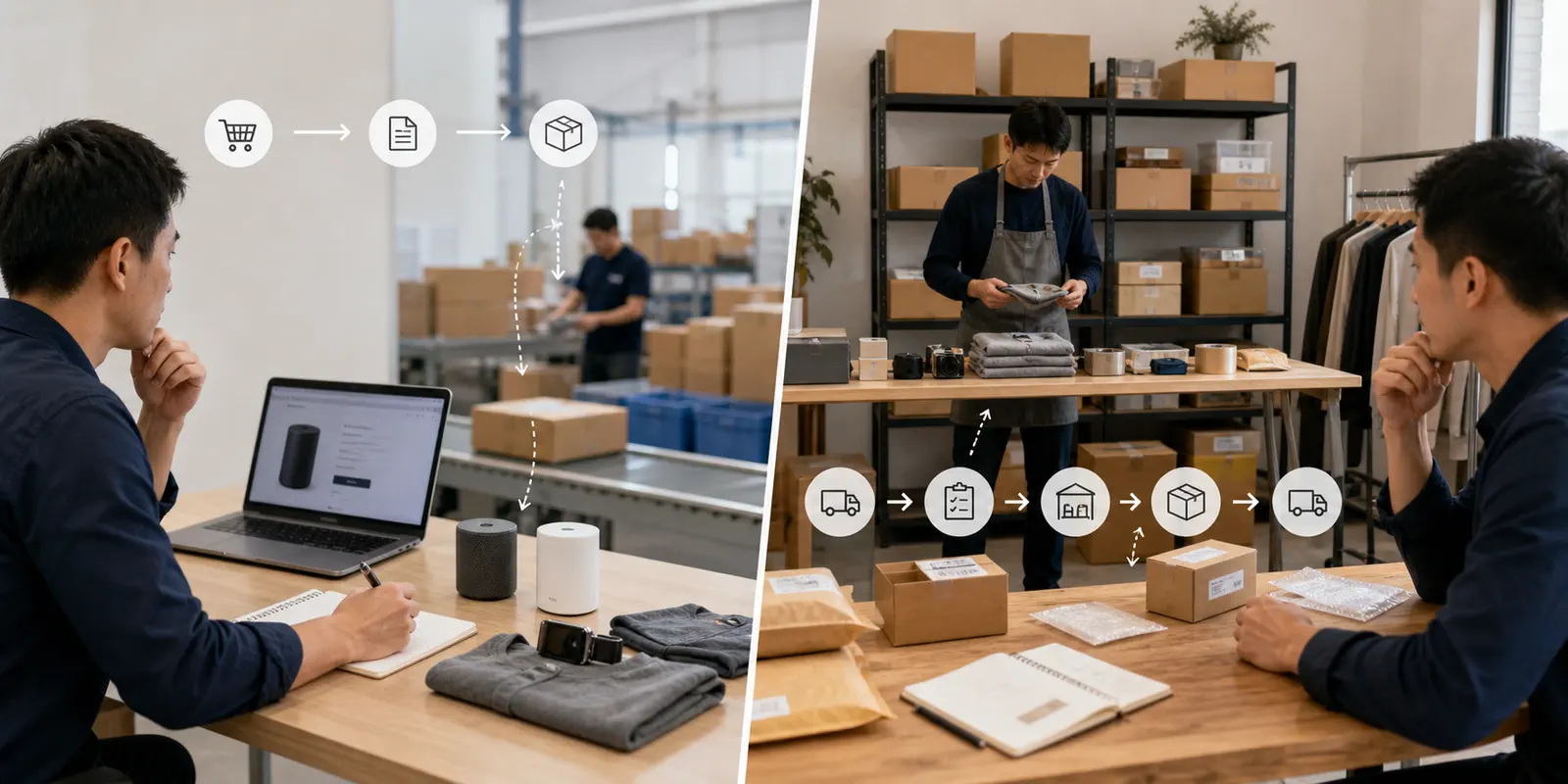
Choose the operating model from the supplier’s real capability, your order pattern, and the control your customers require. A low listing price alone does not make a model workable.
| Model | How it works | Best fit | Main limitation |
|---|---|---|---|
| Supplier ships each order | You send each customer order to a dropshipping-friendly supplier | Early testing when the supplier confirms one-unit service | Less control over stock, packing, parcel checks, and shipping consistency |
| You buy and ship a batch | You receive the MOQ and dispatch customer orders yourself | Sellers with local space and a manageable destination market | You take on inventory, packing, and daily order work |
| Private agent handles the batch | A supplier sends stock to your private agent, which checks, stores, picks, packs, and arranges shipping | Growing stores or operators needing a repeatable workflow | Requires enough real order activity to justify coordination and stock planning |
Direct supplier shipping
Ask whether the supplier accepts one-piece orders, can remove promotional material, can use your approved packing instruction, and can send to every target country. Confirm how you will submit orders and how quickly the supplier returns a tracking number.
This model minimizes inventory commitment, but each parcel still carries a product cost, packing cost, processing charge, and international shipping cost. It is useful for testing only when the supplier can repeat the same service after the first order.
Small-batch buying
Buying a small batch can improve control because you know which product version is available and can inspect stock before dispatch. It also ties up cash and creates a storage decision. Treat it as inventory-backed selling, even if customers still experience it as a dropshipping store.
Private-agent execution
A private dropshipping agent can purchase from the selected supplier or receive the stock you bought, check incoming goods against your requirements, prepare packaging, process individual orders, arrange shipping, and follow exceptions. This does not remove your responsibility to choose a viable product or comply with rules in the markets where you sell.
Key Takeaway: Use direct supplier shipping for a controlled test only after the supplier confirms the complete one-order process. Move to batch control or a private-agent workflow when stock, packing, shipping, and exception handling must become repeatable.
Step 2: Find and Vet Alibaba Dropshipping Suppliers
Start with products that match your target market, then compare several suppliers against the same written request. Alibaba.com’s own sourcing guidance recommends assessing seller profiles, asking detailed questions, requesting samples, and defining the order before payment.
Send a short business brief that includes:
- the exact product and variant;
- expected test quantity and realistic order pattern;
- target countries;
- whether you need one-unit direct shipping or batch supply;
- packaging, insert, label, or branding requirements;
- required processing time and tracking method;
- sample request and inspection points;
- replacement, defect, shortage, and return questions.
Do not ask only, “Do you dropship?” One supplier may interpret that as sending an occasional sample to a different address, while you need daily order processing with neutral packaging and tracking. Ask the supplier to describe what happens after you submit an order.
Use platform badges as filters, not complete proof
A Verified Supplier badge indicates that specified company and capability information has been assessed by an independent third party under Alibaba.com’s program. Trade Assurance relates to eligible online orders and the terms recorded in them. Neither badge proves that a particular product will satisfy your customers or that the supplier can run your exact one-unit workflow.
Keep important specifications, ship dates, and quality requirements in the order and platform record. Alibaba.com states that Trade Assurance protection depends on the online order and payment through its platform. Review the current terms before paying because protection follows the documented agreement, not an assumption made from a listing.
Compare responses, not just quotations
A useful supplier answers the actual question, identifies constraints, and corrects an unrealistic request. Compare sample availability, communication clarity, lead time, packaging options, export experience for the destination, and the willingness to document the agreement. A very low quotation has little value if shipping, processing, or defect handling remains unclear.
For a repeatable evaluation, use a written supplier communication workflow so product requirements, follow-ups, and unresolved questions do not disappear across separate chats.
Step 3: Calculate Your Real Alibaba Dropshipping Cost
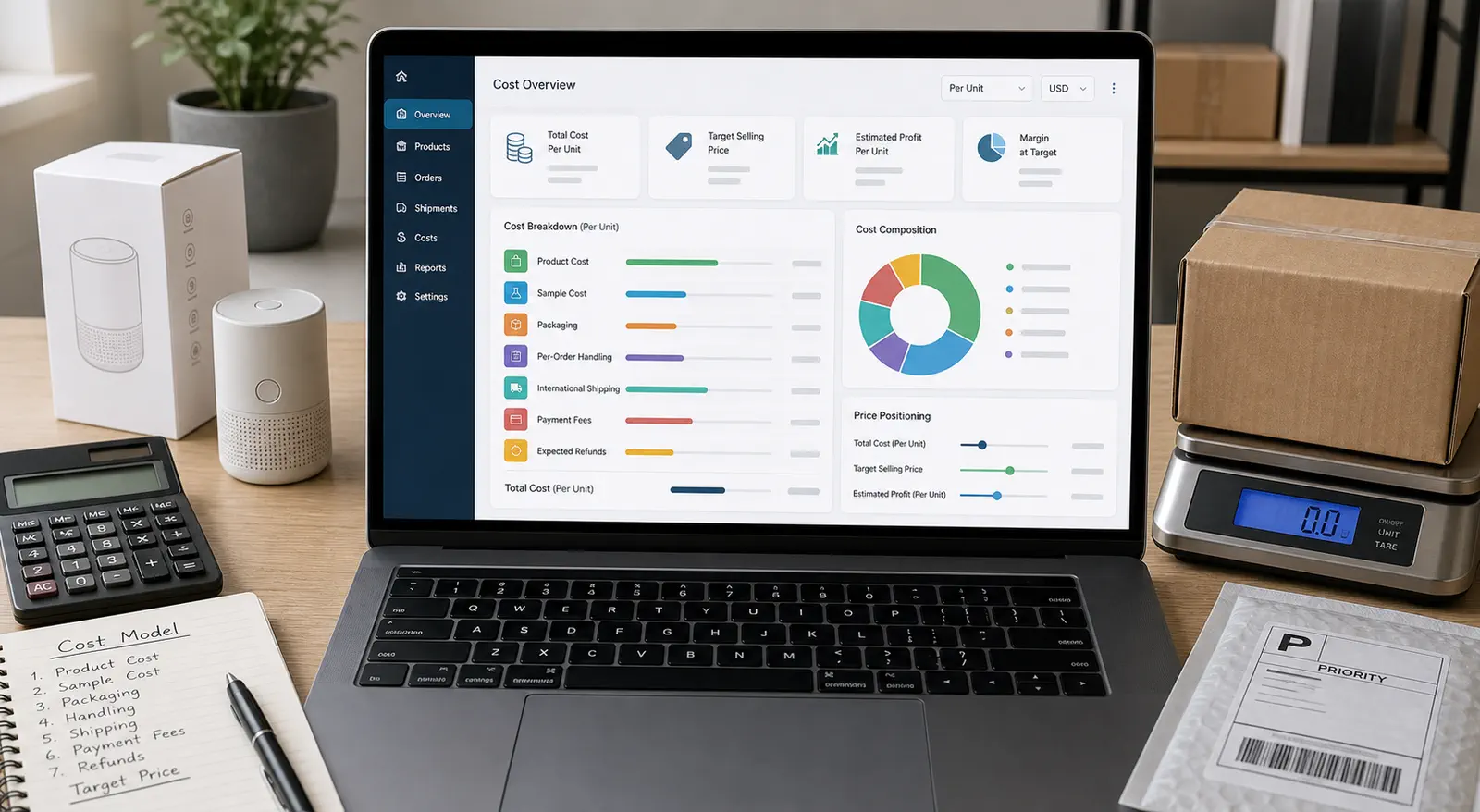
Calculate the cost of one delivered customer order, not only the unit price shown on the listing. A small wholesale price can be overwhelmed by single-parcel shipping, custom packing, payment charges, or replacements.
Use this working formula:
Delivered order cost = product cost + supplier processing + packaging + inspection or handling + international shipping + payment and currency costs + duties or taxes you are responsible for + a reasonable allowance for replacements and refunds
Ask for quotations for the exact product weight, packed dimensions, destination, and shipping method. If you plan to buy a batch, add sample costs, inbound shipping to the storage or agent location, storage, pick-and-pack work, and the risk of stock that does not sell.
Then test your selling price against the other costs of running the store, including platform fees, payment processing, customer acquisition, customer service, and returns. Do not treat a quoted factory price as your gross profit.
Protect cash flow as well as margin
A bulk order can lower the unit purchase price while increasing the amount of cash committed before customers buy. A one-unit arrangement can reduce inventory exposure while raising the cost per parcel. The better option is the one your current demand and cash flow can support, not automatically the cheapest unit.
Key Takeaway: Approve a product only after a destination-specific test quote shows a workable delivered order cost. Recalculate when package size, destination mix, shipping route, customization, or order volume changes.
Step 4: Test the Product and the Real Customer Delivery Journey
Order the exact variant you intend to sell and send it through the same packing and shipping process a customer will receive. A factory sample shipped by express courier in special packaging does not test an ordinary customer order.
Check the sample against a simple specification sheet:
- dimensions, materials, color, finish, and function;
- included parts, instructions, plugs, batteries, or accessories;
- visible defects and common failure points;
- retail packaging and outer shipping protection;
- labels, inserts, barcodes, and unwanted supplier promotion;
- packed weight and dimensions;
- tracking events, transit condition, and delivery presentation.
Take clear reference photos and record which sample was approved. If a supplier changes a material, component, package, or production method, approve the change before more units enter the workflow.
For products where defects, wrong variants, missing parts, or weak packing create meaningful customer risk, define a dropshipping quality control process with checks that match the product rather than using a vague promise to “check quality.”
Testing cannot guarantee every future unit, but it exposes mismatched expectations while the cost of changing the product or supplier is still manageable.
Step 5: Connect Orders, Tracking, and Exception Handling
Automation should transfer accurate order data and status updates. It should not hide an unclear supplier process.
Before connecting a store or importing a catalog, decide:
- Which system is the source of truth for SKU and variant codes?
- Who confirms stock before the store accepts more orders?
- How are paid orders sent to the supplier or agent?
- Who checks address format and restricted destinations?
- When is an order considered accepted, packed, and dispatched?
- How does tracking return to the store?
- What happens when a variant is unavailable, an address is wrong, or dispatch is late?
Shopify, TikTok Shop, WooCommerce, and other channels may exchange orders through apps, files, or an ERP connection. The tool matters less than the control around it. Test each status with a real order and make sure the customer does not receive a dispatch message before the parcel has actually entered the agreed shipping process.
Keep a manual exception queue for orders that cannot proceed automatically. An unavailable variant, suspicious address, restricted product, packaging change, or missed shipping cutoff needs a named owner and a next action.
Key Takeaway: Automate stable data transfer after the product, supplier, SKU map, shipping rules, and exception ownership are proven. A fast integration only repeats mistakes faster when the underlying agreement is incomplete.
When to Move Beyond Direct Alibaba Dropshipping

A private agent becomes useful when the main problem is no longer finding a listing. You may need one accountable workflow across purchasing, incoming checks, stock visibility, packing, individual order execution, shipping follow-up, and after-sales investigation.
Consider that change when several of these conditions appear:
- the supplier can manufacture the product but does not want to process customer orders;
- you use more than one supplier and need products combined into one parcel;
- direct supplier parcels vary in packing or shipping method;
- you need approved inserts, labels, kits, or packaging applied consistently;
- order volume makes manual forwarding and tracking updates unreliable;
- you need someone in China to follow supplier changes, shortages, or defects;
- several stores, clients, students, or projects need the same operating rules.
The agent should not be chosen only because it can quote a product. Ask who purchases, who checks incoming goods, how stock is recorded, when orders are processed, how shipping methods are selected, what evidence is kept, and how exceptions are escalated.
Runtodropship is a private dropshipping agent, not a public supplier marketplace. Its relevant role is to help growing sellers and multi-store operators coordinate sourcing, product checks, packing, individual order execution, shipping arrangements, and after-sales follow-up after the product and operating requirements are clear.
Key Takeaway: Move beyond direct supplier dispatch when fragmented responsibility is creating stock, packing, shipping, or after-sales risk. Choose an agent for accountable execution, not merely access to another product catalog.
Alibaba Supplier Questions to Ask Before the First Order
Send these questions with your product link and target destination:
- Do you accept one-unit customer orders for this exact product and variant?
- What is the MOQ for the quoted price, packaging, and customization?
- Can you provide a paid sample using the normal customer packing method?
- What is the processing time before dispatch?
- Which shipping methods serve my target countries, and how is tracking provided?
- Can you use neutral packaging and exclude invoices or promotional material?
- How do you confirm stock and variant availability?
- What happens when an item is defective, wrong, damaged, lost, or returned?
- Which specifications and ship dates will appear in the online order?
- Can you support the same process if order volume increases?
Ask follow-up questions when an answer is broad. The goal is not to collect ten “yes” replies; it is to expose the real limits before a customer order depends on them.
FAQ
Can I start with an MOQ of one and later order in bulk?
Yes, if the supplier confirms both arrangements for the same product. Treat the one-unit phase as a test, then request a new quotation and sample approval before bulk buying because price, materials, packaging, lead time, and shipping responsibilities may change with volume.
Will a supplier include its own invoice or promotion in the parcel?
It might. Ask for neutral packaging and state exactly which invoices, QR codes, business cards, marketplace branding, or promotional inserts must be excluded. Confirm this with a sample sent through the normal customer-order process.
Does connecting Alibaba.com to Shopify automate everything?
No. A connection can move product or order data, but you still need confirmed stock, correct variants, supplier acceptance, payment, packing instructions, tracking, and exception handling. Test those steps before allowing unattended processing.
Who handles customs duties and import taxes?
That depends on the destination, product, shipment value, and shipping terms agreed for the order. Ask who acts as importer, what the shipping quote includes, and what the customer may have to pay. Get qualified tax or customs advice for the markets where you sell rather than copying another store’s setup.
What happens when a customer wants to return an item?
Your store remains responsible for the customer-facing policy and response. Agree in advance whether the supplier or agent accepts returns, where a parcel can be sent, what evidence is required, who checks it, and which costs each party bears. Do not promise a return route that the operating setup cannot support.
Conclusion
Alibaba.com can be a useful sourcing channel, but a product listing is only the start of the work. Confirm whether the supplier truly supports individual customer orders, compare that route with batch buying and private-agent execution, calculate the delivered cost, test the real package journey, and document every responsibility before you scale.
If your proven product now needs steadier supplier coordination, incoming checks, packaging, individual order execution, shipping follow-up, and after-sales support, Runtodropship can help you build one accountable private-agent workflow. Send the product link, target countries, current order pattern, and packaging requirements to discuss a sample or test-order plan.