

YunExpress customer service can be reached through the carrier’s official contact page and the customer-service email published on its corporate website, but the fastest route to a parcel resolution is often the seller, marketplace, shipping account holder, or final-mile carrier rather than a general inbox.
Quick Answer: Use the official contact form or [email protected] for a carrier inquiry, but first identify who currently controls the parcel. Contact the seller when the parcel has no physical acceptance scan or a refund or replacement is needed; contact the local carrier after a confirmed handoff; and send YunExpress a complete evidence pack when the cross-border leg requires investigation. Do not trust an unverified US phone number simply because it appears in a directory.
A typical escalation starts when a buyer has already waited beyond the store’s stated window, the tracking page has stopped at a vague handoff, and several parties keep redirecting the complaint. Repeating the same message to more inboxes rarely creates new evidence. The practical way forward is to identify custody, choose the party with contractual access to the shipment, and give that party enough information to open a trace instead of sending another general status request.
How to Reach YunExpress Customer Service
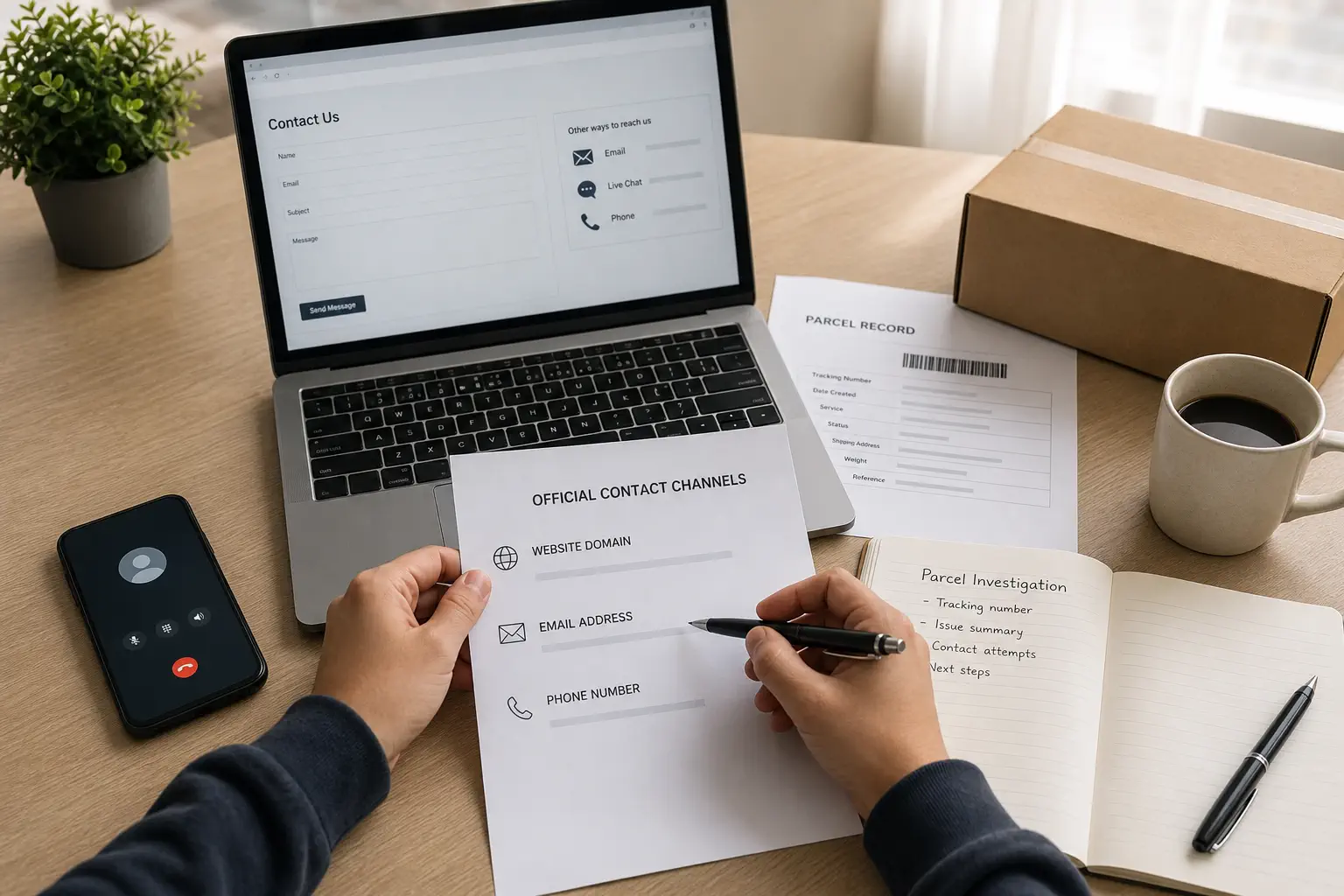
The most defensible contact channels are the ones currently published by YunExpress itself. The official YunExpress contact page provides a company inquiry route, while the company’s About page lists [email protected] as its customer-service email. Because contact details can change, begin with those first-party pages rather than copying a number from an old tracking directory.
Before writing, confirm the parcel on the official YunTrack portal. Save the latest event, timestamp, destination, and any last-mile number. If you are unsure why another carrier appears, the explanation of what YunExpress is and how its cross-border handoffs work clarifies where its role can end and a local network’s responsibility can begin.
Use one clear subject line: Shipment investigation request — YT tracking number — last event date. In the first paragraph, state whether you are the recipient, merchant, or account holder and what outcome you need: location confirmation, delivery evidence, damage review, return instructions, or a claim opened by the contracting shipper.
Send the request from the email connected to the order when possible, and keep one message thread for the case. If an automated reply supplies a ticket number, retain it in the subject line. A response that merely repeats tracking is not a completed investigation; reply by naming the unresolved custody question and the next evidence you need. Avoid attaching identity documents until a verified representative explains why they are required and where they should be submitted.
Is There a Verified YunExpress Customer Service Phone Number in the USA?
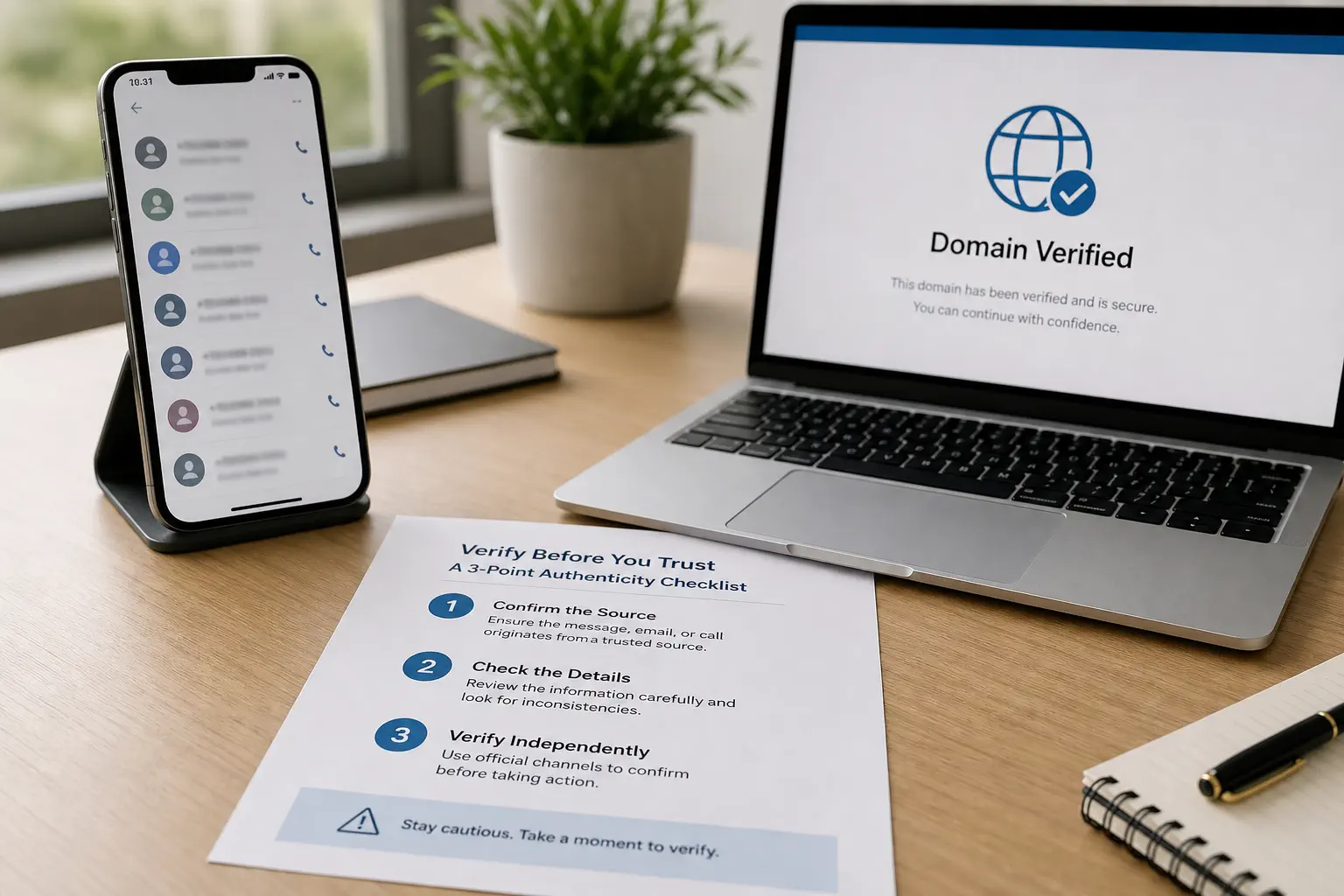
A current parcel-support number for US recipients could not be verified on the official global YunExpress pages reviewed for this article. Third-party websites publish several different numbers, sometimes labeling the same line as a China hotline, a US office, or customer support. That conflict is a reason to verify before calling, not a reason to choose the most repeated listing.
If you search for a YunExpress contact number or YunExpress contact phone number USA, apply three checks:
- Does the number appear on a current YunExpress-owned domain?
- Does the page say it handles recipient parcel traces, rather than sales or corporate inquiries?
- Does the number match the country and office you intend to reach?
Do not give payment data, account passwords, identity documents, or one-time codes to a number that fails those checks. A corporate office line may also be genuine but still unable to investigate a consumer shipment. In that situation, the official form, published email, merchant, or local carrier is a safer path. If the buyer is questioning whether YunExpress is legitimate, separate the carrier’s identity from seller behavior, label timing, local-carrier handoff, and product issues.
Contact the Party That Controls the Next Action
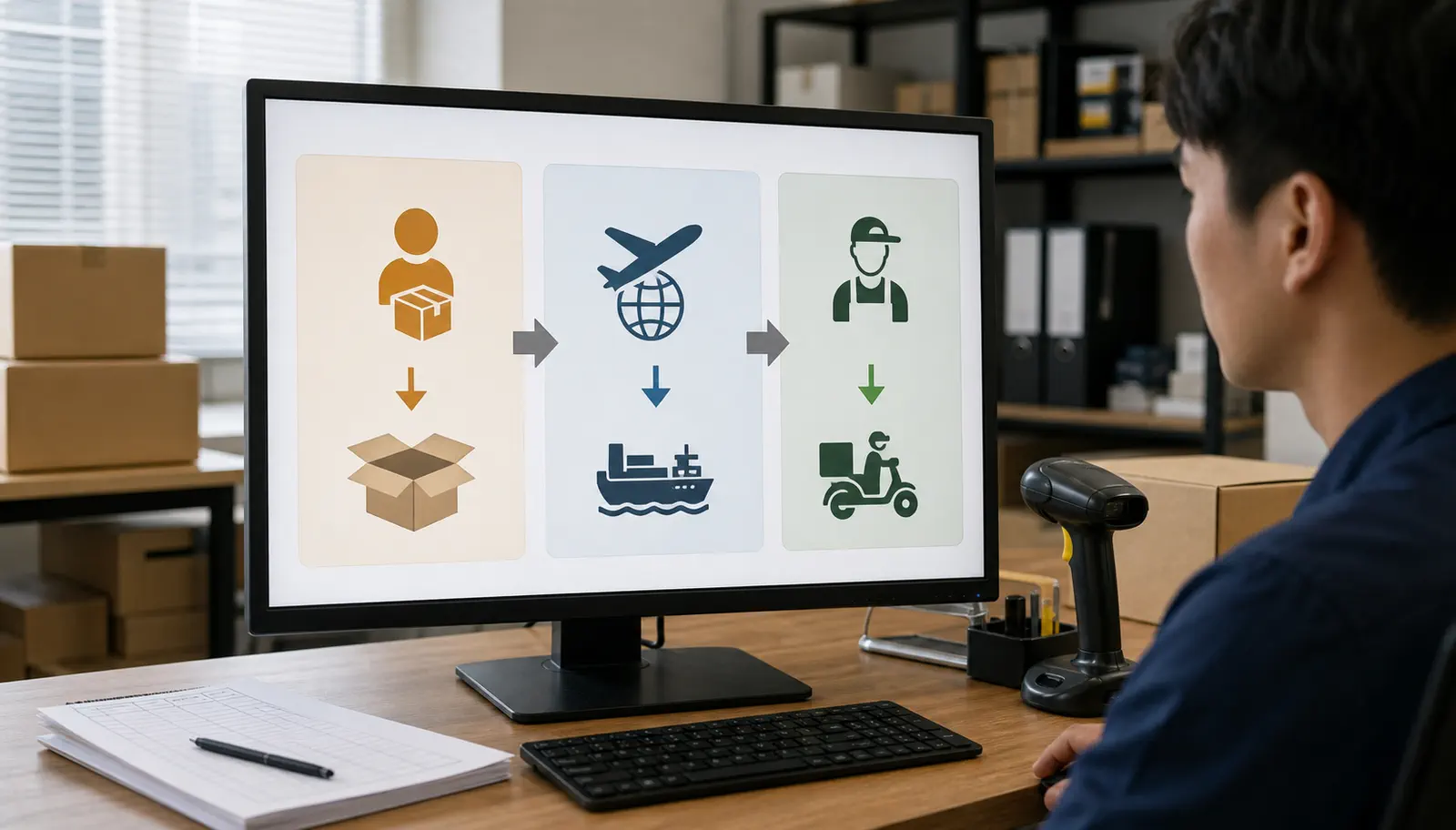
The right contact depends on the last proven custody event and the remedy you need. A parcel can involve the store, supplier, shipping account holder, YunExpress, customs, and a destination carrier; only one or two of them may be able to perform the next action.
| Situation | Best first contact | Why |
|---|---|---|
| Label exists but no physical acceptance scan | Seller, supplier, or private agent | They can confirm packing and handover |
| Cross-border movement stops before local handoff | Shipping account holder and YunExpress | The account holder can request a route investigation |
| Local tracking number shows physical acceptance | Final-mile carrier | It controls delivery attempts and local proof |
| Delivered scan but parcel is missing | Local carrier plus seller | One checks delivery evidence; the other protects the order remedy |
| Refund, replacement, or marketplace dispute | Seller or platform | The carrier normally cannot decide the retail transaction |
| Damage or missing contents | Seller/account holder, with carrier evidence | Claim access and remedy depend on the booking and applicable terms |
The YunExpress tracking status meanings matter here because “shipment information received,” “delivered to local carrier,” and “delivered” assign very different next steps. Do not ask a local courier to find a parcel it has not accepted, and do not wait on a global inbox when the local record already shows an actionable delivery exception.
Key Takeaway: Route the case by custody and remedy. The company that can see the parcel is not always the company that can issue the customer-facing refund or replacement.
Build an Evidence Pack Before You Ask for Help
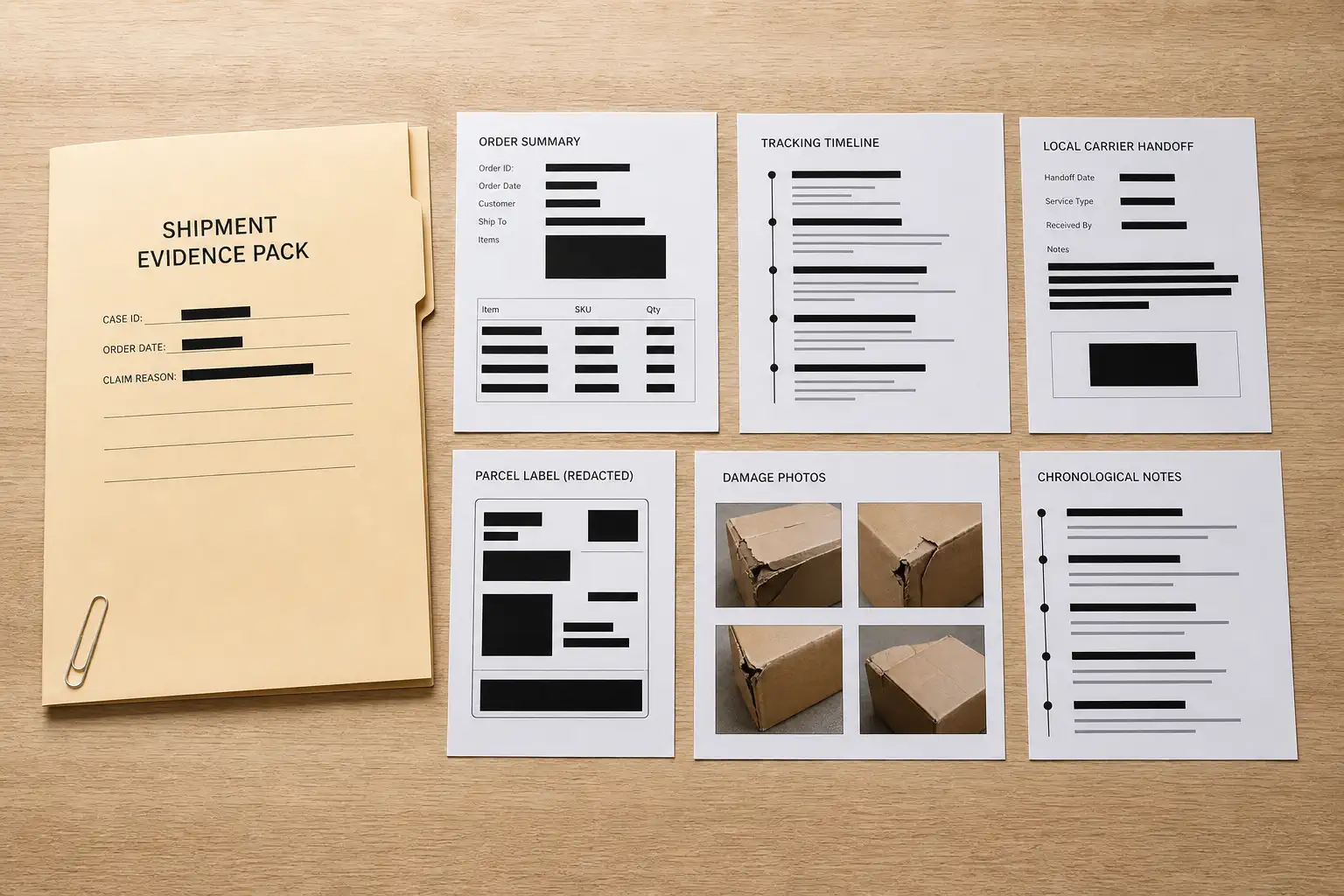
A complete evidence pack gives support enough information to distinguish a routine scan gap from a traceable exception. It also prevents the case from restarting each time another representative reads it.
Include:
- the YT tracking number and any local-carrier number;
- merchant order number and shipment date;
- destination country and postcode, without posting a full address publicly;
- screenshot or export of the complete tracking timeline;
- last meaningful event, location, and timestamp;
- seller’s promised delivery window;
- photographs of the parcel, label, outer packaging, and damage when relevant;
- proof of purchase and the product description or declared value if requested through a legitimate claim channel;
- previous case numbers, dates, and replies;
- the exact remedy requested.
Keep the request narrow. “Where is my package?” forces the recipient to reconstruct the case. “Please confirm whether parcel YT… was physically transferred to the named local carrier on the recorded date; the local carrier shows no acceptance event” identifies the missing proof.
Add a short chronology below the request: order placed, tracking created, first physical scan, last meaningful scan, first customer report, and previous escalation. Dates should use one unambiguous format such as 2026-06-30. If multiple parcels are affected, send a structured list rather than mixing every number into prose. The pattern may help the account holder distinguish one address issue from a batch-level route interruption.
Redact unrelated customer data before sharing screenshots in public forums. Send sensitive documents only through a verified channel and only when they are necessary for the investigation.
Escalate a YunExpress Lost Package Step by Step
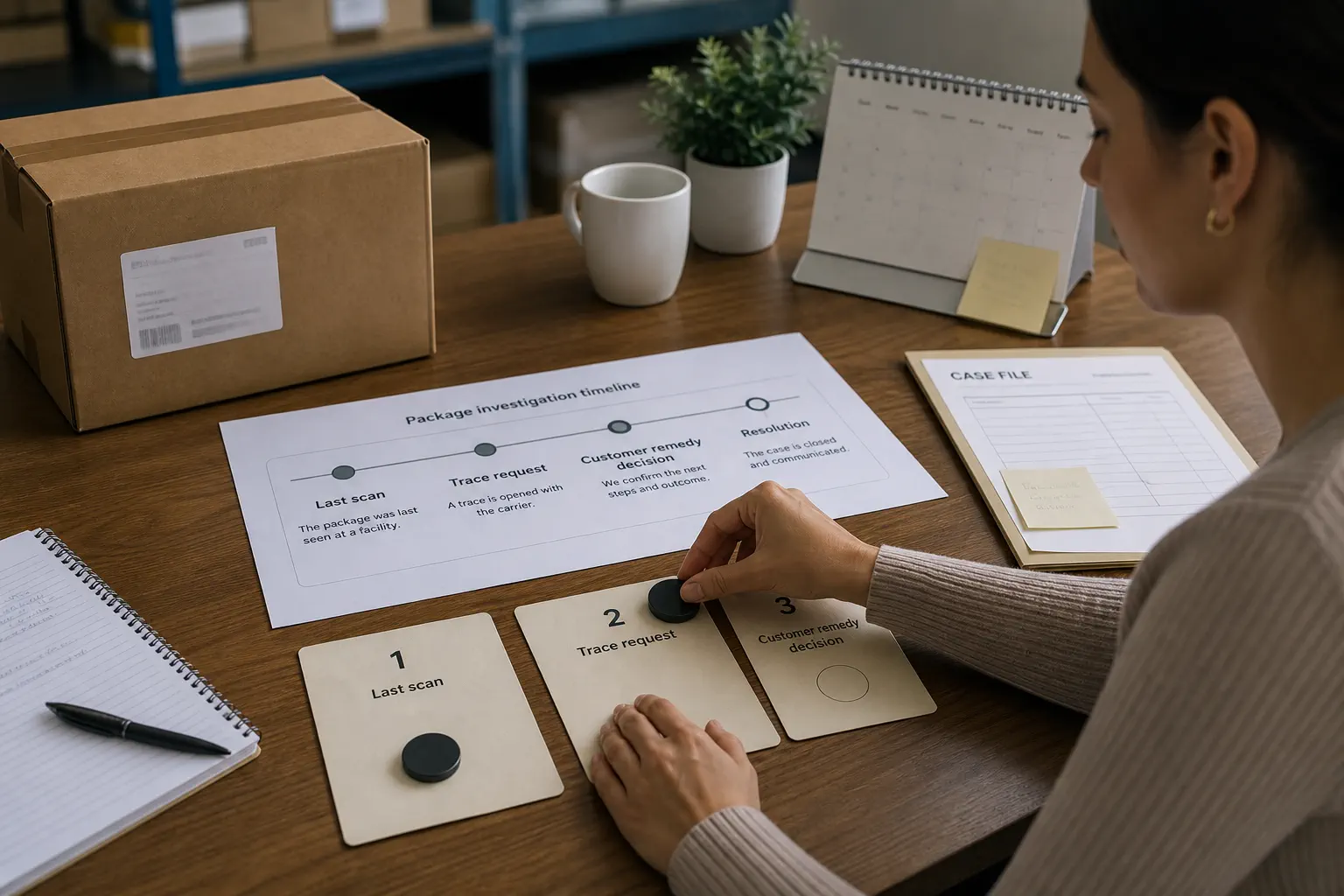
A YunExpress lost package should be escalated through staged checks rather than declared lost from one quiet tracking page. “No update,” “delivery exception,” and “confirmed loss” are different findings. If the only issue is YunExpress tracking not updating, first check whether the parcel is waiting for a physical acceptance scan, airline movement, customs clearance, or local-carrier handoff before treating it as a confirmed loss.
Step 1: Identify the last physical event
A label or shipment-data event proves that information was created, not that the parcel entered the network. An origin-facility acceptance, flight movement, customs event, or local-carrier acceptance is stronger custody evidence. Record the last event that reflects physical control.
Step 2: Compare it with the order-specific window
Use the service selected, destination, merchant promise, and protection deadline. Do not invent a universal waiting period; escalation timing should reflect the route, destination, handoff status, and realistic YunExpress shipping time. A quiet international leg may have fewer public scans than an “out for delivery” event that failed to close.
Step 3: Open one trace with the account holder
Ask the seller, platform, supplier, or agent that booked the shipment to open an investigation. Provide the evidence pack and request a case number, next checkpoint, and decision date. Continue monitoring the local number if one exists.
Step 4: Protect the customer remedy
Do not let a carrier investigation consume a marketplace dispute or card-protection deadline. The buyer’s retail remedy and the shipper’s carrier claim can run in parallel. For a seller, that means deciding when to update, replace, refund, or wait according to published policy and confirmed facts.
Key Takeaway: Treat loss as an evidence decision. Open the trace with the party holding the shipping account, but protect the customer’s remedy deadline separately.
Handle Delivered but Not Received Without Guessing
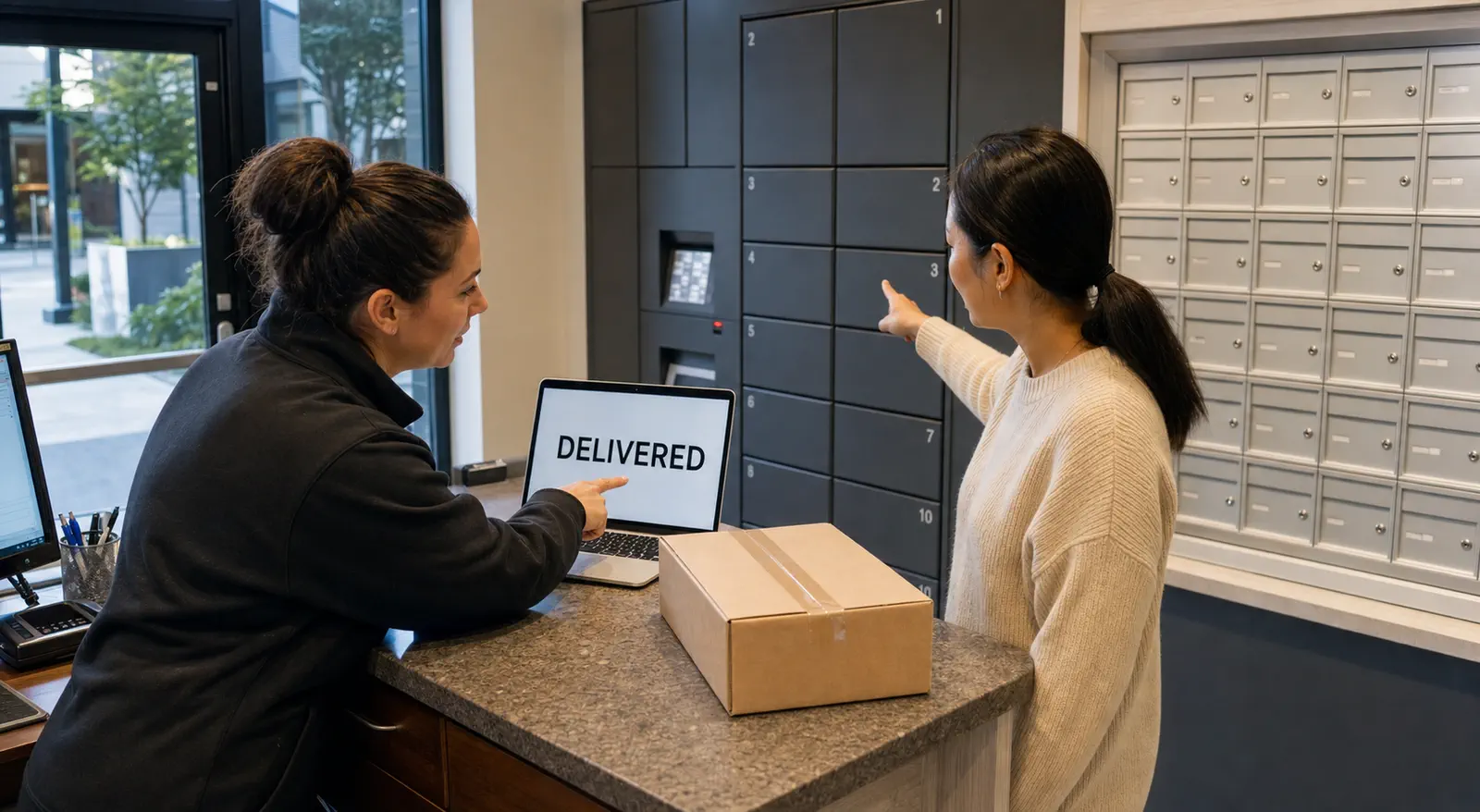
A delivered scan is important evidence, but it is not enough to dismiss a customer who cannot find the parcel. Start with a location check, then request delivery detail from the final-mile carrier.
Ask the recipient to check the mailbox, parcel locker, reception desk, safe place, household members, and immediate neighbors where appropriate. Confirm that the order postcode, unit number, and access instructions were correct. Then check whether the local tracking page shows a delivery photo, signature, GPS note, driver comment, or collection location.
If the local carrier confirms delivery but the evidence does not resolve the case, the seller or shipping account holder should request the available proof and open the applicable investigation. Avoid telling the buyer to contact YunExpress repeatedly when the parcel had already entered a local network. Equally, avoid promising a refund before checking the store’s policy, evidence, fraud controls, and relevant consumer obligations.
For sellers, preserve the customer’s first report, the delivery record, and all subsequent messages. That timeline is useful for a carrier trace, marketplace response, payment dispute, or internal route review.
File Complaints Without Assuming Every Claim Is Payable

YunExpress complaints are more effective when they identify the failure, responsible stage, evidence, and requested action. A complaint about poor communication is different from a contractual claim for loss, damage, or missing contents.
Route-level compensation rules can vary by service, booking contract, declared value, evidence, and filing deadline. One official YunExpress China product page, for example, publishes detailed claim conditions for that specific service rather than one universal policy for every parcel. That is why a third-party statement such as “all claims must be filed within twenty days” should not be treated as a global rule.
Ask the shipping account holder to retrieve the claim terms attached to the actual service code. Confirm:
- who is permitted to file;
- which event starts the filing period;
- what counts as confirmed loss or damage;
- required proof of purchase, refund, or reshipment;
- declared-value and compensation limits;
- exclusions for address errors, prohibited goods, packaging, customs, or delay;
- whether freight, product value, or both are eligible.
Keep the customer-facing decision separate. A seller may choose a remedy under store policy before the carrier finishes its claim, but it should not describe that choice as carrier-approved compensation unless the carrier has actually confirmed it.
If the parcel contains a high-value, fragile, battery-powered, liquid, or regulated product, confirm whether the booked route accepted that category and whether any optional cover was purchased. Do not assume the retail price equals the declared value or the recoverable amount. Preserve original packaging in a damage case, and avoid altering labels before photographs are complete. These details can decide whether a claim is reviewable even when the customer-facing problem seems obvious.
Key Takeaway: Never promise that a complaint will produce compensation. Verify the service-specific terms, preserve deadlines, and describe seller remedies separately from the carrier’s claim decision.
Why Direct Carrier Escalations Often Stall

Direct escalation often stalls because the recipient is not the contracting shipping customer and the public agent cannot see every commercial booking record. Cross-border parcels may also change systems at customs or local handoff, so a general support representative can repeat the public timeline without having authority to open the relevant trace.
Other common causes are incomplete evidence, no local tracking number, an issue sent to a sales inbox, repeated tickets with different wording, and a request for a retail refund from a carrier that did not sell the product. Large networks are built to move shipments at scale; consumer exceptions often depend on the merchant or account holder translating one parcel into the correct internal case type.
A public case shows why the merchant still matters
In a 2026 self-reported Bambu Lab customer case, the buyer described difficulty tracing a YunExpress shipment directly after an apparent delivery problem. The merchant ultimately reprocessed the shipment and arranged another carrier. The account is anecdotal and not independently verified, so it does not establish a general failure rate. It does illustrate the structural point: the merchant could provide the retail remedy even when direct carrier contact did not resolve the parcel’s location.
The operational lesson for a dropshipper is not to tell every buyer to “contact the carrier.” Maintain a route for the merchant to receive the evidence, contact the booking party, make a customer decision, and record the exception for future route selection.
This is especially common when a store still depends on fragmented seller handling: every issue requires chasing a different supplier, carrier record, or order note before the merchant can make a customer decision.
Communicate With the Customer While the Case Is Open
A strong customer update states what is confirmed, what remains unknown, who is acting, and when the next update will arrive. It should not promise a delivery date the evidence cannot support.
Use this structure:
We confirmed that your parcel’s last recorded event was [event] on [date]. The next expected evidence is [next scan or carrier response]. We have asked [responsible party] to [specific action] under case [number, if available]. We will update you by [date] even if the investigation has not closed. Your order remains covered by our published resolution process.
For an angry customer, acknowledge the impact without admitting an unverified cause: “I understand that the missing update is frustrating, especially after the stated window. We are checking the handoff record rather than asking you to repeat the same steps.”
A documented customer service workflow for dropshipping helps agents use consistent evidence and approval rules across stores, clients, or student projects. Consistency matters more than an overly polished apology followed by no checkpoint.
Build an Exception System Before the Next Complaint
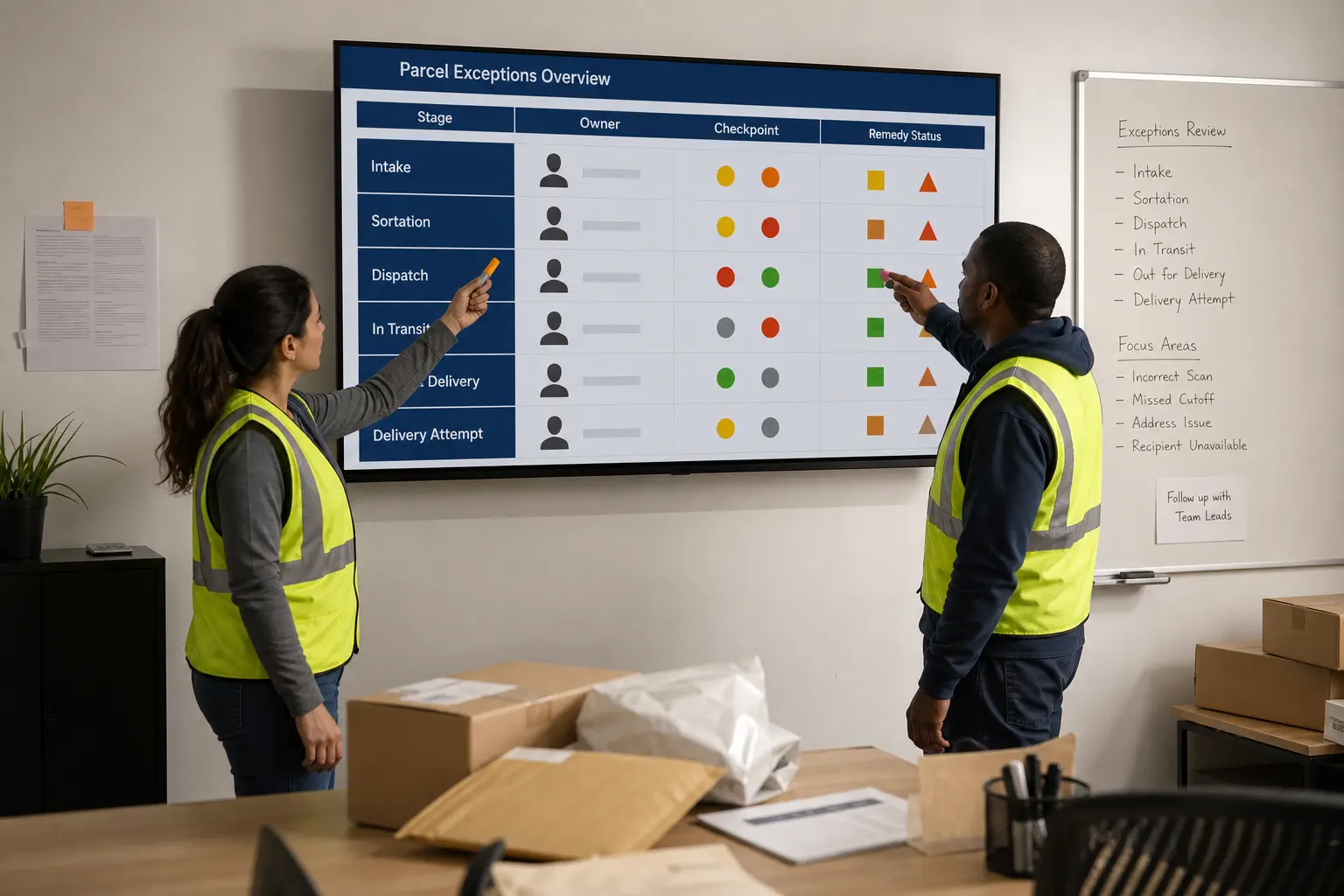
A scalable exception system defines ownership and thresholds before the next urgent ticket arrives. It turns parcel support from an improvised email chase into an operating process.
Create an exception queue with these fields: order, route, last physical scan, scan age, promised window, local carrier, customer deadline, case owner, next action, next checkpoint, and approved remedy. Group cases by route and event. Five parcels quiet at the same handoff may justify a route-level escalation even when each one looks ordinary in isolation.
Review the queue on a fixed cadence and close each case with a cause category, evidence result, remedy, and preventive action. Useful internal measures include the share of cases with complete evidence, time to assign an owner, time to give the customer a substantive update, repeated exceptions by route, and cases that approached a protection deadline. These are process controls, not public performance promises. Their purpose is to reveal where missing information or unclear authority creates avoidable delay.
Set decision rules for:
- label created without acceptance;
- no movement after a physical origin scan;
- customs information requests;
- local handoff without local acceptance;
- failed delivery or address exception;
- delivered but not received;
- confirmed loss or damage;
- replacement, refund, and claim approval.
Review packaging, product restrictions, address validation, route choice, and tracking-upload timing alongside carrier performance. For sellers seeing repeated handoff gaps, better route selection and tracking visibility can reduce the number of cases that turn into customer-service escalations. A wrong variant or weak parcel is not repaired by a better email. A tracking number uploaded before physical handoff can create avoidable distrust even if the parcel later moves normally.
Key Takeaway: The durable fix is an exception-control system with evidence, owners, checkpoints, and remedy authority—not a larger list of phone numbers.
When a Private Dropshipping Agent Changes the Outcome

A private dropshipping agent changes the escalation path when it is the shipping account holder or the accountable coordinator between supplier, parcel preparation, route booking, tracking, and after-sales decisions. Instead of asking the buyer to navigate disconnected parties, the seller has one operational contact that can collect evidence and pursue the correct route.
For qualified sellers with repeat orders, RuntoDropship can coordinate supplier communication, pre-shipment checks, packing confirmation, shipping arrangement, tracking exceptions, and after-sales follow-up through a dedicated account manager. When loss or damage is confirmed, the team can start the applicable claim process and coordinate the appropriate replacement or refund path according to confirmed responsibility and route terms. That conditional boundary matters: no responsible operator should call every delay a loss or promise compensation before the evidence supports it.
This model is especially useful when the problem repeats across destinations or stores. The operational value is not merely access to a “VIP channel.” It is having the booking context, parcel evidence, supplier access, and customer remedy discussion connected in one private-agent workflow. Sellers can then review whether to keep the route, change packaging, split destinations, adjust delivery language, or select another line before the next campaign scales the same exception.
FAQ
What is the official YunExpress email?
The current global corporate site lists [email protected] as its customer-service email. Verify it on a YunExpress-owned page before sending sensitive documents because contact details can change.
How do I contact YunExpress about a package in the United States?
Start with the official form or published email, then check the local tracking number. If a US final-mile carrier has accepted the parcel, contact that carrier for delivery evidence and keep the seller involved for the retail remedy.
Can I file a claim directly as the recipient?
Sometimes you can submit an inquiry, but the shipping account holder often has the contractual access needed to open a trace or claim. Ask the seller, platform, supplier, or agent that booked the shipment to file with the correct service details.
What should I do when YunExpress does not reply?
Escalate through the seller or platform, contact the local carrier when handoff is confirmed, preserve your evidence and deadlines, and avoid opening many incomplete duplicate tickets.
Does no tracking update mean the parcel is lost?
No. A scan gap is not proof of loss. Identify the last physical event, compare it with the order-specific window, and request an investigation when the next expected evidence is overdue.
Conclusion
Reaching a published inbox is only the first step. A successful parcel escalation depends on identifying custody, choosing the party that can perform the next action, sending a complete evidence pack, and protecting the customer’s remedy while the carrier trace remains open.
For growing sellers, mentors, agencies, and ecommerce operators, RuntoDropship can connect supplier communication, parcel preparation, route booking, tracking follow-up, and after-sales coordination through one private dropshipping agent workflow. Send your product links, main destinations, current order volume, and a few anonymized exception examples to discuss where your support process is breaking and what should change before the next shipment batch.