

Dropshipping Canada is a legal way to sell products online without holding every item yourself, but starting successfully requires more than opening a store: you must choose a workable niche, verify products and suppliers, register the business where required, understand taxes and imports, price the complete order, and test the customer experience before spending heavily on marketing.
Quick Answer: Start with one clearly defined customer, a small product shortlist and a conservative budget. Build the store and policies around Canadian requirements, order samples, test the complete delivery path to representative destinations, and scale only after the product, margin, supplier and customer communication work together.
The model often looks simple in a diagram: a customer buys, a supplier ships, and you keep the difference. In practice, the seller still owns the difficult customer-facing decisions. A weak product, vague delivery promise or missing import cost can turn early sales into refunds and support pressure. A structured launch sequence helps you test those assumptions before they become expensive.
How Does Dropshipping Canada Work?
You sell through an online storefront while a supplier or private dropshipping agent handles the physical product and sends the parcel to Canadian customers. You do not need to pre-purchase every unit, but you remain the retailer responsible for the offer and customer relationship.
A normal order moves through six stages:
- You select a product and agree on its specifications, price, stock process, packing and shipping terms.
- A customer places an order and pays your store.
- The order information reaches the supplier or agent.
- The product is prepared, checked and packed.
- A domestic or cross-border shipping service moves the parcel to Canada.
- You provide tracking, answer questions and resolve delivery, return or product problems.
The customer does not have a contract with an invisible supplier behind your store. Your product description, checkout, delivery language, support and refund process shape the purchase. If the supplier sends the wrong variant or misses dispatch, the customer still expects you to fix it.
This model reduces inventory commitment compared with buying a large quantity before testing demand. It does not remove store costs, advertising risk, payment fees, product responsibility, import costs, customer service or the need to verify what the supplier actually does.
Is Dropshipping in Canada Right for You?
It can be a practical entry into ecommerce when you want to test demand without committing to a large inventory purchase. It is less suitable if you expect passive income, immediate margins or full control without inspecting products and managing suppliers.
Main advantages
- Lower inventory commitment: You normally buy a unit after receiving an order rather than purchasing a large batch first.
- Flexible product testing: You can compare several ideas before deciding which product deserves deeper investment.
- Location flexibility: Store, supplier and customer can be in different places when the payment, tax, import and shipping arrangements support the transaction.
- Room to develop: A validated product may later move into negotiated sourcing, custom packaging, small-batch stock or private-label production; comparing dropshipping vs wholesale helps clarify when added inventory control becomes worth the capital commitment.
Main disadvantages
- Less physical control: You may not see the exact unit or packaging unless you arrange samples and checks.
- Supplier dependence: Stock errors, substitutions and delayed dispatch become your customer-service problem.
- Variable shipping: A quoted transit time may exclude processing, customs and a local-carrier handoff.
- Margin pressure: Advertising, payment fees, shipping, currency conversion, refunds and import charges can consume the apparent markup.
- Returns are harder: Sending an inexpensive item back across a border may cost more than the product.
The model is usually a better fit when you are willing to operate a real retail business: study a customer, check products, calculate costs, communicate honestly and improve the process from evidence. It is a poor fit when the plan depends on copying a trending product and leaving the entire customer experience to a marketplace seller.
Key Takeaway: Choose this model for controlled product testing and gradual validation—not because it removes responsibility or guarantees a low-cost business.
How Do You Start a Canadian Dropshipping Business?
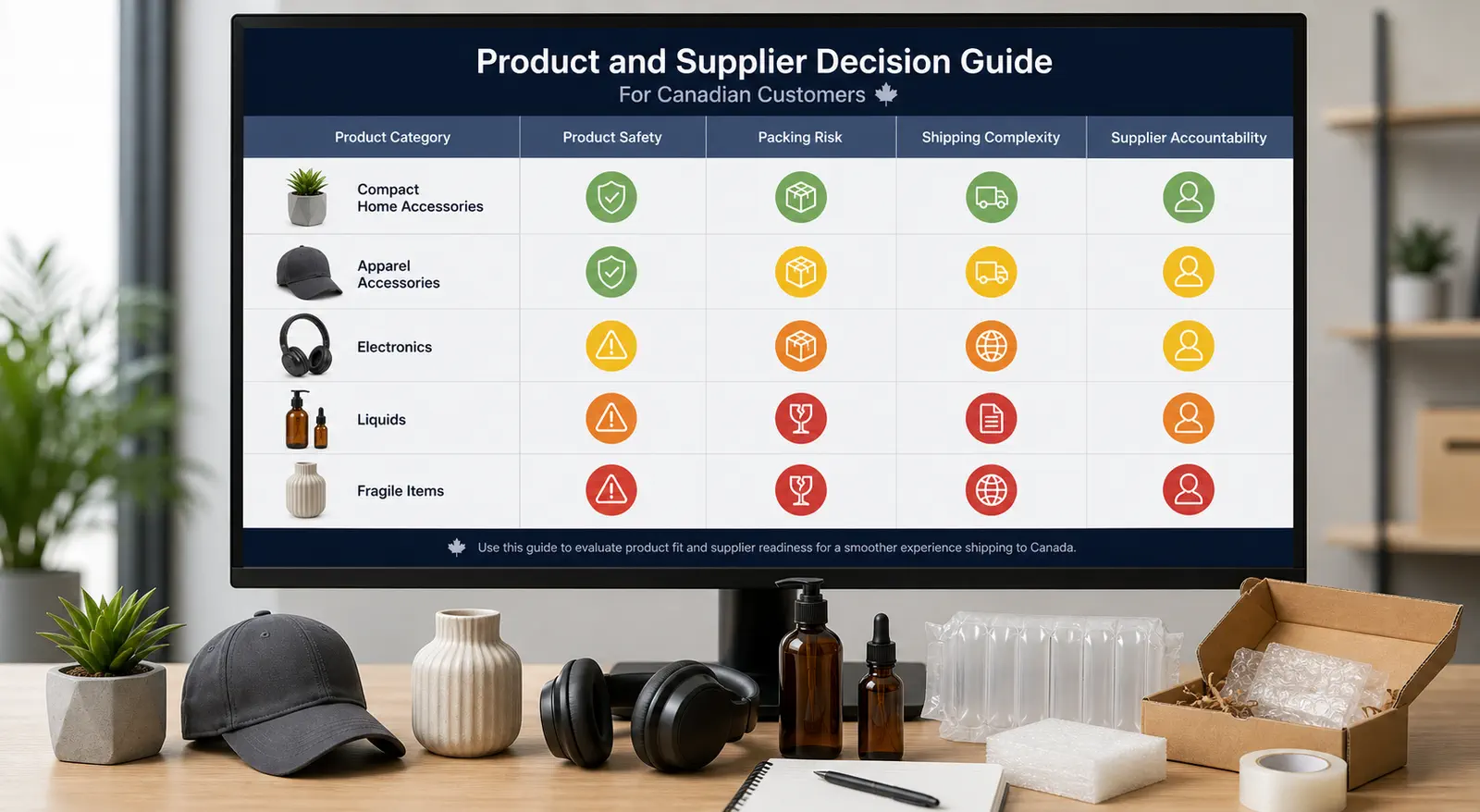
Start in a deliberate sequence. Choosing an app or designing a logo before you understand the customer, product and economics often creates a polished store with no durable reason to buy.
1. Define one customer and problem
Select a market you can understand well enough to evaluate demand, alternatives and objections. “People in Canada” is too broad. A useful starting audience might be apartment renters seeking compact organization products, outdoor commuters needing weather-resistant accessories, or pet owners solving a specific daily inconvenience.
Research customer language, competing offers, common complaints and expected price ranges. Google Trends can help compare relative search interest, but it does not prove purchase demand. Combine it with marketplace reviews, competitor positioning and small advertising or content tests.
2. Build a small product shortlist
Create selection criteria before choosing products. Consider:
- a clear customer problem;
- practical differentiation from common retail alternatives;
- legal and product-safety requirements;
- stable specifications and variants;
- packed size, weight and fragility;
- realistic complete order cost;
- visual demonstration potential;
- return and replacement difficulty.
For an early test, compact, non-fragile and non-regulated goods are generally easier to assess than items with batteries, liquids, health claims, sizing complexity or a high damage risk. This is a risk-screening principle, not automatic approval for any product.
3. Validate the supplier and order samples
Ask where the specific SKU is stored, who packs it, how stock is confirmed, which shipping service is used and who handles a defective or lost order. Obtain a sample through the same preparation method planned for customers.
Inspect the product description, materials, dimensions, finish, included parts, instructions, packaging and label information. Take your own photos or obtain content you have permission to use. Do not build the offer around copied images that show a different version of the product.
4. Choose the store and sales channel
Shopify is a common choice for sellers who want a dedicated storefront and a broad app ecosystem, but review whether Shopify is worth it for your expected fees, payment setup, app requirements, and technical workload before committing. WooCommerce can suit operators comfortable managing WordPress hosting and plugins. Marketplaces may provide existing traffic but impose their own seller, listing and fulfillment rules.
Choose the channel by the customer journey and operating requirements—not by the promise that one app will automate the business. Before launch, complete the product page, checkout, payment settings, contact information, privacy notice, shipping policy, return policy and order emails.
5. Register and organize the business
Choose an appropriate structure and confirm federal, provincial, territorial and municipal requirements for your location and activities. Open separate financial records for sales, supplier payments, fees, refunds and taxes. If you incorporate federally, you may still need registration in provinces or territories where the corporation conducts business; Corporations Canada explains the relationship.
6. Build and test before launch
Place test orders, proofread every customer-facing page, test mobile checkout and confirm that order details reach the correct supplier. Verify taxes, currency, notifications, tracking and support replies. Launch with a controlled budget and a limited product set so you can identify which assumption failed.
Key Takeaway: Build in the order of customer, product, supplier, economics, store and test. Technology should connect a validated plan, not substitute for one.
What Legal and Tax Responsibilities Apply?
The business model is legal, but each seller must comply with the rules that apply to the business, product, transaction and customer location. A supplier’s willingness to ship an item is not proof that the item, claim, checkout or import arrangement is compliant.
This section is general educational guidance, not legal or tax advice. Confirm your setup with the relevant government offices and qualified Canadian advisers.
GST/HST registration
For most businesses, the Canada Revenue Agency uses a CAD 30,000 small-supplier threshold based on taxable supplies and specific calendar-quarter tests. Exceeding the threshold in one calendar quarter can produce a different effective date from exceeding it over consecutive quarters. Review the CRA’s current registration guidance instead of treating the threshold as a simple year-end test.
The customer’s province, place-of-supply rules, seller status and cross-border arrangement can affect treatment. Keep supplier invoices, sales records, import documents, refunds and tax records organized from the beginning.
Understand What GST/HST Registration Actually Changes
The threshold determines when registration may become mandatory, but registration also creates ongoing collection, record-keeping, filing, and remittance responsibilities. The Canada Revenue Agency webinar below explains the purpose of a GST/HST account and the registration process in more detail.
Because tax rules and online registration interfaces can change, use the video as an explanation and confirm the current requirements through the CRA guidance linked above.
Product safety and import requirements
Check whether the product is prohibited, regulated, subject to mandatory standards or requires specific labels, licences, permits or documentation. Cosmetics, food, supplements, children’s products, products making health claims, and consumer electronics dropshipping involving batteries or wireless functions can require deeper category-specific checks.
Health Canada treats products imported for sale through online storefronts as commercial imports. Its consumer-product and cosmetics import guide explains responsibilities that do not disappear because a foreign supplier sends the parcel.
Consumer information and advertising
Describe the product, price, currency, additional charges, delivery conditions and return terms accurately. Avoid fake scarcity, unsupported savings claims, copied reviews and delivery promises that your tests do not support.
Consumer rules differ across provinces. Ontario, for example, applies specific disclosures and agreement requirements to qualifying internet transactions. Its online-shopping guidance illustrates why one generic store policy may not answer every provincial requirement.
Privacy
An online store handles names, addresses, contact details, IP addresses and purchasing history. Canada’s federal private-sector privacy framework, PIPEDA, can apply to commercial handling of personal information, including information crossing provincial or national borders. The Office of the Privacy Commissioner summarizes the core principles.
Collect only what you need, explain why you collect it, protect it and disclose which service providers receive it. Send the supplier only the customer information required to complete the order.
Key Takeaway: Treat registration, tax, product rules, checkout disclosures and privacy as launch requirements. A store should not accept orders first and investigate responsibility only after a complaint or customs problem.
How Much Does It Cost, and How Should You Price?
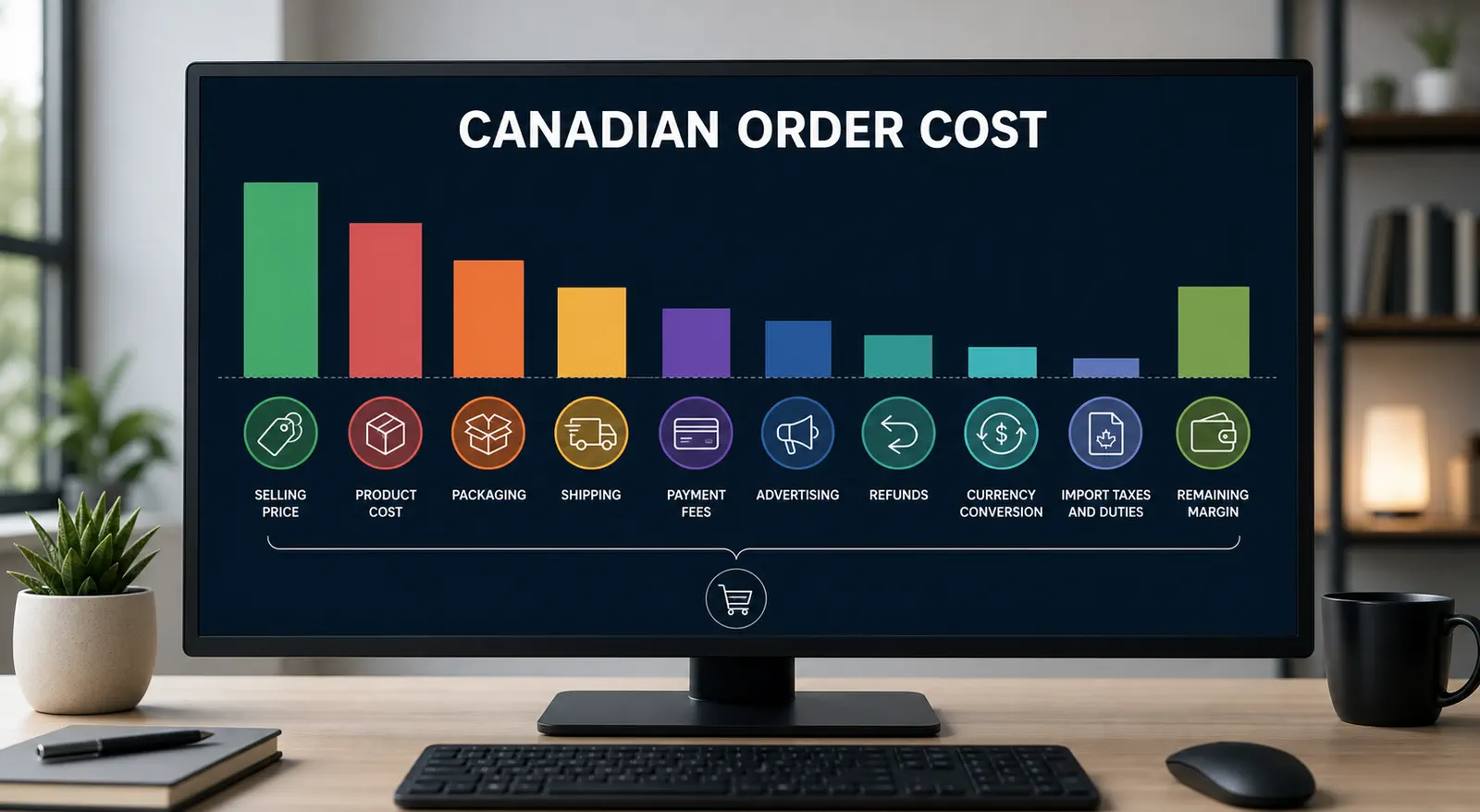
There is no responsible universal startup figure because the budget depends on platform, samples, product category, creative production, professional advice and marketing plan. Separate one-time setup expenses, monthly operating costs and per-order costs before deciding what you can afford to test.
Typical startup and operating categories
- business registration or professional advice where needed;
- domain, ecommerce platform, theme or hosting;
- essential apps or plugins;
- product samples and test parcels;
- photography, video or creative production;
- payment, bookkeeping and currency-conversion tools;
- advertising or creator tests;
- a reserve for refunds, replacements and chargebacks.
Avoid stacking paid apps before the store has proven demand. Start with the minimum tools needed to present the offer, accept payment, transfer orders, communicate with customers and measure results.
Calculate the complete order
Your useful margin is what remains after all costs needed to acquire, prepare, deliver and support the order. Include:
- selling price after discounts;
- product and sourcing cost;
- inspection, packaging, labels or inserts;
- shipping based on packed dimensions and weight;
- platform and payment fees;
- advertising cost assigned to orders;
- currency conversion;
- applicable sales-tax handling;
- import GST, duties, brokerage or disbursement fees;
- expected refunds, reshipments and support cost.
Goods imported into Canada are generally subject to GST or the federal part of HST unless an exception applies, while duty can depend on classification, origin and value. The owner or importer of record is responsible for import GST/HST. The CRA explains imported-goods treatment.
Confirm who acts as importer, which charges are prepaid and whether the carrier may collect anything from the customer. Never ask a supplier to use a false description or artificially low customs value.
Set a test price
Compare the complete cost with the value customers see and competing alternatives. Leave room for normal variation rather than pricing from the supplier’s lowest product and shipping quote. A product that works only when advertising is unusually cheap and no order needs support has a fragile margin.
Key Takeaway: Budget and price from the complete customer order. Product markup alone cannot tell you whether the business can absorb acquisition, delivery and after-sales costs.
How Do You Choose a Reliable Supplier?
Choose the supplier by evidence of capability and responsibility, not simply by country, catalogue size or app integration. A local supplier may simplify some deliveries or returns, while an overseas marketplace supplier may offer broader selection. Neither model is automatically reliable.
Compare suppliers using the same questions:
| Decision area | What to verify | Evidence to request |
|---|---|---|
| Product | Exact model, materials, variants and included parts | Specification sheet and approved sample |
| Stock | Where the SKU is stored and how availability is confirmed | Current stock method and substitution rule |
| Packing | Who packs and which materials are used | Sample parcel or packing confirmation |
| Shipping | Exact service, processing time and carrier handoffs | Test-order tracking and route description |
| Problems | Responsibility for defects, loss and wrong items | Written replacement, refund and evidence process |
| Communication | Contact method and escalation ownership | Named contact and response workflow |
Finish the paragraph and responsibility agreement before connecting automation. A plugin can transfer an address or order number, but it cannot decide whether a scratched item should be dispatched or who pays for a replacement.
When visible defects, wrong variants or missing accessories would reach customers, pre-shipment quality-control checks create a practical approval point before dispatch.
As a store gains stable orders, more SKUs or multiple client projects, fragmented supplier chats become difficult to control. A private dropshipping agent can coordinate sourcing, samples, checks, packing, shipping and after-sales issues through one accountable contact. This is an operational upgrade for qualified sellers, not a substitute for validating customer demand.
Key Takeaway: Select a supplier only after the sample, stock process, packing, shipping path and problem-resolution responsibility are clear enough to test.
How Do You Launch, Market and Test the Store?
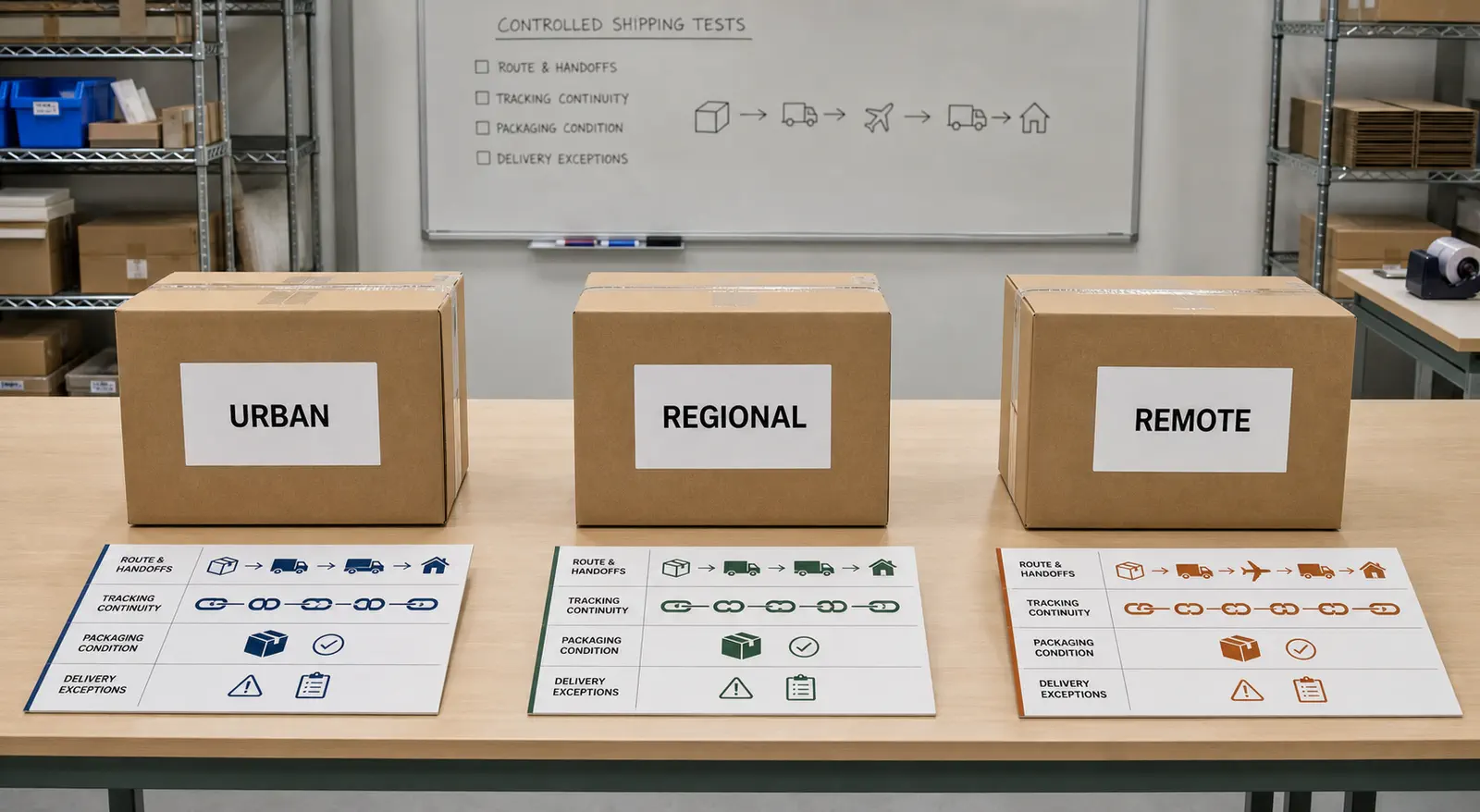
Launch with a narrow offer and a measurement plan. Your first objective is not maximum sales; it is learning whether the right customer understands the offer, completes checkout and receives an experience that supports the promise.
Prepare the store for traffic
Before promotion, confirm:
- the product page answers the main buying questions;
- photos and demonstrations match the actual sample;
- price and currency are clear;
- delivery language includes processing and realistic transit expectations;
- returns and contact details are easy to find;
- checkout works on mobile;
- analytics record important store actions;
- order and tracking emails are understandable.
Choose a marketing channel by customer behavior
Search advertising can suit products customers already know to look for. Short-form video can demonstrate a visible problem and solution. Creators may help when trust and authentic use matter. Organic content can build durable demand but usually requires consistent publishing and time.
Start with one primary acquisition channel and a defined test budget. Measure more than clicks: product-page engagement, add-to-cart activity, checkout completion, acquisition cost, refund requests and customer questions reveal different problems.
If visitors do not engage, examine the audience, creative and offer. If they add to cart but do not buy, examine price, trust, shipping and checkout. If they buy but complain, examine product quality, delivery promises and support.
Test the complete delivery path
A supplier may quote only the time after carrier acceptance while the customer experiences processing, international transport, customs and local delivery as one wait. Separate those stages before writing a delivery range.
Send controlled test orders using the actual product, packaging and shipping service. Test the type of urban destination you expect to serve and, where relevant, a regional or remote destination. Record order submission, supplier confirmation, dispatch, first scan, carrier handoff, customs event, delivery and parcel condition.
Check whether tracking remains understandable after handoff and whether the recipient is asked for unexpected payment. One successful delivery is evidence about that product, route, service, address type and time period—not a permanent national guarantee.
Key Takeaway: Use early marketing and test orders to diagnose the complete offer. Scale only when demand signals, checkout, product condition, tracking and customer communication support one another.
When Should You Scale or Change the Model?
Scale after repeatable evidence, not after one strong advertising day. A product is more promising when customers understand it, the complete order margin remains viable, suppliers execute consistently and exceptions can be resolved without improvising every time.
Before increasing spend, review:
- repeat demand and customer feedback;
- acquisition cost across a meaningful test period;
- complete order margin after refunds and reshipments;
- supplier stock and dispatch consistency;
- product and packing quality;
- delivery performance by destination type;
- support volume and recurring questions;
- cash needed between customer payment and supplier, advertising or refund obligations.
Scale in stages. Increase advertising gradually, keep backup supplier or route options where practical, and update customer-facing promises when the operation changes. A new supplier, packaging method or shipping service requires a fresh test.
When marketplace sourcing becomes the bottleneck, transitioning from AliExpress to a private agent can centralize product confirmation, order preparation and issue follow-up. Make the change product by product rather than moving an unverified catalogue at once.
Key Takeaway: Scale the parts that have become repeatable. More automation or advertising magnifies weak product, supplier and customer-experience decisions as quickly as it magnifies good ones.
FAQ
Can a non-resident start dropshipping to Canadian customers without forming a Canadian corporation?
Potentially, yes. Selling to Canadian customers does not automatically mean that you must incorporate in Canada. However, a non-resident may still need Canadian registration or tax accounts depending on whether the business is considered to be carrying on business in Canada, where inventory is located, how orders are accepted, and who imports the goods. Confirm the setup before accepting Canadian orders.
Is a Business Number the same as a GST/HST account?
No. A Business Number is the Canada Revenue Agency’s nine-digit identifier for a business. A GST/HST account is a separate program account attached to that number. If you register for GST/HST without already having a Business Number, the CRA can issue both during the registration process.
Do I need a Canadian warehouse to start dropshipping in Canada?
No. A supplier can ship directly to Canadian customers without the seller holding stock in a Canadian warehouse. The trade-off is that you must verify processing, customs, last-mile delivery, customer charges, and return handling. Canadian inventory becomes useful only when faster domestic delivery and easier returns justify the added inventory and storage risk.
Can I dropship on Amazon.ca?
Yes, but only if you follow Amazon’s dropshipping policy. You must remain the seller of record, ensure that packing slips, invoices, and external packaging identify your business rather than another retailer, and accept responsibility for returns. Using another online retailer to fulfil an Amazon.ca order can violate the policy when that retailer appears as the seller.
Do I need French-language content to sell to customers in Quebec?
Do not assume that an English-only store is sufficient when actively selling to Quebec consumers. French-language requirements can affect product information, commercial materials, customer service, and certain consumer contracts. The exact requirements depend on the business, product, and how the store targets Quebec, so verify the current provincial rules before launching there.
Conclusion
Starting a Canadian-focused store requires a connected plan: one customer, a suitable product, a verified supplier, a complete cost calculation, a compliant storefront, a focused marketing test and an order-to-door experience you have checked yourself. The model lowers inventory commitment, but it does not remove retail responsibility.
When a growing store needs stronger supplier coordination, product checks, packing confirmation, order execution, shipping arrangements and after-sales follow-up, Runtodropship can support that backend as a private dropshipping agent. Sustainable growth comes from promises the operating process can actually keep. Send your product link, target destinations, expected order volume and current supplier challenge to discuss samples and a controlled test-order plan.