

Dropshipping products can produce high profit only when customers will pay enough to cover the item, delivery, marketing, payment fees, returns, and support; no category is automatically profitable, so use product lists to create a shortlist and test the complete order economics before scaling.
Quick Answer: Start with small, easy-to-demonstrate items that solve a specific problem, have room for a bundle or better presentation, and avoid obvious size, breakage, warranty, or compliance risk. Shortlist three to five candidates, price every cost per delivered order, order samples, and run a controlled demand test. Keep only the offer that produces acceptable contribution after real acquisition and exception costs.
A typical seller finds a low supplier price, applies a large markup, and assumes the difference is profit. Once advertising, shipping, refunds, replacements, and customer questions arrive, the attractive spreadsheet margin can disappear. A better approach connects product demand, perceived value, physical delivery, supplier reliability, and complete costs before you commit more budget.
Which Dropshipping Products Have the Best Profit Potential?
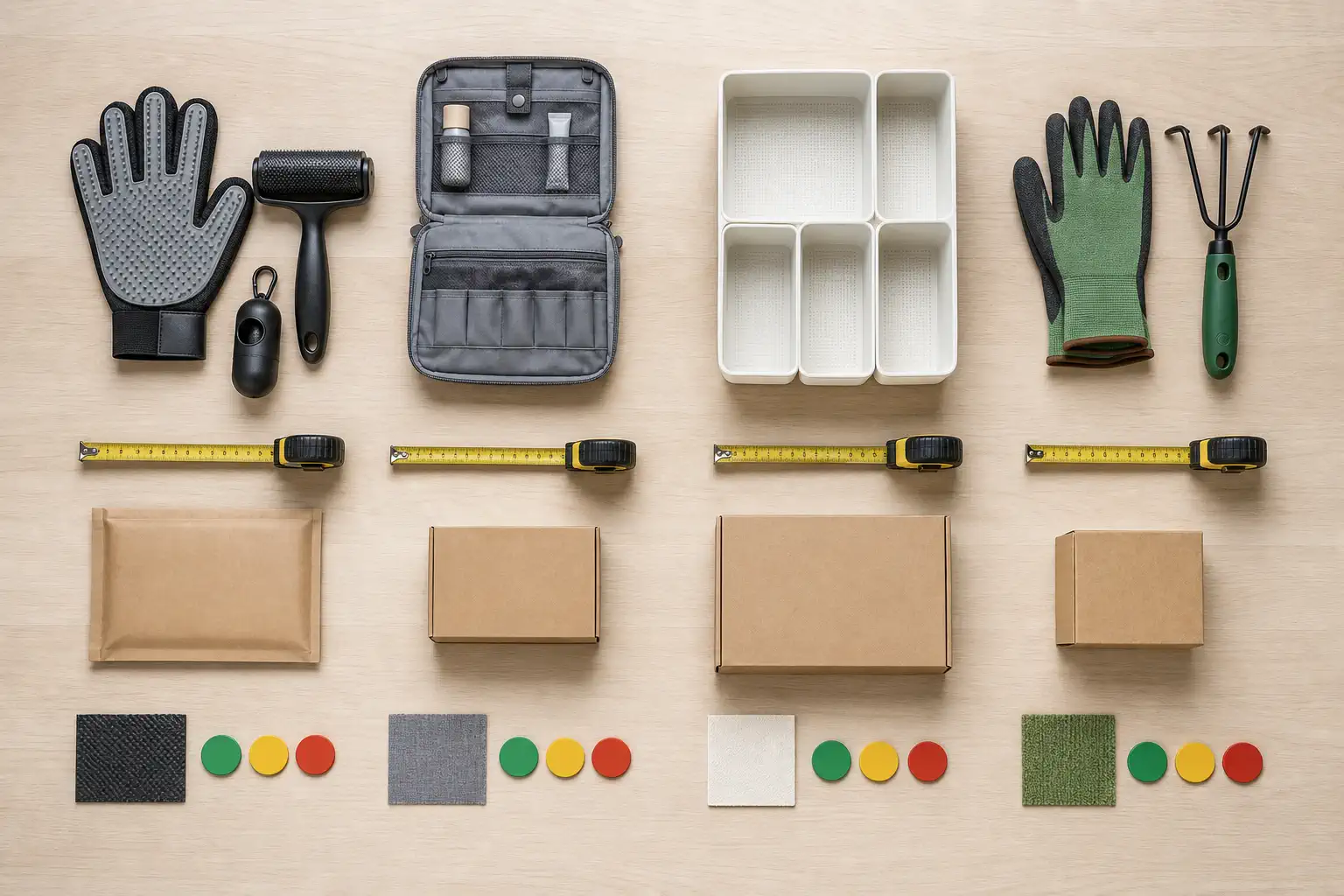
The strongest candidates are usually problem-solving or identity-driven items with clear customer value, manageable delivery, low return friction, and enough pricing room after all costs.
The product ideas below are starting directions, not guaranteed winners. Demand, competition, selling price, product quality, and route suitability change by market and supplier, so each candidate still needs a live check and a sample.
| Product direction | Why customers may value it | Main risk to check |
|---|---|---|
| Pet cleanup and enrichment accessories | Solves a visible daily pet-care problem | Material safety, durability, and pet-size fit |
| Home organization tools | Easy before-and-after demonstration and bundle potential | Local price competition and packed size |
| Non-electric beauty tools | Visual routines can support perceived value | Skin-contact materials and unsupported claims |
| Car organization and comfort accessories | Clear use case and gift potential | Vehicle compatibility and heat resistance |
| Desk and hobby organizers | Specific audience and easy bundle building | Commodity competition and small order value |
| Personalized jewelry and accessories | Emotional value can exceed material cost | Finish quality, sizing, and intellectual property |
| Travel organizers | Useful sets can raise order value | Zipper, seam, and dimension accuracy |
| Simple fitness and recovery accessories | Demonstrable routine and audience focus | Injury or medical claims and material quality |
| Kitchen storage and preparation tools | Everyday problem with visual demonstration | Food-contact suitability and local substitutes |
| Garden and plant-care accessories | Enthusiast audience and complementary items | Seasonality, weather resistance, and dimensions |
These directions favor practical value and manageable parcels, but the best choice depends on the customer you can reach. A narrow offer for apartment pet owners, frequent travelers, home bakers, or a specific hobby is often easier to explain than a general store filled with unrelated trending items.
Avoid treating supplements, cosmetics with active ingredients, medical devices, children’s safety items, batteries, mains-powered electronics, fragile glass, counterfeit goods, or oversized products as easy high-margin choices. Some can become viable businesses, but they require deeper product, documentation, route, warranty, and compliance checks before launch. If you are considering batteries, liquids, powders, or other restricted categories, confirm the product and route through a sensitive-product sourcing process before accepting orders.
Key Takeaway: Choose a product direction because it creates clear customer value and survives the first risk screen, not because a list calls it a winner.
What Makes a Product Capable of Producing High Profit?
A product has real profit potential when its customer value, selling price, acquisition path, delivery cost, return risk, and supplier execution work together.
A clear reason to buy
The item should solve a specific problem, support a strong interest, make a routine easier, or carry personal or gift value. The reason to buy must be understandable in a short product demonstration or a few sentences without exaggerated claims.
Perceived value is not permission to mislead. It comes from useful design, a well-matched bundle, accurate information, better presentation, personalization, or dependable support—not a permanent fake discount or an invented comparison price.
Room beyond the supplier quote
Low item cost can help, but a high markup percentage on a very cheap order may still leave little cash for acquiring and serving the customer. Look at the amount left per delivered order as well as the percentage margin.
Bundles can improve the equation when the items belong in one customer task. A pet grooming set or a travel organization set may be more defensible than several unrelated add-ons, provided the bundle remains easy to pack and explain.
Low friction after the sale
Products become harder to operate when customers frequently choose the wrong size, expect exact color matching, need complex setup, request warranty support, or receive a fragile item. A candidate that looks less exciting may be more valuable if its specifications are easy to verify and its common questions are easy to answer.
Physical properties matter. Record the packed weight and dimensions, not just the product size. Check sharp edges, weak joints, odors, finishes, labels, instructions, accessories, and any material that touches skin, food, children, or pets.
Key Takeaway: A profitable candidate needs more than a large markup. It must leave usable cash after acquisition and remain simple enough to deliver, explain, and support.
How Do You Calculate the Real Profit on an Order?

Calculate profit from a delivered order after every variable cost and a realistic allowance for exceptions, not from selling price minus supplier price.
Use this planning formula:
Order contribution = selling price − product cost − packaging − shipping − payment and platform fees − customer acquisition cost − expected refund, replacement, return, and support cost
Order contribution is the amount left from one order to pay fixed business costs and eventually create profit. Keep taxes, duties, and currency conversion in the calculation when your business bears them. Do not hide them inside a vague “other costs” line.
Model normal and problem orders separately
A normal order may include one product payment, one shipment, and routine support. A problem order may require a reshipment, refund, return handling, extra messages, or a lost advertising cost. Build both scenarios before approving the product.
For example, compare three internal cases without pretending they predict the future:
| Scenario | What to include | Decision use |
|---|---|---|
| Normal delivered order | All routine product, delivery, fee, and acquisition costs | Shows ordinary contribution |
| Refund or replacement order | Routine costs plus the selected remedy and support work | Tests exception tolerance |
| Higher acquisition-cost order | Routine costs with a less favorable ad result | Tests marketing sensitivity |
The purpose is not to find one perfect margin target for every category. It is to set a minimum contribution for your own business and identify which cost change would make the offer unacceptable.
Do not approve a candidate using a supplier’s current item price alone. Ask for the complete quote for the exact variant, quantity or order model, packaging, destination, and shipping route. Recalculate whenever the product, parcel, destination, or traffic source changes.
Key Takeaway: Set a minimum contribution and a stop condition before launch. Sales revenue is not proof of profit when delivery, acquisition, and exception costs are still missing.
Once a product passes the contribution test, the next question is how those unit economics translate into store-level income. The dropshipping salary guide separates revenue, net profit, break-even requirements, and take-home pay.
How Can You Validate Demand Without Chasing a Viral List?
Validate demand by combining search behavior, active offers, customer language, competitor activity, and a paid or marketplace test instead of trusting one trend signal.
Check durable and recent signals
Use Google Trends for product research to compare interest over time, seasonality, and regional differences. Then inspect marketplace best-seller areas, sold listings when available, active ads, social demonstrations, search results, and reviews across several sellers.
For AliExpress candidates specifically, the AliExpress Dropshipping Center can help you build a shortlist and compare marketplace-side product signals, but treat those signals as screening data rather than proof that a product will sell profitably in your market.
No single signal proves demand. Search interest can rise without purchases, views can come from entertainment, and a best-seller label can reflect another market or price. Look for agreement across sources and note the date and geography of every signal.
Watch: How to Use Google Trends Correctly
Google’s official walkthrough explains how to compare topics, apply country and time filters, and interpret search interest across Google and YouTube. Use it to screen seasonality and regional demand—but combine the results with active offers, customer reviews, and completed-order data before approving a product.
Read complaints as product requirements
Reviews and customer discussions can reveal weak zippers, confusing sizes, missing accessories, difficult cleaning, poor instructions, or packaging damage. Turn repeated complaints into a candidate specification or rejection rule rather than copying a competitor’s listing.
Also study the offers customers already see. Record delivered price, main promise, proof, bundle, delivery expectation, return terms, repeated complaints, and the reason a customer might choose one seller over another. If your only difference is a higher price on the same public listing, the offer has little protection.
Define a test that can fail clearly
Choose one audience, one core offer, one landing page, and one acquisition route for the first controlled test. Decide in advance what will make you continue, revise, or stop. Useful observations include qualified visits, checkout starts, completed orders, acquisition cost, delivery completion, support questions, refund requests, and contribution after exceptions.
Change one important variable at a time. If you change the product, price, audience, creative, and page together, you will not know which part caused the result.
Key Takeaway: Treat trends as clues and completed, economically workable orders as stronger evidence. Stop early when demand or contribution does not meet the condition you set.
How Should You Check the Supplier and Delivery Risk?
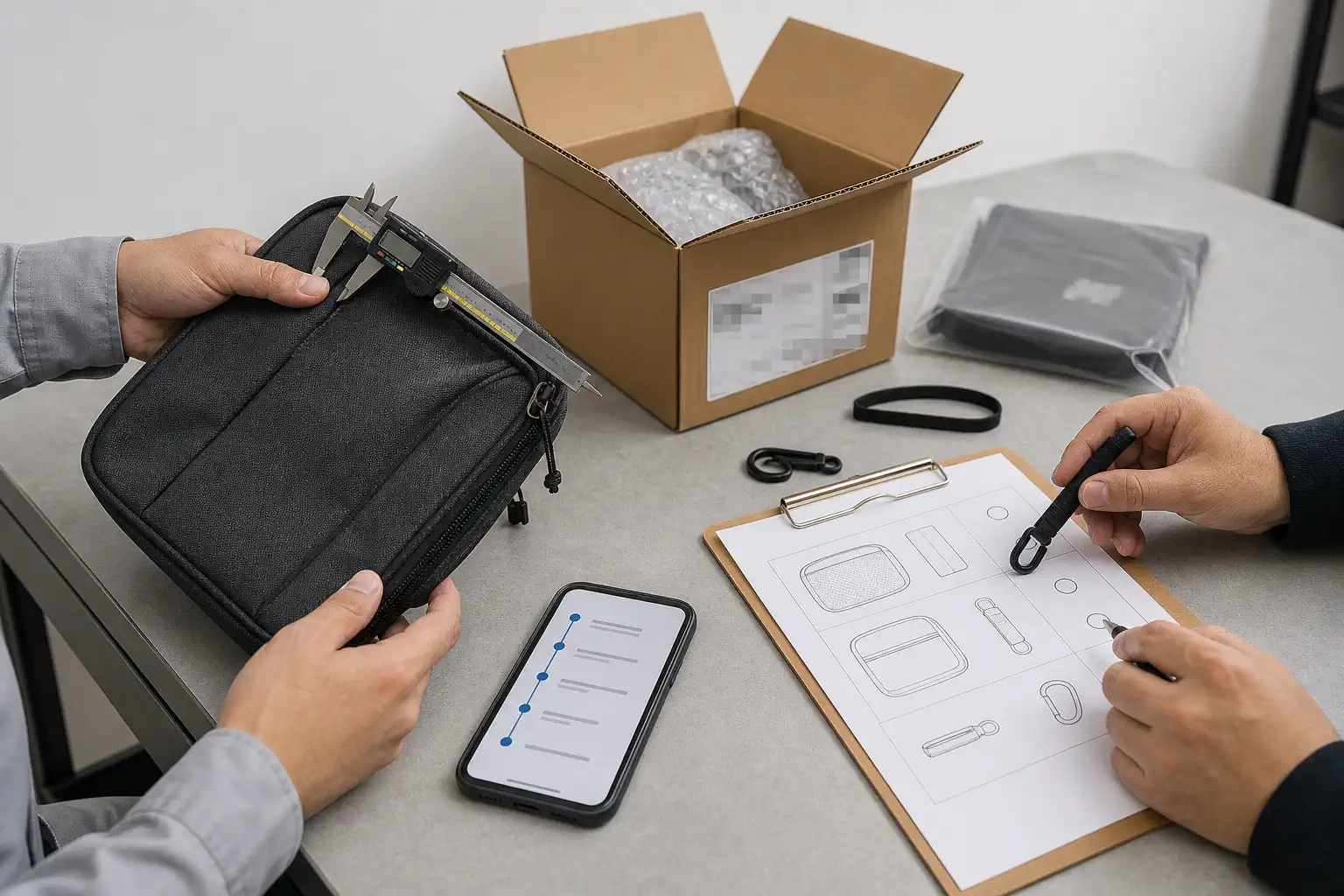
Check whether the supplier can repeatedly deliver the exact product, variant, packaging, evidence, and issue response that your customer offer requires.
Start with a complete dropshipping supplier evaluation rather than comparing catalog size or item price alone. Confirm the legal business details available to you, product specifications, live-stock communication, lead time before dispatch, packed weight and dimensions, shipping options, tracking, packaging, replacement rules, and who handles each common exception.
Order and inspect samples
Place a sample order for the exact variant you plan to sell. Compare it with the supplier description and your planned product page. Photograph the item, packaging, labels, included parts, and visible issues so the approved version is clear.
For a visual or functional item, test the feature you intend to demonstrate. For an adjustable or compatible item, check the claimed range. A sample cannot prove every future unit will match, but it can expose an offer that was never accurate enough to launch.
Test the parcel journey
Send a test order through the intended packing and delivery path. Check packaging condition, tracking visibility, address handling, delivery communication, and what happens when information is wrong or the customer needs help.
As order volume grows, supplier coordination can become more important than finding another catalog. A private dropshipping agent may be relevant when you need one accountable workflow for supplier communication, samples, agreed product checks, packaging, order processing, shipping arrangements, and after-sales investigation. That model should still be tested against your written requirements rather than accepted as a guarantee.
Key Takeaway: Approve the supplier and route together. A good sample cannot rescue an unsuitable delivery path, and a fast route cannot rescue an inaccurate product.
How Do You Test, Improve, and Scale the Product?
Scale only after the offer has shown repeatable demand, acceptable delivered-order contribution, and a workable supplier and support process.
Begin with a small number of candidates so you can observe each one properly. For every product, keep one file with the approved specification, sample evidence, supplier quote, parcel data, customer promise, cost model, test result, common questions, and exception decisions.
Use a go, revise, or stop review
- Go: the same offer attracts qualified buyers, completes delivery, and leaves acceptable contribution.
- Revise: one identifiable problem—such as the creative, bundle, page explanation, packaging, or supplier term—can be changed and retested.
- Stop: safety, legality, product accuracy, delivery, customer expectations, or economics cannot meet the written condition within your loss limit.
Do not call a product validated because it received clicks or a few orders. Check whether customers received what was promised and whether the remaining contribution can support the business. When volume increases, repeat sample checks after meaningful supplier, specification, packaging, or route changes.
For mentors, agencies, and multi-store operators, use the same review format across client or student projects. A shared scorecard makes decisions comparable without pretending that one product result applies to every audience or market.
Key Takeaway: Scale the process that produced an acceptable delivered order, not the excitement around the product. Keep a written stop rule for every test.
FAQ
Should you start with high-ticket or low-ticket items?
Start with the risk level your cash flow, customer support, and supplier evidence can handle. Higher-priced items can leave more cash per sale but may require stronger trust, more expensive acquisition, better pre-sale support, and a larger refund reserve; lower-priced items are easier to test but can leave too little contribution unless bundles or repeat purchases improve the order.
Should seasonal and evergreen items use the same test window?
No. A seasonal item needs a test early enough to order samples, improve the offer, and complete delivery before demand falls, while an evergreen item can be judged across a longer and less compressed period. Record the seasonal deadline before spending so late demand does not create a delivery promise you cannot meet.
How many products should one store test at the same time?
Test only as many as you can sample, cost, support, and measure separately. For a small team, three to five shortlisted candidates and one or two live tests usually provide more usable evidence than launching a broad catalog; a larger operation can test more only if ownership, budgets, and stop decisions remain clear for each item.
Conclusion
High-profit product selection is a connected operating decision, not a hunt for a permanent winner. Start with a customer problem, shortlist product directions, screen physical and delivery risk, model complete order contribution, verify demand, test the supplier and parcel, and scale only when delivered orders support the numbers.
When a growing store or multi-store operation needs stronger supplier coordination, samples, agreed product checks, packaging, order processing, shipping arrangements, or issue follow-up, Runtodropship can support that work as a China-based private dropshipping agent team. Durable ecommerce profit comes from matching the customer promise with accountable execution behind every order; send your product links, target market, current order volume, and main constraint to discuss a controlled sourcing and test plan.