
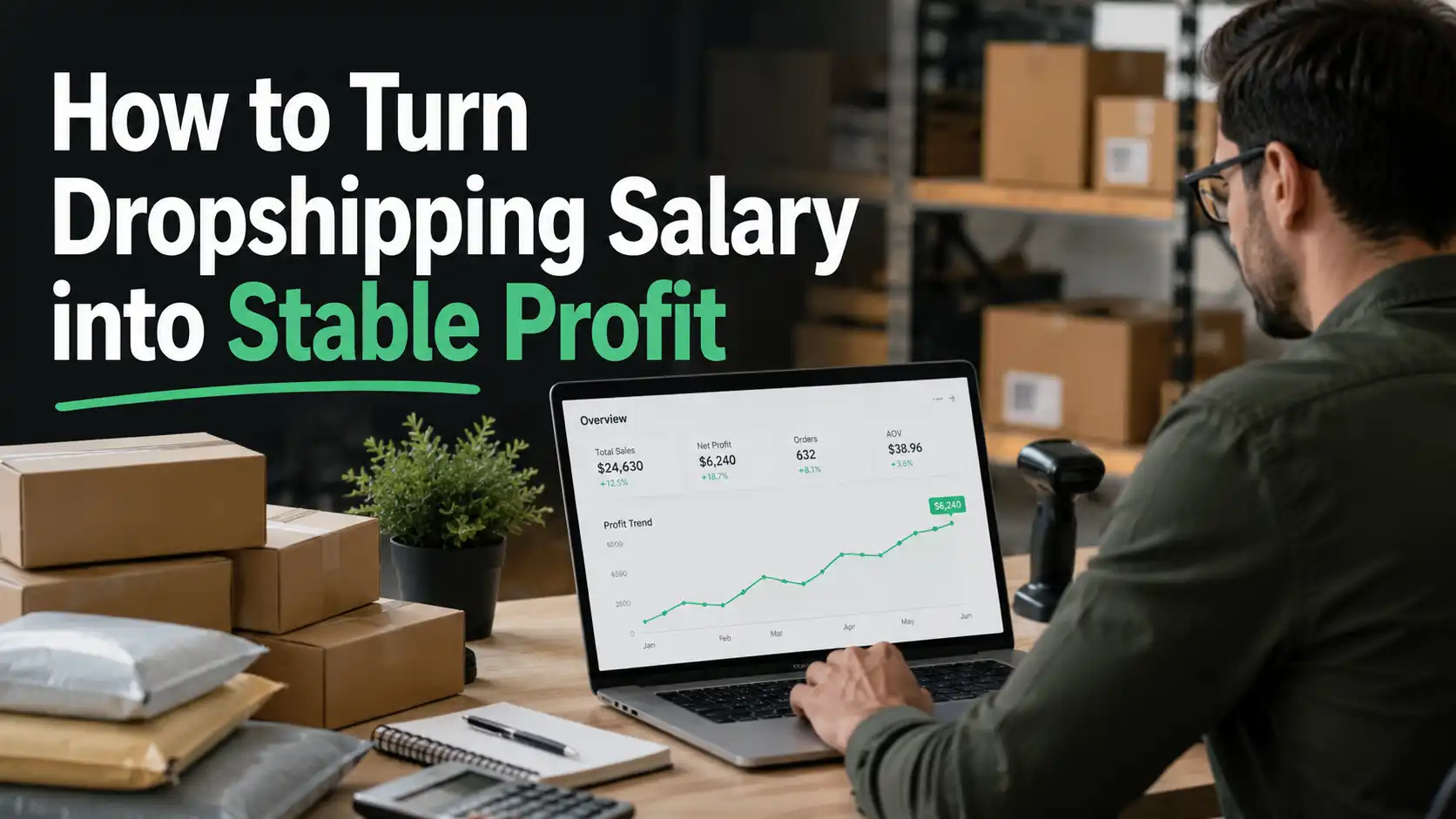
In 2026, a professional dropshipper can realistically earn anywhere from $1,000 to over $50,000 per month, depending heavily on operational scaling, marketing efficiency, and supply chain maturity. Launching an e-commerce store often feels like shouting into a void while watching your hard-earned capital slowly drain away. You spend days hunting for products and setting up storefronts, only to be crushed by razor-thin profit margins, skyrocketing ad costs, and unreliable suppliers who ship substandard goods. To help you cut through the online noise and build a predictable business, this comprehensive guide analyzes what influences your dropshipping salary in 2026 and how to scale your profit margins effectively.
What Is the Average Dropshipping Salary in 2026?
The average dropshipper earns a monthly net profit of $1,500 to $5,000, although high-volume enterprise stores frequently exceed $50,000 in monthly take-home income.
While baseline averages provide a helpful starting point, your actual earnings will fluctuate based on product choice, supplier pricing, ad efficiency, and realistic dropshipping profit margins. As you optimize your store, you will quickly realize that the industry is divided into distinct earning tiers. Let us explore how these earnings look for different stages of the business lifecycle.

What Do Beginners Earn in Their First Year?
New store owners typically generate between $0 and $1,000 in monthly net profit during their first twelve months as they master product validation and paid advertising. Many beginners struggle to break even initially due to high testing costs and inefficient logistics channels. However, once you identify a stable niche and align your marketing, you can expect these numbers to stabilize. This initial phase is strictly about learning the fundamentals of customer acquisition without exhausting your budget.
How Much Do High-Volume Stores Take Home?
High-volume stores frequently capture between $10,000 and $50,000+ in monthly net margins by scaling winning ad campaigns and establishing direct factory relations. At this level, operators move away from standard public platforms to leverage custom logistics solutions. By negotiating bulk rates and optimizing shipping, you can secure much healthier profit margins that support sustainable growth. These advanced stores operate as genuine brand assets rather than simple transactional storefronts.
How Does Experience Shape Dropshipper Income?
Experience directly dictates your earning bracket by shifting your focus from frantic product testing to structured brand building and supply chain optimization.
As you spend more time in the industry, your ability to spot inefficiencies and negotiate better pricing increases exponentially. The transition from a part-time side hustle to a full-time venture requires a complete shift in operational mentality. Let us analyze the distinct earning trajectories associated with different levels of commitment.

What Is the Reality of Part-Time Earnings?
Part-time sellers generally take home between $1,000 and $3,000 per month by dedicating 10 to 20 hours a week to store management. This model is ideal for testing the waters and building a low-risk secondary income stream alongside your primary employment. To ensure you do not burn out, you must focus on highly efficient workflows and strict time allocation. If you manage your hours wisely, part-time store management can yield highly attractive hourly returns.
Can Full-Time Store Owners Reach Six Figures?
Full-time e-commerce operators regularly generate six-figure annual incomes by scale-testing multiple products and building real brand equity. Dedicating your entire focus to the business allows for deeper market research, better supplier negotiations, and robust customer service systems. However, scaling to this level requires you to reinvest your early profits back into the brand. If you treat the store as a legitimate corporate entity, six-figure earnings become a realistic milestone.
Which Factors Metricize Your E-commerce Earnings?
Your net earnings are primarily determined by your customer acquisition costs, average order value, product return rates, and supplier pricing structures.
Understanding the variables that dictate your profitability allows you to make informed, data-driven decisions instead of relying on guesswork. Every single metric on your store dashboard directly influences how much money you can safely withdraw at the end of the month. Let us dissect the two most influential factors driving your bottom line.
How Do Customer Acquisition Costs Impact Profit?
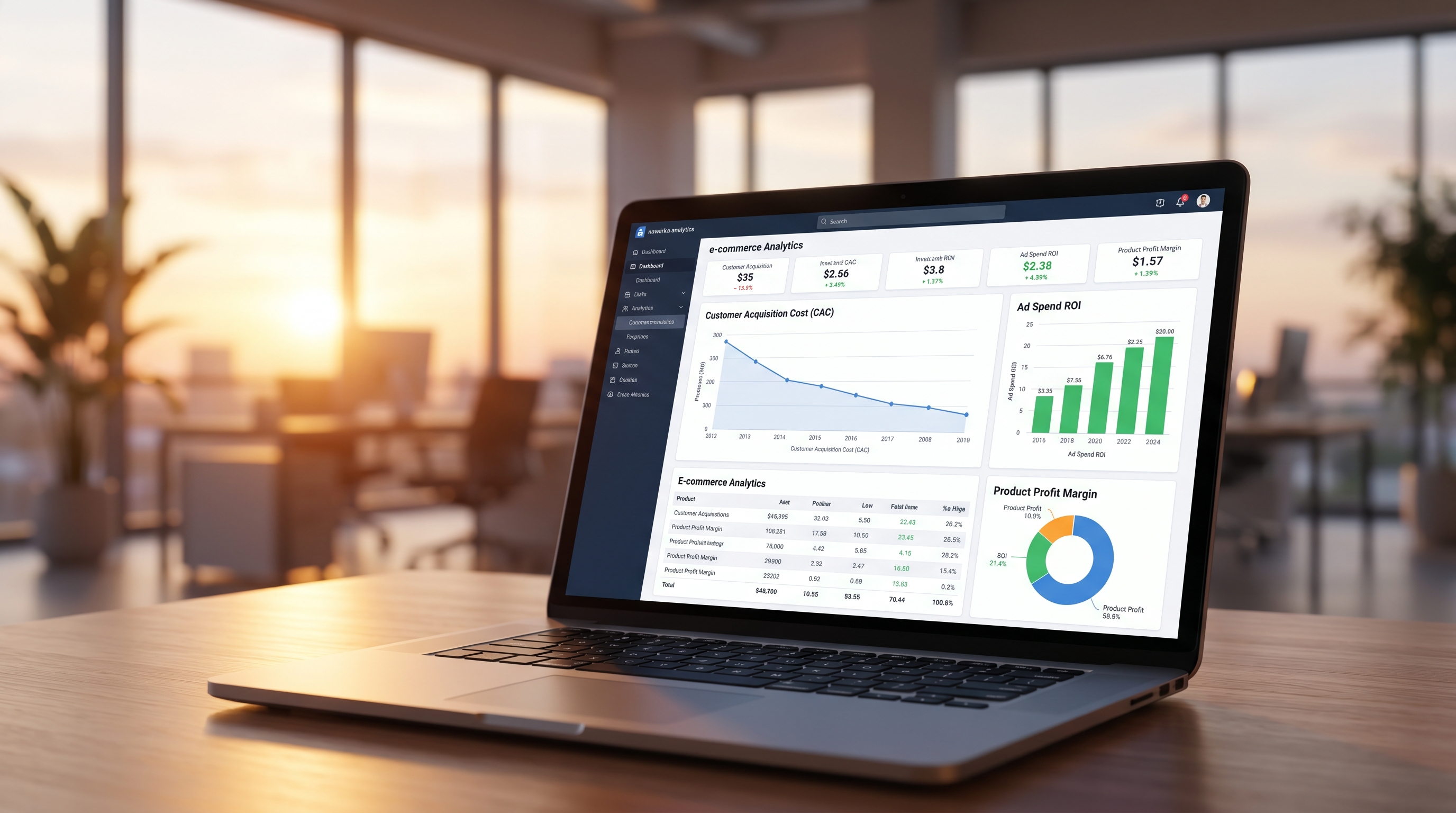
Customer acquisition cost (CAC) is the single largest variable expense that can instantly make or break your store’s profitability. If your ad spend per purchase exceeds your gross margin, your business will lose money regardless of how many orders you process. To maintain healthy earnings, you must constantly optimize your ad copy, target highly specific audiences, and build organic traffic sources. Keeping your CAC low is the most effective way to protect your net margins.
Why Does Niched Product Selection Define Revenue?
Selling high-margin, specialized items within a defined niche allows you to charge premium prices and dramatically increases your average order value. Generic products face fierce price competition and struggle to convert visitors, while unique products solve specific pain points and command customer loyalty. When you focus on a specific audience, your marketing becomes far more targeted and cost-effective. Ultimately, your choice of product determines the baseline profitability of your entire operation.
How Do You Calculate Your True Net Dropship Profit?
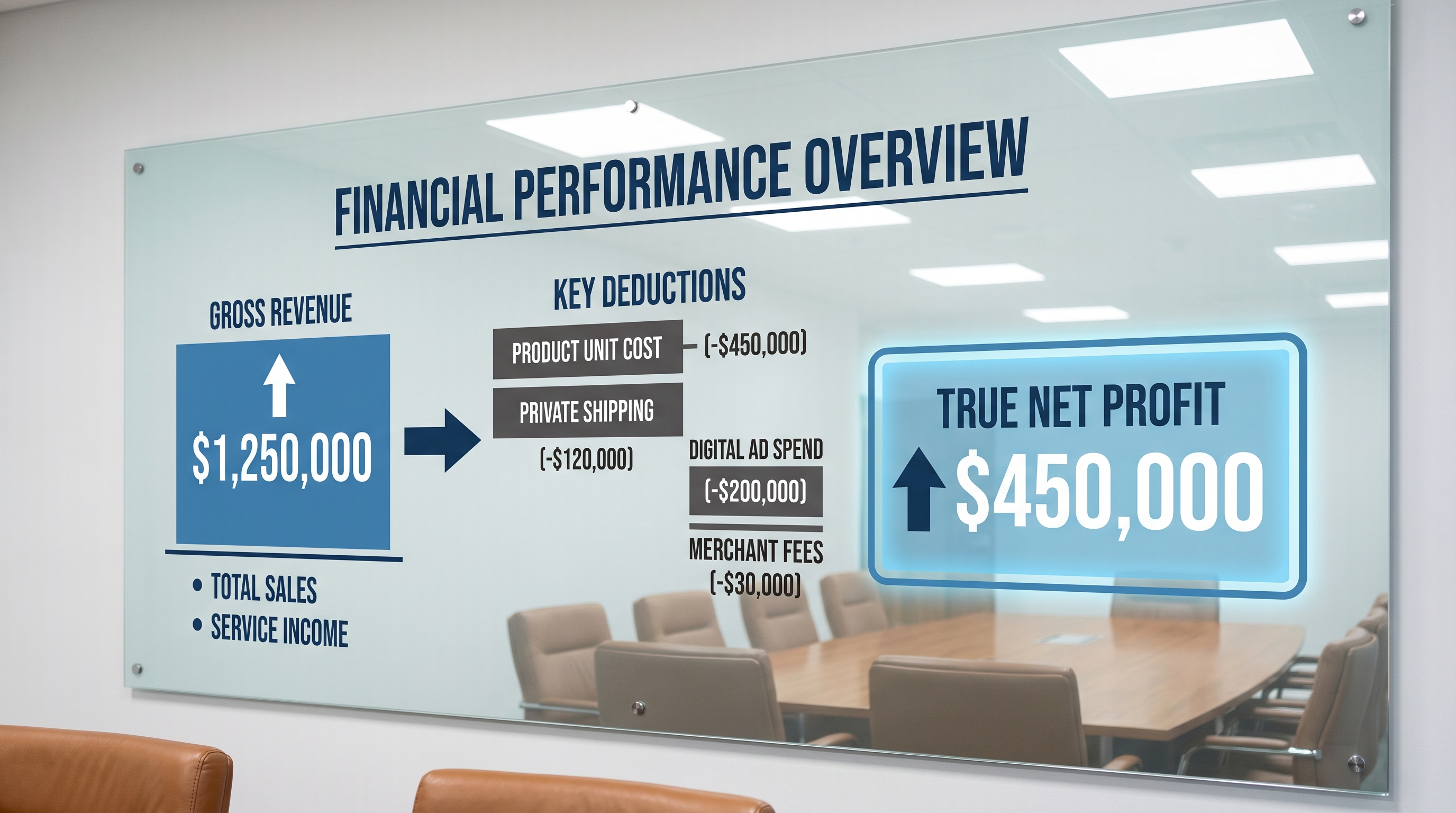
To find your true net profit, you must subtract product costs, shipping fees, total ad spend, transaction merchant charges, and software subscription fees from your gross revenue.
Many store owners fail because they confuse vanity revenue metrics with the actual cash they can keep. Calculating your numbers down to the exact penny is the only way to ensure your business remains financially healthy as you scale. Let us break down these financial realities using a clear, structured visual comparison.
| Financial Metric | Beginner Store (Monthly) | Advanced Store (Monthly) | Key Cost Type |
|---|---|---|---|
| Gross Revenue | $5,000 | $100,000 | Total customer sales |
| Product & Sourcing Cost | -$1,500 | -$25,000 | Direct factory cost |
| Shipping & Logistics | -$1,000 | -$15,000 | Carrier and handling fees |
| Ad Spend (CAC) | -$1,800 | -$35,000 | Paid marketing budget |
| Platform & Apps | -$200 | -$3,000 | Software subscriptions |
| Net Profit (Take-Home) | $500 | $22,000 | Actual cash retained |
This financial breakdown demonstrates how operational scale and volume efficiency can expand a store’s net profit margin from a modest 10% up to an impressive 22%.
What Hidden Operational Fees Drain Your Margin?
Unanticipated expenses like payment processing fees and chargeback risk, refund processing, and dispute handling can silently erode your projected profit margins. Most payment gateways charge a percentage of each transaction plus a fixed fee, which adds up rapidly as your volume grows. To safeguard your earnings, you must factor these payment processing costs directly into your retail pricing. Minimizing product returns through rigorous quality standards is also essential to keeping these hidden fees under control.
How Many Order Cycles Are Needed to Break Even?
Calculating your break-even point requires you to divide your fixed monthly costs by your average net profit per individual order. If your monthly software and marketing baseline costs total $600 and your average net margin per order is $20, you need exactly 30 orders per month to break even. Once you pass this critical threshold, every subsequent sale contributes directly to your personal take-home pay. Keeping a close eye on this metric helps you manage your cash flow during slower sales periods.
Key Takeaway: Always calculate your margins based on net cash flow rather than gross sales figures; protecting your unit economics against transaction fees, returns, and ad costs is the ultimate secret to sustaining high earnings.
Can You Generate Sustainable Wealth via Dropshipping?
Yes, you can build sustainable, long-term wealth through dropshipping by transforming a transactional storefront into a recognized direct-to-consumer brand with exclusive supply relationships.
Building a long-term business requires a practical dropshipping business plan built around cash-flow management, product testing, supplier control, and strategic asset building. If you plan your financials carefully, you can successfully scale your operations without taking on massive, unmanageable risks. Let us examine the overhead structures and growth plans needed to achieve this stability.
What Fixed Monthly Costs Must You Anticipate?
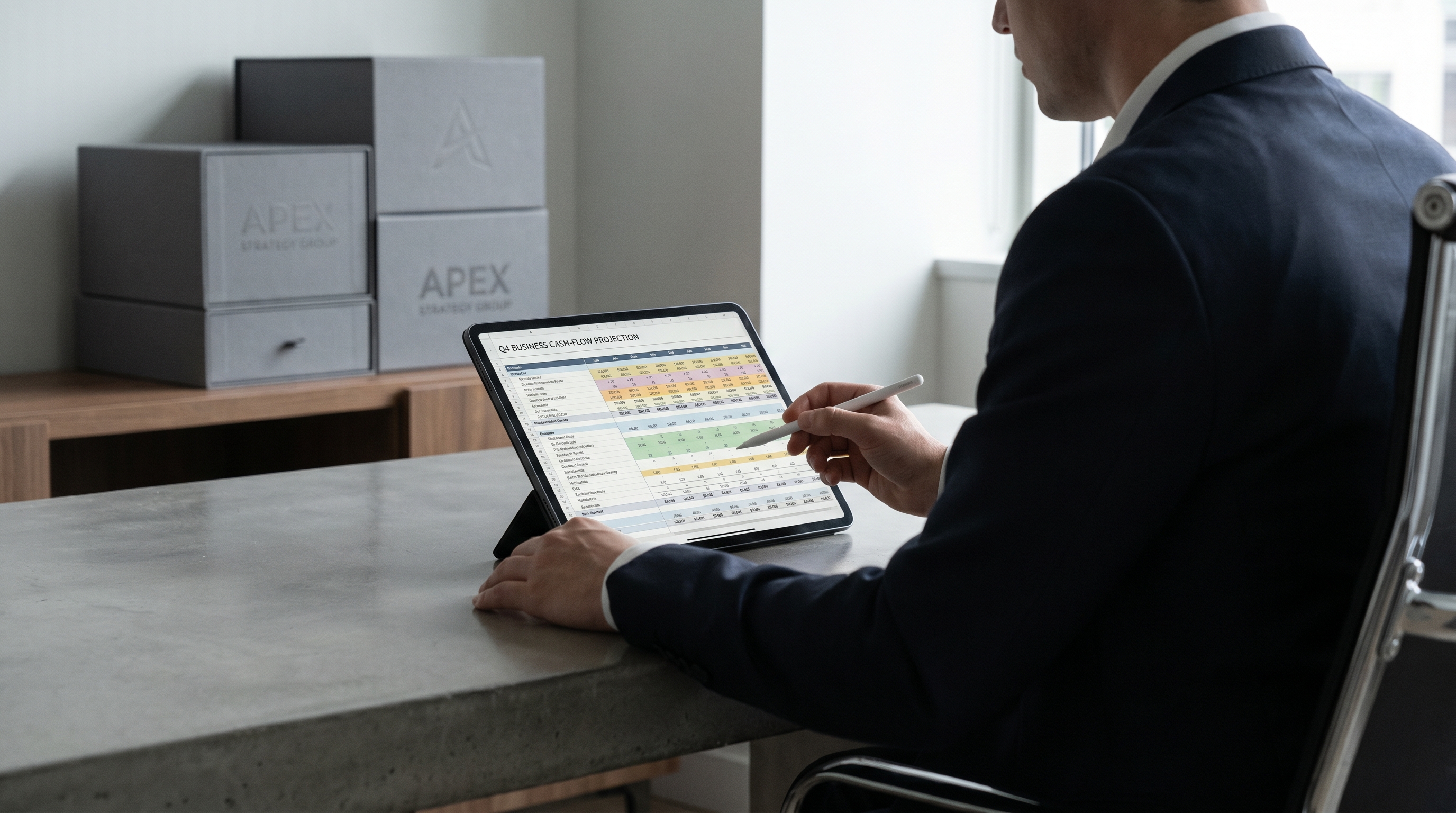
A sustainable e-commerce business relies on predictable fixed costs, including platform subscriptions, domain hosting, email marketing tools, and customer support software. When starting, you can keep these overhead costs under $150 per month by using basic plans and free applications. As your sales grow, you will naturally upgrade your software to automate tasks and handle higher traffic volumes. Managing these fixed expenses keeps your break-even point low and ensures your business remains resilient.
How Can Side Hustlers Safely Scale Operations?
Side hustlers can safely scale by allocating a set portion of their weekly profits back into product testing and localized ad campaigns. This gradual approach allows you to validate new products and build up capital without risking your personal savings. To handle the increased workload as orders rise, you should gradually transition from manual processes to automated software solutions. Once your store consistently matches your primary salary for several consecutive months, you can confidently consider transition options.
Key Takeaway: Sustainable wealth in e-commerce is built by treating your store as an asset, keeping fixed monthly overhead low, and systematically reinvesting profit into proprietary sourcing and brand development.
How Do Marketing Channels Shift Your Revenue Scale?
The marketing channels you select directly dictate your customer acquisition costs, traffic volume, and overall store profitability.
Not all traffic sources are created equal, and choosing the wrong advertising channel can quickly deplete your budget. As an e-commerce operator, you must balance high-volume instant traffic against high-quality organic conversions to maximize your ROI. Let us compare the primary advertising platforms that will drive your revenue in 2026.
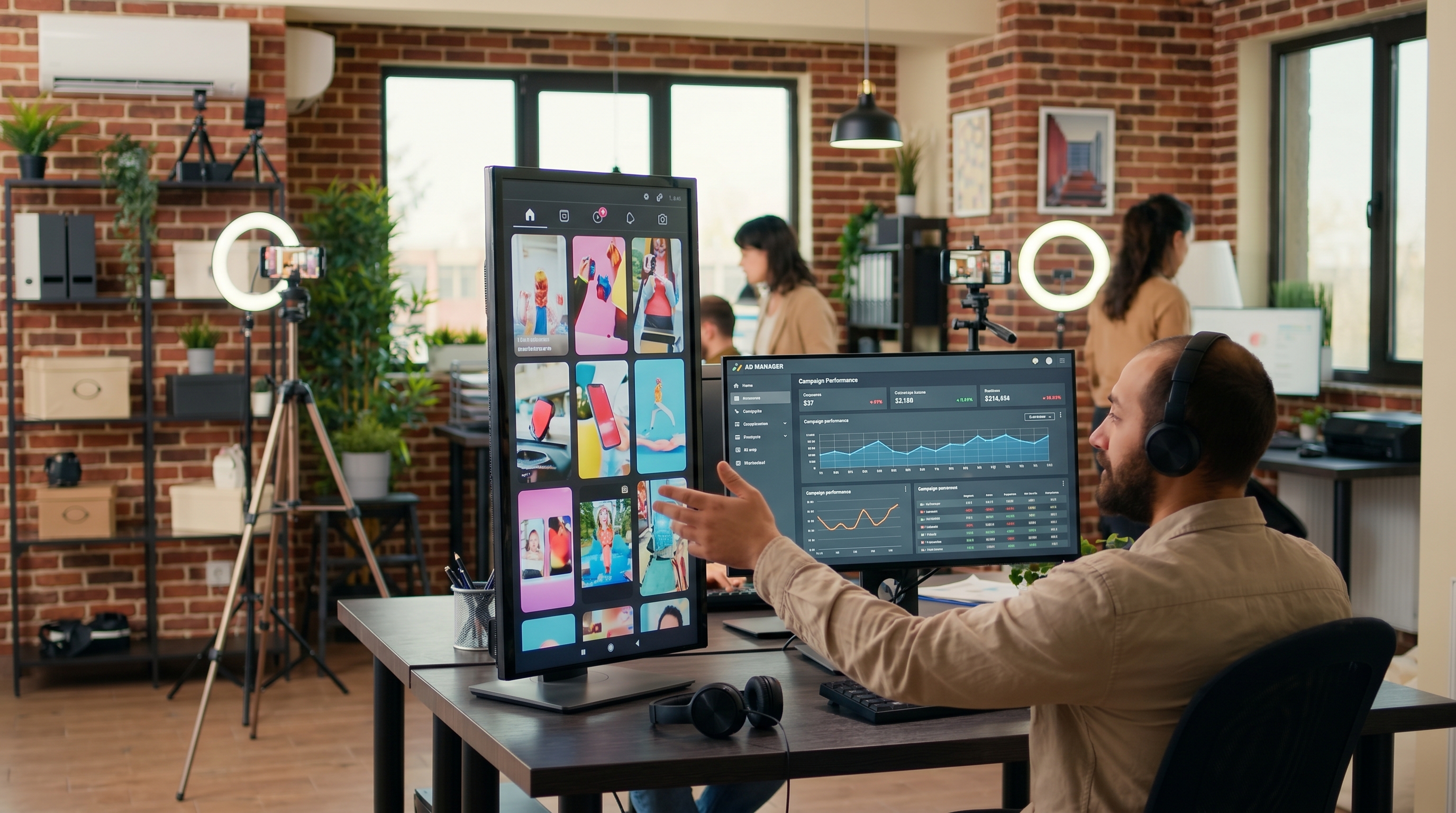
Why Is TikTok Commerce Redefining Profitability?
TikTok commerce offers unparalleled viral organic reach and high-converting paid social ads that can instantly launch a product into the mainstream. The platform’s algorithm excels at matching engaging video creatives with passionate buyers, resulting in lower customer acquisition costs than legacy channels. To succeed here, you must produce highly engaging, authentic video content that does not feel like a traditional advertisement. Capturing this organic energy is an incredible way to boost your earnings without spending heavily on ads.
How Do Meta and Google Ads Compare on Ad Spend?
Meta and Google Ads provide unmatched targeting precision and high-intent search traffic, but they require a higher up-front ad budget to optimize properly. Meta is exceptional for visual product discovery and retargeting campaigns, while Google excels at capturing customers who are already actively searching to buy your product. If you want to scale reliably, combining these two platforms helps diversify your traffic and protects your business from algorithm changes. Balancing your ad spend across these channels keeps your revenue stable and highly predictable.
Which Automation Systems Scale Your Dropship Margins?
Integrating advanced automation systems into your storefront dramatically increases your profit margins by reducing manual errors, lowering labor costs, and accelerating order processing speeds.
As your order volume increases, managing your store manually becomes practically impossible and leads to costly fulfillment mistakes. Implementing the right digital tools allows you to scale your daily order count without having to hire a large, expensive team. Let us look at how automated workflows can free up your time so you can focus on high-level growth.
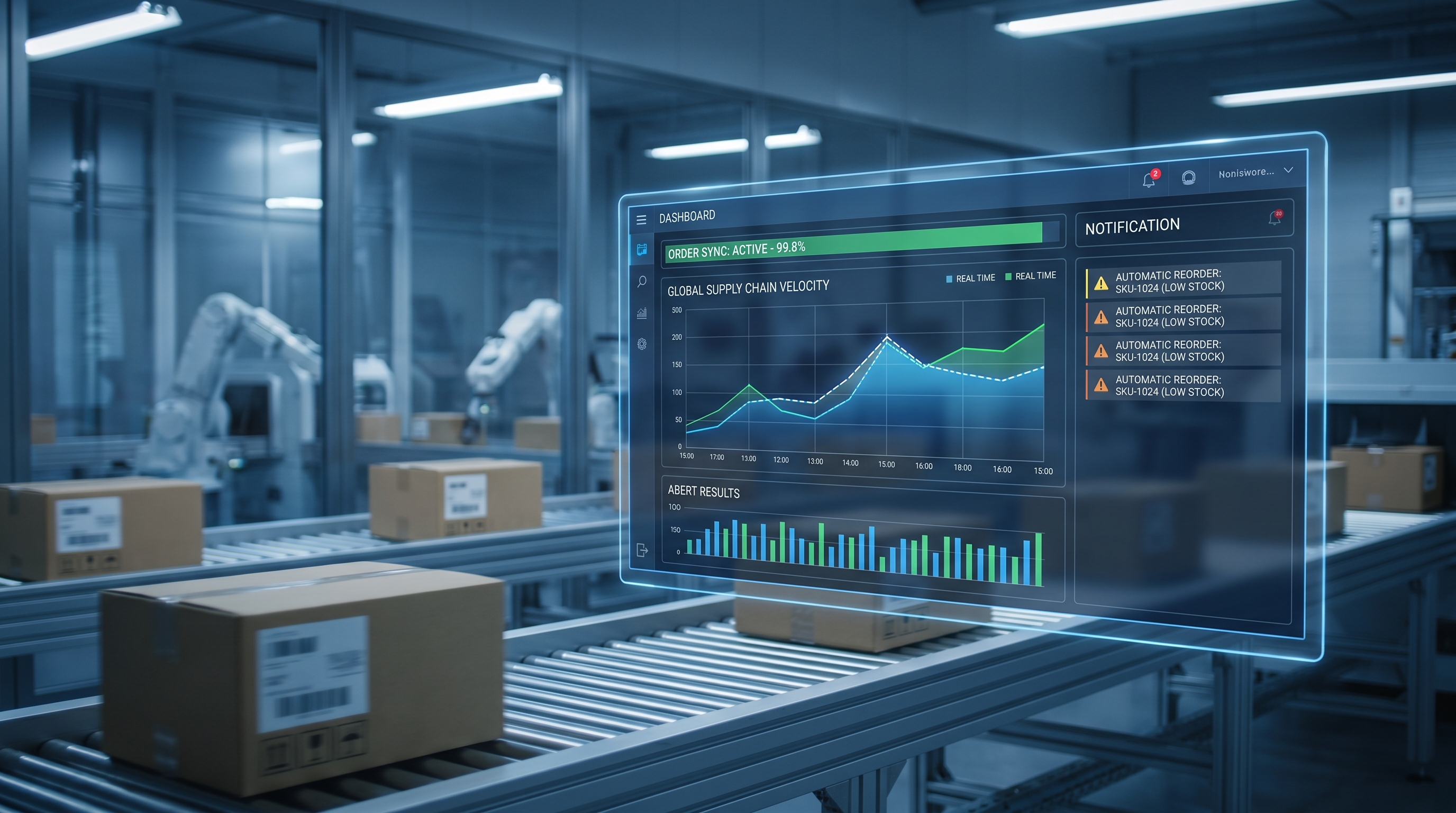
How Can Automated Syncing Reduce Fulfillment Time?
Automated order syncing instantly transmits customer details, shipping addresses, and product selections directly to your fulfillment providers the moment a sale is made. This completely eliminates manual data entry, ensuring that shipping labels are printed accurately and tracking codes are automatically emailed to your customers. By utilizing seamless global shipping networks, you can guarantee faster delivery times and build strong brand trust. Speeding up this entire process keeps your customers happy and reduces administrative support tickets.
Why Do Manual Supply Workflows Stifle Growth?
Relying on manual copy-and-paste order methods limits your daily output and increases the risk of shipping incorrect products to your clients. These delays create frustration, leading to chargebacks and negative reviews that can quickly get your merchant accounts suspended. If you spend all your time fixing shipping mistakes, you will have no energy left for marketing and product research. Transitioning away from manual management is a vital step toward protecting your business’s financial health.
Sellers on eBay or Facebook Marketplace can automate the listing side too: SuperDS imports products from the supplier page and lists them with AI-written titles and profit-based pricing.
How Does a Private Agent Maximize Dropship Earnings?
Partnering with a private agent maximizes your dropship earnings by unlocking direct wholesale factory pricing, establishing strict quality standards, and providing rapid, custom shipping routes.
While basic public platforms are fine for beginners, scaling to high volumes requires a more robust, professional supply chain solution. If you want to protect your profit margins and build a truly sustainable brand, having professional representation on the ground in China is invaluable. Let us explore how a dedicated sourcing partner can completely transform your e-commerce operations.
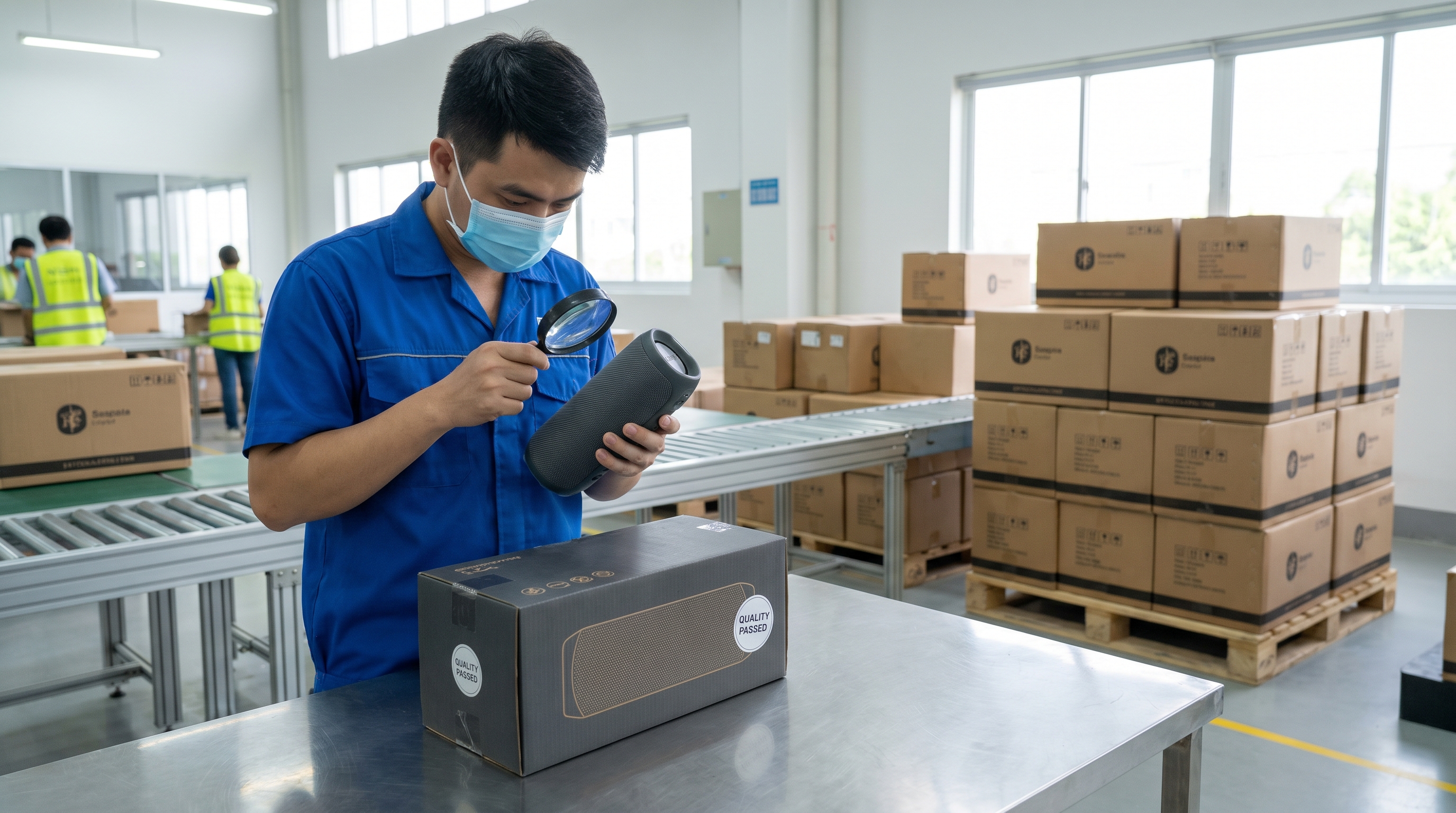
Why Does China Sourcing Defeat Standard Platforms?
Sourcing products directly from manufacturing hubs in China allows you to eliminate public marketplace markup fees and secure direct wholesale rates. When you work with a private dropshipping agent, you can negotiate custom packaging and private labeling options that are unavailable on general platforms. This direct relationship dramatically lowers your cost of goods sold, which instantly boosts your profit margin on every sale. Lowering your sourcing costs is the fastest way to increase your overall earning potential.
How Does Quality Control Stop High Return Rates?
Implementing rigorous quality control processes before packages are shipped prevents defective items from ever reaching your customers. When you run an e-commerce brand, a single bad batch of products can result in a wave of refunds and ruin your payment processor standing. Having a team physically inspect item quality, confirm specifications, and check packaging ensures your brand reputation remains spotless. Minimizing returns directly protects your cash flow and increases your net take-home earnings.
What Logistics Strategies Minimize Shipping Delay?
Working with a fast shipping dropshipping agent helps you manage route matching, tracking visibility, and dispatch control instead of relying only on cheap public postal services.Delays in shipping are the leading cause of customer complaints and chargebacks, which can destroy your business’s credit rating. A professional logistics partner negotiates priority space with premium carriers and manages customs clearance to prevent unexpected holds. Implementing reliable shipping strategies keeps your customers loyal and supports predictable business scaling.
Key Takeaway: Moving from public platforms to a private supply chain partner is the single most impactful transition a scaling dropshipper can make, as it secures wholesale margins, implements physical quality checks, and delivers consistent shipping speeds.
Conclusion
Sustaining a premium dropshipping business in 2026 relies on making a clear choice: either struggle with basic public platforms and thin margins, or build a professional supply chain that lasts. By taking control of your sourcing, automating your backend workflows, and protecting your product quality, you can build a highly profitable e-commerce asset. If you are ready to scale your revenue and build a lasting brand with a reliable partner on the ground, explore how Runtodropship can optimize your business from sourcing to fulfillment.
FAQ—Common Questions About Dropshipping Salary
Can I start dropshipping with a low budget in 2026?
Yes, you can absolutely begin dropshipping with minimal upfront capital. While paid advertising requires a budget, you can easily validate your business model by using organic traffic channels like TikTok and setting up a low-cost Shopify storefront. Keeping your initial software overhead low allows you to test products with very low financial risk.
What’s the best way to scale my profit margins quickly?
The most effective way to boost margins is to transition to direct manufacturer sourcing. By working with a private partner, you cut out marketplace middleman markups and secure true wholesale pricing on your products. This direct relationship instantly increases your profit margin without requiring you to raise your retail prices.
How do I know if I should quit my day job for e-commerce?
You should only transition to full-time e-commerce once your store’s net profit consistently matches your salary for at least three to six months. This track record proves that your product selection and marketing channels are stable and not just a temporary trend. Having a reliable cash reserve also protects you during seasonal retail fluctuations.
Can I run a successful store without automated systems?
No, manual workflows will quickly limit your growth and lead to operational errors as your sales increase. Processing more than ten orders a day manually is incredibly time-consuming and leads to costly address and shipping mistakes. Implementing automatic syncing keeps your business highly efficient and allows you to focus on high-level strategy.