

Shopify Dropshipping Custom Inserts Logistics is the process of sourcing, storing, assigning, placing, and checking branded cards, stickers, or small printed materials for the correct Shopify orders before dispatch. For a growing store, these lightweight brand touches are usually easier to test than fully printed boxes because they do not require you to redesign the entire shipping package.
Quick Answer: Start with one evergreen insert that has one clear job, keep the outer mailer or box standard, and document exactly which orders receive the card. Move to custom boxes only after your product dimensions, reorder demand, and packing method are stable enough to justify a larger packaging commitment. The main risk is not the print price; it is sending the wrong, outdated, or damaged insert to a customer.
Picture a Shopify seller whose product has begun generating repeat orders. The generic parcel no longer matches the storefront, but a large run of printed boxes would lock cash into one size and one design. A thank-you card or care card looks like the obvious middle step. Then practical questions appear: Who prints it? Where is it stored? How does the packing team know which SKU or country receives it? What happens when a promotion expires? A useful insert program answers those questions before the first stack of cards reaches the packing table.
Shopify Dropshipping Custom Inserts Logistics
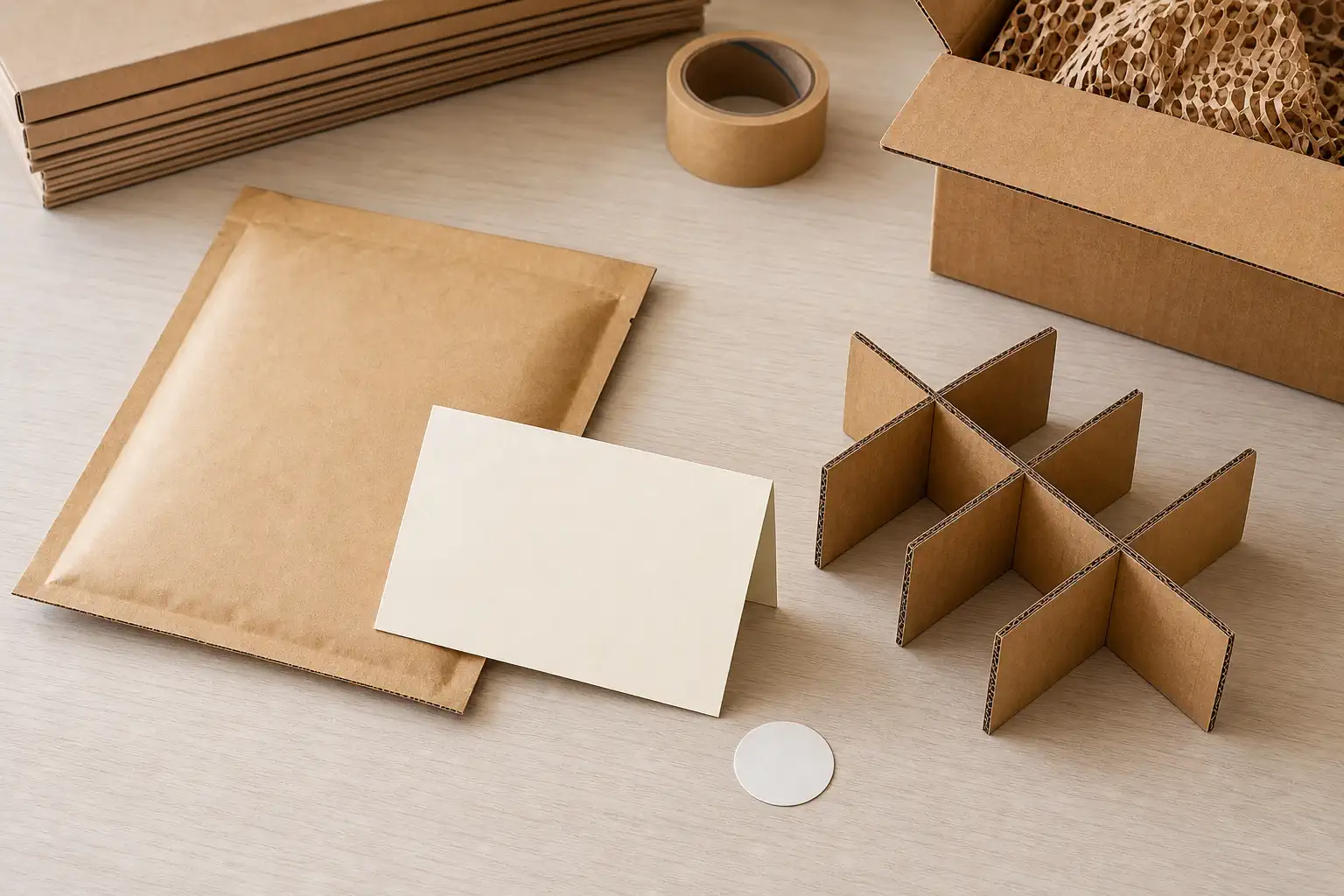
The workflow covers printed marketing or information pieces placed inside an outbound parcel, not foam trays, molded pulp, or protective structures fitted around a product.
A structural insert protects the product inside a box. A printed package insert carries a message such as a thank-you, care instructions, or a QR code. This article focuses on the second type.
The card is only one part of the system. A reliable setup also needs approved artwork, a print specification, storage, an order rule, a placement instruction, a final check, and a replenishment trigger. If any one is missing, a low-cost card can create wrong offers, dead QR codes, bent corners, or inconsistent customer experiences.
For stores that already have repeatable orders, a private dropshipping agent workflow for Shopify orders can connect the store’s SKU and order data with supplier coordination, packaging instructions, dispatch, and tracking write-back. The insert remains a small physical component, but the order rule behind it must be as clear as the rule for selecting the product variant.
What counts as a printed insert?
Common options include:
- Thank-you cards with an evergreen brand message.
- Product-care or setup cards that prevent avoidable confusion.
- Stickers or small branded gifts with no product-performance claim.
- QR cards leading to a support, registration, review, or reorder page.
- Campaign cards for a defined product, market, or date range.
Your packing specification should also state whether invoices or supplier promotions must be removed before sealing.
Choose the Right Execution Method Before Printing Inserts
Before ordering printed inserts, decide who will control the physical execution, because dropshipping supply chain execution determines whether the right insert actually reaches the right parcel. The wrong choice can turn a simple card into a packing error, especially when different SKUs, countries, languages, or campaign dates require different versions.
A printer can produce the card, but it does not know which Shopify order should receive it. A normal supplier may agree to place a card inside the parcel, but that instruction can become unreliable when there are multiple insert versions, expired promotions, or product-specific care cards.
There are three common execution options:
| Execution method | Best for | Main limitation |
|---|---|---|
| Printer only | Producing approved insert stock | Does not control order-level placement |
| Supplier-side placement | One simple evergreen card for one stable product | Weak version control when SKUs, languages, or campaigns change |
| Private-agent workflow | Multiple SKUs, insert versions, countries, or packing rules | Requires clear order rules and insert stock control |
This is where a private-agent workflow matters: the insert is no longer just a decoration. It becomes an order-level packing rule. It becomes an order-level packing rule. The agent must match the correct insert ID to the Shopify order, store the approved version, remove supplier promotions, check placement before sealing, and keep the dispatch record consistent with the actual parcel.
Custom Inserts vs. Custom Boxes: Choose the Smaller Commitment First
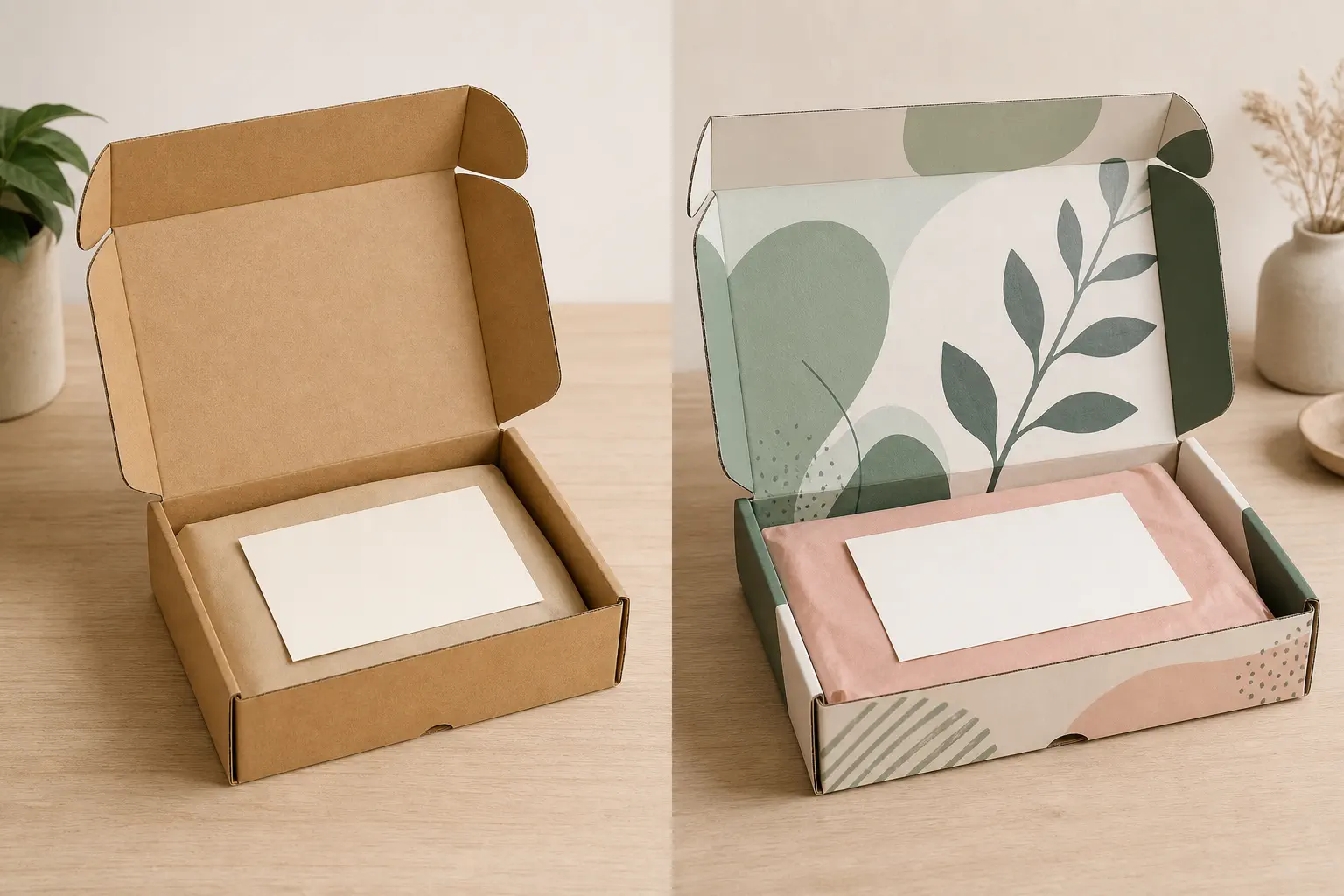
Custom inserts are usually the better first step when you want a branded unboxing touch without committing to a new box size, print run, and packing structure.
A card can work across several products that share the same message. A custom box must fit the product, protective material, and shipping method closely enough to pack and travel well. If your winning SKU changes, a generic thank-you card may still be usable; a product-specific box may not be.
| Decision factor | Printed insert with stock packaging | Fully custom box |
|---|---|---|
| Primary job | Add a message or brand touch | Change the complete presentation and structure |
| Product dependence | Can be evergreen across several SKUs | Usually tied to dimensions or a product family |
| Storage exposure | Flat, compact printed stock | More space and more size-specific inventory |
| Change risk | Artwork can be replaced in a smaller component | Old boxes can become unusable after a size or design change |
| Packing change | Adds a placement and check step | May change assembly, protection, sealing, and shipping dimensions |
| Best starting condition | Stable orders but evolving packaging needs | Stable product, dimensions, presentation, and reorder demand |
| Shipping impact | Usually does not change parcel size or carrier route | May change parcel dimensions, chargeable weight, storage space, and route feasibility |
The table does not mean cards are always cheap or boxes are always expensive. The real comparison is logistics commitment. A printed insert usually adds a placement step without changing the outer parcel size. A custom box may change storage space, packing speed, carton fit, dimensional weight, and even which shipping route remains cost-effective.
That is why the first question is not only “Which option looks better?” The safer question is: how much physical inventory, packing behavior, and shipping cost become locked in if the product, offer, artwork, or package size changes?
Match the insert to one customer job
Do not ask one small card to thank the customer, tell the founder story, explain product care, request a review, promote three products, display five social channels, and carry a coupon. Choose one primary job and, at most, one supporting action. In branded dropshipping, a care card may reduce uncertainty after unboxing, a thank-you card may reinforce the store’s voice, and a QR card may give the buyer a clean next step.
Key Takeaway: Use an insert when the message is stable but the product or packaging system is still evolving. Choose a custom box when the physical package itself has become a stable, necessary part of the product experience.
Build an Insert Brief That Works at the Packing Table

An effective insert brief specifies how the card must print, fit, scan, store, and enter the parcel—not just how it should look on screen.
Begin with the actual package. Measure the usable flat area after the product and protective materials are inside. A card that fits an empty mailer may curl, fold, or cover necessary product information once the parcel is packed. Decide whether it lies on top, sits beneath tissue, or goes inside a product box. The placement should be visible and repeatable without forcing the packer to improvise.
Your brief should record:
- Final trim size and orientation.
- Paper or card stock, finish, and whether the surface must be writable.
- One-sided or two-sided printing.
- Approved artwork filename and version date.
- Required safe margins, bleed, and fold direction if applicable.
- Exact QR destination, coupon terms, and expiry rules.
- Eligible products, variants, countries, languages, and customer groups.
- Placement order relative to the product, tissue, manual, and protective material.
- Packing quantity per parcel.
- Sample approval and reprint process.
Proof the physical action, not only the artwork
Check the physical sample for spelling, color, trim, scuffing, and paper feel, then place it into a fully packed parcel. Scan every QR code from the printed sample rather than the PDF. Confirm that the landing page is mobile-friendly and that any offer terms match the destination. If the card contains care guidance, the approved product information should be the source of truth.
Run a small packing test with the actual product and mailer. Watch whether the card sticks to a glossy surface, slides under the product, catches on tissue, or requires two hands to orient. These details determine whether the instruction will remain reliable when daily volume rises.
Plan MOQ, Storage, and Reorder Points Before Printing
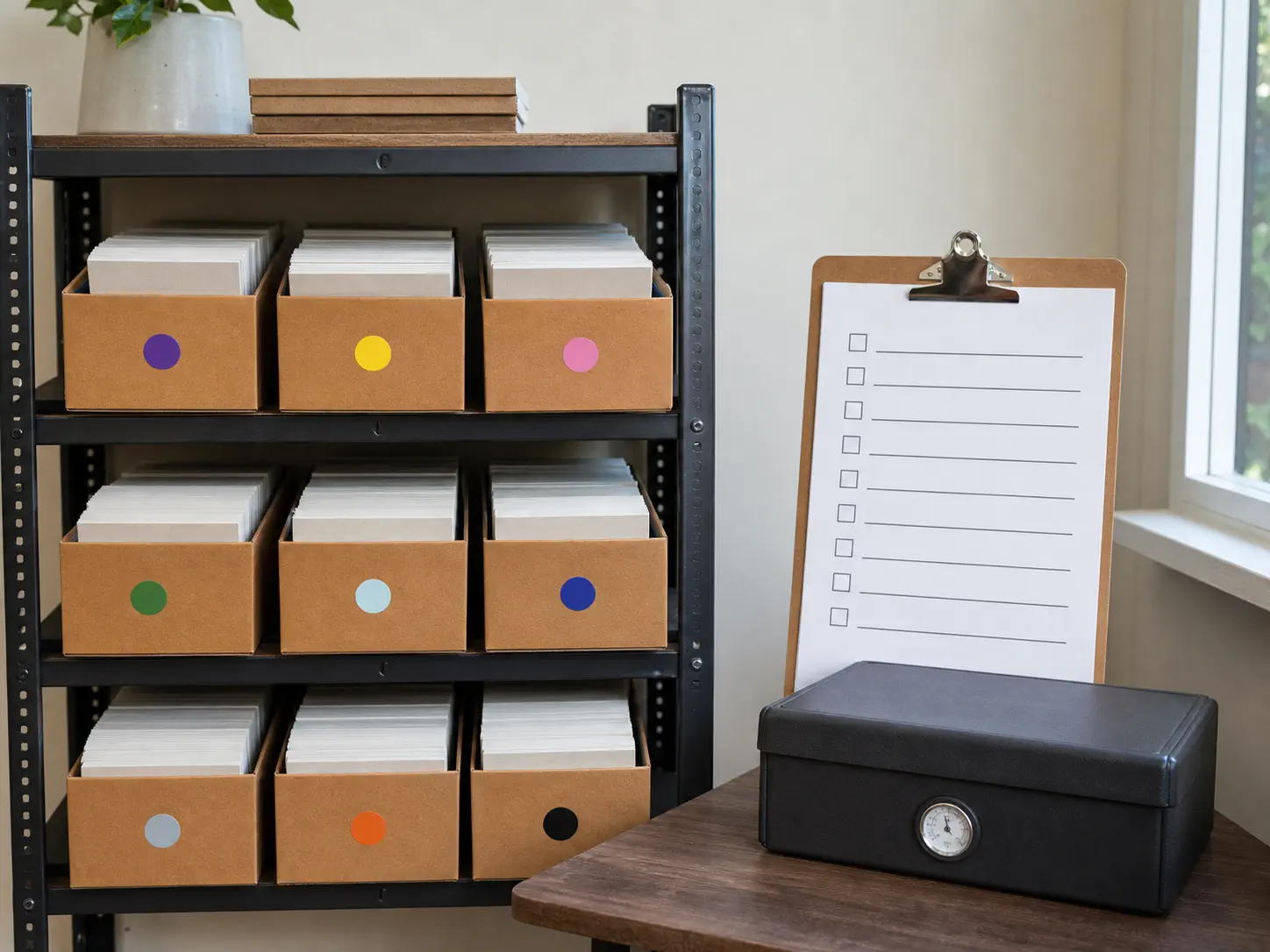
Your safest order quantity is the amount you can consume before the message, product, or campaign becomes obsolete, with enough buffer to reorder without interrupting packing.
Printer minimums vary, so do not treat a quoted minimum as the quantity your business should buy. Estimate consumption by eligible orders, not total store orders. If only one SKU or one country receives the card, a large share of the print run may sit unused even while the store grows.
Use a simple planning model:
usable stock = delivered quantity - damaged stock - approval samples - safety reserve
expected consumption = eligible orders × inserts per eligible order
reorder point = expected consumption during print and delivery lead time + safety reserve
This is a planning method, not a universal quantity recommendation. Your actual buffer depends on demand variation, printer reliability, transport method, campaign dates, and how quickly you can approve a replacement version.
Keep packaging stock physically controlled
Store flat printed materials away from moisture, crushing, direct sunlight, and open packing debris. Give each approved version a labeled bin or shelf position. The label should show the insert ID, version, eligible order rule, and status. Separate active, future, and quarantined stock so an old card cannot drift back onto the packing table.
Do not mix two visually similar language or campaign versions in the same open bin. Count stock by bundles or sealed packs when possible, then reconcile expected use against eligible orders. A large unexplained difference may indicate double insertion, missed insertion, damage, or an incorrect order rule.
Key Takeaway: Buy against expected eligible-order consumption, not an attractive printer price break. Excess stock is not a saving when a dead offer, old URL, or changed product makes the remaining cards unusable.
Route the Correct Insert to Every Shopify Order
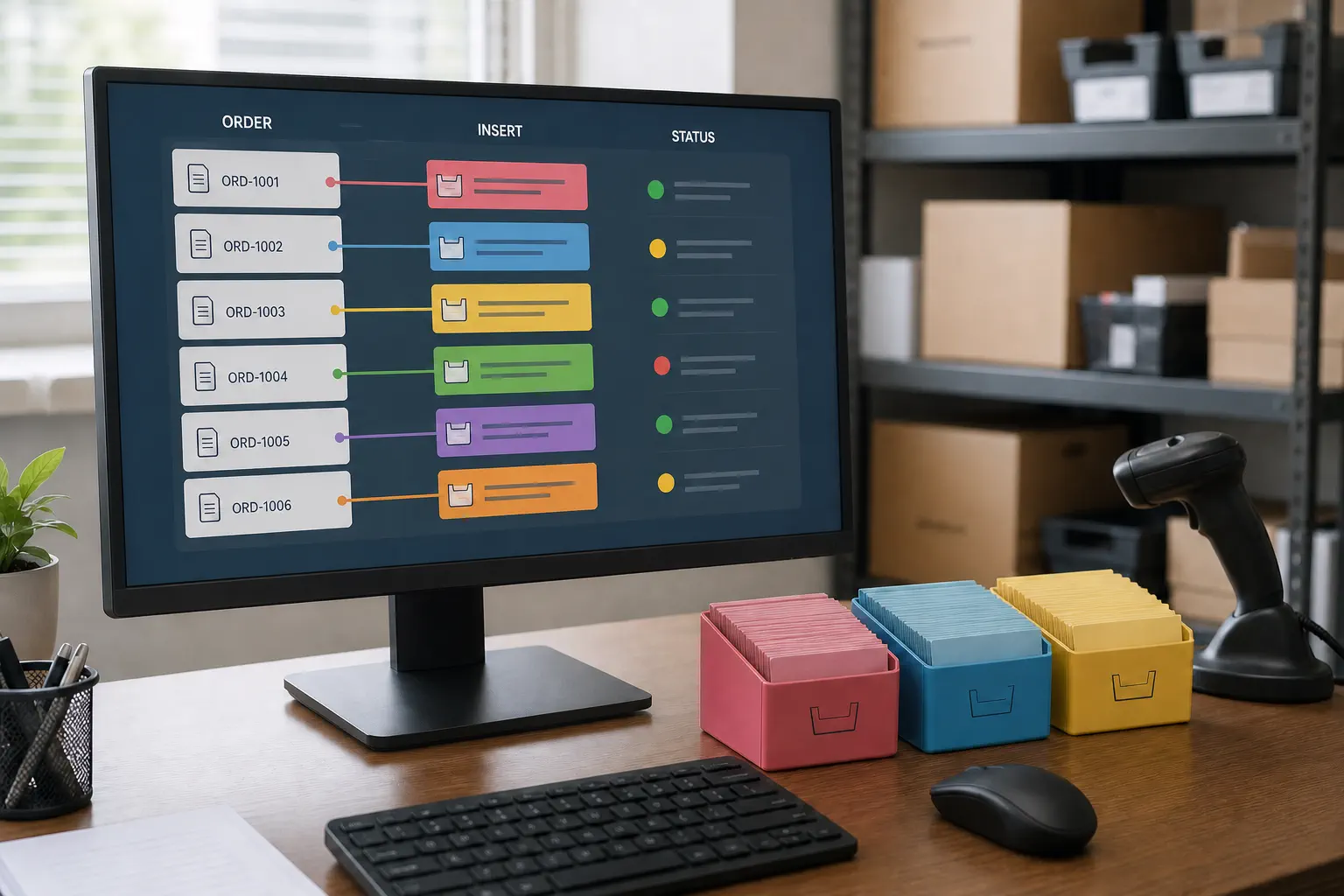
The correct card should be assigned by a documented order rule that the digital order record and physical packing station can both recognize.
An evergreen thank-you card may apply to every eligible order. Other inserts may depend on SKU, variant, bundle, customer type, destination, language, or campaign date. As soon as you have more than one version, “add the branded card” is no longer a complete instruction.
Build a routing matrix like this:
| Order condition | Insert ID | Quantity | Validity rule | Exception action |
|---|---|---|---|---|
| Any eligible retail order | EVER-01 | 1 | No campaign date | Hold if stock is unavailable |
| Product family A | CARE-A2 | 1 | Current product instructions | Hold if version does not match SKU |
| French-language order | FR-THANK-01 | 1 | Approved French copy | Use no substitute language |
| Seasonal campaign order | HOL-03 | 1 | Orders placed within approved dates | Quarantine after end date |
The insert ID can appear in a pick note, packing instruction, order tag, or another controlled field used by your order system. The important point is that the packer sees one unambiguous instruction and the physical bin carries the same ID.
Treat version changes like SKU changes
When artwork changes, create a new version rather than silently replacing the file under the same name. Record the activation date, affected products, old-stock action, and approver. If a QR destination changes but the printed code remains valid through a controlled redirect, document who owns that redirect and how long it must stay active.
Never rely on memory to stop an expired campaign. Use a clear deactivation rule, remove the bin from the active pick face, and quarantine remaining stock. That mundane little handoff is what prevents a customer from receiving last month’s promotion after your storefront has moved on.
Add the Insert to the Final Packaging Check
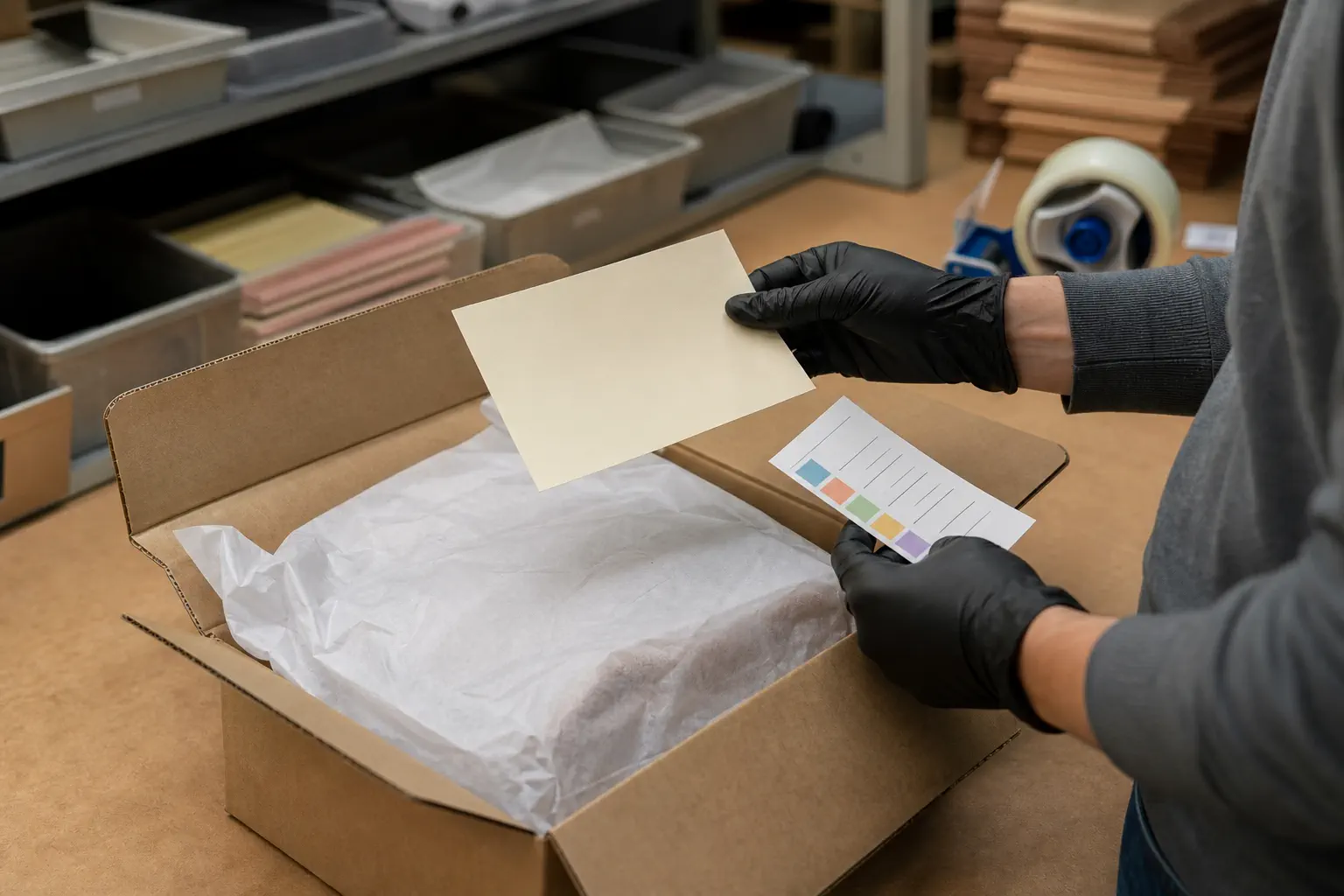
The insert placement checkpoint should be named before sealing, with the card identity, quantity, condition, and orientation confirmed against the order instruction.
A practical pack sequence is:
- Scan or open the order and confirm the physical product and variant.
- Read the insert instruction and retrieve the matching insert ID.
- Check the card for visible print damage, bent corners, or contamination.
- Place the specified quantity in the approved position and orientation.
- Confirm that manuals, safety information, and protective materials remain complete.
- Complete the packaging check, seal the parcel, and release it for dispatch.
The insert check should sit inside the same pre-dispatch quality control process as product, variant, accessory, and packaging checks. It sits inside the same release process. A beautiful thank-you card does not compensate for a missing cable, wrong size, leaking bottle, or poor protective packing.
Define exceptions before they happen
Define an exception action for when the correct card is out of stock, damaged, or unclear. Substituting an old campaign or a different language may create a worse customer experience than sending no promotional insert. The safe default is often to hold the order briefly for a decision or to ship without the optional card if the seller has approved that fallback in advance.
For required care or setup information, “ship without it” may not be acceptable. Mark required information separately from optional marketing material, and keep the approved fallback available only when it is accurate for the product and destination.
Key Takeaway: Make the insert a controlled packing instruction, not a last-second decoration. The right fallback depends on whether the card is optional marketing or necessary product information.
Measure Insert Performance Without Assuming ROI

Measure an insert with a traceable action and a defined test window instead of assuming that a more polished parcel automatically creates loyalty or profit.
Choose a metric that matches the card’s job. For a care card, review support questions related to the included instructions. For a reorder card, use a dedicated landing page, code, or QR parameter. For a review request, track completed actions under the platform’s applicable rules. Record print, freight, storage, handling, and unused-stock cost before judging the result.
Avoid changing the offer, card design, audience, and landing page at the same time. A simple version log helps you identify what actually changed. If order volume supports a responsible comparison, keep the eligible groups and time periods reasonably comparable and avoid claiming causation from a small or biased sample.
A real example: The Drinks List keeps the gesture simple
Shopify’s overview of packaging insert examples describes The Drinks List, a boutique wine ecommerce business, including a handwritten note with each purchase. The useful lesson is not a promised percentage or revenue result—Shopify does not provide one for this example. It is that a focused thank-you can be a complete insert strategy when it fits the brand and can be executed consistently.
That restraint matters. A real example strengthens the decision only when you preserve what the source actually shows. In this case, it shows a specific practice, not proof that every handwritten note increases repeat purchases.
Use an insert scorecard
Review four categories after the test period:
- Execution: Was the correct version placed in eligible orders?
- Engagement: Did the tracked action occur often enough to justify another test?
- Customer clarity: Did the card create or resolve support questions?
- Inventory: How much stock was consumed, damaged, or made obsolete?
A broader store growth case can also show why packaging, QC, sourcing, and shipping need to work together instead of being treated as separate fixes.
Continue, revise, or stop based on the combined result. A card can attract scans but still fail if the offer creates confusion or the stock expires before use.
Know When to Upgrade From Inserts to Custom Boxes
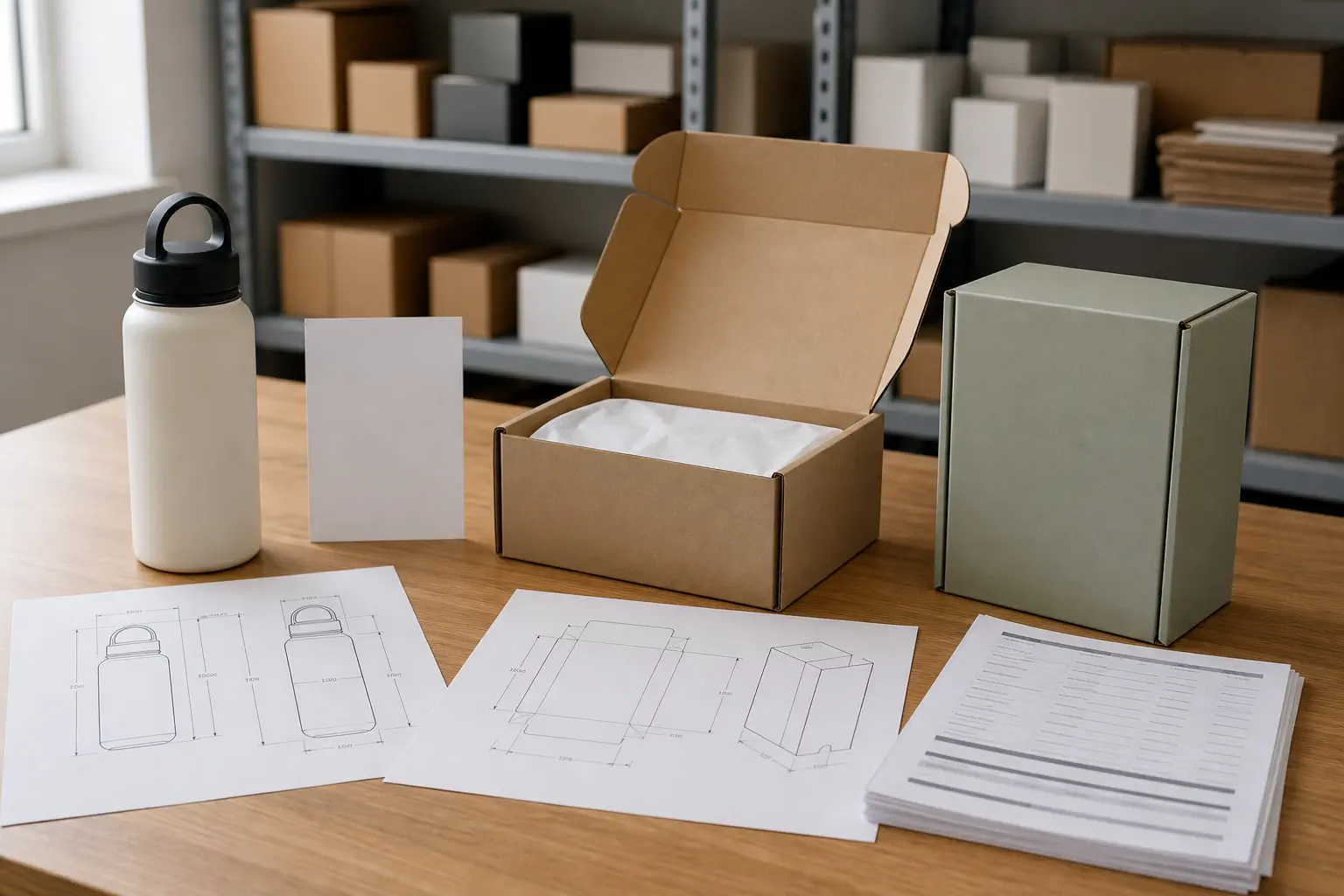
Upgrade to custom boxes when the product, stable dimensions, protection method, order demand, and visual system make the box likely to remain useful through its expected inventory cycle.
Signs that you may be ready include:
- One product or product family has repeatable dimensions and order demand.
- The current stock package creates a genuine fit, protection, or presentation problem.
- Samples have passed fit and shipping-condition checks.
- You can forecast box consumption and storage needs with reasonable confidence.
- The artwork and regulatory information are unlikely to change before stock is used.
- The packing team can assemble, protect, seal, and label the new format consistently.
Custom boxes are not a graduation badge, and white label dropshipping does not require every seller to move into heavy packaging customization before the product and order volume are stable. If a clean stock mailer plus a useful care card meets the customer and product need, there is no operational reason to add complexity. Conversely, a fragile kit, premium set, or tightly arranged multi-item product may eventually need a purpose-built structure that a loose card cannot provide.
When the decision moves beyond a small printed touchpoint into product-specific packaging, labeling, samples, and repeatable branded order execution, private-label dropshipping support becomes the more relevant implementation path. That step should begin with the product and packing specification, not with decorative finishes.
A private label success case is useful only when the seller already has stable demand, clear product standards, and a reason to move beyond light insert-based branding.
Use a phased packaging ladder
A sensible progression is:
- Clean neutral packaging with supplier promotional material removed.
- One evergreen printed insert or sticker with a controlled packing rule.
- Product-specific care, setup, or campaign versions with routing and measurement.
- Custom inner packaging or a custom box after fit, demand, and storage are stable.
The goal is not maximum customization; it is a system your store can afford, repeat, and keep accurate.
Key Takeaway: Move to custom boxes only when a physical packaging need and stable consumption justify them. If the main need is still communication, a well-controlled insert is the leaner tool.
FAQ
Can I add custom inserts without ordering custom boxes?
Yes. A printed card, sticker, or care guide can be placed inside clean stock packaging as long as the supplier or private-agent workflow can store it, assign it to the right orders, and verify placement before sealing.
Can my dropshipping supplier add custom inserts to Shopify orders?
Sometimes, but only if the instruction is simple and stable. If different SKUs, countries, languages, or campaign dates need different inserts, the safer setup is a controlled private-agent workflow with insert IDs, stock control, packing rules, and final checks.
Do custom inserts increase shipping cost?
Usually not in a major way if the insert is light, flat, and placed inside the existing parcel. Custom boxes are more likely to affect shipping cost because they can change parcel dimensions, chargeable weight, storage space, and packing method.
How do I prevent the wrong insert from being packed?
Give each version a unique ID, map that ID to clear order conditions, label the physical bin, and check the card during final packing. Remove expired versions from the active packing area rather than relying on memory.
What happens when a QR code or offer expires?
Deactivate the insert, quarantine remaining stock, and keep a controlled redirect only if it still leads to an accurate and appropriate destination. Never continue packing a card whose promise or product information is no longer valid.
Conclusion
Custom inserts can give a growing Shopify store a deliberate physical brand touch without forcing an early commitment to fully printed boxes. The winning version is not the fanciest card. It is the one with a clear job, an approved specification, a controlled inventory position, an exact order rule, a reliable packing check, and a measurement plan that does not invent success.
If you already have repeatable orders and need help coordinating insert sourcing, version control, packaging confirmation, and order-specific placement, Runtodropship can support that work through one accountable private dropshipping agent workflow. We believe branded order execution should grow in controlled stages, not through expensive guesses. Send your product link, current packaging photos, target markets, and insert idea to discuss a sample and packing test before committing to a full print run.