
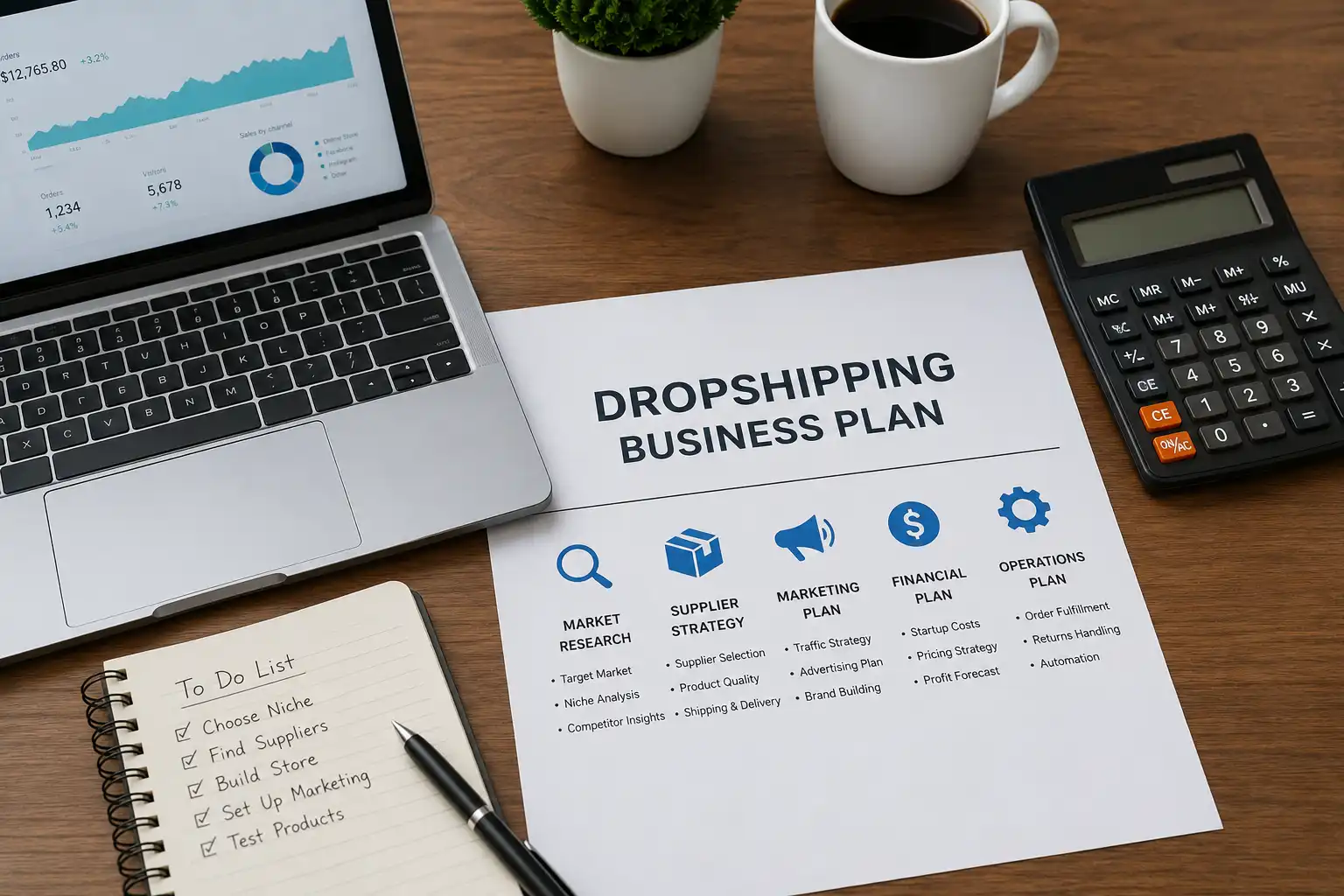
A comprehensive dropshipping business plan is a strategic document that outlines your store’s operational goals, sourcing methodologies, marketing tactics, and financial forecasts. You spend weeks designing a beautiful storefront, adding trending products, and launching high-budget ad campaigns. Within days, you are met with zero conversions, unpredictable shipping delays from unvetted suppliers, and a rapidly draining bank account because you acted on guesswork instead of a system. By mapping your strategy before spending a single dollar on marketing, you establish a resilient foundation for long-term growth.
Why do you need a dropshipping business plan?

A dropshipping business plan is essential because it acts as a strategic blueprint, defining your target niche, supply chain operations, and cash flow requirements. It eliminates guesswork, minimizes operational risks, and provides a clear path to scale your business sustainably while proving viability to potential financial partners.
Think about it: starting your business journey without a roadmap is like sailing in the dark. You risk crashing into logistical or financial barriers that could have been avoided with simple foresight.
How does a roadmap prevent early business failure?
Most e-commerce stores fail within their first year due to unstructured scaling, cash flow exhaustion, or poor customer retention. To build a sustainable foundation, you must validate every structural element before investing capital. When you understand the dropshipping business model explained down to its core mechanics, you can anticipate friction points and design systems to bypass them.
Building a roadmap helps you address the primary operational failures:
- Unvalidated product selection: Testing market demand before committing significant marketing capital.
- Inconsistent carrier delivery: Securing trusted shipping lanes to prevent shipping delays and customer complaints.
- Cash reserves exhaustion: Maintaining clear cash allocations for ad testing, payment processing reserves, and product costs.
What elements must your business executive summary contain?
The executive summary introduces your brand’s core mission, target audience, and operational framework.If you need a general business plan template, the U.S. Small Business Administration provides a useful reference for structuring executive summaries, company descriptions, market analysis, and financial planning. It should clearly outline your unique selling proposition (USP), your choice of niche, your fulfillment partnerships, and your projected scaling milestones over the next twelve months.
Key Takeaway
Writing a business plan shifts your mindset from a casual hobbyist to a professional enterprise owner, allowing you to bypass typical supply chain bottlenecks before they harm your reputation.
How do you map out an e-commerce store roadmap?
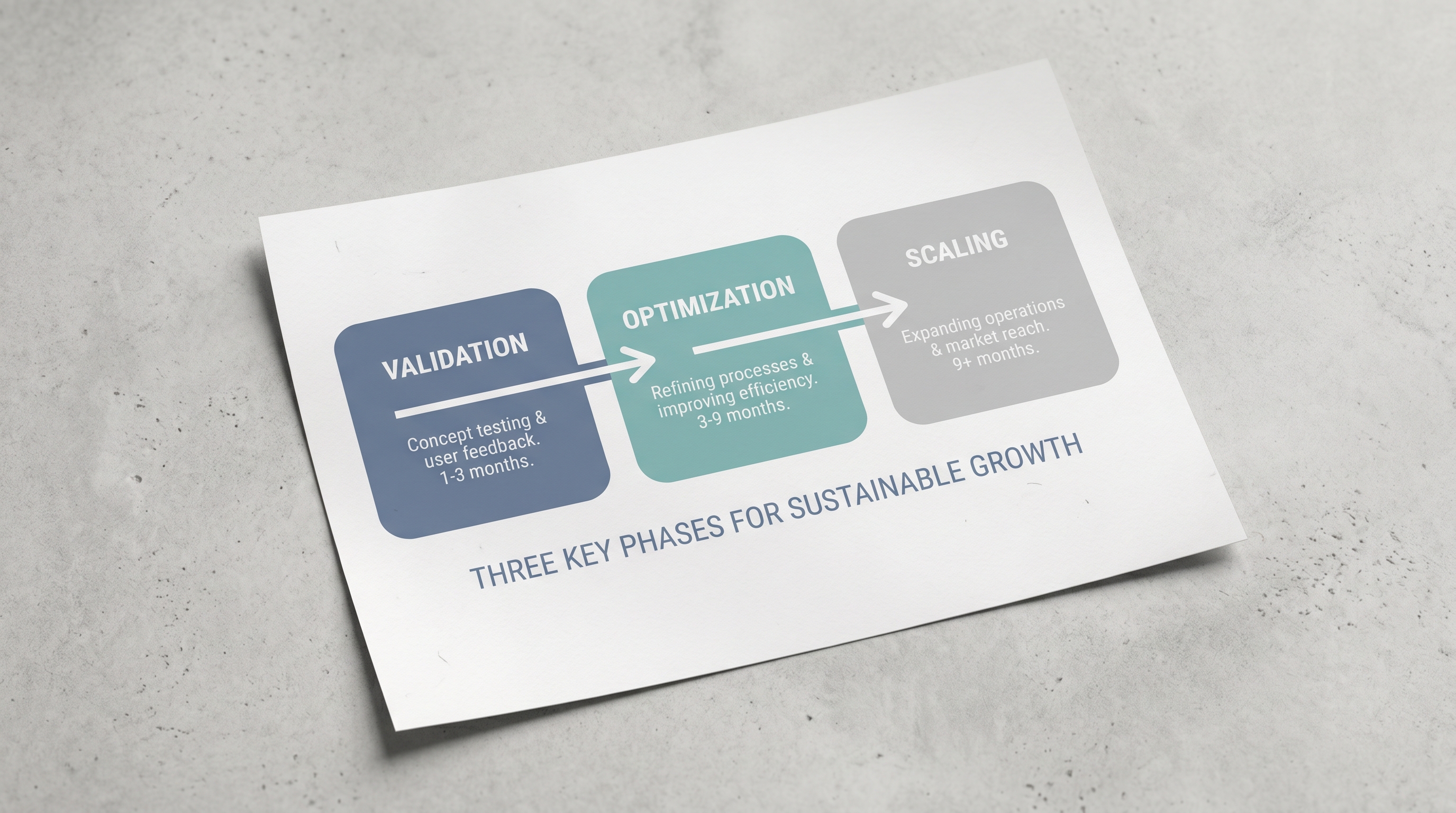
Mapping out an e-commerce store roadmap requires dividing your journey into three structured phases: market validation, store optimization, and automated scaling. This phase-based progression protects your startup capital, stabilizes your supply chain, and ensures your customer acquisition processes are optimized before scaling your advertising budgets.
Store optimization may also include a platform decision when your current system limits apps, data control, integrations, or backend workflow. If you are comparing Shopify, WooCommerce, or other options against BigCommerce, review BigCommerce alternatives for dropshipping store migration before rebuilding the storefront.
Store optimization should include URL hygiene, not only themes, products, and apps. If you change product titles, collections, pages, or blog URLs inside Shopify, use this Shopify handle and URL structure guide to avoid broken links, messy redirects, and unstable storefront paths.
Here is the catch: you cannot scale what you have not yet proven to work on a micro level. Progressing sequentially through designated phases is the safest path to success.
What are the critical phases of store validation?
Validating your concept prevents wasted advertising spend on products with no market demand. Before spending capital on custom themes or high-budget ads, use a structured e-commerce startup guide to systematically test your storefront and confirm consumer interest.
During validation, focus on meeting these key performance indicators:
- Ad CTR (Click-Through Rate): Target a CTR above 2% on your testing campaigns to confirm product appeal.
- Average Session Duration: Maintain user engagement over 2 minutes to verify landing page quality.
- Healthy Profit Margins: Confirm your product has a perceived value high enough to support a 30% net margin.
How to establish sustainable scaling milestones?
Scaling too fast can break your cash flow and operations if you lack the infrastructure to handle a sudden influx of orders. Divide your milestones into clear, sequential blocks: proof of concept at 10-50 sales, supplier consolidation, automation integration, and custom brand packaging.
How do you select a profitable sales niche?
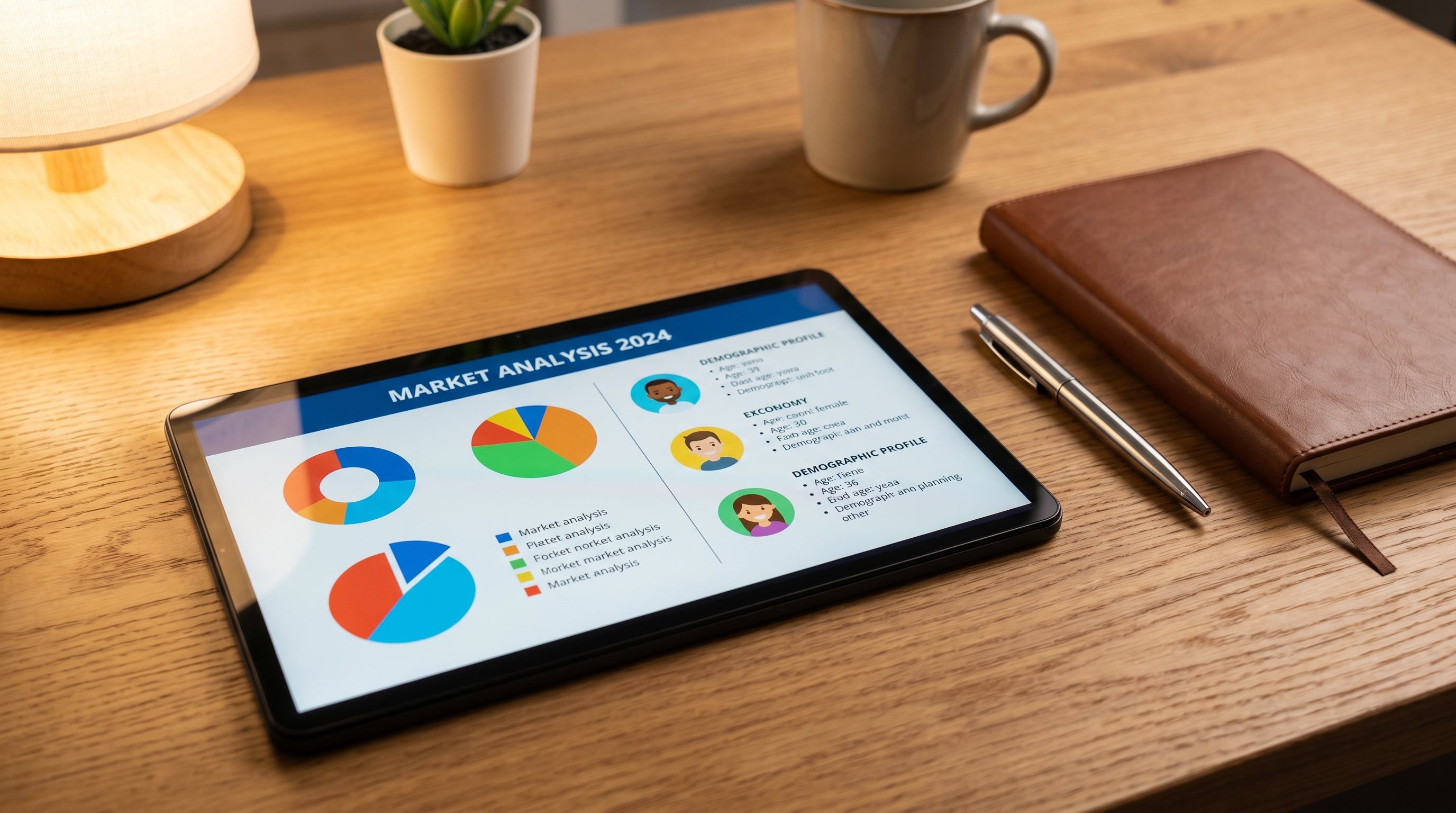
Selecting a profitable sales niche involves evaluating average order value, search volume, competitor ad strategies, and target audience pain points. Focus on enthusiast hobbies or problem-solving items with a high perceived value, allowing for at least a three-to-four-times markup on your base wholesale product cost.
The hard truth is: trying to sell everything to everyone guarantees you will sell nothing to anyone. You must focus your energy on a specific, high-intent audience.
How do you analyze market demand and audience pain?
To find a profitable niche, you must identify a target audience with high purchase intent and underserved needs. Look for enthusiast niches, specialized hobbyist gear, or practical products that solve a frustrating everyday problem. Analyze forums, social media groups, and search trends to uncover actual challenges customers face with existing marketplace options.
How do you evaluate your primary competitors?
Before entering a niche, perform a rigorous competitive analysis. Locate the top three players in your chosen market and dissect their operations. Analyze their pricing structures, inspect their social media ad libraries to see what creatives they run, and place test orders to evaluate their shipping times and packaging quality. This research reveals service gaps—such as poor customer support, slow delivery times, or weak branding—that your business can exploit.
How to define your target customer demographic?
Knowing your target customer’s exact profile ensures your marketing campaigns hit the mark. Define their age, gender, geographic location, average income, and social media habits. More importantly, map their psychographics: what motivates their purchasing decisions, what concerns they have when buying online, and what level of quality they expect.
Geography is part of the operating model, not just an ad-targeting field. Payment habits, tax and registration questions, delivery expectations, supplier choices, and sales channels differ by market. Build the launch plan for the country you will actually serve—for example, dropshipping in the Philippines, starting dropshipping in India, launching a dropshipping business in the UK, or building a dropshipping store in Australia—instead of copying one global setup into every market.
What is your dropshipping supplier selection strategy?

A successful dropshipping supplier selection strategy prioritizes working with private agents who source directly from factories over public platforms. This approach ensures consistent product quality control, lower wholesale cost of goods, faster specialized shipping lines, and the ability to scale your brand with customized packaging.For this section of your plan, define whether you will rely on public suppliers or work with a dropshipping sourcing agent in China to compare suppliers, verify samples, and confirm repeat-order stability before scaling.
Now, let’s be honest: the traditional way of picking cheap public suppliers is a fast track to business ruin. Slow shipping and poor quality control will destroy your customer trust before you can scale.
Why do public platforms fail scaling brands?
While public platforms are acceptable for initial product testing, they are highly risky for scaling brands. Public suppliers often display virtual stock that does not exist, leading to sudden order cancellations. Furthermore, they lack standardized quality control, meaning your customers frequently receive defective or incorrectly sized products. The resulting chargebacks, customer support backlogs, and payment processor freezes can easily sink an otherwise profitable brand.
How do you verify private dropshipping agents?
To successfully scale, you must work with a dedicated, on-the-ground private dropshipping agent who can source directly from factories at B2B wholesale prices. Vetting your partners through a list of the best dropshipping suppliers is a critical safeguard for your customer satisfaction metrics.
A supplier list is only a starting point. Use these questions to ask a dropshipping agent before hiring to compare responsibility, product checks, route logic, costs, systems, escalation, and after-sales support against the same evidence standard.
How do you establish strict quality control protocols?
A professional supplier relationship must include structured quality control (QC) protocols before any parcel is dispatched. Your agent should execute standard inspection checklists, quarantine defective units, and share clear photos or videos of the batch for your approval. This active screening process stops product issues at the warehouse level, preventing them from turning into costly customer complaints or payment disputes.Your plan should also define when pre-dispatch quality control is required, especially for electronics, fragile products, multi-variant SKUs, or products with high refund risk.
Ensure your supplier follows these vital QC steps:
- Functional testing: Verifying that electronic components and moving parts work correctly.
- Material checks: Confirming the product matches the colors and quality of your test samples.
- Packaging protection: Adding sufficient bubble wrap and sturdy outer boxes to prevent damage in transit.
Key Takeaway
Shifting your operations to a private dropshipping agent like RuntoDropship is the single most critical transition for securing your brand’s long-term reputation and logistics stability.
Which store automation systems maximize margins?

Maximizing your business margins requires integrating store automation systems that synchronize inventory, process orders automatically, and write back tracking numbers instantly. Removing manual processes reduces costly human errors, allows you to handle higher order volumes effortlessly, and significantly reduces customer service overhead costs.
Make no mistake: manual order entry is the silent killer of growing e-commerce operations. It drains your time, leads to input errors, and slows down your delivery process.
How do you automate order and inventory flows?
Manually copying order details and tracking codes is slow, prone to errors, and impossible to maintain as your order volume grows. High-performance stores rely on automation to sync purchases from their store directly to their agent’s system within seconds. Configuring robust dropshipping automation software allows you to route orders from your store directly to your sourcing agent without manual file uploads.
A reliable automation setup includes:
- Real-time stock sync: Automatically updating inventory levels on your store to prevent selling out-of-stock items.
- Auto-order routing: Instantly sending customer shipping details to your agent’s backend.
- Automated cart recovery: Triggering email sequences to recover lost sales from abandoned checkouts.
For a WordPress-based store, review WooCommerce dropshipping plugins by supplier model before treating plugin installation as the automation strategy. The tool must match how products, stock, orders, and tracking actually move between the store and the supplier.
How do you eliminate manual tracking bottlenecks?
A slow order-to-carrier process is a major cause of shipping delays. When order processing is automated, tracking updates sync with local carriers the moment a package is packed. This immediate synchronization gives payment gateways and customers instant visibility into the shipment’s status, lowering refund requests and keeping your payment processing accounts in good standing.
How do you build a repeatable marketing engine?

Building a repeatable e-commerce marketing engine involves combining targeted paid advertising with long-term organic search engine optimization and customer retention campaigns. Diversifying your marketing channels lowers your customer acquisition costs, builds brand authority, and ensures stable, high-margin sales even when paid advertising costs fluctuate.
The math is simple: if your entire business depends solely on rising ad costs, your profits will eventually disappear. You must build a multi-layered funnel to stabilize your acquisition costs.
What are the pillars of organic and paid traffic?
A balanced marketing strategy uses both immediate paid traffic and long-term organic traffic. Paid advertising channels like Facebook Ads, TikTok Ads, and Google PPC drive fast, targeted visitors to your store, allowing you to quickly test product demand. To balance these ad costs, invest in organic marketing through search engine optimization (SEO) and engaging social media content.
Your engine should rely on these distinct channels:
- Paid testing campaigns: Testing creatives and audiences to find profitable angles.
- SEO blog writing: Creating helpful content around customer pain points to drive free, high-intent traffic.
- Retention marketing: Setting up post-purchase email and SMS flows to capture repeat sales.
How do you budget for paid testing campaigns?
Uncontrolled ad spend can quickly destroy your profit margins. Set clear, strict limits on your advertising budget based on your target numbers. Calculate your Break-Even Return on Ad Spend (ROAS) using your product margin, and set daily budget limits for your testing campaigns. Never increase your daily ad spend until a campaign proves it can consistently convert visitors at a profitable rate over several days.
How do you manage supply chain and return risks?

Managing supply chain risks requires utilizing rapid shipping lanes, establishing strict quality control standards, and implementing a centralized return management protocol. Working with a professional partner allows you to inspect products before they ship, dramatically lowering return rates and keeping customer satisfaction high.
Ask yourself this: what happens when a customer receives a broken item and files a credit card dispute? If you do not have a clear returns plan in place, you risk losing both your product and your merchant account.
How do you design an efficient returns process?
Even the best e-commerce stores have to deal with returns. Instead of paying high shipping costs to send returns all the way back to international factories, work with an agent who offers local return handling and inspection. Scaling brands should secure comprehensive dropshipping services that handle local returns, customized quality control, and re-packing solutions.
How do you mitigate global shipping delays?
Logistical delays are a common challenge in international e-commerce. You can easily manage this risk by using fast-line shipping methods with clear tracking and setting realistic delivery expectations on your website. Be transparent about your shipping windows on your product pages and in your checkout emails.
To ensure consistent shipping times, implement these safeguards:
- Proactive shipping notices: Sending instant updates if a parcel experiences carrier delays.
- Fast-line air corridors: Using priority shipping methods with local delivery partners instead of slow postal services.
- Delivery guarantees: Offering clear resolutions, such as partial refunds or free replacements, if a parcel exceeds your guaranteed delivery window.
What protocols prevent payment processor disputes?
Preventing payment disputes requires exceptional customer communication. Provide clear tracking numbers, respond to support inquiries within 24 hours, and resolve issues with refunds or replacements before they escalate to chargebacks. This proactive service keeps your payment accounts in good standing and protects your business from expensive fees.
What are the core elements of e-commerce finance?

Core elements of e-commerce finance include calculating true startup capital, monitoring monthly operating cash flows, and analyzing product profit margins. Maintaining a healthy cash buffer protects your advertising campaigns and order processing from gateway payment delays, ensuring continuous business operations.
Let’s face the cold numbers: you cannot run a real brand if you only understand revenue and ignore net margins. Careful budgeting is what separates successful brands from failed stores.
Revenue, store profit, and owner take-home income are not the same number. Use the dropshipping salary and profit guide to connect unit economics, fixed costs, break-even volume, reinvestment, and the cash you can realistically withdraw from the business.
How do you calculate your actual startup costs?
While dropshipping requires less upfront capital than traditional retail, you still need to plan for initial startup costs. These include website subscription fees, domain registration, professional themes, initial ad spend, and essential business software. Accurately budgeting for these expenses prevents cash flow shortages during the critical early stages of your store.
How do you plan for operational cash flow?
Healthy cash flow is the lifeblood of any growing business. You must account for the delay between a customer’s payment on your website and when those funds are actually deposited into your bank account. Always keep a cash buffer to pay your suppliers and keep your ads running smoothly, ensuring your business never stalls due to temporary payment gateway holds.
What pricing models secure high profit margins?
To run a profitable business, your pricing must cover more than just your product costs. Your retail price needs to absorb your advertising costs, platform fees, payment processing fees, and return rates while still leaving a healthy profit margin. As a general rule, aim for a retail price that is at least three to four times your total sourcing and shipping cost (COGS).
Estimated Startup Capital Allocation
| Expense Category | Allocation % | Purpose | Target Cost (Est.) |
|---|---|---|---|
| Product Sourcing & Samples | 15% | Physical quality testing and cost verification | $300 – $500 |
| Store Platform & App Fees | 10% | Storefront subscriptions and essential software | $200 – $300 |
| Marketing & Ad Testing | 55% | Paid traffic testing and initial customer acquisition | $1,100 – $1,500 |
| Operational & Cash Reserves | 20% | Emergency funds and buffer for payment gateway holds | $400 – $600 |
The capital allocation table highlights that the largest portion of your startup budget should be reserved for marketing and product testing, ensuring you have enough runway to find a winning product and optimize your campaigns.
To maintain healthy margins, keep these financial guidelines in mind:
- Maintain a 3x COGS markup: Set your retail price at least three times higher than your combined product and shipping cost.
- Factor in merchant fees: Account for the 2.9% + $0.30 transaction fees on every sale.
- Build in ad spend buffers: Ensure you have enough profit margin to absorb your average customer acquisition cost.
Key Takeaway
Financial modeling is not a one-time exercise; reviewing your unit economics weekly prevents hidden ad costs or shipping surcharges from slowly eroding your net profitability.
Frequently Asked Questions
Can I start dropshipping with zero budget?
While dropshipping requires less initial capital than traditional retail because you do not buy stock in advance, it is not completely free. You still need a budget for platform subscriptions, domain hosting, product testing samples, and initial marketing campaigns to drive targeted traffic to your storefront.
What is the best platform to build my online storefront?
Shopify is often a strong choice when you need a reliable checkout, app ecosystem, and a managed ecommerce backend, but it should not be chosen only because it is popular. Before building your store around it, review whether Shopify is worth it for dropshipping by comparing platform cost, app needs, supplier workflow, order execution, and your current business stage.
How do I handle customer refunds and shipping disputes?
The most efficient way to handle returns is to work with an agent who offers centralized QC and local return collection. When a refund request arises, review the issue promptly, offer a free replacement or store credit to keep the customer happy, and use your QC logs to hold your supply chain partners accountable if needed.
Can I sell customized or white-labeled products?
Yes, you can easily offer customized packaging and custom inserts once you transition from basic public sourcing to a dedicated private agent. This custom branding creates a premium unboxing experience, increases your product’s perceived value, and helps build long-term customer loyalty.
What’s the best way to scale past public supplier limitations?
To scale smoothly, you must move away from public platform suppliers and partner with an active private agent in China. A private agent can negotiate directly with factories for better wholesale pricing, batch-inspect your orders to ensure consistent quality, and use faster, more reliable shipping lines.
If you are ready to secure factory-direct pricing, custom packaging support, and reliable shipping routes from day one, contact RuntoDropship today. Their expert team will review your product concepts, handle factory negotiations, perform strict batch inspections, and manage fast shipping routes to help you scale smoothly.