

Shopify dropshipping chargebacks are usually prevented before the customer opens a dispute, not after the payment gateway asks for evidence. If your product is damaged, the wrong variant leaves the supplier, tracking is unclear, or the customer hears nothing during a delay, the dispute has already started operationally even if it has not appeared inside Shopify, PayPal, Stripe, or the card network yet.
Core Summary:
- Payment disputes often come from physical execution gaps: wrong items, weak packing, unclear tracking, delayed communication, and missing evidence.
- Software can sync order data, but it cannot inspect a product, photograph a package, verify a variant, or stop a bad parcel before dispatch.
- The practical solution is a pre-shipment control system: product checks, packing records, tracking transparency, exception handling, and fast customer updates before frustration turns into a claim.
Picture a store that is scaling well from paid ads. Orders are coming in, Shopify shows them as fulfilled, and tracking numbers are uploaded automatically. Then customer messages start to cluster around the same problems: the package has not moved, the color is wrong, one accessory is missing, or the item arrived crushed. At first, the issue feels like customer service. Soon it becomes a payment risk. A stronger backend process does not remove every dispute, but it gives you more chances to catch preventable failures before the customer asks the bank to intervene.
Why Shopify dropshipping chargebacks start before the dispute
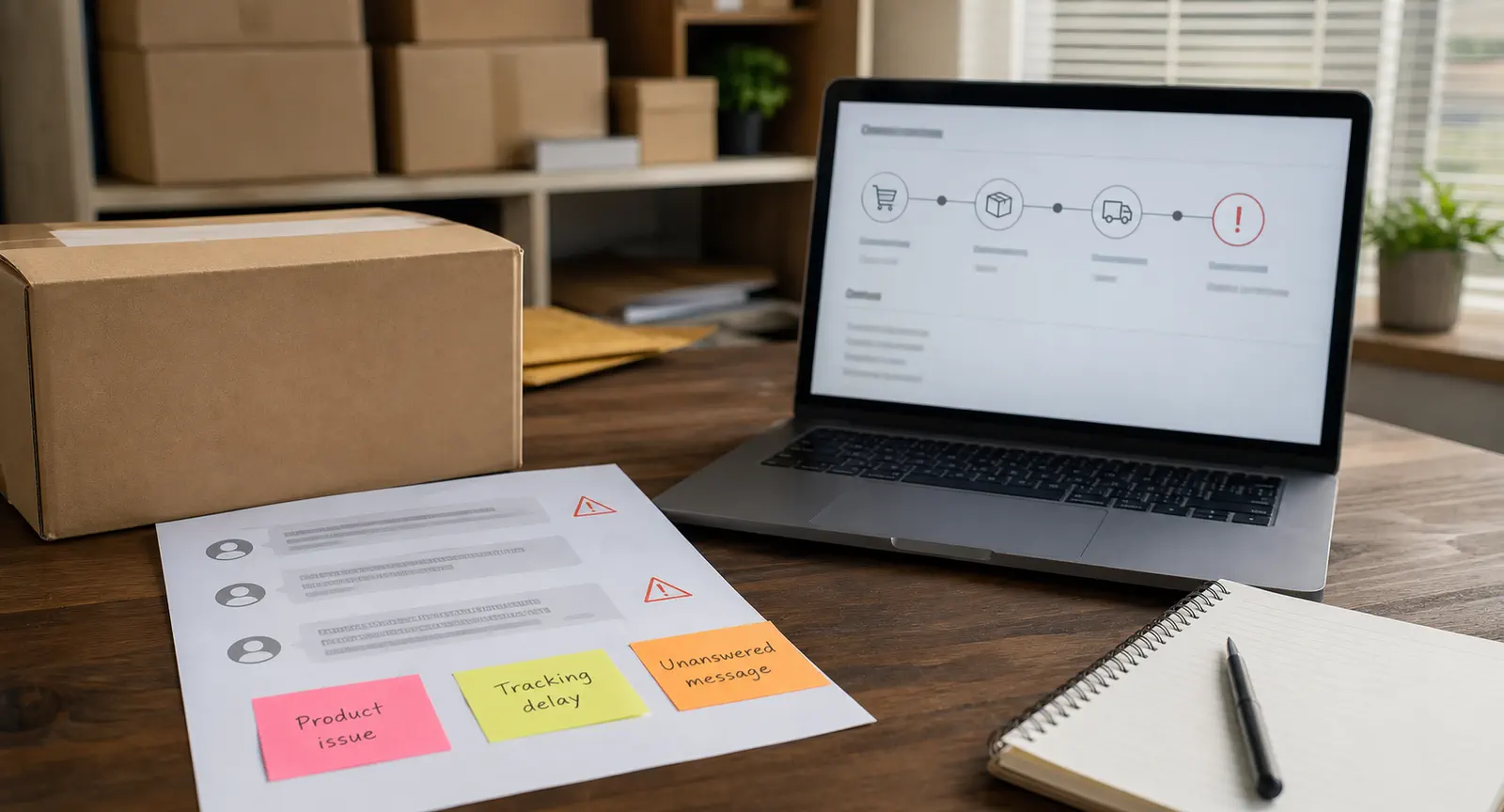
Payment disputes start when the customer loses confidence that the order will arrive correctly, safely, and as promised.
For dropshipping sellers, the danger is that the visible store experience and the physical supply chain often live in different worlds. The customer sees a clean product page, a checkout confirmation, and a branded email. Behind the scenes, the order may pass through a supplier, a packing desk, a carrier handoff, a tracking system, and a final-mile delivery network. Any weak link can become a refund request, a PayPal claim, a Stripe dispute, or a card chargeback.
Shopify’s own chargeback guidance centers on responding with relevant evidence, including transaction, customer, fulfillment, and delivery information. That is useful, but it also reveals the real problem: you cannot submit evidence you never collected. If the supplier shipped a wrong item without photos, if the parcel was packed without a checklist, or if tracking was vague for too long, your response becomes reactive and thin.
If you are already evaluating dedicated backend help, working with a Shopify dropshipping agent is relevant because dispute prevention depends on sourcing coordination, product checks, dispatch control, and tracking write-back working together.
Key Takeaway: Treat dispute prevention as an operations problem first. If you wait until the gateway notification arrives, you are already working with whatever evidence your backend process did or did not create.
The physical causes behind payment gateway risk

Most avoidable gateway disputes come from a small set of physical order failures that repeat across stores.
The first is product mismatch. A customer ordered a black XL item but received a blue L, or the listing showed a set while the supplier sent only one component. The second is condition failure: scratched surfaces, leaking bottles, damaged boxes, missing accessories, or poor presentation. The third is tracking uncertainty, where the order appears shipped but the customer cannot see meaningful movement. The fourth is silence during exceptions. A delay that might have been manageable becomes a dispute because nobody explains what is happening.
These problems are not solved by changing the dispute template alone. A better template may help you respond, but it cannot turn a poorly packed item into a correct delivery. The control point has to move earlier: before dispatch, before the first tracking update, and before the customer feels ignored.
Returns and after-sales support still matter, but many payment disputes begin earlier than the return stage. The stronger prevention point is before the parcel leaves the origin side: confirming the item, checking the package, recording the handoff, and communicating exceptions before the customer has to complain. Once the wrong parcel is already in transit, the seller is usually choosing between an apology, replacement, partial refund, or formal dispute response.
Where software automation stops

Automation can reduce administrative work, but it cannot verify the physical truth of an order.
Shopify apps, supplier tools, and order-sync systems are useful for passing information: customer address, SKU, variant, quantity, fulfillment status, and tracking number. The risk begins when sellers treat that information flow as proof that the order was handled correctly. A synced status does not prove that the right item was picked. A tracking number does not prove that the parcel contains the right product. A fulfillment notification does not prove that fragile packaging was sufficient.
This distinction is especially important for sellers who already use app-based workflows. Many Shopify order fulfillment mistakes, such as missing accessories, wrong variants, and poor packing accuracy, become more serious when they also weaken the evidence trail needed for a later dispute response.
The better model is not anti-automation. Use software for speed and consistency, then add human and physical checkpoints where software has no eyes. A clean order flow should answer three questions before dispatch:
| Control question | Why it matters for disputes |
|---|---|
| Is the product correct? | Prevents wrong-item and not-as-described claims. |
| Is the product in acceptable condition? | Reduces avoidable complaints about damage or defects. |
| Is the parcel record clear? | Gives you a stronger basis for customer updates and dispute evidence. |
Key Takeaway: Automation should move order data; it should not be treated as evidence that the physical order is correct. The safer workflow combines order syncing with pre-shipment verification.
Build a pre-shipment evidence routine

A pre-shipment evidence routine gives you useful records before a customer problem becomes a payment dispute.
The routine does not need to be theatrical. It needs to be consistent. For normal orders, the record may include a product check, variant confirmation, packing confirmation, and tracking handoff. For higher-risk products, you may add photos of the product condition, accessories, seal condition, or fragile packing method.
The goal is not to collect random photos. The goal is to collect the specific proof that matches the most likely dispute reason. If customers often complain about missing parts, show the parts before packing. If fragile items arrive damaged, document protective packing. If customers question whether the order was shipped, keep the parcel handoff and tracking record clean.
Match evidence to the claim type
Different disputes require different evidence. A not-received claim depends heavily on shipping and delivery information. A not-as-described complaint depends more on product condition, variant accuracy, and listing consistency. An unauthorized-payment dispute may involve a different evidence set, including fraud-screening and transaction details.
You should not overclaim that supply-chain evidence wins every case. Gateways and card issuers have their own rules, and outcomes vary. What physical control does is give you a stronger, more organized record. It also gives your customer service team better information before the dispute escalates.
Keep records easy to retrieve
Evidence loses value when it is scattered across chat threads, supplier messages, email attachments, and tracking pages. Create a repeatable naming or storage habit: order number, SKU, date, check type, and exception status. Even a simple shared folder or ticket note can be better than asking a supplier to find an old photo after the case deadline begins.
Stop bad orders before dispatch
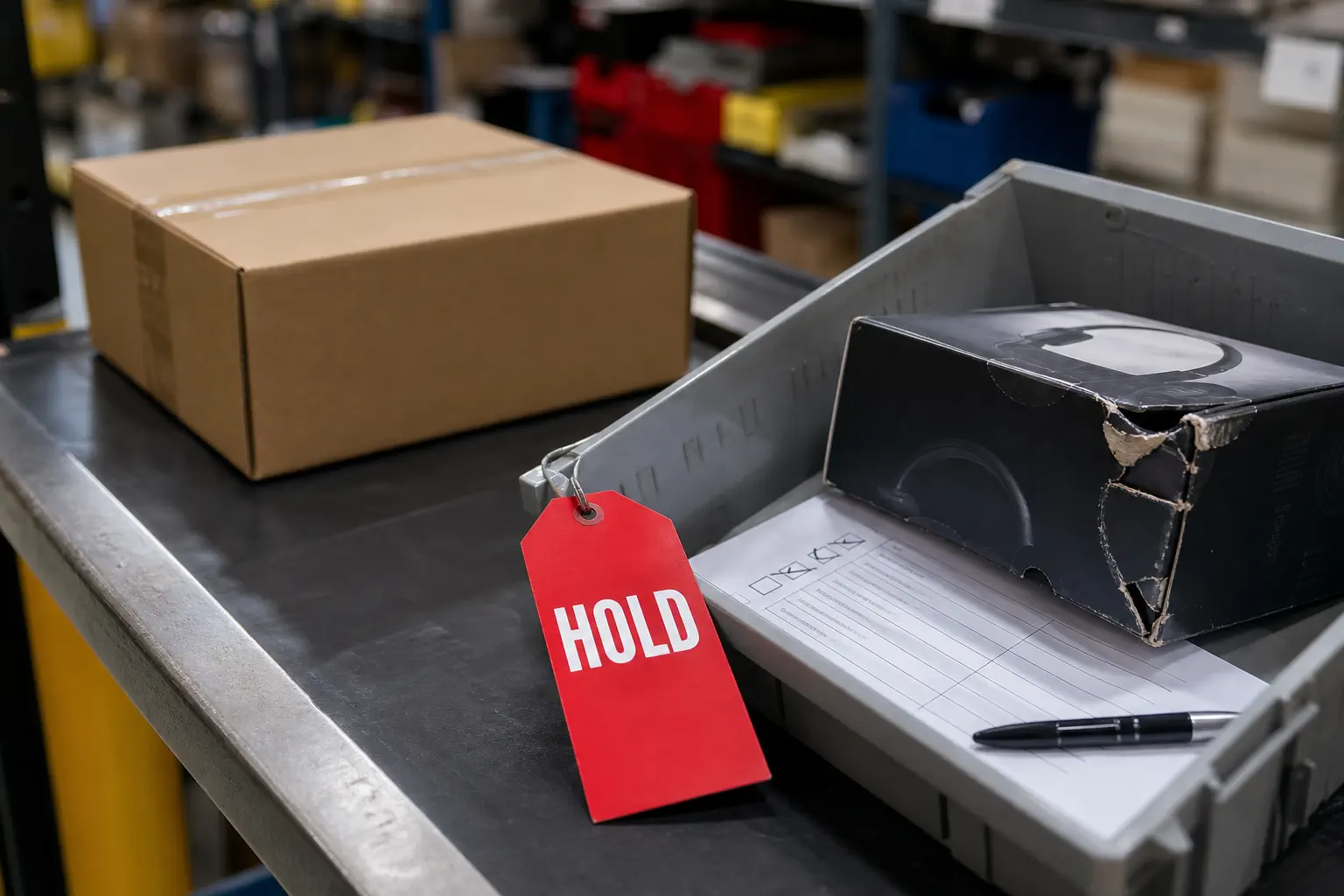
The highest-leverage dispute prevention step is stopping questionable orders before they leave.
A bad order is not only an obviously broken product. It can be a missing accessory, an unclear variant, a weak package, an address issue, a supplier substitution, or a shipping route that does not fit the product. If the order is already moving, every fix becomes slower, more expensive, and more visible to the customer.
A strict product check before dispatch should focus on the specific failure modes of the product category. Apparel needs size, color, label, stitching, and visible-condition checks. Consumer electronics may need plug type, version, accessory, and basic power-on confirmation when appropriate. Cosmetics need seal, leakage, and packaging checks. High-ticket products need stronger photo records because one dispute can affect both margin and account health.
A broader dropshipping quality control process supports this prevention layer by catching product, packing, and condition problems before they become customer-facing failures. Quality control is the capability; dispute prevention is the reason those checks matter to a Shopify seller under gateway pressure.
Create a hold-and-confirm rule
Your backend team should know when to pause an order. Examples include a damaged box, supplier substitution, color uncertainty, missing part, suspicious address mismatch, or tracking-route concern. The pause should trigger a clear decision: replace, repack, confirm with the seller, update the customer, or cancel before a worse outcome occurs.
Do not ship uncertainty downstream
The worst habit is sending the problem forward because the order queue is busy. Customers do not care that the supplier was rushed. They judge the store they paid. If the backend sees uncertainty, the seller should see it before the customer does.
Key Takeaway: A paused order is often cheaper than a shipped mistake. The discipline to hold, confirm, and fix before dispatch protects both customer trust and the evidence trail.
Use tracking transparency before customers escalate
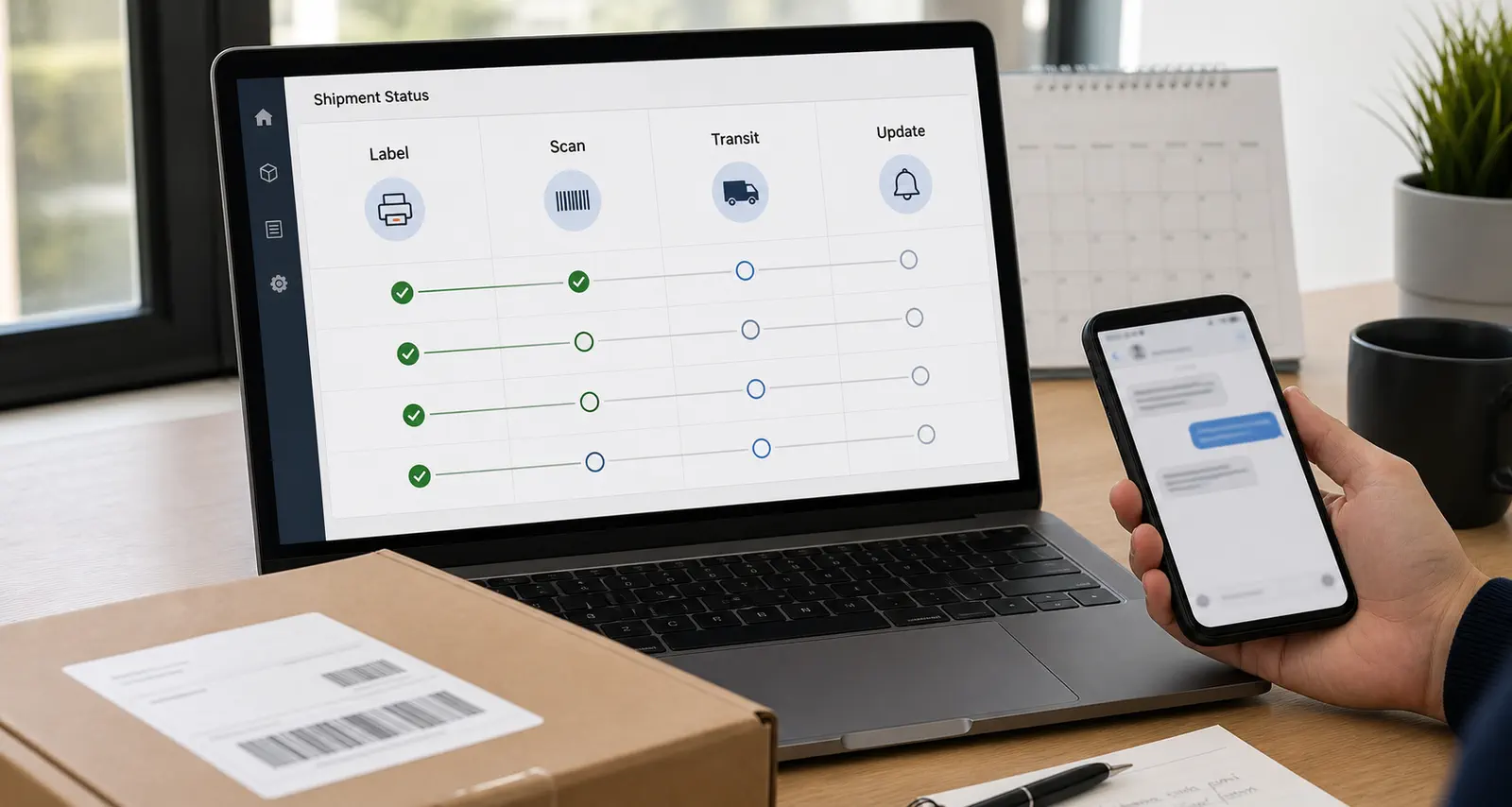
Tracking is not only a logistics detail; it is a trust signal.
A customer may tolerate a reasonable wait when they can see progress and receive honest updates. The same wait becomes risky when the tracking page is blank, the number looks strange, or support replies with vague reassurance. In dropshipping, this is especially sensitive because cross-border parcels can pass through stages that are not obvious to the buyer.
Your process should separate three moments: tracking number created, parcel accepted or scanned, and meaningful movement visible. A reliable fast shipping process should separate label creation, carrier acceptance, first scan, and buyer-visible movement so support does not confuse a tracking number with real parcel progress. Many sellers send a tracking email as soon as a number exists, but the customer cares whether the parcel is actually progressing. When a delay occurs between label creation and carrier movement, support should know what to say before the inbox fills up.
Customer service for dropshipping becomes more effective when support replies are based on accurate backend visibility: where the parcel is, whether the delay is normal or exceptional, and what action has already been taken.
Build exception alerts
Create an alert list for parcels with no movement after label creation, repeated failed delivery attempts, customs holds, address problems, and delivery-confirmed complaints. The point is to contact the customer before the customer feels forced to contact the bank.
Make updates specific but conservative
Avoid promises you cannot control. Instead of guaranteeing a date, explain the current status, the next expected scan or handoff, and what your team is monitoring. Clear communication can reduce frustration without creating a new promise that later becomes evidence against you.
Use the Fashion Nova case as a warning

The Fashion Nova case shows how fulfillment and communication failures can become a trust and compliance problem at scale.
According to public reporting on Federal Trade Commission actions, Fashion Nova previously agreed to pay $9.3 million over allegations that it failed to properly notify customers about shipping delays and give them a chance to cancel delayed orders, and that it used gift cards instead of refunds for unshipped merchandise. The lesson for Shopify sellers is not that every delay creates the same legal exposure. The lesson is that fulfillment promises, delay communication, cancellation options, and refund handling can become business-critical when growth outpaces operations.
For a dropshipping store, the practical takeaway is simple: do not let the customer discover the problem first. If your backend knows an item is delayed, out of stock, substituted, or stuck before acceptance, you need an escalation path. That may mean changing the route, replacing the item, asking for confirmation, offering a cancellation option where required, or updating the customer with accurate information.
This case moves the risk beyond generic fear: fulfillment promises and customer communication must match operational reality.
Build a dispute-ready operating system
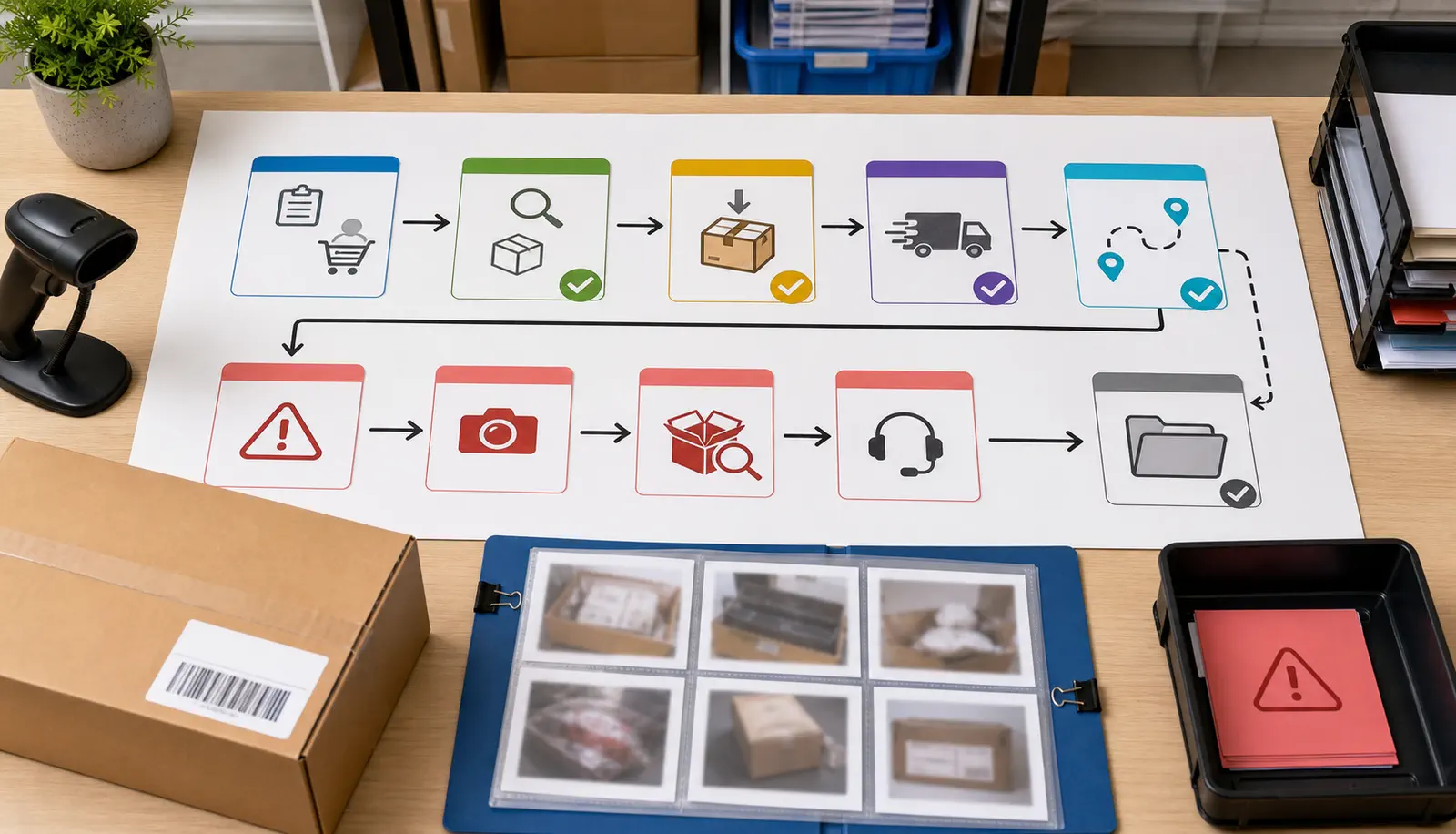
A dispute-ready operating system is a set of habits that makes good evidence normal instead of emergency work.
Start with the order record. Each order should connect the product, variant, supplier, check status, parcel, tracking number, and exception notes. Then define who owns each action. If the supplier sends a questionable item, who decides whether to hold it? If tracking stalls, who checks the route? If the customer asks for proof, who retrieves the packing or dispatch record?
This is where a Private dropshipping agent team can add value without acting as a payment processor or legal advisor. The role is physical execution: supplier communication, product checks, packing confirmation, parcel handoff, tracking coordination, and issue escalation. The seller still owns store policies, gateway settings, and customer-facing promises, but the agent helps make the backend facts clearer.
A simple operating checklist
Use a practical checklist before you scale a product:
- Confirm the exact SKU, variant, accessories, and listing promise.
- Define the product-specific check before dispatch.
- Decide what photos or records are required for high-risk orders.
- Set a hold rule for damaged, unclear, substituted, or incomplete products.
- Track the gap between label creation and first meaningful movement.
- Prepare customer-update templates for common delays.
- Store evidence by order number so it can be found quickly.
This system will not eliminate all disputes. Fraud, buyer remorse, carrier issues, and platform decisions still exist. But it reduces preventable cases created by weak backend execution.
Know when to bring in private-agent control

Private-agent control becomes worth considering when disputes are connected to repeatable physical failures, not isolated customer behavior.
If you receive one random complaint, you may only need a customer-service fix. If multiple customers report wrong variants, poor packing, confusing tracking, missing accessories, or silence during delays, you need a supply-chain fix. Ask: “Why are customers getting reasons to dispute?”
Runtodropship is positioned for sellers and operators who already have orders and need stable backend execution. For this specific risk, that can mean coordinating suppliers, checking products before dispatch, confirming packing, arranging suitable shipping options, and helping your team see exceptions earlier. It is especially relevant for Shopify sellers, mentors, agencies, and operators managing several stores or client projects where one weak process can repeat across many orders.
The decision threshold is practical. If your current supplier can provide clear evidence, fix errors quickly, and communicate exceptions before customers complain, you may not need to change. If the supplier can only send tracking numbers and vague replies, your dispute risk may be a symptom of missing physical control.
Key Takeaway: Bring in private-agent support when the pattern points to backend execution: wrong items, unclear tracking, damaged parcels, missing proof, and slow exception handling. Do not wait until payment accounts are already under pressure.
FAQ
Can physical supply-chain control prevent every chargeback?
No. It cannot prevent fraud, buyer remorse, cardholder bank decisions, or every carrier problem. It can reduce preventable disputes caused by wrong products, weak packing, missing records, poor tracking visibility, and slow exception handling.
What evidence should a Shopify seller keep for disputes?
Keep order details, customer communication, product and packing records when relevant, shipping and tracking information, delivery updates, and exception notes. The exact evidence depends on the dispute reason and the payment provider’s rules.
Is this the same as returns management?
No. Returns management handles what happens after a customer wants to return, replace, or resolve an order. Physical dispute prevention focuses earlier: catching product, packing, tracking, and communication issues before they become formal payment claims.
Should I mention chargeback risk in customer emails?
Usually no. Customer emails should be clear, calm, and service-focused. Explain the order status, the action being taken, and the customer’s options without sounding defensive or threatening.
When should I change suppliers or agents?
Change when problems repeat and the current backend cannot provide clear checks, records, tracking visibility, or timely exception handling. A single complaint may not justify a switch; a pattern of physical execution failures usually does.
Conclusion
Payment disputes are rarely only a payment problem. For Shopify sellers, they often reveal a deeper gap between the polished storefront and the physical order process behind it. When products are checked before dispatch, packages are confirmed, tracking is monitored, and exceptions are communicated early, you create fewer reasons for customers to escalate and better records when a dispute still happens.
If your store already has orders and the same backend issues keep creating refund pressure, Runtodropship can help you build a more accountable private-agent workflow around sourcing coordination, product checks, packing confirmation, shipping arrangement, and after-sales support. The future of serious dropshipping is not just faster order syncing; it is clearer physical control behind every customer promise. To review whether your current backend is creating avoidable dispute risk, contact Runtodropship and share your product type, current order flow, and the dispute patterns you are seeing.