

YunExpress Customs and DDP can help EU delivery feel more predictable for sellers, but only when the selected route, product declaration, VAT treatment, importer arrangement, and exception process are aligned before dispatch. DDP can spare the buyer from handling import formalities, but it does not make an inaccurate declaration, restricted product, or missing compliance document acceptable.
Quick Answer: Treat DDP as a responsibility model, not a customs shortcut. Confirm who declares the parcel, who acts as importer, how VAT and duty are settled, which products the line accepts, and who answers a customs query. IOSS can simplify VAT for eligible B2C consignments, but it is not the same thing as DDP and does not replace product compliance.
A familiar failure pattern starts with a seller opening Europe using the same product data that worked elsewhere. The checkout collects tax, the shipping quote says duties are included, and the first parcels leave China. Then one batch enters inspection because the product description is vague, the value does not match the invoice, or the route cannot support that category. Buyers see no useful update, support tickets rise, and the seller discovers that a tax-inclusive price did not solve the underlying customs responsibility. The safer direction is to design the declaration and exception workflow before scaling the route.
YunExpress cross-border shipping involves separate stages: China-side collection, international transport, import clearance, and local-carrier handoff. This guide focuses on the EU clearance part of that chain: import responsibility, tax handling, inspection risk, and the controls a mature seller should verify before scaling.
How YunExpress Customs Works on an EU Parcel Route
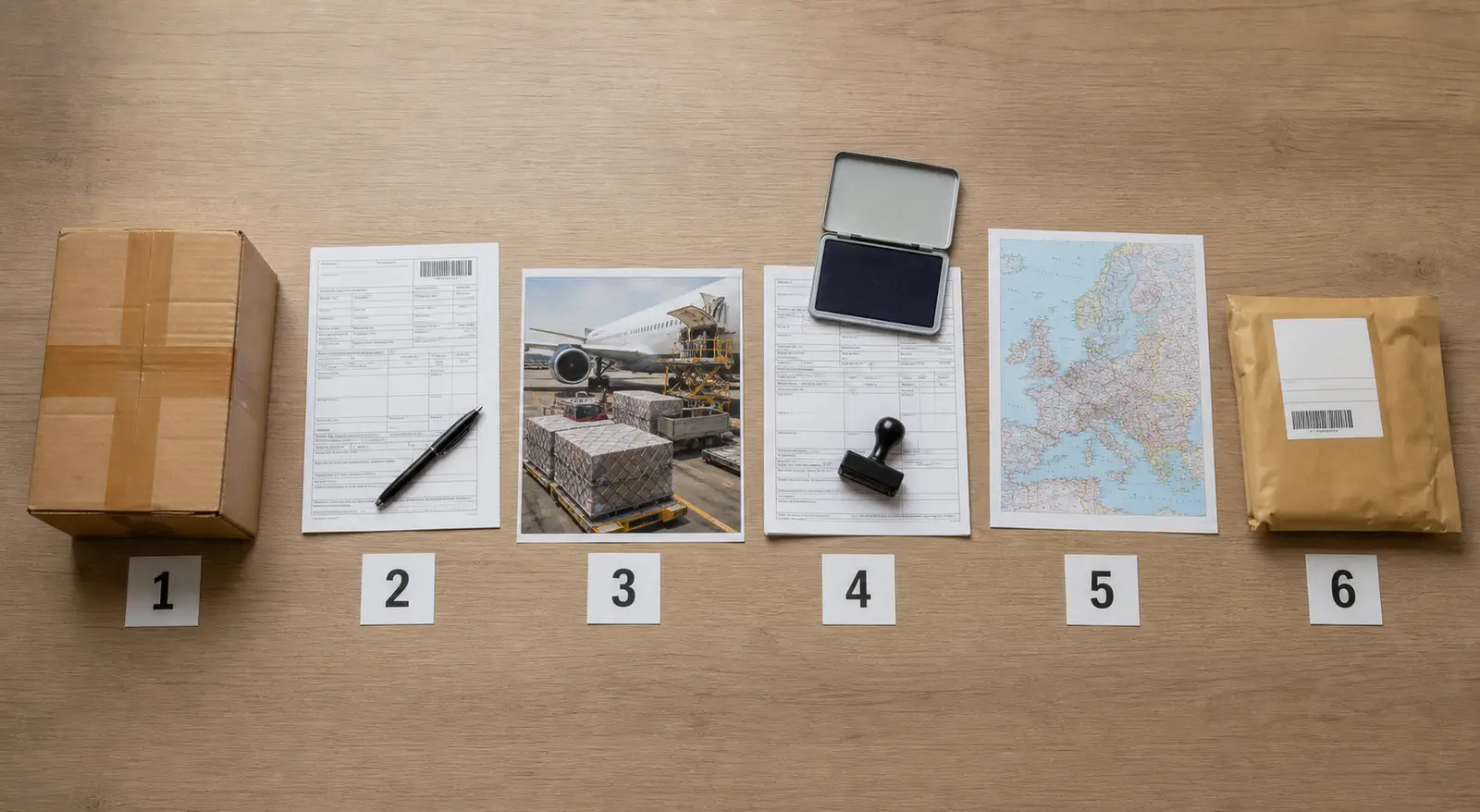
Import clearance is one stage in a multi-party route, not a single scan performed by one company from pickup to doorstep. YunExpress’s regional service information describes commercial customs clearance, local delivery, a European DDP solution, and IOSS support. The exact operating parties and entry point can still vary by service, product, destination, and current routing, so your quotation or service agreement matters more than a generic route diagram.
A typical seller-side sequence looks like this:
- The seller or agent supplies the product name, value, quantity, origin, HS classification, and consignee data.
- The parcel enters an export and international transport channel.
- Electronic shipment data reaches the declarant or customs representative before or around arrival.
- The goods are presented to customs at the EU entry point and the import declaration is processed.
- VAT and any applicable duty are accounted for under the declared arrangement.
- Once released, the parcel enters an intra-EU movement or local delivery network.
The crucial control point is data continuity. The checkout record, commercial invoice, shipping label, product database, and customs declaration should describe the same transaction. If one system calls an item a “gift,” another says “accessory,” and the invoice identifies a powered device, customs sees inconsistency rather than convenience.
How the YunExpress DDP Model Changes Seller Responsibility

A YunExpress DDP route can shift import-clearance and import-charge responsibility away from the consumer when the booked service is genuinely structured that way. Under the ICC’s Incoterms framework, Delivered Duty Paid places export, transit, and import formalities on the seller up to the named destination, while the buyer normally takes responsibility for unloading.
That commercial definition is broader than a carrier label. For an individual ecommerce parcel, you still need to know which legal and operational parties perform the work. “DDP included” should lead to five named answers:
| Question | What a usable answer identifies |
|---|---|
| Who is the seller under the customer contract? | The party promising the delivered price |
| Who submits the import declaration? | Declarant or customs representative |
| Who can legally act as importer? | Importer arrangement accepted for that lane |
| Who settles VAT and duty? | The account, scheme, or billing mechanism |
| Who handles a customs query? | The party collecting documents and responding |
DDP is not permission to use an unrelated company’s IOSS number or name a buyer as importer without informed agreement. The ICC comparison of DDP and DAP warns that local rules can make DDP impractical when a foreign seller cannot complete import clearance.
For EU ecommerce sellers, the practical contrast is simple: under a workable DDP route, the seller-side arrangement should prevent the buyer from handling routine import charges at delivery. Under DAP or the older DDU-style model, the buyer may be asked to pay import VAT, duty, or handling charges before receiving the parcel. That difference affects conversion, support tickets, refund pressure, and repeat purchase trust.
Key Takeaway: Do not approve a route because the quote contains three letters. Approve it when the importer, declarant, tax payer, exception owner, and named delivery point are all documented.
DDP, IOSS, VAT, and Customs Duty Are Not the Same
For readers who need a quick visual explanation of the EU VAT e-commerce background before comparing IOSS with DDP, this official EU tax and customs video is a useful starting point.
These four concepts answer different questions, and treating them as interchangeable is one of the fastest ways to create a broken EU shipping setup.
- DDP allocates delivery costs, risks, and import responsibilities between seller and buyer under the agreed trade term.
- IOSS is an EU VAT simplification for eligible distance sales of imported goods in consignments not exceeding €150, excluding excise goods.
- VAT is a consumption tax generally due on goods sold to EU consumers, using the applicable destination-country treatment.
- Customs duty is a border charge determined by customs rules, tariff classification, origin, value, and—in the new low-value regime—the applicable temporary method.
Where IOSS fits
When an eligible order uses IOSS, import VAT is collected at checkout and reported through the scheme. The valid IOSS identification number must reach customs in the electronic declaration, but it should not be printed publicly on the parcel or disclosed to the buyer. The European Commission’s IOSS conditions apply to qualifying B2C imports from outside the EU with a value not exceeding €150 and not subject to excise duty.
A non-EU seller normally needs an EU-established intermediary unless an exception applies. That intermediary supports scheme registration and reporting; it does not certify that the product itself meets EU safety, labeling, or market-access rules.
Where DDP goes further—and where it does not
DDP can cover situations outside IOSS, including consignments above the scheme’s value limit, but the tax, importer, and customs structure must be workable. Conversely, an IOSS order is not automatically DDP: the seller may have handled VAT at checkout without accepting every delivery cost and import responsibility defined by the trade term.
Key Takeaway: Build pricing and operations around separate tax and responsibility fields. If your system has only one DDP toggle, it is probably concealing decisions your team still needs to make.
What Changes for EU Low-Value Imports on July 1, 2026
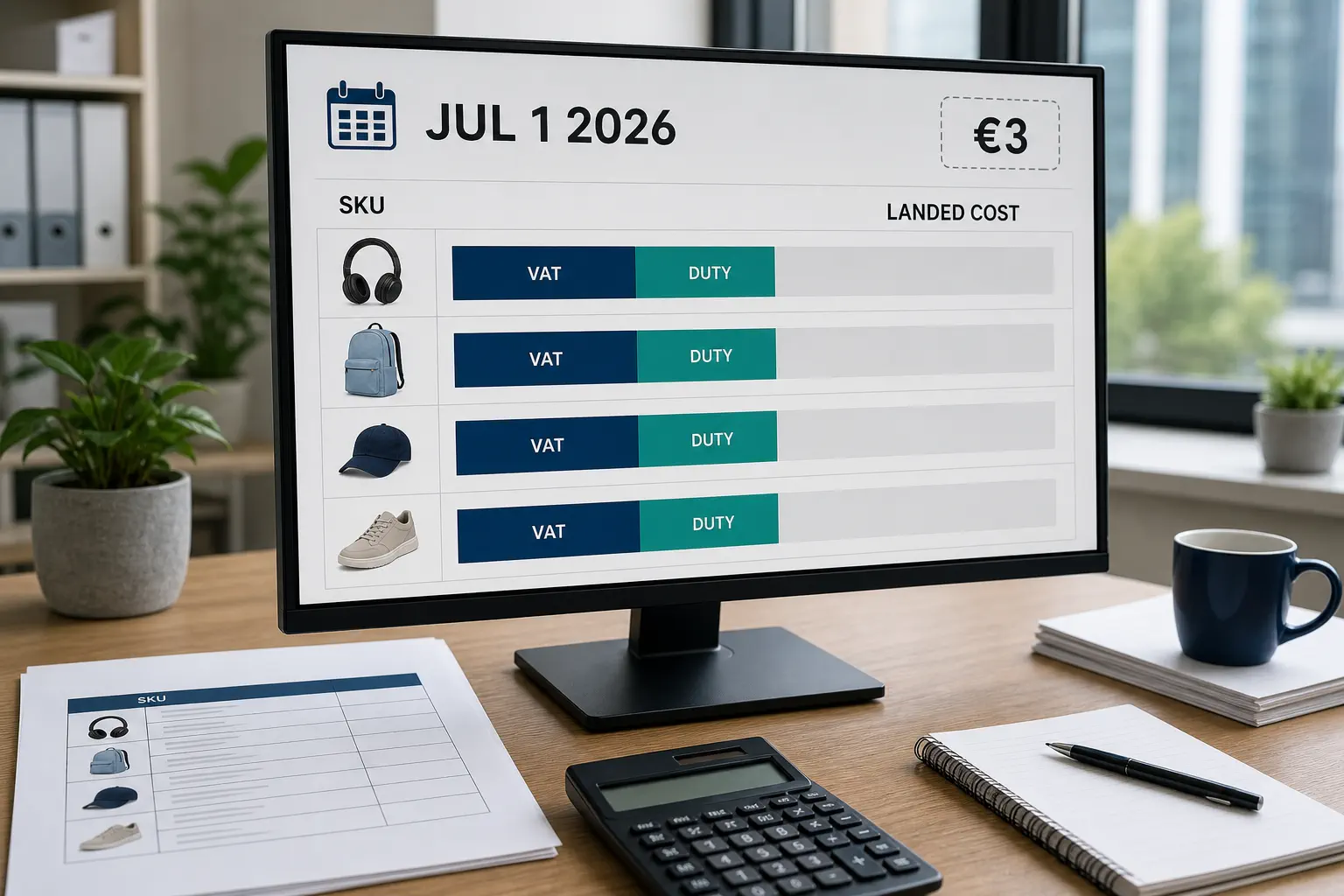
From July 1, 2026, the old shorthand that parcels below €150 are free of customs duty is no longer safe for EU ecommerce planning. EU guidance describes a temporary €3 customs duty for low-value consignments up to €150, applied per item rather than per parcel, until the broader customs data infrastructure is in place.
VAT was already due on low-value commercial imports after the 2021 reform; the 2026 change concerns customs duty relief. That distinction is essential. A seller who already collects VAT through IOSS still needs to understand how the new duty is calculated, charged through the route, and reflected in landed cost.
The temporary duty is intended to operate before the EU’s broader customs reform and future data infrastructure are fully in place. This creates an immediate seller task: revalidate every EU shipping quote and margin model that assumed sub-€150 duty relief.
Repricing the lane also requires more than adding the new duty to an old freight number. Recalculate the full YunExpress shipping cost using the current route, chargeable weight, fee inclusions, tax treatment, and quote validity.
Ask the route provider these questions in writing:
- Does the quoted DDP rate already include the temporary duty from July 1?
- Is the charge assessed per distinct tariff item, and how is a multi-SKU parcel represented?
- What product and HS-code fields must the order feed provide?
- Will the seller receive an itemized adjustment or only a blended rate?
- What happens to parcels manifested before the date but imported afterward?
Do not publish a fixed landed-cost promise until those answers are reflected in your checkout economics. For a store with bundles, low ticket prices, or many tariff headings per order, a per-item duty can change contribution margin more than the parcel’s headline value suggests.
For bundles and multi-SKU carts, dropshipping order consolidation also needs to account for how each item, item line, or declared category is represented before the parcel enters the EU route.
Key Takeaway: Reprice the EU lane at SKU and basket level for orders imported from July 1, 2026 onward. The risk is not only a higher charge; it is a margin model that cannot explain which item, tariff category, or bundle structure created the cost.
Which Data and Documents Reduce Clearance Risk

Clean, consistent import data reduces avoidable questions but cannot guarantee release. A reviewer should be able to identify the product, function, materials, sale value, origin, and regulatory category.
A minimum declaration record
For each SKU, maintain:
- a plain-language product description rather than “sample,” “gift,” or “accessory”;
- the commercial selling price and the basis for any discount;
- quantity, net weight, and parcel weight that reconcile;
- country of origin;
- a reviewed HS or CN classification with the reasoning retained;
- material, function, power source, and battery details where relevant;
- the invoice, order reference, seller and buyer data;
- required conformity, safety, labeling, or licensing evidence for the product category.
For sellers, the tariff question is not only what YunExpress or the service provider charges for the route. It also depends on customs classification, declared value, origin, product category, and the data used to calculate border charges. It also concerns the customs tariff classification and the data used to calculate border charges. YunExpress can transport and coordinate a customs channel, but the seller remains responsible for supplying truthful product and transaction information.
Real enforcement example: EU checks on toys and electronics
In a 2026 EU-wide control action, customs and market-surveillance authorities checked 20,000 toys and small electronic products shipped directly from third countries. The European Commission reported that more than half did not comply with EU product standards; among the selected products sent for laboratory testing, 84% were found dangerous.
This was not a YunExpress case, and it should not be used to imply carrier fault. It demonstrates why paid tax and a released declaration do not replace product-safety compliance.
That distinction matters for cosmetics, children’s products, battery goods, radio equipment, medical claims, supplements, and branded goods. Before launch, confirm both route acceptance and market-access evidence. A carrier accepting a booking is not the same as an authority approving the product for sale.
What “Customs Inspection – Import” Means
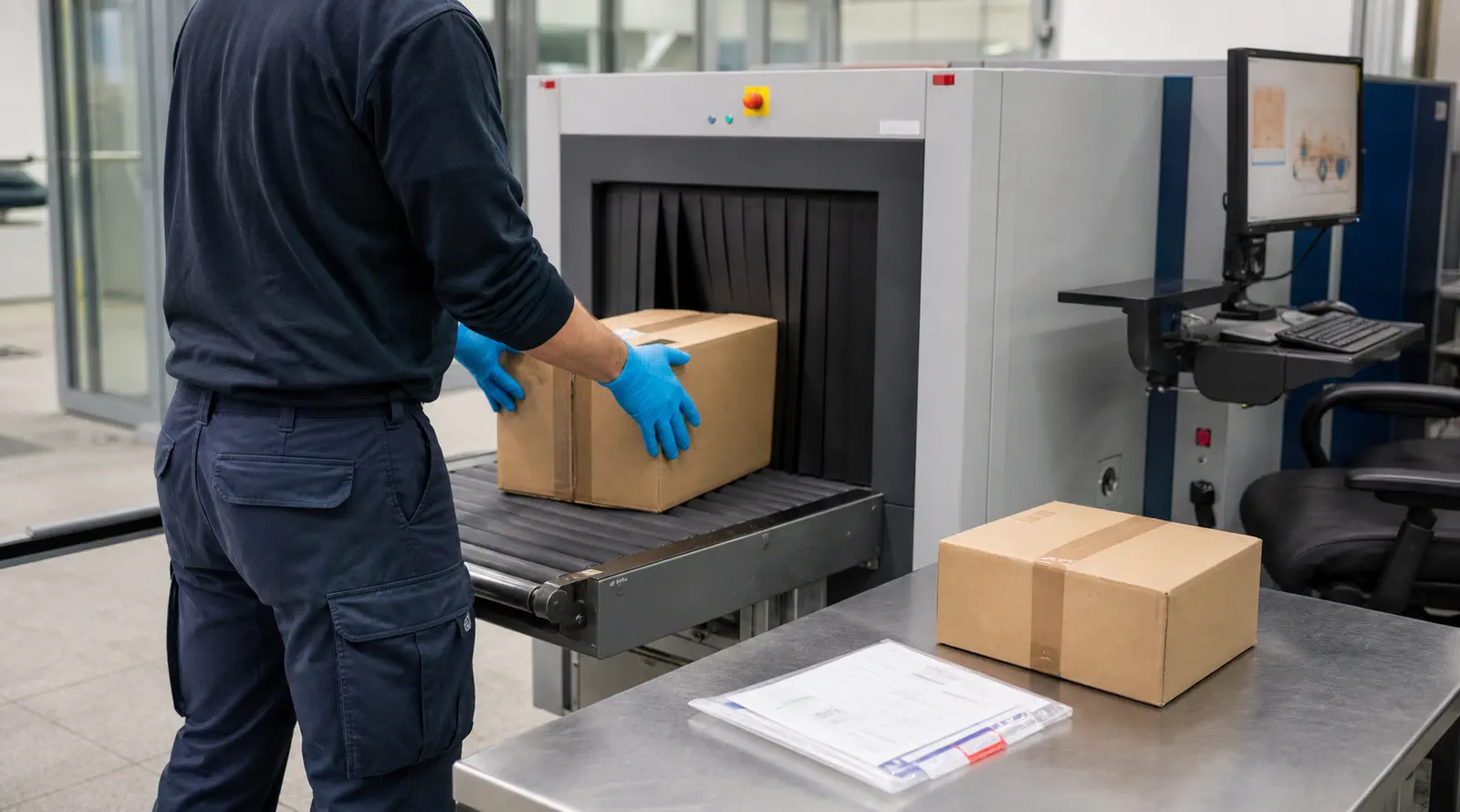
When YunExpress tracking shows “Customs Inspection – Import,” it usually means the shipment or its associated batch has entered an import-control review. It does not prove that the parcel has been seized, fined, or rejected, and it does not tell you whether the review is documentary, scanner-based, physical, or referred to another authority.
Possible triggers include routine selection, inconsistent declaration data, unusual value, an HS-code question, a controlled product category, missing documents, intellectual-property concerns, or a wider check on the consolidated shipment. The status alone cannot identify the trigger.
What the seller should do first
Preserve the original order and shipping evidence before changing anything. Collect the commercial invoice, payment record, product page, accurate product description, classification record, material or battery details, and any relevant compliance documents. Ask the shipping account holder for the exact request from the broker or customs representative rather than sending an improvised explanation to the buyer.
Use one internal exception owner. That person should record the tracking number, affected orders, latest official event, documents requested, response deadline, responsible party, and customer message. If a consolidated batch is affected, identify every order in it before support teams make separate promises.
When a parcel is held or the broker requests documents, YunExpress customer service should usually be approached through the seller, agent, or shipping account holder because that party has the invoice, declaration data, and route relationship.
What not to do
Do not create a new invoice, lower the value after selection, change the product description to something vague, or borrow a tax identifier. Those actions create a second inconsistency and may turn a resolvable document question into a credibility problem.
Tell the customer that the parcel is under import review and that a new delivery date cannot be confirmed until the review ends. A local-carrier pre-advice record is not proof that the parcel has left customs.
Key Takeaway: Respond to the authority’s actual question with the original transaction record. Speed matters, but consistency matters more than sending a fast, speculative document pack.
What “Clearance Processing Completed” Means
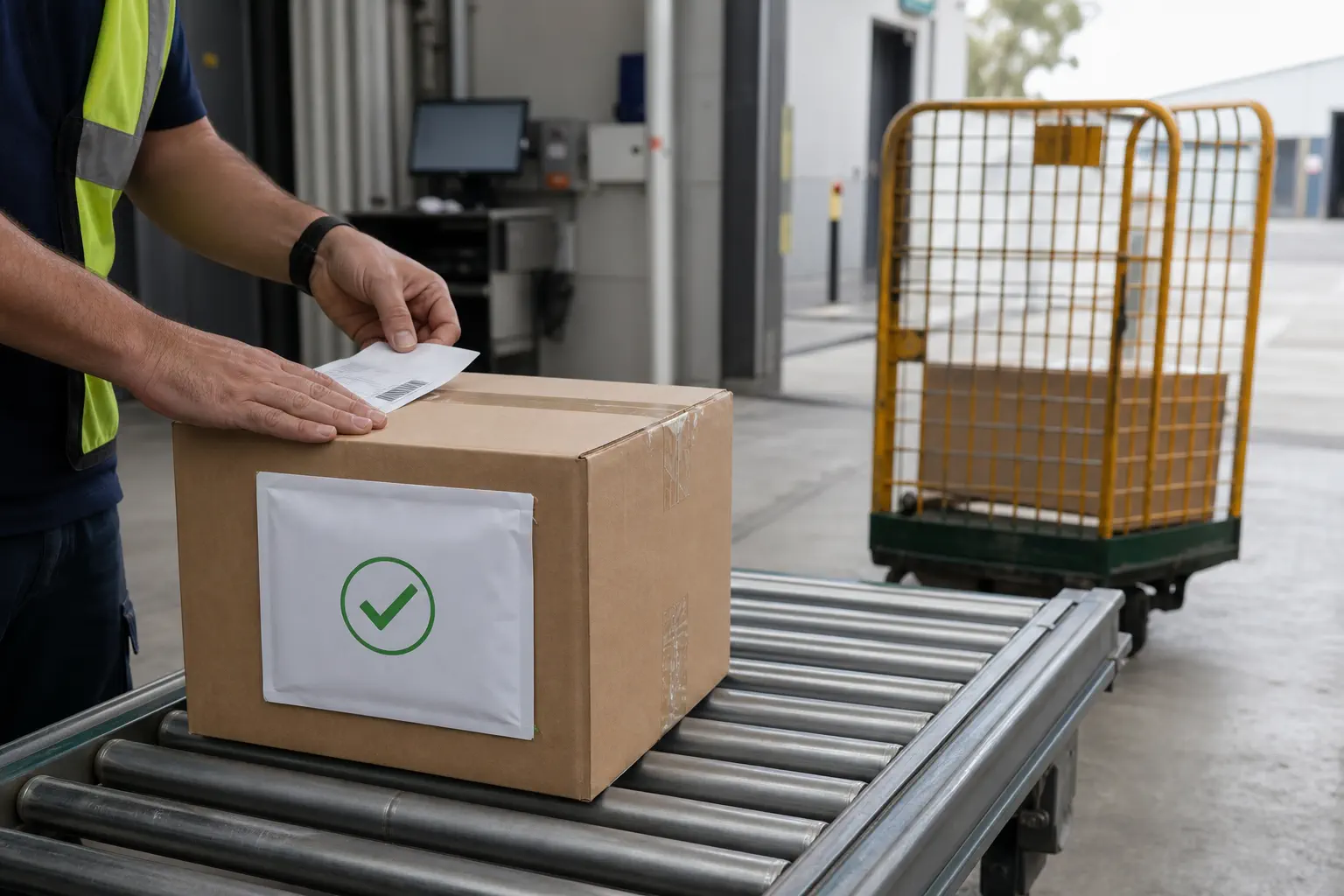
When YunExpress tracking shows “Clearance Processing Completed,” it generally means the recorded customs-processing stage has finished and the shipment can move toward release, terminal handling, sorting, or local-carrier induction. It is positive, but it is not the same as “out for delivery” or “delivered.”
Tracking systems may display variants such as “Clearance processing completed – Import,” “Customs clearance completed,” or “Import procedure completed.” Third-party trackers often normalize several carrier events into one label, so check the event time, location, official YunTrack record, and any local tracking number together.
A delay after clearance can still come from:
- release data not yet synchronized to the parcel record;
- terminal or gateway handling;
- transfer from a consolidated batch;
- road line-haul to the destination country;
- local-carrier pre-advice waiting for the first physical scan;
- an address, payment, or exception issue outside the customs decision itself.
First determine custody. A local-carrier number with only pre-advice may mean the handoff is not physically scanned. After the route’s normal post-clearance window, ask for release confirmation, last physical location, and handoff status.
Customer support should translate the event accurately: “Import processing is recorded as complete; the parcel still needs to enter the next transport or local-delivery stage.” That sentence sets a boundary without making an unsupported delivery promise. When a store needs broader timing expectations, YunExpress delivery-time planning helps separate processing time, international transit, customs, and last-mile variability.
How to Compare YunExpress DDP Options Before Scaling

The right YunExpress DDP option should fit your product, destination country, importer arrangement, and exception capacity—not simply offer the lowest rate. Approve a lane through controlled tests and written answers.
Route qualification checklist
Ask the account provider to confirm:
- Destination countries and postal-code exclusions.
- Maximum value, weight, dimensions, and item-count rules.
- Accepted and restricted categories, including battery configuration.
- The active VAT, IOSS, duty, and importer arrangement.
- Required order-feed and declaration fields.
- How the July 2026 temporary duty enters the quote.
- The declarant and customs-query escalation path.
- Compensation, return, abandonment, and re-export terms in the service agreement.
- Local-carrier handoff evidence and tracking visibility.
Test representative risk: a multi-item basket, remote destination, and the most document-sensitive accepted product. Compare landed-cost transparency, data requirements, exception ownership, product fit, and handoff visibility—not transit estimates alone.
When EU delivery expectations require speed, product handling, and stronger exception control, sellers should qualify the route before promising fast shipping to customers.
Key Takeaway: Scale the lane that produces repeatable evidence across representative orders. A cheap successful sample proves very little if it avoids your real product and basket complexity.
Build a Customs Control Loop Before Expanding Europe
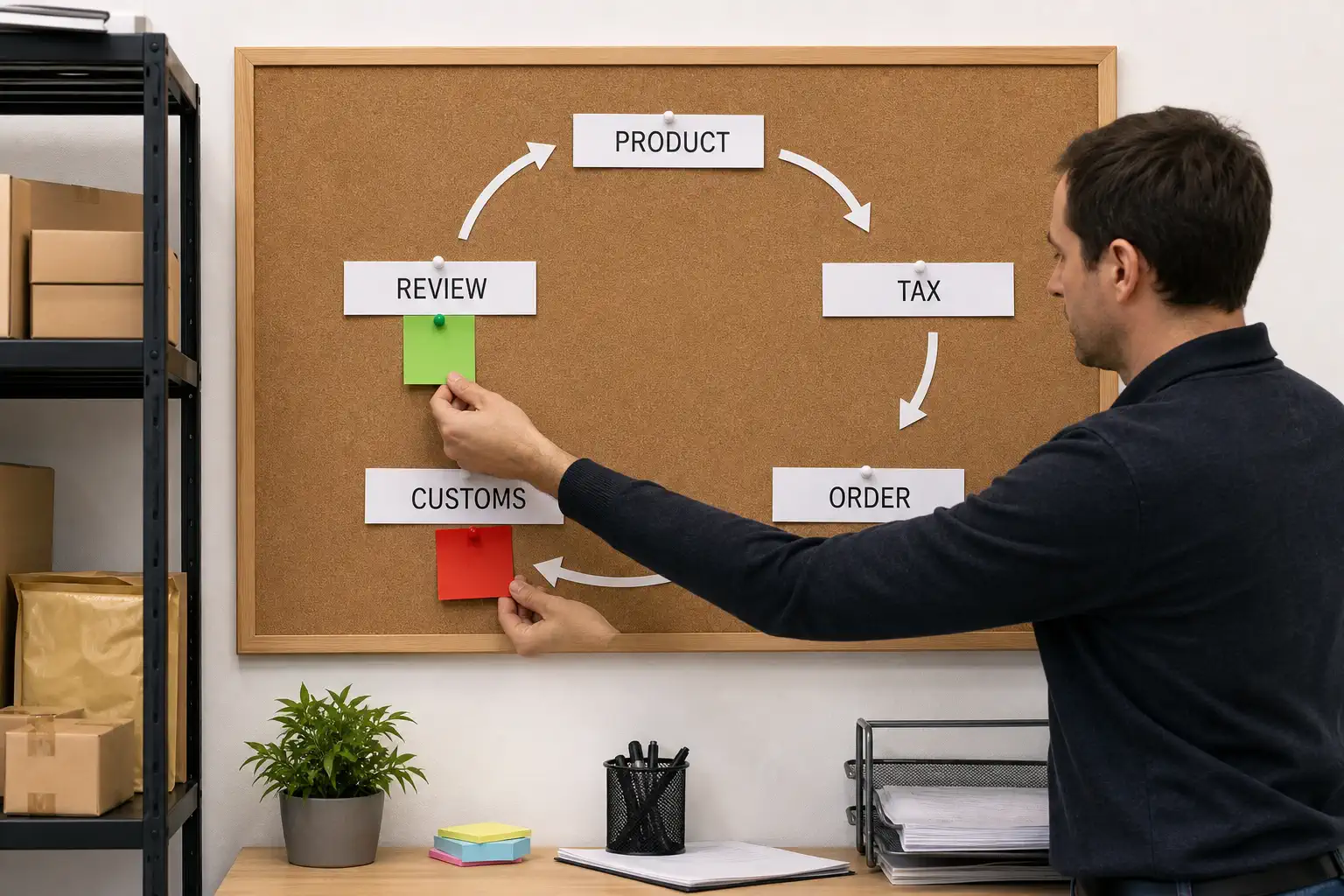
A customs control loop turns DDP from a shipping setting into a repeatable operating process. The goal is not to eliminate inspections—no seller or carrier can promise that—but to prevent known data problems and respond consistently when an authority asks a question.
For Shopify sellers, this control loop should connect checkout tax logic, product data, order export, tracking write-back, and support ownership inside one Shopify dropshipping workflow.
Assign ownership across five stages:
| Stage | Control owner | Required record |
|---|---|---|
| Product onboarding | Product/compliance lead | Classification, materials, restrictions, evidence |
| Checkout and tax | Finance/tax owner | VAT treatment, IOSS eligibility, landed-cost logic |
| Order export | Operations | Matching invoice, value, quantity, origin, address |
| Customs exception | Named escalation owner | Request, document pack, deadline, response log |
| Post-clearance review | Operations and finance | Actual charges, delays, root cause, corrective action |
Review exceptions by cause rather than by tracking number alone. Useful categories include bad description, value mismatch, classification question, missing compliance evidence, restricted product, consignee data, tax-identifier transmission, batch-level inspection, and post-clearance handoff delay. A recurring pattern should trigger a SKU, system, or route change—not another customer-service template.
Keep the record accessible to finance, operations, support, and the shipping account owner so each team works from the same declared facts when a batch crosses multiple countries or delivery networks during an active review.
For multi-store operators, coaches, or agencies, keep the control record per legal seller and store. Do not let several businesses casually share one importer or tax setup because they use the same agent or shipping account. The commercial parties, VAT reporting, invoices, and customer terms must remain traceable.
Before a major campaign, recheck product acceptance, tariff data, destination coverage, duty treatment, and the escalation contact. Regulations and carrier lines change; a route approved last season is evidence of past performance, not permanent authorization.
FAQ
Does DDP mean my EU customer can never receive a tax bill?
No. A correctly structured DDP route is intended to place import costs and formalities on the seller, but errors, excluded charges, misdeclared goods, or an unworkable importer arrangement can still create an exception. Confirm the written scope and test it.
Can I use IOSS for an order above €150?
No. The import scheme applies to eligible consignments with an intrinsic value not exceeding €150 and excludes excise goods. A different VAT and import arrangement is needed above that limit.
Does paying VAT make a product compliant for sale in the EU?
No. Tax settlement and product compliance are separate. Safety, labeling, conformity, intellectual-property, and category-specific requirements can still determine whether goods may enter or be sold.
Is a Benelux clearance scan proof that the parcel is in my customer’s country?
No. It can indicate processing at an EU gateway before onward movement. Confirm the event location and local-carrier handoff instead of assuming the parcel has reached the destination country.
Who should contact YunExpress when a parcel is held?
Usually the seller, agent, or shipping account holder should escalate through the booked service channel because that party holds the invoice, declaration data, and commercial relationship. The consumer often lacks the information needed to answer an import query.
Conclusion
EU expansion works best when tax collection, customs responsibility, product compliance, and shipping data are designed as one operating system. DDP can protect the buyer from routine import administration, while IOSS can simplify VAT for eligible orders, but neither excuses vague declarations or unsupported products. The July 2026 duty change makes SKU-level classification and landed-cost visibility even more important.
As a private dropshipping agent, RuntoDropship can help qualified sellers coordinate product information, pre-shipment checks, route questions, test orders, and exception records before expanding volume. We do not promise that customs will never inspect a parcel; we help make the seller-side workflow more prepared, traceable, and easier to act on. Send your target countries, product links, expected order profile, and current EU tax arrangement so the team can review the questions your DDP route needs to answer before launch.