

The hidden costs of Shopify dropshipping usually appear after revenue starts to rise: app subscriptions, payment fees, supplier markups, currency spread, separate parcel shipping, returns, reships, support time, and fulfillment mistakes. The danger is not one single surprise fee; it is a chain of small operational costs that quietly turns a growing store into a low-margin store.
Core Summary:
- Your real cost is not just the product price plus Shopify plan. It includes payment processing, apps, product samples, supplier quote differences, shipping routes, returns, customer support, damaged goods, and time lost fixing backend errors.
- The biggest margin leaks often come from physical execution: wrong variants, split packages, weak packaging, unclear tracking, and delayed supplier replies.
- A healthy cost review separates unavoidable platform costs from controllable supply-chain costs, then uses clearer quoting, product checks, order consolidation, and better exception handling before scaling ads.
Imagine your store has finally found a product that sells. The dashboard looks encouraging, ad spend is rising, and daily orders no longer feel random. Then the bank balance tells a different story. Two apps were added, shipping changed by destination, a supplier quote excluded packaging, and a few multi-item orders shipped in separate parcels. The issue is not that Shopify dropshipping cannot work. The issue is that growth exposes costs your beginner setup did not force you to measure.
Why the hidden costs of Shopify dropshipping hurt profit first

Hidden Shopify dropshipping costs hurt profit first because revenue grows on the front end while supply-chain complexity grows in the background.
Most sellers notice obvious costs early: the Shopify subscription, domain, paid theme if they choose one, product cost, shipping cost, and ad spend. Those matter, but they are only the visible layer. The deeper margin problem starts when you handle more orders, variants, suppliers, customer messages, tracking exceptions, and product quality uncertainty.
For scaling Shopify sellers, the problem is not simply whether dropshipping can work. The harder question is why sales increase while the cash left after shipping, apps, refunds, reships, and support keeps shrinking.
Before scaling further, separate unavoidable Shopify costs from backend execution costs. Platform costs are easier to list. Execution costs hide inside supplier choices, shipping design, product checks, support workload, and refund pressure.
For stores with repeat orders, a private Shopify dropshipping workflow can help connect sourcing, product checks, packing, dispatch, tracking updates, and after-sales handling before those gaps become margin leaks.
Key Takeaway: Do not judge a product by revenue or gross margin alone. If your calculation ignores support time, replacements, shipping exceptions, and supplier quote gaps, you are not measuring the business you are actually operating.
Why revenue grows while margins shrink

Revenue can rise while margin shrinks when each new order carries more operational friction than your spreadsheet expected.
Early dropshipping math often looks clean: selling price minus product cost minus shipping minus ad spend. That formula helps screen products, but it is too thin for a scaling Shopify store. It does not show how many customer messages one delayed parcel creates, whether “free shipping” is built into a higher quote, or how often you must reship missing accessories.
The more useful model is contribution margin after operational leakage: the cash left after payment processing, app allocation, supplier quote variance, packaging, shipping, refunds, reships, support labor, and payment disputes. You do not need perfect accounting software to start. You need a habit of recording repeated costs.
The cost stack behind a single order
A single order can include:
- Platform subscription and theme or checkout-related tools.
- Payment processing and possible transaction fees depending on payment setup.
- Product cost, sample cost allocation, and supplier quote changes.
- Shipping cost by destination, weight, and route.
- Packaging, inserts, labels, or bundle handling.
- Replacement, refund, return, or customer support time when the order fails.
Many hidden costs begin as Shopify order fulfillment mistakes, such as wrong SKU mapping, missing accessories, premature fulfillment updates, or tracking errors that only become visible after the customer complains.
If the order contains multiple products from different suppliers, the stack becomes more complicated. You may pay separate shipping, send separate tracking numbers, create confusion, and lose the chance to present one clean package.
The cost of unmanaged complexity
Complexity is not always bad. A larger catalog, bundles, branded inserts, and multiple suppliers can support a stronger store. But unmanaged complexity is expensive. When your backend cannot answer “where is this item, who checked it, how will it ship, and what happens if it fails?” your margin starts paying for uncertainty.
The platform and payment costs you should count first

Platform and payment costs are the easiest costs to verify, so they should be the first layer in your Shopify cost baseline.
Shopify’s public pricing page lists plan pricing and explains that card rates and transaction fees vary by plan and payment setup. Because pricing can change by country, billing term, and payment provider, verify current fees directly on Shopify’s official pricing page before building a margin model.
Do not stop at the plan price. Review:
| Cost layer | Why it matters |
|---|---|
| Shopify plan | Sets your fixed monthly platform baseline. |
| Payment processing | Affects every paid order and varies by setup. |
| Third-party payment transaction fees | Can apply when Shopify Payments is not used or is unavailable. |
| Apps | Each operational workaround may become a recurring subscription. |
| Themes and store tools | Some are one-time costs, others renew or require upgrades. |
| Chargebacks or disputes | Can create fees, lost revenue, and support workload. |
This is not a full Shopify pricing tutorial. The point is to avoid treating the platform as the main cost while ignoring supply-chain costs that appear only after orders move.
Key Takeaway: Use official Shopify billing and pricing pages for current platform numbers, then build a second cost model for supplier, shipping, returns, and execution. The platform line item is visible; the backend leakage is where many sellers miscalculate.
Supplier quotes can hide markups and missing services
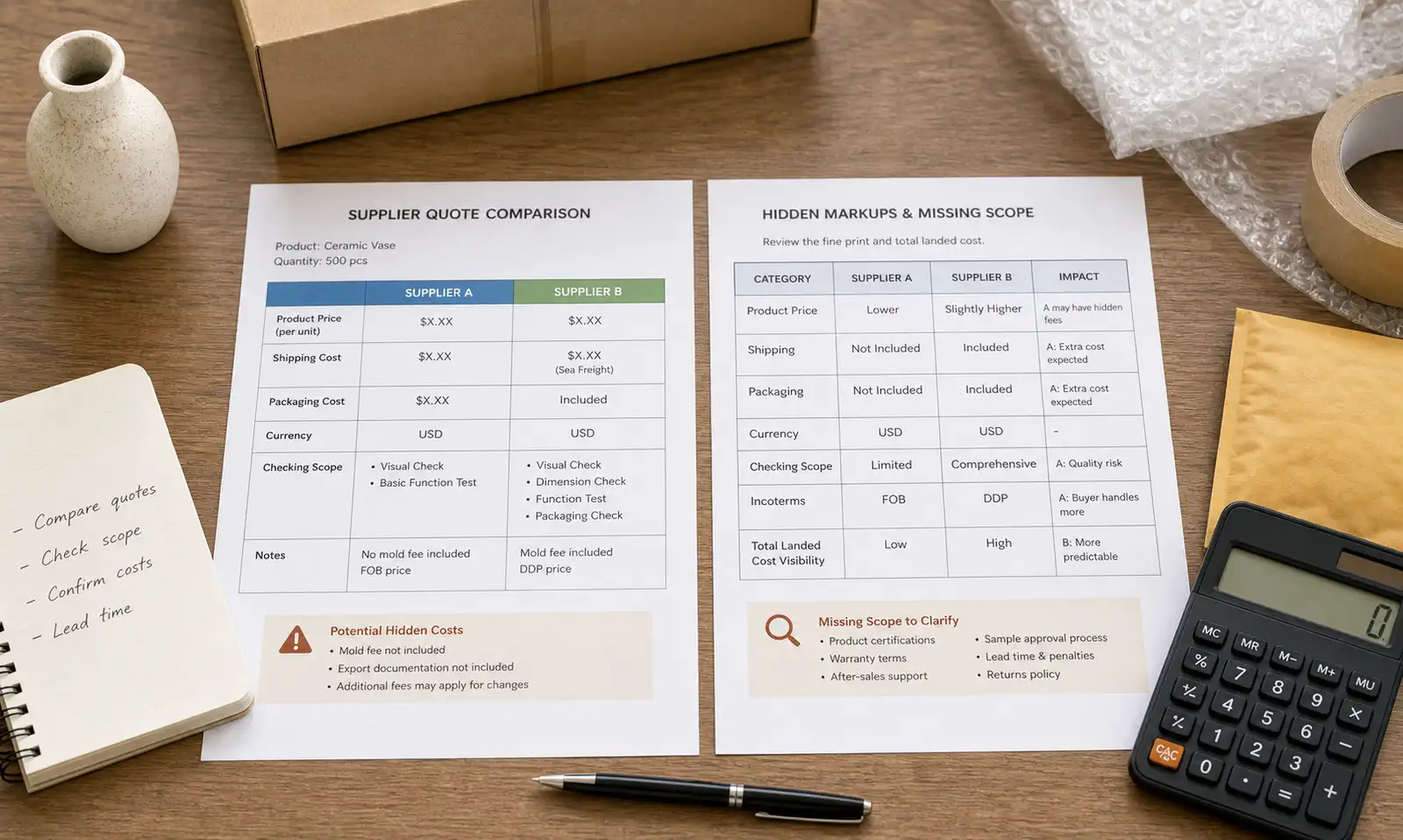
Supplier quotes can hide cost differences when product price, shipping, packaging, currency conversion, and service scope are not separated.
Many public platforms make the buying process feel simple: one product page, one listed price, one shipping option, one checkout. That simplicity can blur the real cost structure. A product that looks cheaper may have higher shipping. “Free shipping” may be built into the item price. A quote may exclude packaging upgrades, inserts, product checks, replacement handling, or the labor needed to coordinate suppliers.
Currency also matters. If you buy in one currency, sell in another, and pay suppliers or platforms through conversion layers, the rate you actually receive may differ from the rate you used in your forecast. Because rates vary by supplier, product type, payment method, and route, compare landed cost instead of relying on a universal markup percentage. Not headline product cost.
Ask for itemized quotes
When you compare suppliers or agents, ask for the same buckets every time:
- Product unit cost.
- Domestic China-side delivery to the agent or processing point, if relevant.
- International shipping by destination and weight.
- Packaging or insert handling.
- Product check or photo confirmation scope.
- Replacement, reship, return, and after-sales handling terms.
- Currency and payment method assumptions.
The cost task is quote normalization: making different supplier offers comparable before you choose the “cheapest” option.
Compare landed cost, not quote screenshots
Landed cost is the amount you expect to pay to get the correct product into the customer’s hands under normal conditions. For dropshipping, it should include the costs required for the order to be correct, trackable, and supportable. If a quote excludes the checks and communication you need, the missing service may appear later as refunds, reships, and complaints.
Shipping and split parcels can erase multi-item profit
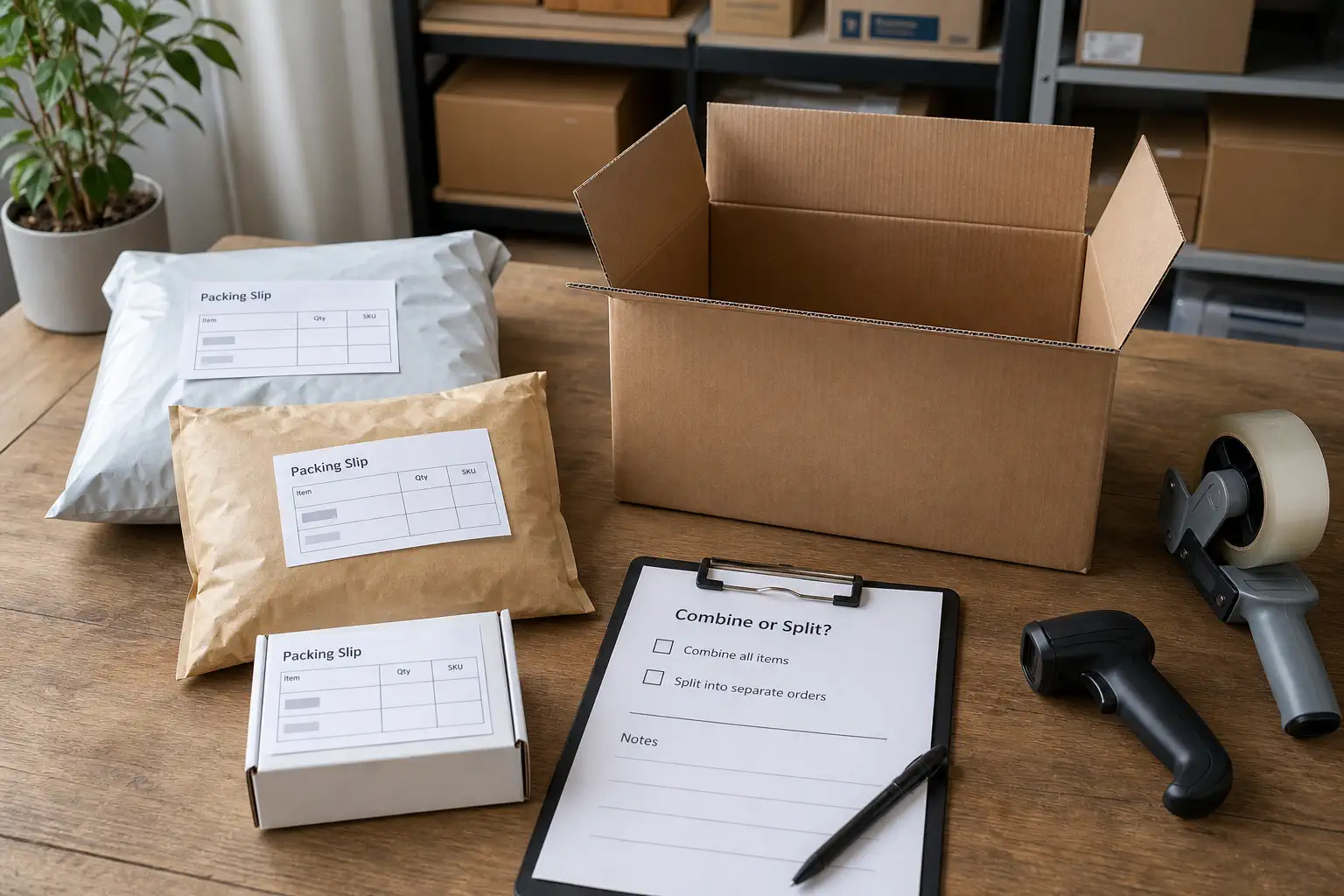
Shipping costs become more dangerous when one customer order turns into several supplier shipments.
Multi-item orders look attractive because they increase average order value. The hidden cost appears when each item comes from a different supplier and ships separately. You may pay more freight, send multiple tracking numbers, create confusion, and let one missing parcel damage the whole order experience.
For example, a customer who buys a main product plus two accessories expects one order experience. If three parcels arrive on different days, the customer may assume part of the order is missing. Support then explains split delivery, checks tracking, and reassures the buyer. If one parcel stalls, refund pressure grows even if two parcels arrived correctly.
For stores with frequent bundles or accessory orders, dropshipping order consolidation can reduce split-parcel confusion and make order-level profit easier to measure. Separate parcels can make a profitable-looking bundle less profitable after freight, support, and replacement risk are counted.
When consolidation is worth reviewing
Order consolidation is worth reviewing when:
- Customers often buy more than one item per order.
- Accessories, kits, or bundles come from different suppliers.
- You receive frequent “where is the rest of my order?” messages.
- Shipping cost rises faster than order value.
- You want a cleaner brand experience without forcing wholesale inventory.
The decision is not automatic. Consolidation requires timing control, receiving, checking, holding, and repacking. But if split parcels are creating repeated support and shipping waste, the cost of coordination may be lower than the cost of disorder.
Key Takeaway: A higher average order value is not automatically better. If multi-item orders create separate parcels, repeated support tickets, and reships, calculate profit at the order level rather than the product level.
Returns, reships, and delays are real cost centers
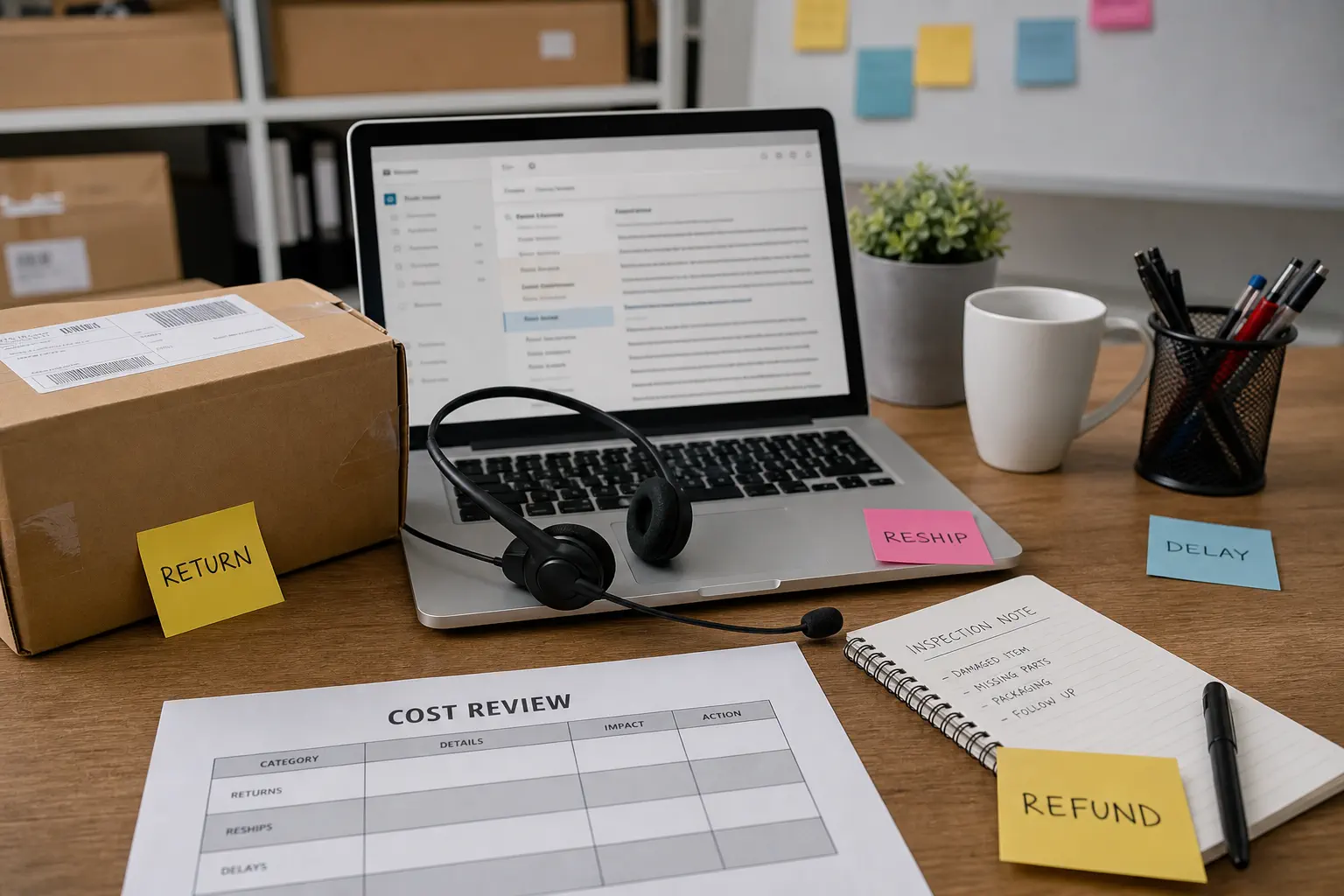
Returns, reships, and delays are cost centers because they consume cash, stock, support time, and customer trust.
A refund is easy to see. The hidden part is everything around it: support replies, investigation, supplier negotiation, replacement shipping, discount codes, payment dispute handling, and the possible loss of future orders. A reship may save a customer relationship, but it can also turn one order into two product costs and two shipping costs. A delay may not create a refund immediately, but it can create a long thread of support work.
A refund also does not always reset the order to zero. Shopify explains that the original credit card transaction fee is not refunded when a Shopify Payments transaction is refunded, so payment processing loss should be counted as part of refund cost.
This is why cost control and Shopify dropshipping chargebacks are closely connected. When customers cannot see tracking progress, receive the wrong item, or feel ignored during a delay, ordinary support can become payment-dispute territory.
A real case warning: Fashion Nova and delayed orders
The Fashion Nova FTC case shows how shipping promises, delay communication, cancellation options, and refunds can become serious business issues when operations do not match customer expectations. The Federal Trade Commission announced in 2020 that Fashion Nova would pay $9.3 million to settle allegations related to shipping delays, cancellation rights, and refunds for unshipped merchandise.
The lesson for a Shopify dropshipping seller is not that every delay creates the same legal or financial exposure. The lesson is more practical: promises must match operational reality. If your supplier cannot confirm stock, dispatch, tracking, or delay status quickly, you may keep selling while the cost of unresolved orders accumulates behind the scenes.
Treat prevention as a cost strategy
Better product checks, clearer shipping routes, accurate updates, and faster exception handling are not just quality improvements. They are margin protection. Every preventable wrong item, damaged parcel, vague delay, and avoidable reship pulls money out after the sale.
Apps, automation, and operational workarounds add up
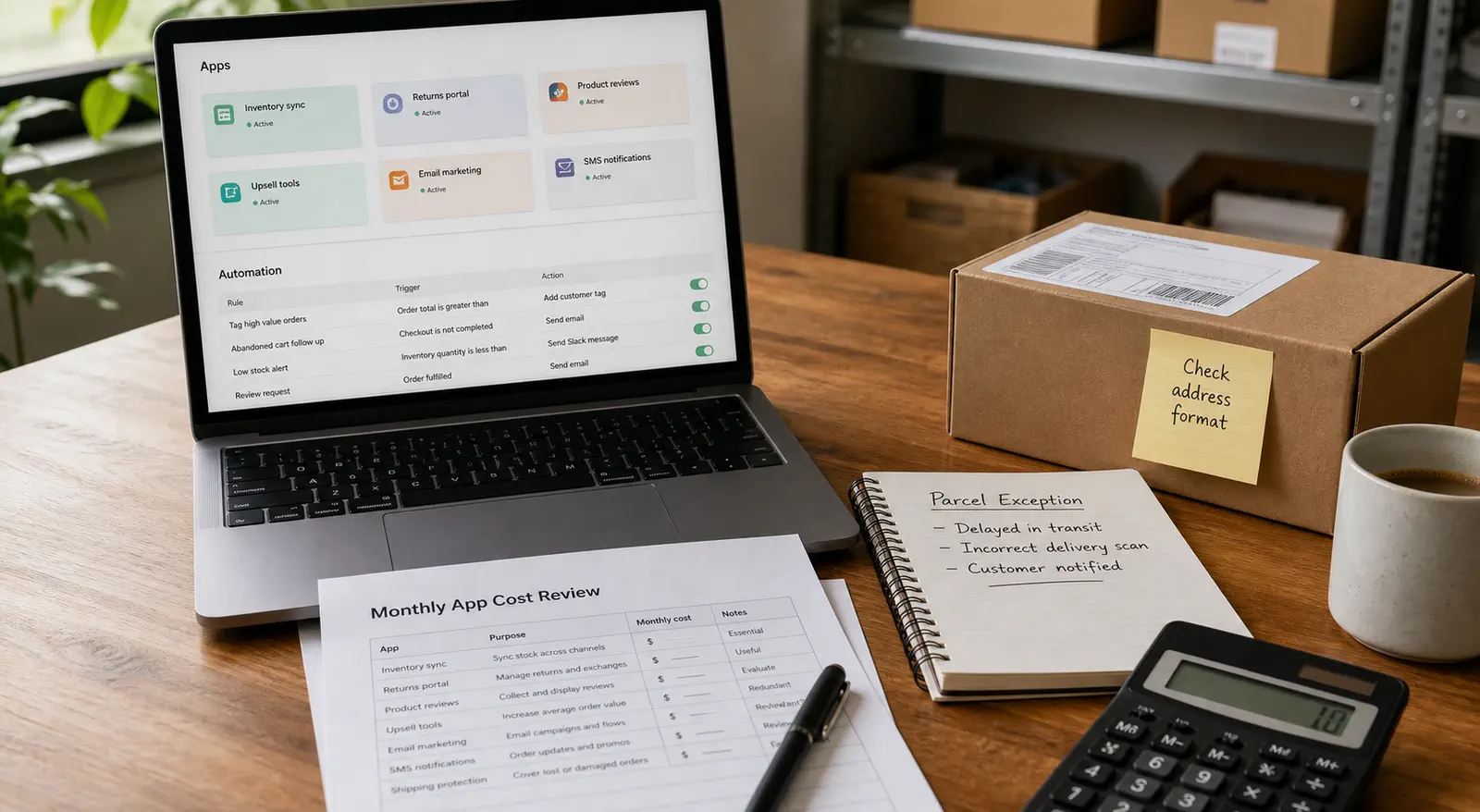
Apps and automation become hidden costs when each new tool patches a backend weakness without solving the physical problem.
Shopify’s app ecosystem is powerful. A growing store may need review, tracking, email, upsell, product import, inventory, support, analytics, and fraud-prevention tools. The problem is not apps themselves. The problem is that subscriptions can become a monthly tax on operational disorder.
If you add a tracking app because customers are confused, ask whether the root issue is tracking visibility or supplier dispatch behavior. If you add customer service automation because the inbox is overloaded, ask whether order exceptions are being caught early enough. If you add a product import tool because suppliers are messy, ask whether the supplier process itself is too fragmented.
Software cannot inspect a parcel
Automation can sync order data, send emails, tag customers, and organize workflows. It cannot open a parcel, check a variant, confirm an accessory, identify weak packaging, negotiate a replacement, or decide whether an order should be held. Here, the cost lesson is narrower: software should reduce repeat work, not hide backend risk.
Watch for stacked subscriptions
Review your Shopify dropshipping app stack every month. Keep tools that reduce repeat support work, improve order visibility, or prevent avoidable fulfillment problems. Remove tools that duplicate each other, downgrade tools that exceed current needs, and cut subscriptions that only exist because supplier dispatch, tracking, or exception handling is unclear. A small subscription is not small if it becomes a permanent workaround for backend disorder.
Use a true-cost audit before scaling ads
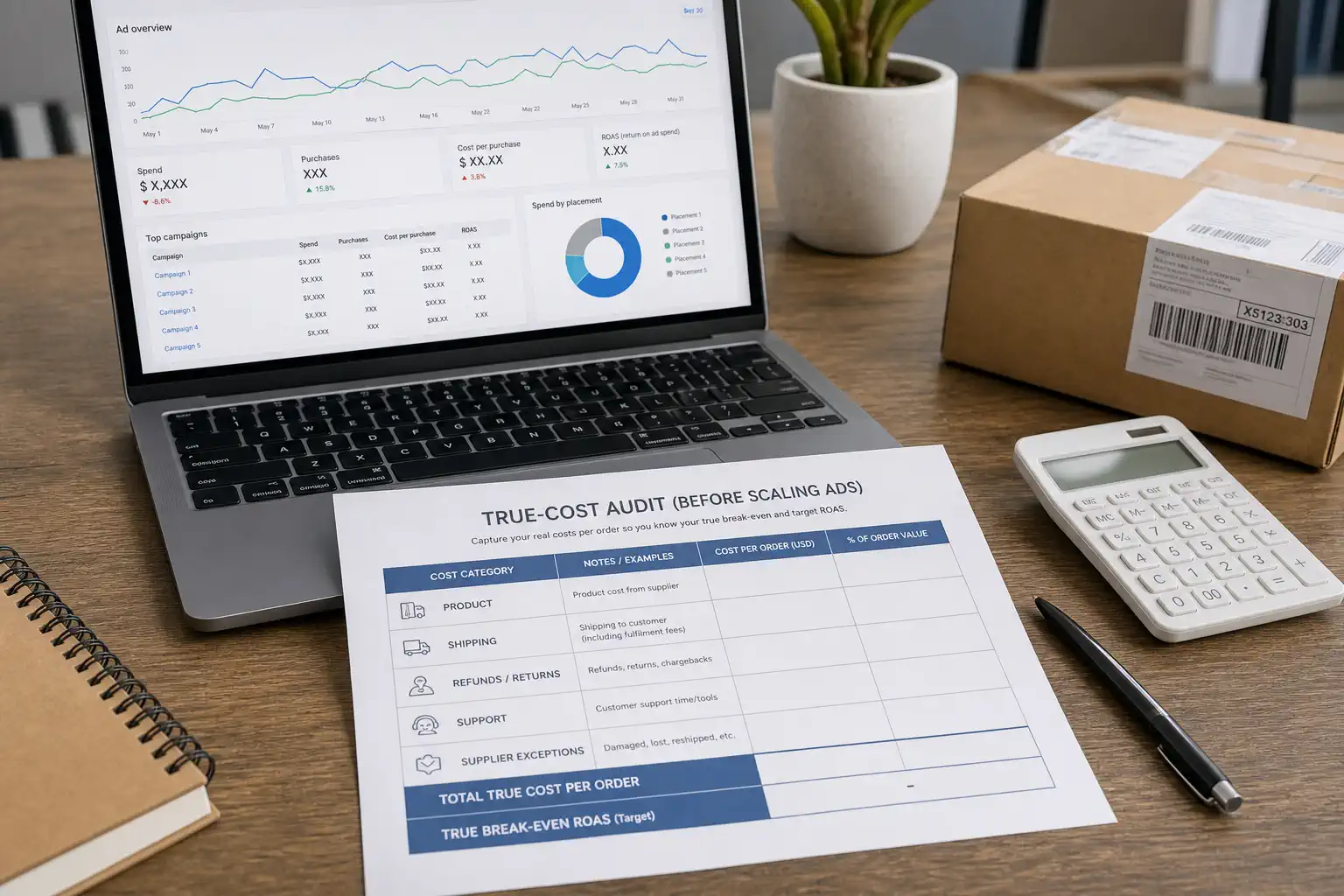
A true-cost audit helps you decide whether a product is ready to scale or only looks profitable under incomplete math.
Before increasing ad spend, choose a recent order sample and review the real cost path. Include normal orders and problem orders. The goal is to see whether the backend can support more volume without turning every small failure into a margin leak.
Use a simple audit table:
| Audit question | What to check |
|---|---|
| Product cost stability | Did supplier quotes change by variant, batch, or availability? |
| Shipping reality | Did actual shipping match the forecast by country and weight? |
| Parcel structure | Did multi-item orders ship together or separately? |
| Quality and packing | Were wrong variants, damage, leaks, or missing parts reported? |
| Support workload | How many customer messages did each issue create? |
| Refund and reship cost | Which issues required refund, discount, or replacement? |
| App and tool allocation | Which tools are required to keep this product manageable? |
Build three margin views
For each product, create three views:
1. Expected margin: your forecast before selling. 2. Normal-order margin: the margin on smooth orders. 3. Problem-order margin: the margin after a refund, reship, delay, or support-heavy exception.
The third view is where many products fail. A product can be profitable when everything goes right and fragile when anything goes wrong. Scaling it without stronger backend control multiplies the problem.
Key Takeaway: Scale only after the true-cost audit proves that normal orders are profitable and problem orders are survivable. A product that collapses after one reship or one split parcel needs operational repair before more ad spend.
When a Private Dropshipping Agent Improves Cost Visibility

A private dropshipping agent improves cost visibility when your current setup cannot clearly show product cost, shipping cost, checking scope, parcel handling, and exception responsibility.
This does not mean every beginner needs a private agent immediately. If you are testing a product with very low volume, your priority may be validation. But once orders are stable, the question changes. You no longer need only product access; you need repeatable execution. That includes supplier communication, quote comparison, product checks before dispatch, packaging confirmation, shipping arrangement, tracking visibility, and after-sales coordination.
Runtodropship’s role is best understood as private-agent supply-chain execution for sellers and operators who already have orders. For cost control, the value is not a magic promise of cheaper everything. The value is a clearer operating structure: what the product costs, what shipping includes, which checks are performed, which exceptions are held, and who is accountable for follow-up.
What to ask before switching
Ask any potential agent:
- Can you itemize product, shipping, packaging, and service scope?
- How do you handle multi-item orders from different suppliers?
- What product checks are included before dispatch?
- How do you report tracking exceptions?
- What happens when the supplier sends the wrong variant?
- How are replacements, returns, and after-sales issues handled?
The right answer is not always the lowest quote. It is the quote you can understand, compare, and operate with fewer surprises.
FAQ
What is the most common hidden cost in Shopify dropshipping?
The most common hidden cost is usually operational leakage, not one isolated fee. Shipping mismatches, refunds, reships, support time, app subscriptions, and supplier quote changes often create a larger impact together than sellers expect.
Are Shopify fees the biggest cost for most dropshipping stores?
Usually no. Shopify platform and payment costs matter and should be verified on official Shopify pages, but product sourcing, shipping, returns, advertising, and fulfillment mistakes often have a larger effect on net margin as the store scales.
How do I know if a supplier quote is truly cheap?
Compare landed cost, not only product price. Ask whether the quote includes shipping, packaging, product checks, currency assumptions, replacement handling, and after-sales support. A low quote that excludes critical work can become expensive later.
Should I use more apps to control hidden costs?
Use apps when they reduce real work or improve visibility. Do not use apps as a substitute for supplier accountability, product checks, clear shipping routes, or exception handling. Software cannot fix every physical execution problem.
When should I review private-agent support?
Review it when you have repeat orders and hidden costs are coming from supplier communication, split parcels, quality issues, unclear tracking, or repeated support workload. The stronger your order volume, the more costly backend uncertainty becomes.
Conclusion
A Shopify dropshipping store does not lose margin only because one fee is too high. Margin usually leaks through a system: unclear supplier quotes, separate shipping, weak checks, app sprawl, support tickets, refunds, reships, and delayed exception handling. Once you see those costs clearly, you can decide whether a product is worth scaling, whether a supplier is still suitable, and which backend controls need to change.
If your store already has orders and you want clearer sourcing, product checks, packing confirmation, shipping arrangement, and after-sales coordination, Runtodropship can help you review the backend cost drivers behind your current Shopify operation. The next step is practical: share your product type, current supplier workflow, shipping destinations, and the costs that keep surprising you, then build a cleaner private-agent workflow before scaling further.