
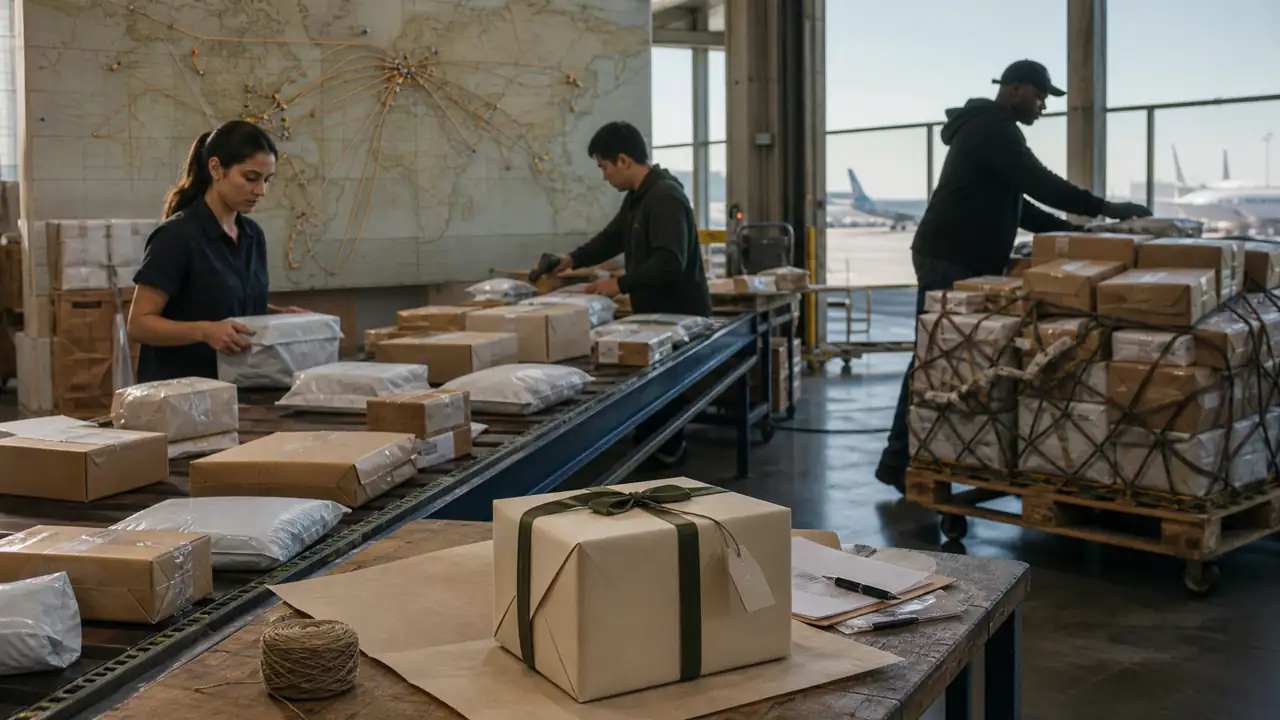
YunExpress SHEIN searches reveal more than curiosity about an unfamiliar tracking name: they expose how platform-scale ecommerce turns parcel density, air capacity, routing data, and local delivery handoffs into a competitive system. SHEIN and Temu do not win because one carrier performs magic. They win by coordinating demand, suppliers, consolidation, customs data, multiple transport options, and customer promises at enormous volume.
Quick Answer: YunExpress can appear in the logistics ecosystem around large marketplaces, but a tracking event does not prove that every SHEIN or Temu order follows one permanent carrier relationship. The strategic lesson for an independent seller is to copy the operating logic—not the giants’ spending: shorten the gap from order to first scan, pool volume where possible, match routes to products and destinations, control packaging, and build an exception process before promising faster delivery.
Imagine a customer sees an inexpensive platform order cross borders in days while your branded-store parcel still shows “label created.” The comparison may be unfair—different products, lanes, subsidies, volumes, and service levels—but the customer experiences only the gap. Competing by promising an even lower price is usually a dead end. Competing with a clearer promise, a more deliberate route system, better presentation, and faster recovery when something goes wrong is achievable.
YunExpress SHEIN Searches Point to a Network, Not a Single Secret Deal

The defensible answer is that YunExpress publicly presents SHEIN and Temu among the partners shown on its website, and consumers sometimes see YunExpress tracking attached to orders from major marketplaces. That evidence supports participation in a broader ecommerce ecosystem. It does not establish that either platform uses YunExpress exclusively, in every country, for every category, or under an unchanged global contract.
That distinction matters because large platforms allocate parcels across routes. Origin city, destination postcode, product restrictions, parcel weight, promised date, available capacity, customs method, and last-mile coverage can change the choice. A customer may see one carrier on the international leg and another after destination-country induction. If you need the carrier fundamentals before comparing platform strategies, the practical explanation of what YunExpress is and how its handoffs work provides that foundation.
Searchers asking “does SHEIN use YunExpress?” often want one of two answers. Consumers want to know whether a parcel is legitimate and who will deliver it locally. Sellers and industry researchers want to know how low-value orders move from China quickly enough to reset expectations. Those are connected questions, but not identical ones.
Does SHEIN use YunExpress?
The careful answer is: YunExpress is visibly associated with the platform ecosystem, and individual shipments may use its network, but the carrier shown on one parcel should not be generalized into a universal routing rule. The phrase “SHEIN uses YunExpress” is safest when it describes an observed shipment or YunExpress’s own partner display, not an exclusive arrangement.
What about YunExpress Temu parcels?
The same boundary applies. A Temu buyer may receive a YunExpress-linked tracking number, while another order follows a different consolidator or local delivery path. Platform logistics are portfolio systems. The operator buys outcomes across lanes rather than loyalty to one label.
Key Takeaway: Treat a carrier name as evidence about one route, not proof of an entire platform’s logistics architecture. The transferable advantage is multi-route orchestration.
For sellers comparing carrier options, a 4PX vs YunExpress route comparison is more useful than assuming one carrier name is always better.
The Speed Advantage Begins Before a Parcel Reaches the Airport
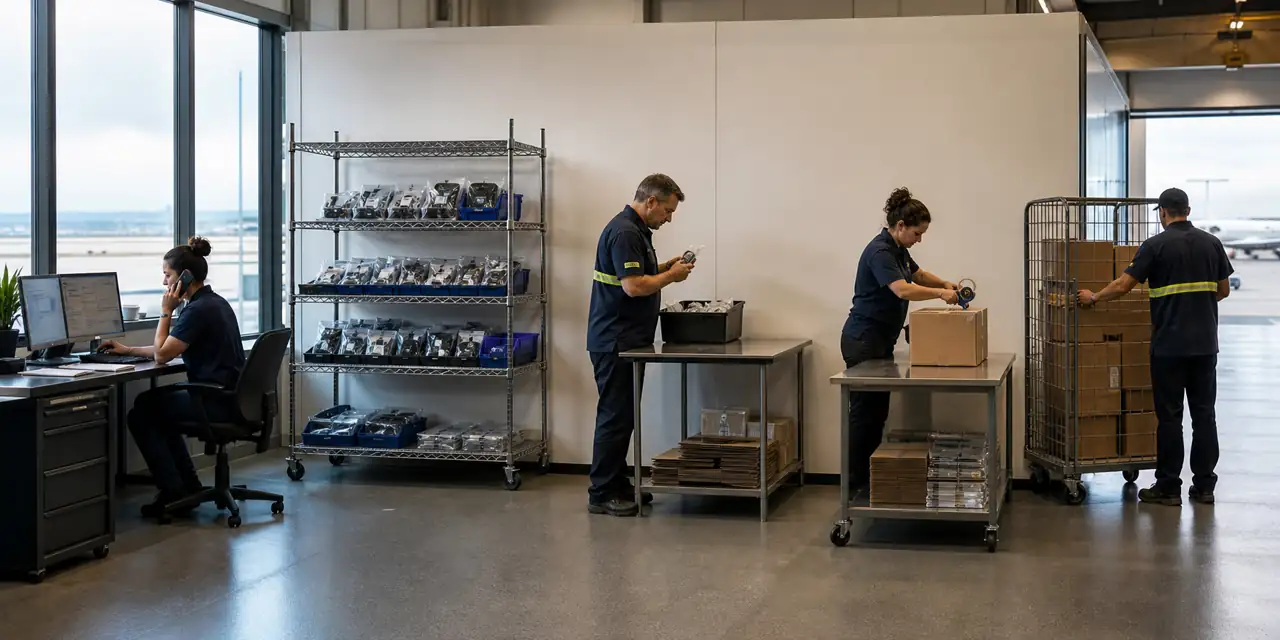
Fast cross-border delivery is often described as an air-freight story. Air capacity matters, but the clock starts earlier. A parcel cannot benefit from a fast flight if the product has not been produced, allocated, checked, packed, manifested, and handed to the line-haul network.
SHEIN’s publicly described on-demand model begins with small initial production batches—often 100 to 200 pieces—then uses customer response to decide what to reorder. This reduces the need to commit every style to deep inventory before demand is visible. Temu’s model differs because it operates a broad marketplace, yet it also concentrates order data and logistics decisions at platform level.
For an independent store, the lesson is not “copy fast fashion.” It is to compress decisions:
- Keep a reliable view of supplier-ready inventory, not just catalog availability.
- Set a cutoff for same-batch processing and record when an order misses it.
- Pre-approve packaging, variants, inserts, and restricted-product requirements.
- Measure paid-to-packed and packed-to-first-scan time separately.
- Stop advertising a SKU when supplier confirmation becomes ambiguous.
Traditional product-listing dropshipping often starts buying only after an order arrives, then discovers that the supplier changed stock, packaging, or preparation time. That variability consumes the time saved by any premium route. A denser flight schedule cannot repair an order that sat unconfirmed for three days.
Parcel Density Is the Hidden Economic Engine
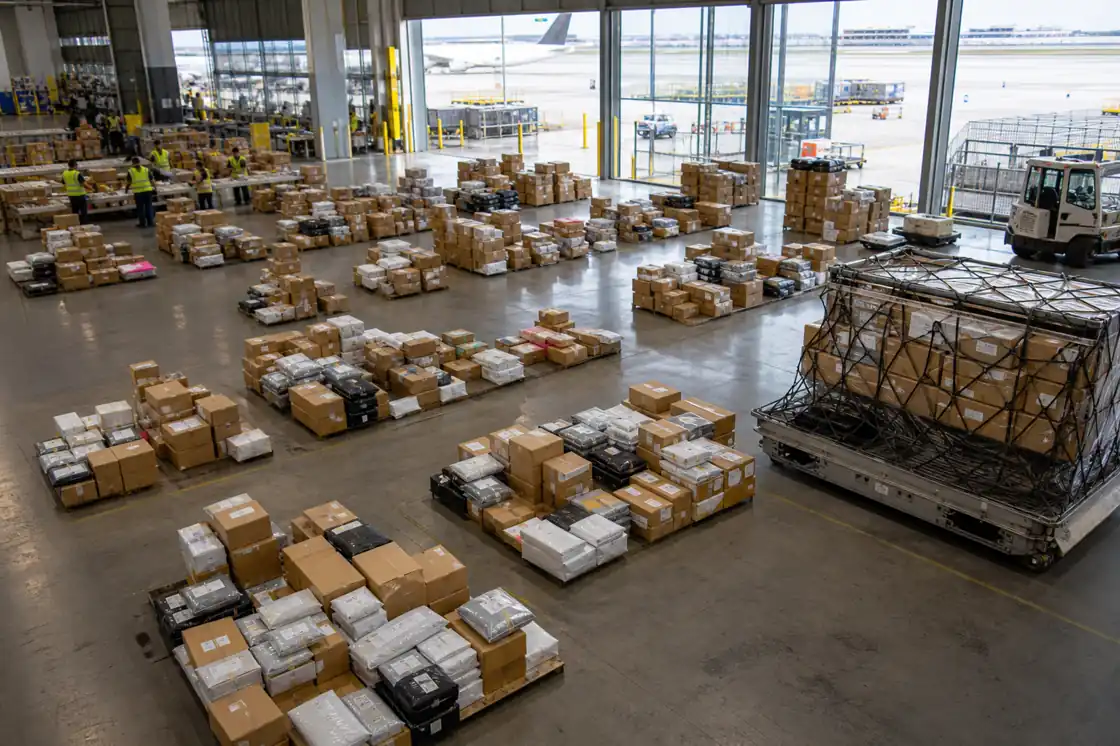
The giants’ most powerful logistics asset is density: many parcels leaving related origin regions for repeat destination zones every day. Density improves the chances of filling scheduled capacity, negotiating line-haul terms, pre-sorting by destination, and feeding last-mile networks in predictable batches.
The Wall Street Journal reported in late 2023 that individual packages for the same US ZIP code or region were grouped on pallets in China. Temu said inspecting and bundling at origin removed traditional steps, while large order volumes helped secure lower shipping rates. This is more important than the simplistic claim that platforms merely “buy cheap air freight.” They redesign where sorting, inspection, and aggregation happen.
Air cargo reporting also shows the external effect. Ecommerce demand led by SHEIN and Temu pushed global air-cargo demand up 5% year over year in November 2023; a Xeneta executive said their volumes could dominate Hong Kong export capacity on certain days. Those figures describe a historical market moment, not a permanent share, but they demonstrate how concentrated ecommerce demand can reshape capacity and rates.
Small sellers cannot charter the market. They can still access a density benefit through aggregation. A private agent or specialized cross-border network can combine parcels from multiple sellers into established lanes, creating a better operational position than isolated postal packets. The seller should still ask what the quoted route includes: pickup cutoff, first scan, customs data, last-mile handoff, remote-area coverage, claims channel, and prohibited-item rules.
Key Takeaway: Do not compare shipping quotes as if transport were a single commodity. Ask how your parcels enter an existing flow and what happens when they fall outside it.
The Real Product Is a Chain of Handoffs
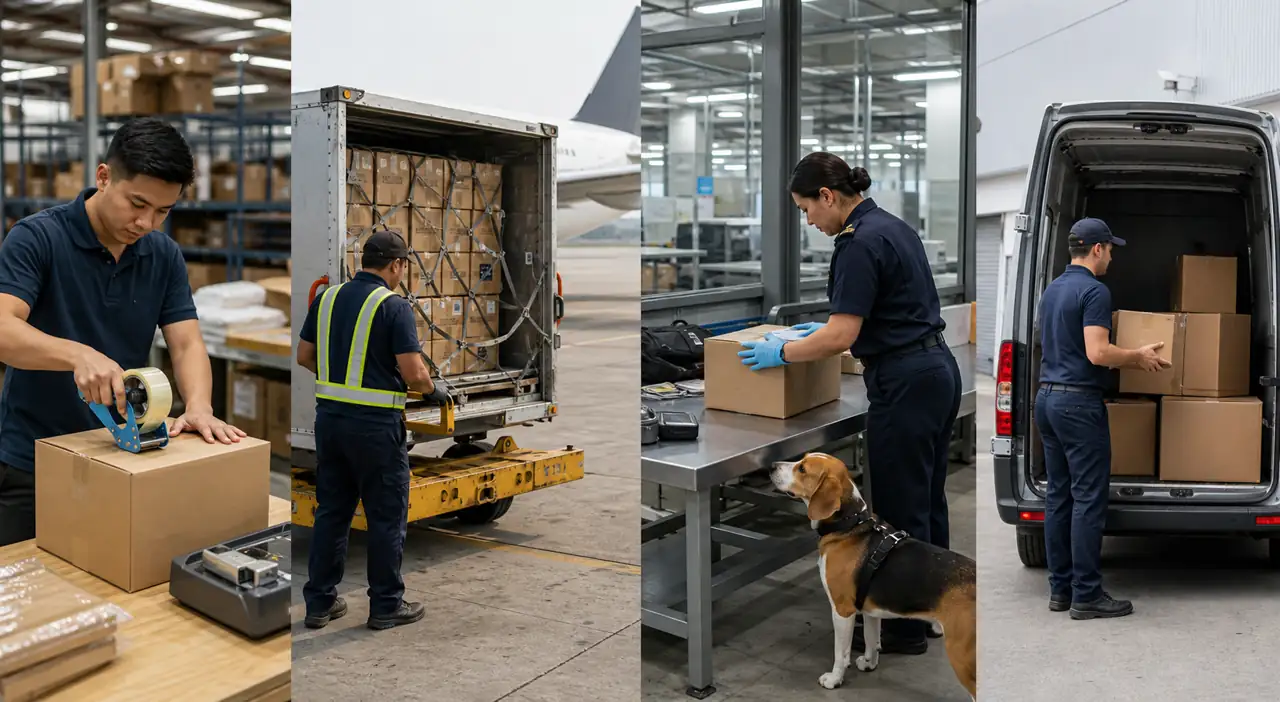
Cross-border parcel delivery is a relay. The visible carrier may collect and consolidate in China, arrange international movement, transmit customs data, and then tender the parcel to a postal or regional carrier. Each handoff creates a new operational question: who possesses the parcel, whose tracking system is authoritative, and who can initiate a trace?
For consumers, this explains why a tracking page can appear quiet while the parcel is between systems. For sellers, it exposes the danger of treating “fulfilled” as a physical event. A label can exist before collection. Export information can exist before a flight departs. Last-mile data can be created before the domestic carrier has possession.
A useful control record therefore needs at least five timestamps:
| Checkpoint | What it proves | What it does not prove |
|---|---|---|
| Order released | The store approved processing | Supplier stock is physically confirmed |
| Packing completed | The parcel is prepared | The carrier has accepted it |
| First carrier scan | Network possession is visible | Export has occurred |
| Destination induction | A local network event exists | Delivery will occur on a specific day |
| Delivery evidence | The route recorded completion | The customer received the correct item intact |
This is also why Amazon shipping YunExpress searches require nuance. Amazon Marketplace contains third-party sellers and varied fulfillment models; seeing YunExpress can indicate a merchant-fulfilled cross-border parcel, not that Amazon’s own domestic delivery network selected one universal international carrier.
What the Giants Changed and What Regulation Changed Back

The direct-to-consumer small-parcel model grew partly because customs systems were designed to simplify low-value imports. That policy environment is no longer static.
In the United States, duty-free de minimis treatment for qualifying low-value goods from China and Hong Kong ended on May 2, 2025, and US Customs and Border Protection later began enforcing the global suspension from August 29, 2025. The old assumption that every sub-$800 parcel from China enters duty-free is therefore obsolete. Shipping architecture now has to account for duties, entry data, origin, postal versus non-postal treatment, and changing enforcement requirements.
The European Union faces the same volume challenge through a different framework. EU data shows that low-value imports reached 4.6 billion items in 2024, while European Commission guidance says almost 5.9 billion low-value items were shipped directly to EU consumers in 2025. From July 1, 2026, the EU began applying a temporary €3 customs duty per item on low-value consignments up to €150, replacing the previous duty exemption that applied until June 30, 2026. For sellers, the lesson is no longer only that parcel volume attracts regulatory attention. The operational lesson is that low-value cross-border shipping now requires stronger product data, tariff classification, landed-cost planning, and compliance checks before a customer promise is made.
Independent sellers should take two lessons. First, never build a customer promise around a tax or customs shortcut that may change. Second, product compliance and accurate data are logistics capabilities. A fast route with weak declarations, unclear product descriptions, or prohibited contents can become the slowest route in the portfolio.
A real scale case: 600,000 daily US parcels
A 2023 bipartisan US House Select Committee report estimated that SHEIN and Temu together sent almost 600,000 packages per day to the United States under the de minimis rule at that time—more than 30% of daily US de minimis packages in the report’s comparison. The finding is historical and tied to the rules and evidence then available. Its lasting lesson is operational: once parcel flows reach that density, customs policy, enforcement capacity, air freight, and local delivery can no longer be separated from platform strategy.
Key Takeaway: Speed built on a regulatory assumption is fragile. Design routes around accurate product data and landed-cost resilience, not yesterday’s exemption.
Why Traditional Dropshipping Feels Slow Even When Transit Is Acceptable
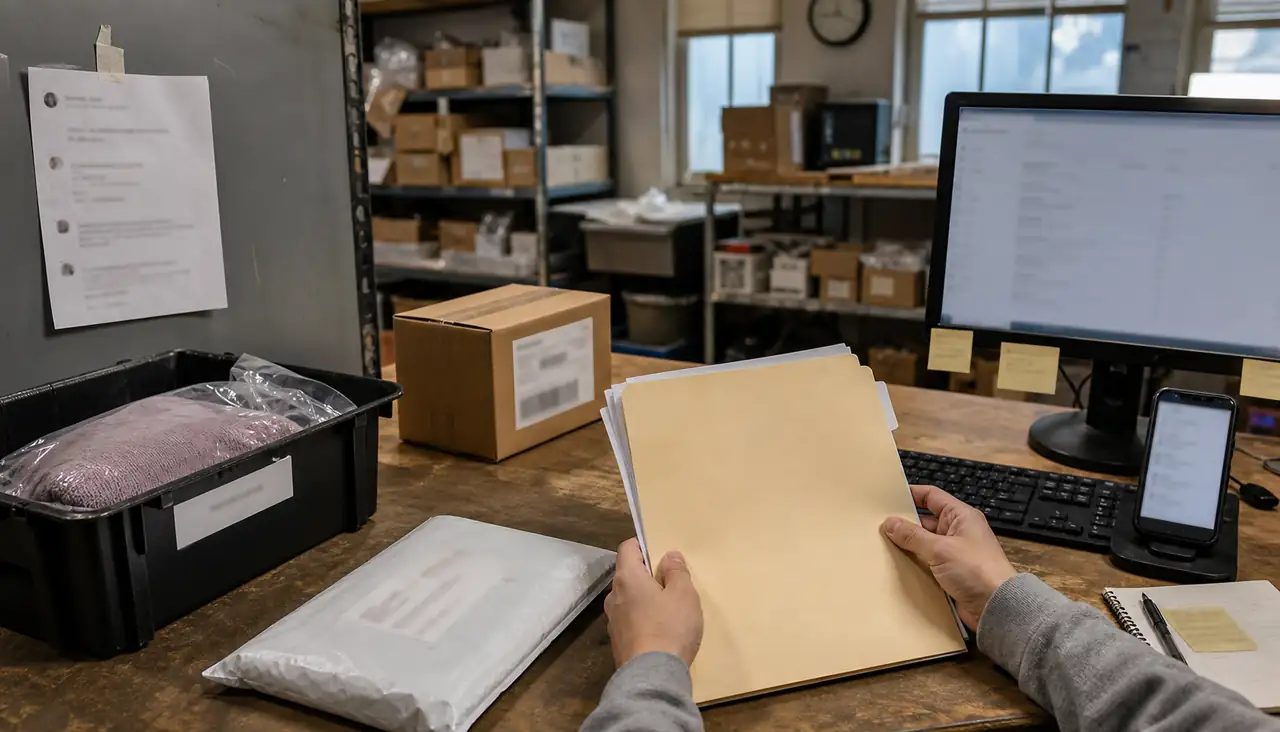
Traditional dropshipping is often slow because responsibility is fragmented. The supplier confirms stock, another party packs, a carrier receives the parcel, a tracking app imports events, and customer service reacts later. Every participant can complete its own task while the customer’s order still fails as a whole.
The most damaging delay may not be transit. It may be uncertainty:
- The supplier says “shipped” but means a label was created.
- The correct product arrives in packaging that contradicts the brand promise.
- Two items wait for separate suppliers without a consolidation decision.
- A route accepts the parcel but rejects its battery, liquid, or cosmetic declaration later.
- The first tracking number is replaced at destination and support cannot find the second.
- Nobody has authority to approve a resend, refund review, or alternative route.
Large platforms reduce this uncertainty through rules, data, and bargaining power. A smaller seller needs explicit ownership. One person or team must be able to connect supplier evidence, packing status, carrier acceptance, customer communication, and remedy decisions.
This is where copying a platform’s price is the wrong contest. The platform can spread exceptions across millions of orders. Your customer remembers one. A smaller brand can win by making that one order feel considered: correct item, deliberate packaging, intelligible tracking, honest updates, and a fast decision when the route fails.
Independent Sellers Need a Service-Level Architecture
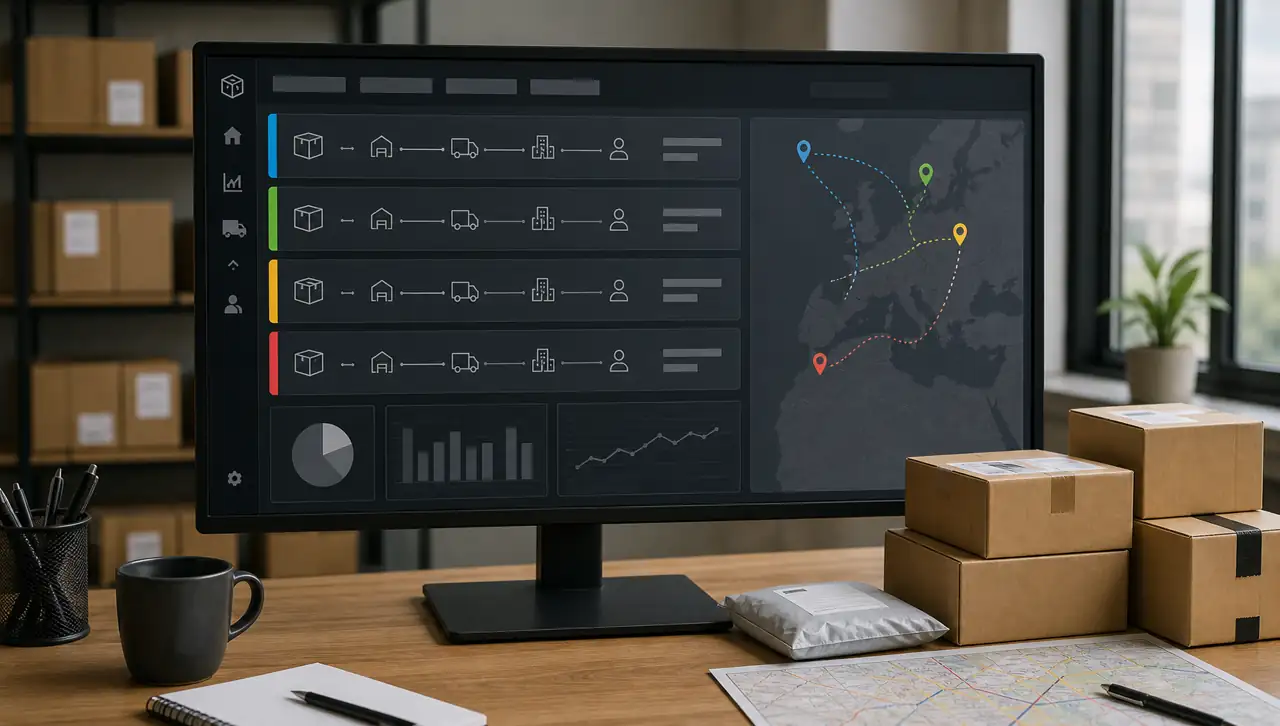
One “fast shipping” line is not a strategy. A resilient store assigns routes by order risk and customer promise. Start with four service classes rather than a carrier popularity contest.
| Service class | Suitable order | Required control |
|---|---|---|
| Economy tracked | Low-risk, flexible delivery | Valid tracking and clear expectation |
| Standard dedicated line | Core lightweight orders | Stable origin processing and last-mile visibility |
| Priority route | Time-sensitive or higher-value orders | Margin approval and stronger delivery evidence |
| Exception route | Restricted, remote, oversized, or fragile goods | Manual eligibility and packaging review |
Then create routing rules around destination, chargeable weight, product attributes, order value, buyer deadline, and current lane performance. Do not upgrade every parcel when one route slows; identify the affected lane and risk class.
Your operating dashboard does not need artificial intelligence theater. It needs usable signals: median paid-to-first-scan time, parcels without a meaningful scan, destination handoff gaps, delivery attempts, damage reports, and the cost of refunds or replacements by route. Compare cohorts rather than celebrating one unusually fast parcel.
A 30-day implementation sequence
During week one, map the physical order journey and define each timestamp. In week two, test representative SKUs and destinations on at least two appropriate route classes. In week three, connect tracking exceptions to named owners and customer-update templates. In week four, review actual scans, packaging outcomes, and total cost before shifting more volume.
Key Takeaway: Promise the service level your system can repeatedly explain and recover—not the fastest screenshot from a test parcel.
Packaging Is Where an Independent Brand Can Beat a Marketplace
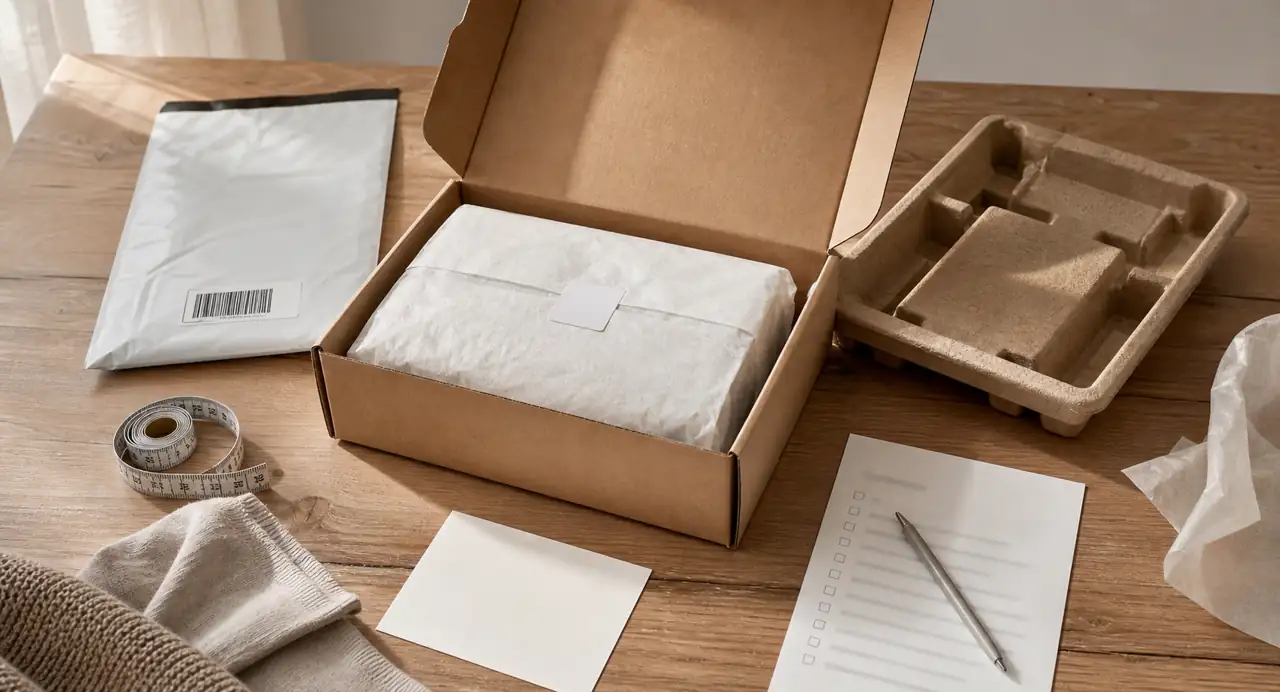
Platform parcels optimize for throughput and cost. An independent brand can make packaging part of the product experience, provided it does not compromise route eligibility or chargeable weight.
Branded packaging is not merely a logo on a mailer; private label dropshipping only protects the brand when product protection, insert placement, and route eligibility are controlled together. It is a controlled specification: product protection, correct variant, clean presentation, compliant labels, insert placement, barcode visibility, and a pack-out that survives consolidation and last-mile handling. A beautiful rigid box that triggers dimensional charges or arrives crushed is not premium execution.
For growing stores, the useful sequence is:
- Approve the product sample and packaging separately.
- Test the complete packed parcel on the intended route.
- Record dimensions and weight after final packing.
- Photograph the approved pack-out for repeat checks.
- Define what may be replaced during carrier repacking—and what may not.
- Use inserts to clarify use, care, support, or brand story without making unsupported claims.
The practical implementation options for custom inserts and branded parcel preparation become relevant when presentation must remain consistent through cross-border handling. Packaging gives a smaller seller a field where scale is not everything: attention can create more perceived value than another generic discount.
The Small-Seller Moat Is Exception Recovery

The biggest platforms train customers to tolerate standardized processes. A focused brand can offer judgment. That makes exception recovery—not raw speed—the more defensible moat.
Build an exception matrix before scaling:
| Trigger | First action | Decision owner |
|---|---|---|
| No carrier acceptance scan | Confirm physical handoff evidence | Origin operations |
| Export or customs hold | Check declaration and product eligibility | Shipping coordinator |
| Destination handoff gap | Locate local number and induction event | Tracking support |
| Delivered, not received | Gather delivery evidence and address facts | Customer support lead |
| Damage or wrong item | Collect photos and packing record | After-sales owner |
| Repeating lane failure | Pause or reroute qualified orders | Operations manager |
Set review windows by route and event rather than telling support to “wait a few days.” The response should state the last confirmed fact, the next checkpoint, the person responsible, and the remedy threshold. This prevents a carrier delay from turning into silence.
For a seller with stable orders, a China-based private dropshipping agent team can coordinate supplier communication, product checks, packaging confirmation, order execution, route selection, tracking follow-up, and after-sales evidence in one accountable workflow. It cannot guarantee customs decisions or every delivery date. Its value is reducing the gaps between parties and giving exceptions an owner.
Key Takeaway: Customers may forgive a delay; they rarely forgive being left to investigate your supply chain alone. Make recovery visible, specific, and owned.
FAQ
Is YunExpress the exclusive carrier for SHEIN or Temu?
No. Public partner displays and observed tracking records support the conclusion that YunExpress participates in the broader platform ecosystem, but they do not prove exclusive or universal routing. Large marketplaces use multiple logistics and last-mile options by lane and order.
Why can a low-cost platform parcel arrive faster than a dropshipping order?
Because speed comes from coordinated demand data, ready inventory, origin sorting, dense line-haul flows, customs preparation, and route allocation—not simply paying for a faster flight.
Does Amazon use YunExpress?
Some Amazon Marketplace orders from third-party sellers may use YunExpress. That does not mean every Amazon order or Amazon’s own delivery network uses the same carrier.
Should an independent store promise seven-day international delivery?
Only after representative route tests and stable operating data support that promise for the relevant product and destination. Use a range and explain processing separately from transit when conditions vary.
What should a seller copy from SHEIN and Temu first?
Copy their operating discipline: demand-linked inventory decisions, origin control, route portfolios, event-level tracking, and fast exception ownership. Do not copy unsustainable pricing or assume their regulatory economics remain available to you.
Conclusion
SHEIN and Temu changed cross-border expectations by treating logistics as part of the merchandising system. Demand signals influence supply, parcels are prepared and grouped near origin, capacity is allocated across routes, and local delivery is one stage in a managed chain. YunExpress is useful evidence of that ecosystem, but no single carrier name explains the whole machine.
Independent sellers do not need to reproduce a giant’s aircraft demand or subsidy budget. They need a tighter promise: verified supplier readiness, controlled packaging, route classes, meaningful scan checkpoints, honest landed-cost planning, and an exception owner who can act. That combination can deliver something a bargain marketplace often cannot—a coherent brand experience before, during, and after the parcel journey.
If your store already has consistent orders and the backend still depends on disconnected suppliers and improvised shipping choices, RuntoDropship can help you test a more accountable private-agent workflow with sourcing coordination, product checks, branded packaging, shipping arrangement, tracking follow-up, and after-sales support. Send your product link, average daily order volume, main destinations, and current packaging or delivery problem to start with a representative test order.