

Q4 dropshipping logistics is about preparing the physical order system before holiday demand hits: supplier capacity, processing cutoffs, route backups, tracking visibility, customer updates, and exception rules. For a high-volume Shopify seller, the goal is not to promise unrealistically fast delivery; it is to protect customer trust when November and December put pressure on every weak point in your backend.
Core Summary:
- Q4 risk usually comes from a chain reaction: ad spikes, supplier queues, airport congestion, carrier handoffs, customs checks, and customers buying gifts with tighter expectations.
- A safer plan separates what you can control before dispatch from what you can only communicate after shipment, then builds buffers around both.
- The practical next step is to create a holiday logistics calendar, choose backup routes, confirm supplier capacity, tighten tracking rules, and update customer-facing promises before the rush begins.
Picture a Shopify store that normally handles steady daily orders. In late November, a winning offer starts converting, customers buy gifts, and support messages become more emotional because every delay feels personal. The seller does not need another generic shipping-speed article. They need a concrete peak-season operating plan that keeps ads, inventory signals, packing capacity, shipping options, and customer communication aligned.
Q4 dropshipping logistics: Quick Verdict

The quick verdict is simple: plan the holiday backend before you scale holiday traffic. Standard dropshipping routines often work during calm months, but peak season exposes small gaps in supplier response, packing accuracy, carrier capacity, and tracking communication.
For Shopify sellers, Q4 logistics works best when the backend already has one accountable workflow for supplier confirmation, product checks, order preparation, dispatch coordination, and tracking write-back before holiday traffic increases.
Your Q4 plan should answer five questions before Black Friday:
| Decision area | What you need before peak season |
|---|---|
| Supplier capacity | Which SKUs can be prepared quickly, and which need earlier confirmation? |
| Processing rules | What daily cutoff separates same-day handling from next-batch handling? |
| Route selection | Which standard, priority, and backup shipping lines fit each product and destination? |
| Tracking visibility | When should your team investigate no-scan, slow-scan, or handoff exceptions? |
| Customer promises | What delivery language is honest enough for holiday buyers? |
Key Takeaway: Do not enter holiday sales season with one supplier answer and one shipping route. Treat Q4 as a capacity-planning project: confirm supply, protect processing time, prepare backup lines, and make customer promises conservative enough to survive real-world delays.
Why Q4 Breaks Standard Dropshipping Systems
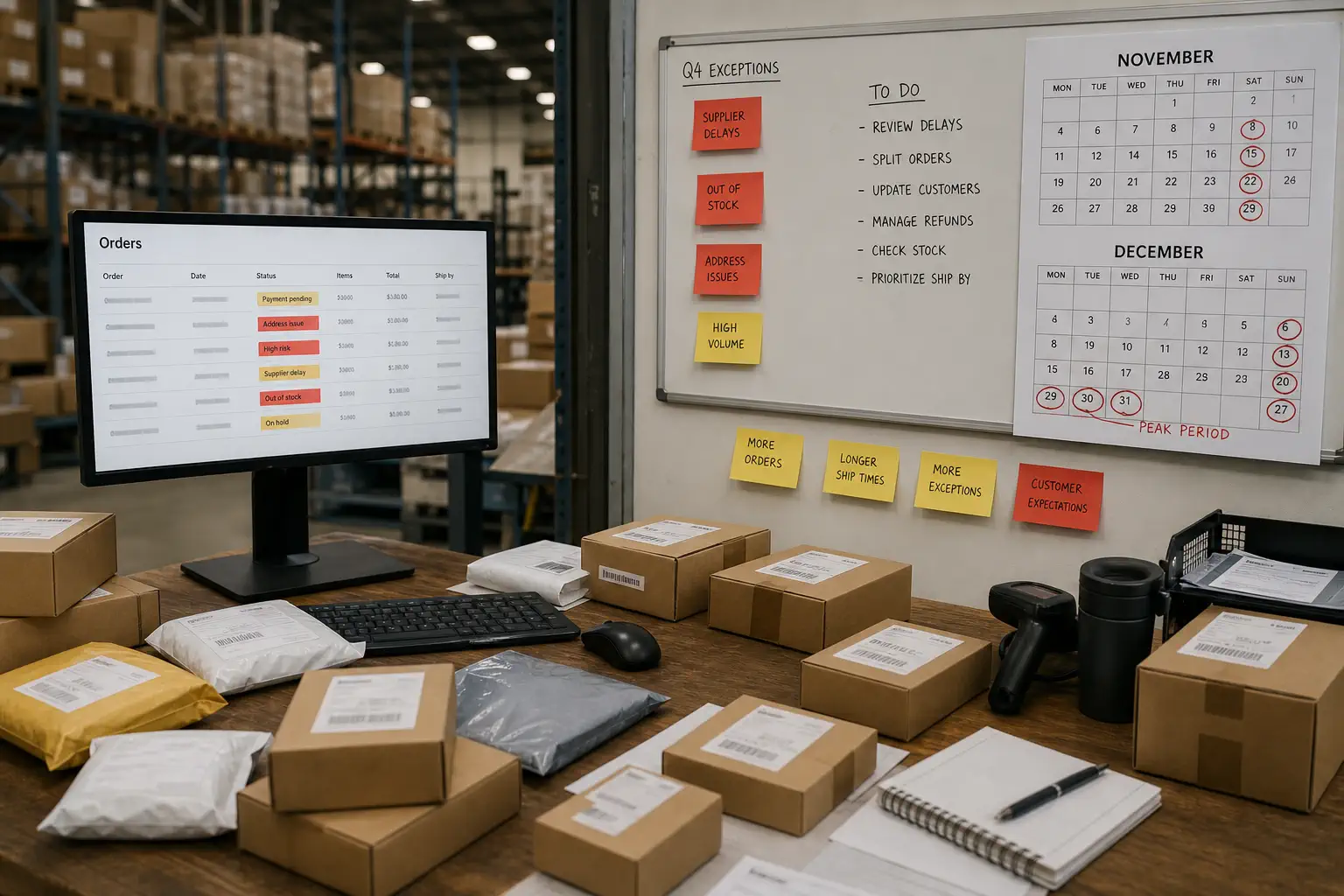
Q4 breaks weak systems because order volume, delivery expectations, and logistics congestion rise at the same time. A seller can be profitable on the front end and still lose control if the backend cannot process, scan, and communicate orders fast enough.
The first pressure point is demand concentration. Black Friday, Cyber Monday, Christmas gifting, and year-end promotions compress buying activity into a short window. Even if your store only doubles order volume, suppliers may be serving many other sellers at the same time. A reply such as “stock is available” becomes too vague when daily order flow changes.
The second pressure point is customer expectation. In Q4, many buyers are not just buying for themselves. They are buying gifts, event items, seasonal products, or products tied to a date. A parcel that would feel acceptable in March may create anxiety in December.
The third pressure point is logistics handoff complexity. Cross-border shipments may pass through origin processing, line-haul movement, customs clearance, destination handoff, and final-mile delivery. During peak season, every stage can slow down. A seller who only watches the Shopify fulfilled status may miss the difference between a label created, a parcel accepted, and a parcel moving meaningfully.
Peak-season planning also depends on stock visibility. If the team cannot confirm which SKUs are actually available, route planning and customer promises become unreliable before the parcel even leaves the supplier.
What changes in November and December
The most important change is not only volume. It is reduced margin for error. A late supplier reply, one missing accessory, or a blank tracking page can create more support pressure because the buyer is watching the calendar.
Map Your Peak-Season Risk by SKU and Destination
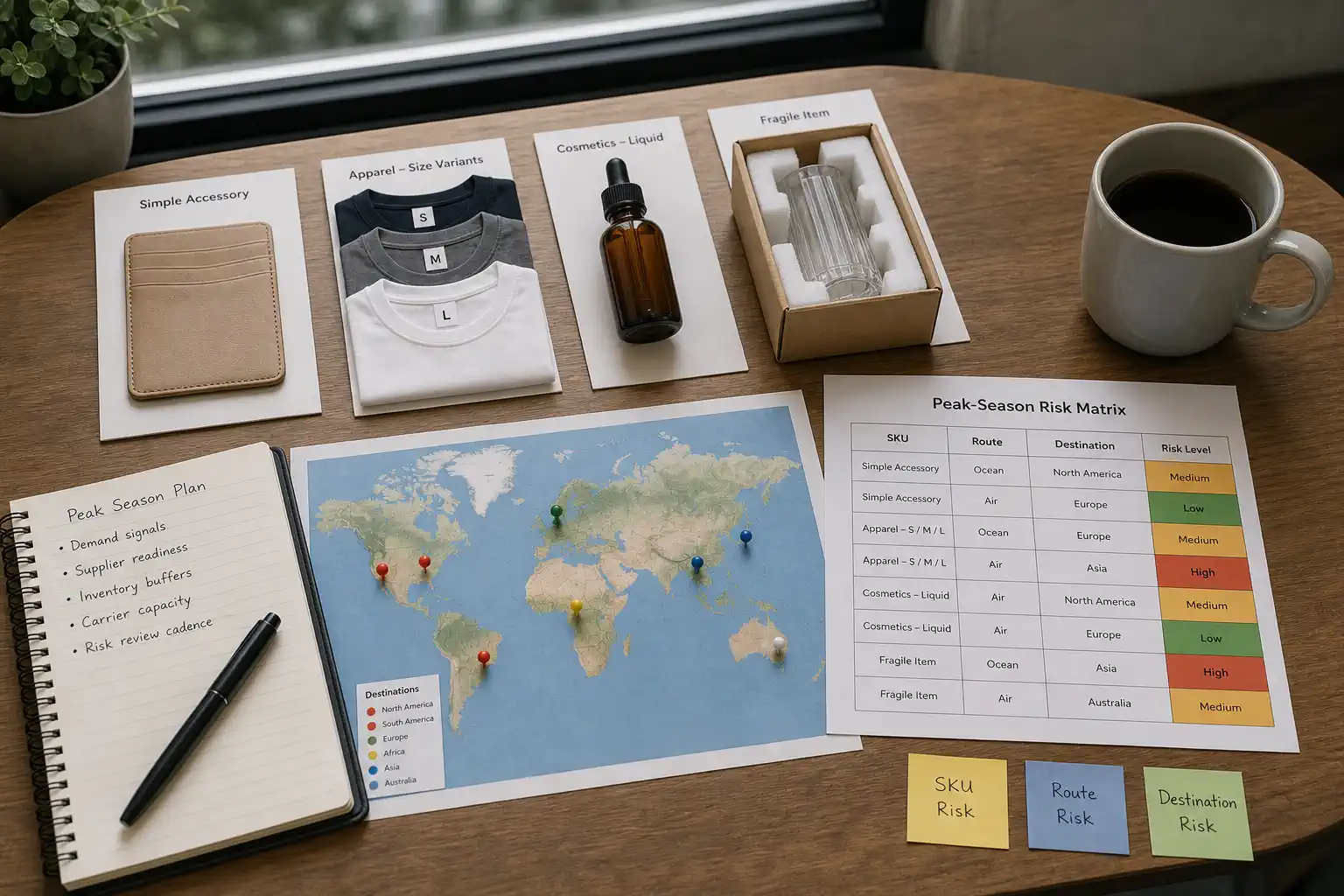
The right holiday plan starts with SKU and destination risk, not a single storewide shipping rule. Different products fail in different ways when volume rises. A lightweight phone accessory, a cosmetic liquid, an apparel item with many sizes, and a fragile gift product do not need the same route logic. Some products need stronger packing checks, earlier supplier confirmation, or more cautious customer messaging.
Create a Q4 risk map before scaling ads:
| Risk factor | Low-risk pattern | Higher-risk pattern |
|---|---|---|
| Product type | Simple, durable, low-variation item | Fragile, liquid, battery, apparel, bundle, or branded item |
| Variant complexity | One or two versions | Many sizes, colors, plugs, or accessory combinations |
| Supplier behavior | Fast confirmation and stable preparation | Slow replies, substitutions, unclear capacity, or inconsistent packing |
| Destination | Historically stable route | Remote area, customs-sensitive market, or slow final-mile handoff |
| Customer promise | Flexible, non-gift purchase | Gift timing, seasonal event, or urgent replacement need |
This map helps you decide which products can stay on standard routes, which need priority routing, and which should be paused if capacity becomes uncertain.
Separate product risk from shipping-line risk
Do not blame the route for every problem. A parcel can be delayed because the supplier prepared it late, the product was held for repacking, the line-haul stage was congested, customs needed more time, or the final-mile carrier slowed down. Record the failure source so your next decision is not just “use faster shipping” for every SKU.
Key Takeaway: Q4 planning should be SKU-specific. High-risk products need earlier confirmation, stricter packing checks, and more cautious route selection than simple products with stable suppliers and flexible delivery expectations.
Build a Holiday Logistics Calendar Before Black Friday

A holiday logistics calendar turns vague urgency into working deadlines. It should show when products need supplier confirmation, when ad scaling can continue, when route upgrades become necessary, and when customer-facing delivery language must change.
Do not wait until the week before Christmas to decide whether your shipping promise is still safe. Build the calendar backward from your customer promise and forward from your supplier reality.
Your calendar should include:
- Product-level supplier confirmation dates.
- Sample or packaging review deadlines for risky products.
- Daily order-processing cutoff times.
- Route upgrade decision dates for major destinations.
- Customer service template update dates.
- Ad-scaling pause rules when dispatch capacity falls behind.
- Exception-review windows for no-scan and slow-scan parcels.
The calendar does not need invented delivery guarantees. It needs decision points. If a route starts slowing, you should know when to switch. If supplier preparation time increases, you should know when to cap ads. If holiday shipping deadlines and delivery expectations become unrealistic for Christmas delivery, your store copy should change before buyers place new orders.
Use cutoffs as control points, not promises
Cutoffs are internal operating controls. They help your team decide whether an order enters today’s batch, tomorrow’s batch, a priority queue, or a hold-and-confirm workflow. Public delivery promises should remain more conservative because carrier and customs events are not fully under your control.
Choose Routes by Scenario, Not by Cheapest Quote
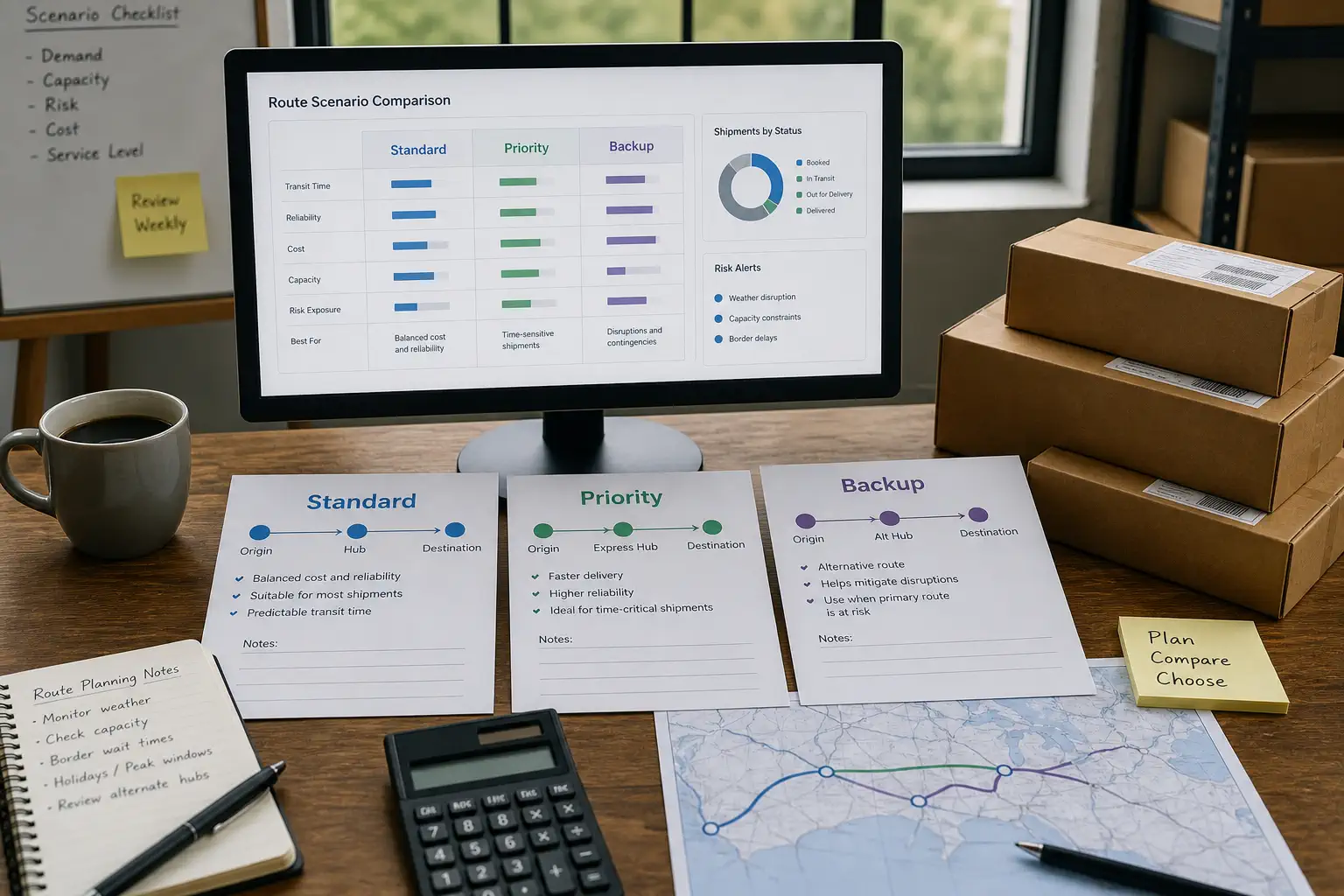
Route choice should be based on product, destination, season, customer promise, and exception support. The cheapest quote can become expensive if it creates support tickets, refunds, replacements, or customer distrust during the most sensitive buying period of the year.
Build at least three route categories:
| Route category | Best use | Watch carefully |
|---|---|---|
| Standard stable route | Normal products and flexible delivery expectations | First scan speed and destination handoff |
| Priority route | Gift-sensitive items, higher AOV orders, or stronger customer promises | Margin impact and cutoff discipline |
| Backup route | When the primary line shows congestion, restriction, or scan issues | Product eligibility and destination coverage |
For some destinations, a standard line such as YunExpress can still work during Q4, but it should be checked against first-scan speed, destination handoff stability, product eligibility, and backup-route availability.
The fast shipping dropshipping service page is also relevant when speed becomes part of the buyer’s commercial next step. Still, how sellers should think about routing before peak-season pressure arrives.
Avoid the one-route trap
A one-route setup is fragile because you have no decision path when the route slows down. A seller with route categories can move high-risk orders earlier, keep low-risk orders stable, and avoid upgrading every parcel unnecessarily.
Key Takeaway: In holiday logistics, the best route is not always the fastest or cheapest. The best route is the one that matches product risk, destination reliability, customer promise, margin, and the backup option available if the first plan slows.
Protect Processing Time Before You Protect Transit Time
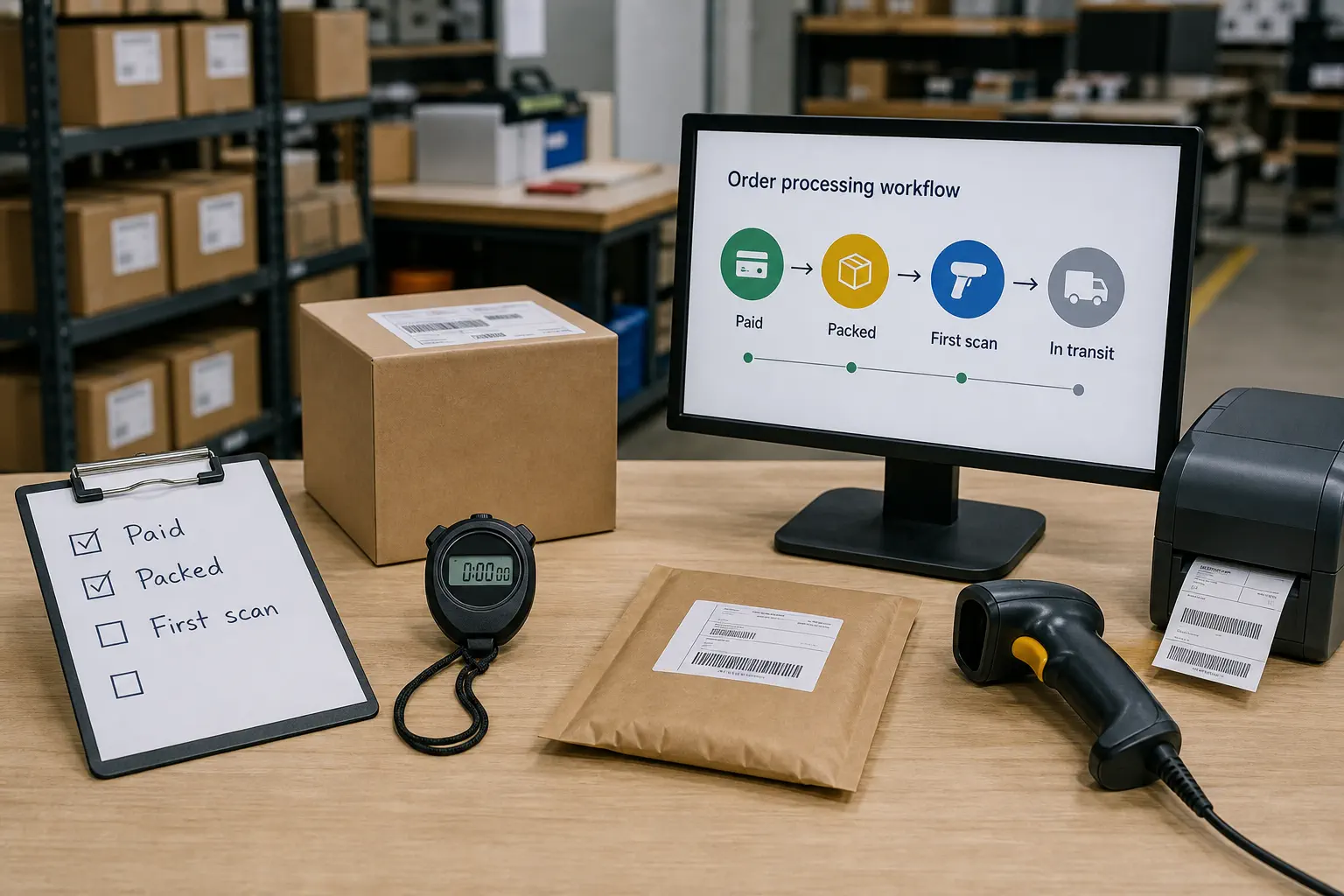
Processing time is the part of the order journey that sellers often underestimate. A faster shipping line cannot fix late supplier confirmation, unclear variants, weak packing, or a parcel waiting too long before the first carrier scan. For high-volume Shopify sellers, processing control should include three layers: confirm supplier capacity before the campaign, separate normal orders from high-risk orders, and track the gap between payment, packing completion, and first meaningful tracking movement.
This is where many dropshipping stores confuse software progress with physical progress. A Shopify fulfillment status can update while the parcel still needs supplier pickup, packing, or carrier acceptance. A private-agent workflow can help because someone is responsible for the physical handoff, not only the data handoff.
Multi-item orders need stricter Q4 handling because one slow item can delay the full package. Order consolidation can improve the customer experience, but only when the team has a clear cutoff for when to combine, split, or hold an order.
Watch the first-scan gap
The first-scan gap is the period between order fulfillment activity and visible carrier movement. During peak season, a growing gap can tell you that the bottleneck is not the final-mile carrier yet; it may be preparation, pickup, acceptance, or line-haul entry.
Create Customer Updates Before Support Gets Overloaded
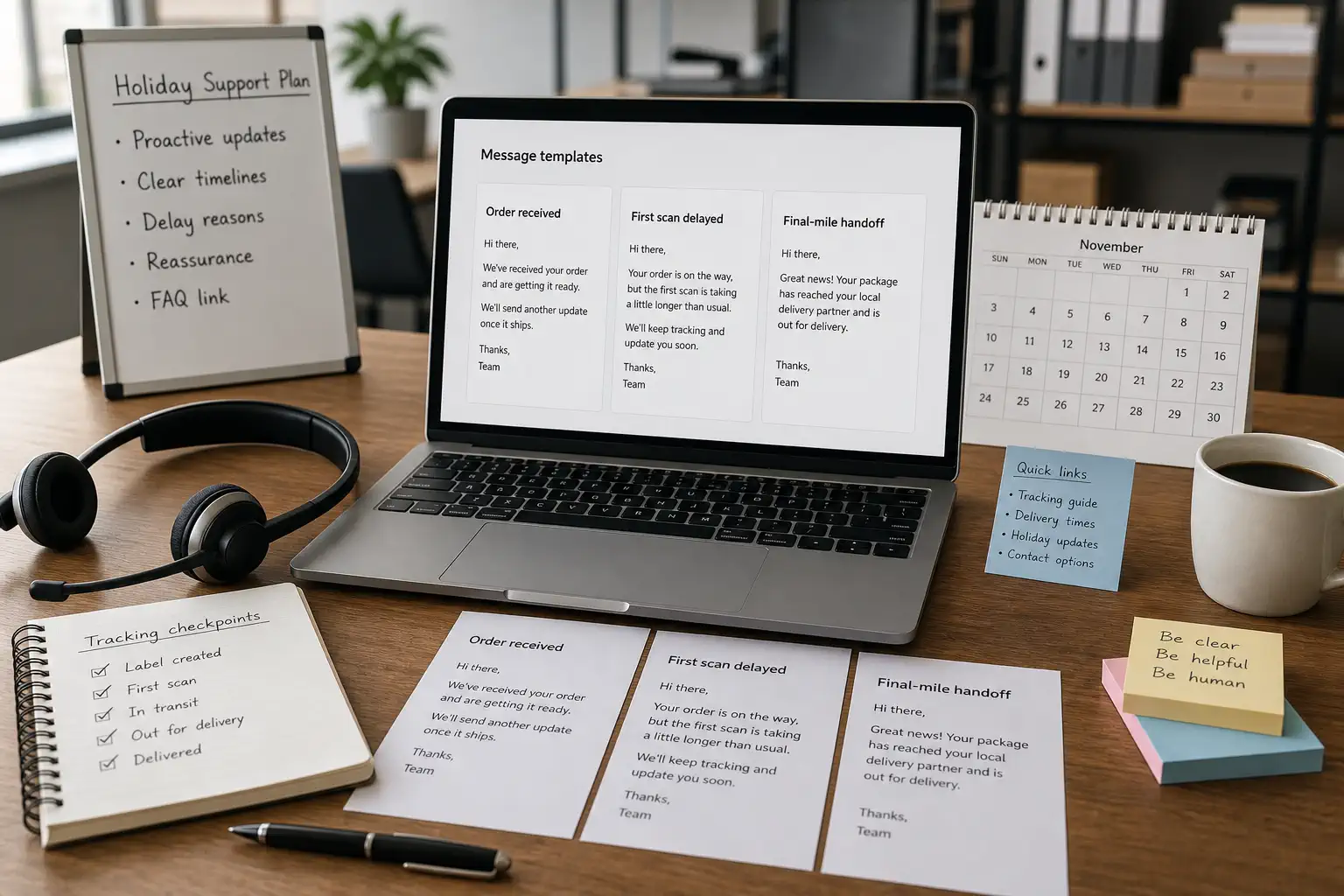
Customer communication should be prepared before support volume rises. In Q4, a blank tracking page or vague reply can feel worse because the customer may be buying for a deadline.
The goal is not to flood buyers with messages. The goal is to provide timely, specific, conservative updates when the order status needs context. Prepare templates for order received, dispatched, first scan delayed, customs or line-haul delay, final-mile handoff, failed delivery attempt, and replacement review.
Real-time tracking update support becomes more important in Q4 because customers watch delivery movement more closely when an order is tied to a gift, event, or holiday deadline.
Good updates follow three rules:
- State the current known status without pretending to control every stage.
- Explain the next checkpoint your team is watching.
- Offer the customer a clear support path if the status does not move.
Do not overpromise to calm a customer
Overpromising may calm one message and create a larger problem later. If the team cannot verify the delivery date, say what is known and what is being checked. Conservative clarity beats optimistic guesses.
Key Takeaway: Q4 customer updates should be written before the rush, not improvised during it. Prepare status-specific templates so your team can explain delays clearly without making promises the supply chain cannot guarantee.
Use a Real Case to Understand Delay Communication Risk
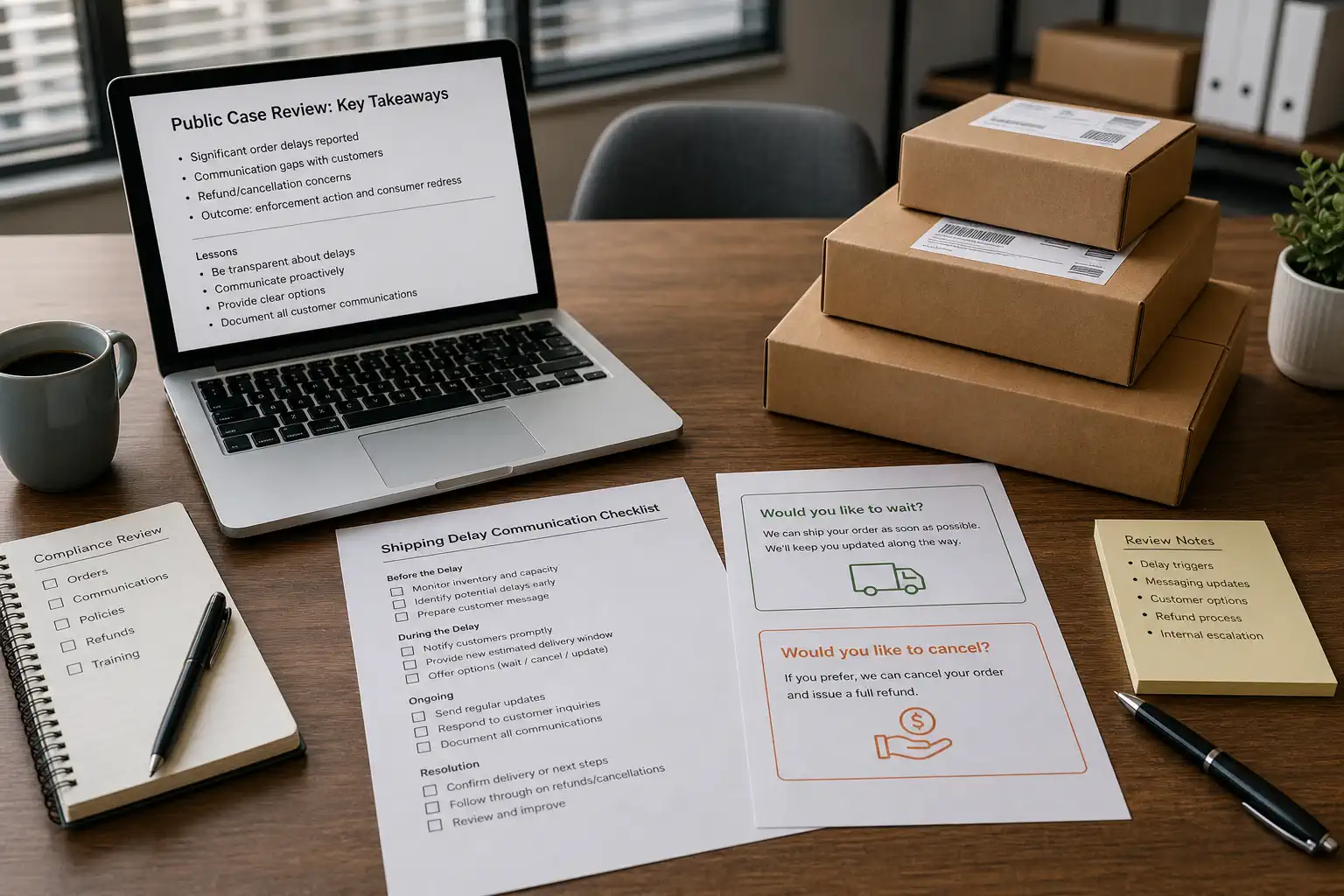
The FTC charges against Fashion Nova are a useful public warning for ecommerce sellers: when order volume and customer promises outgrow operations, shipping communication can become a trust problem, not just a support problem.
Public reporting on Federal Trade Commission actions described allegations that Fashion Nova failed to properly notify customers about shipping delays, failed to give cancellation options in some delayed-order situations, and used gift cards instead of refunds for unshipped merchandise. That does not mean a small Shopify seller faces the same scale or legal situation. It means holiday sellers should take delay communication and refund handling seriously.
The practical lesson is simple: if your backend knows a parcel cannot move as expected, the customer-facing process needs to change. That may mean updating shipping language, pausing a product, offering a cancellation option where required, changing the route, or escalating a replacement review. The worst approach is to keep accepting orders under a promise your backend can no longer support.
What high-volume sellers should borrow from the case
Borrow the discipline, not the drama. Keep shipping promises aligned with operational reality. Document delay decisions. Make sure customer service knows what options exist. Do not let holiday marketing create promises that supplier capacity, packing, and routes cannot support.
Prepare Backup Suppliers and Hold Rules
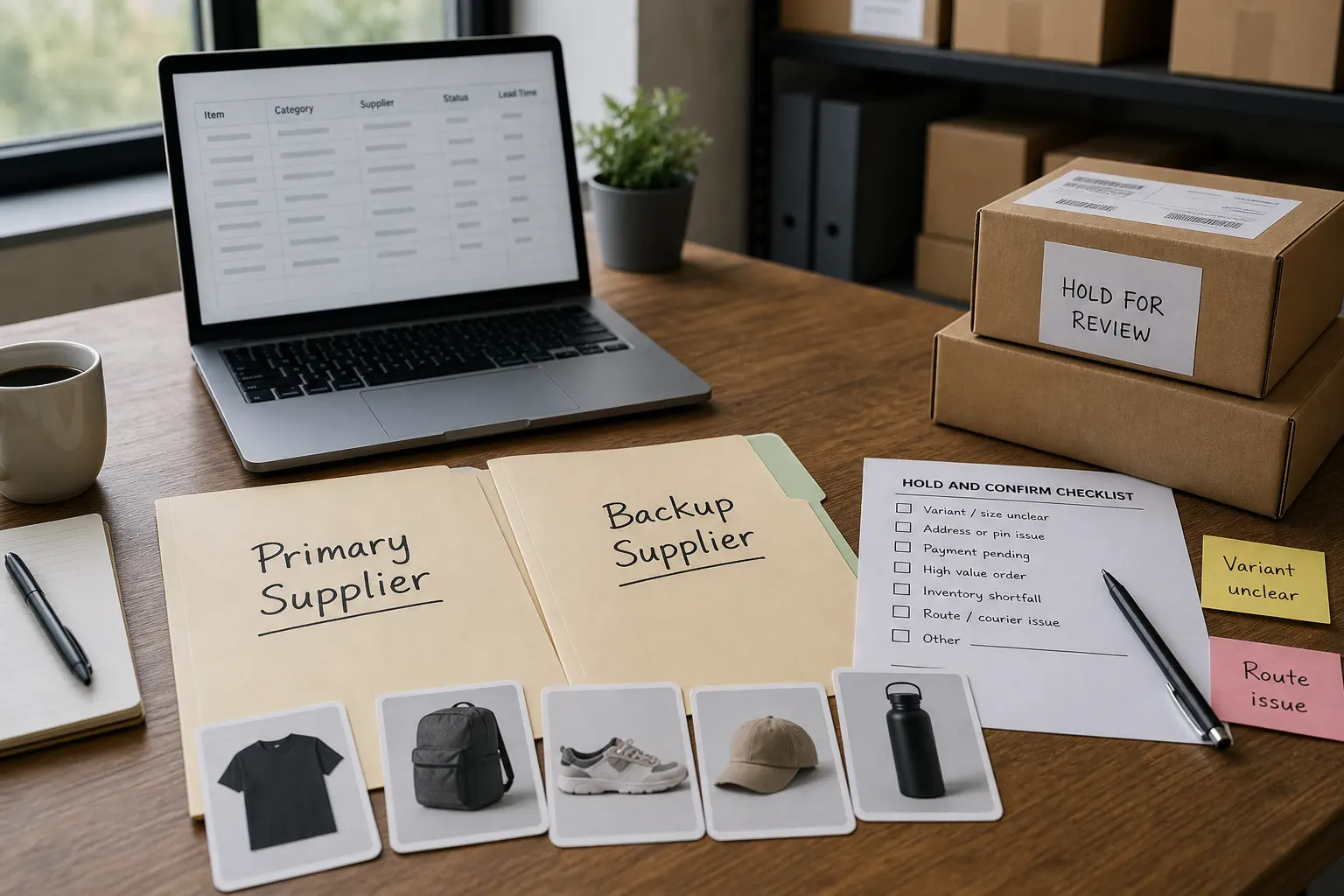
Backup planning is necessary because Q4 problems rarely wait politely. A supplier may run out of one variant, switch packaging, delay preparation, or give a vague answer while your ads continue spending.
A backup supplier is not automatically safe. The backup must match product specs, variant details, packaging expectations, and quality requirements. If the backup product changes the listing promise, it may create a different customer problem. Your hold rule should say when an order pauses for seller confirmation instead of moving forward.
Use this simple framework:
| Situation | Action |
|---|---|
| Supplier confirms product and preparation time | Continue normal processing |
| Supplier stock is unclear | Pause ad scaling and request variant-level confirmation |
| Supplier offers a substitution | Hold order and compare against listing promise |
| Primary route shows repeated scan issues | Move qualified orders to backup route |
| Product cannot meet customer promise | Pause product, update copy, or review cancellation options |
This is where private-agent execution can matter. A seller needs someone to notice weak supplier answers, compare backup options, and prevent silent substitutions from reaching customers.
Decide When Private-Agent Control Is Worth It
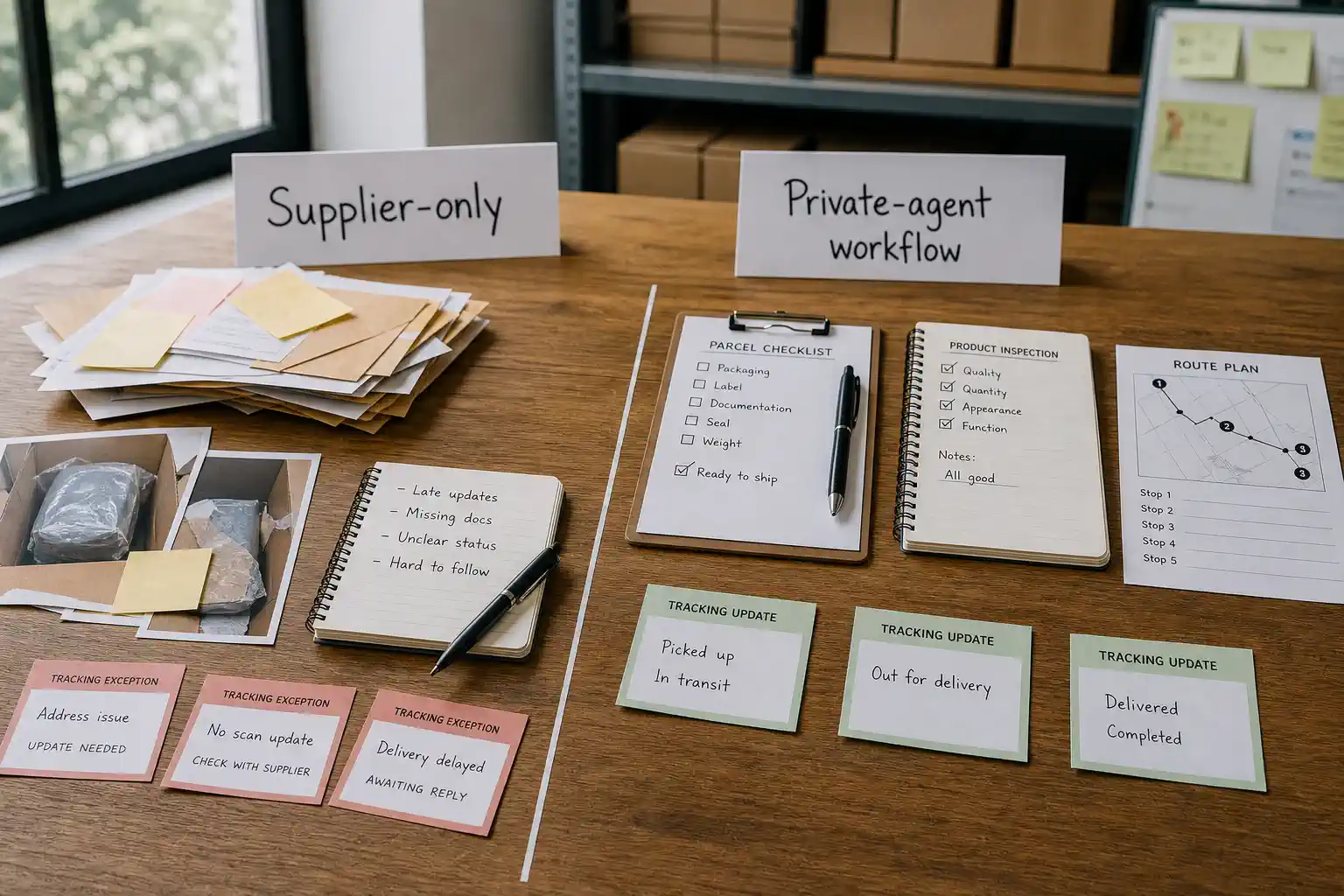
Private-agent control becomes worth considering when peak-season problems repeat across supplier communication, product checks, dispatch timing, route choice, and customer updates. One isolated delay may not justify changing your backend. A repeating pattern usually does.
For a high-volume Shopify seller, the better question is not only “Can someone ship my orders?” It is whether the backend can coordinate supplier confirmation, product checks, packing, route selection, tracking visibility, and exception escalation before customers complain.
A private dropshipping agent is not the same as a carrier or a public supplier marketplace. For Q4, the value is coordination: supplier confirmation, product checks, order preparation, shipping arrangement, tracking visibility, and after-sales support work together instead of being handled as separate problems.
This also matters for mentors, agencies, and multi-store operators. If the same holiday process supports several stores or client projects, a weak backend can repeat the same mistake many times. A documented private-agent workflow gives those operators a clearer system to explain and manage.
Key Takeaway: Bring in stronger backend control when Q4 pressure exposes repeatable execution gaps: unclear supplier capacity, late preparation, weak route backups, blank tracking, or support teams working without facts.
Build a Post-Q4 Review for Next Year

The best holiday logistics plan produces lessons you can use after the season ends. Do not only ask whether sales were strong. Ask where the backend created risk, margin pressure, and avoidable support work.
Review these records in January:
- Products with the most delay complaints.
- Routes with repeated no-scan or slow-scan patterns.
- Suppliers that missed preparation expectations.
- SKUs that needed packaging or quality holds.
- Customer messages that appeared most often.
- Orders that required replacement, refund, or escalation.
- Products that should receive earlier supplier confirmation next year.
This post-season review protects your next holiday campaign and shows which products, routes, suppliers, and customer promises need adjustment.
Turn support tickets into operations data
Support tickets are not only customer service history. They are operational evidence. If a question repeats, your backend or customer-facing promise needs adjustment.
FAQ
When should a Shopify seller start planning holiday logistics?
Start before the main Q4 sales push, ideally while product selection, supplier capacity, shipping routes, and customer promises can still be adjusted. Waiting until orders are already delayed leaves fewer options.
Should I use the fastest shipping line for every Q4 order?
No. Use route categories instead. Some orders need priority handling, but upgrading every parcel can damage margin. Match route choice to product risk, destination, customer promise, and backup availability.
What is the biggest holiday logistics mistake in dropshipping?
The biggest mistake is treating fulfillment status as proof of physical progress. A tracking number or synced status does not prove the parcel is moving, correctly packed, or safe from exception.
How do I handle customers when holiday delivery is uncertain?
Use clear and conservative updates. Explain the current status, what your team is checking, and what options exist if the order does not move as expected. Do not promise a delivery date you cannot verify.
Can a private dropshipping agent help with peak-season logistics?
Yes, when the issue is backend coordination rather than only carrier speed. A private agent can help coordinate supplier communication, product checks, packing, route selection, tracking visibility, and exception handling, depending on the product and operating setup.
Conclusion
Holiday logistics rewards preparation and punishes vague backend habits. A high-volume Shopify seller needs more than a cheap route and a hopeful supplier message. You need SKU-level risk mapping, a holiday logistics calendar, route categories, processing cutoffs, tracking exception rules, customer update templates, backup suppliers, and a post-season review that turns problems into next year’s operating plan.