

The fastest practical way to reduce Shopify dropshipping refund requests is to stop treating every refund request as a customer-service problem and audit the physical order path behind it: supplier dispatch, parcel tracking, shipping-line fit, exception handling, and pre-shipment evidence.
Core Summary: Refund stress usually rises when customers lose confidence that their order is moving, complete, and recoverable. Your first job is to separate policy issues from logistics failures, freeze risky suppliers or routes, rebuild tracking visibility, and give support staff evidence-based answers before disputes escalate. A private-agent workflow can help when the problem is not just what you promise on your store, but how reliably your backend executes each order.
Picture a Shopify store that looked healthy two weeks ago. Ads are still bringing orders, but the inbox is filling with “Where is my order?”, tracking numbers are stuck before the first scan, and your support team is answering angry messages instead of helping new customers. If you only edit the refund policy, the root problem keeps moving through the supply chain. The better recovery path is operational: identify which orders are causing pressure, route new parcels through safer logistics options, and give customers clearer evidence before they decide that a refund or dispute is their only option.
How to reduce Shopify dropshipping refund requests without taking over your refund policy
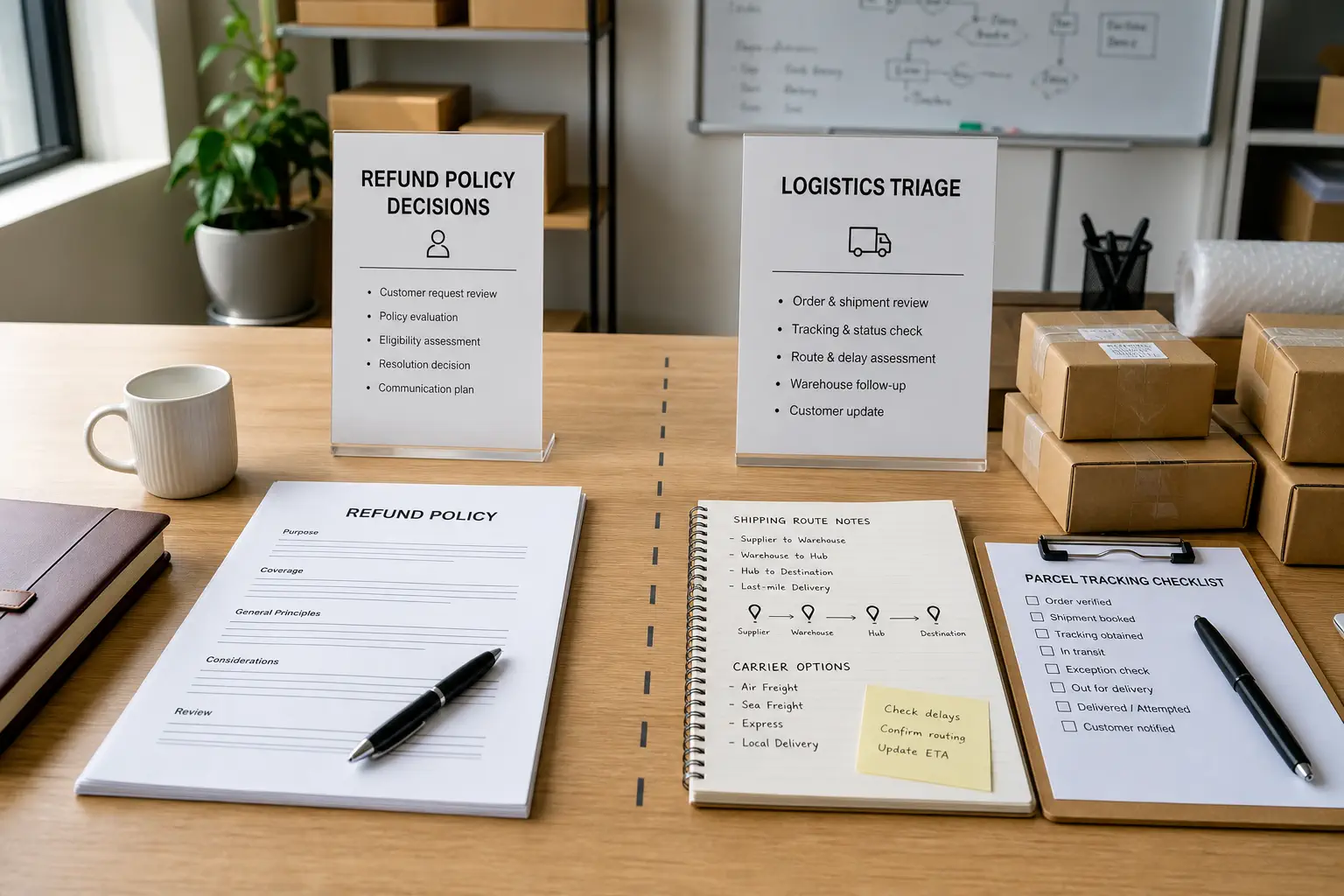
The right way to reduce refund requests without rewriting your refund policy is to focus on logistics triage, order execution, tracking evidence, and emergency recovery.
Your refund policy still matters, and Shopify reminds dropshipping merchants to communicate order details such as shipping times clearly. But a policy cannot rescue a parcel with no first scan, a supplier who ships the wrong variant, or a route that keeps producing delivery exceptions. The operating question is: which backend conditions make customers ask for money back before you can solve the order?
For a Shopify seller, the common logistics-driven triggers are simple to name but hard to fix late: no usable tracking after the shipping email, multiple suppliers using different routes, products dispatched before variant checks, support staff unable to confirm parcel status, and delivery promises the backend cannot support.
If this pattern is already hurting your Shopify operation, the broader commercial next step is not another generic supplier list. It is a more controlled backend model, such as a Shopify dropshipping agent workflow that connects sourcing, checks, dispatch coordination, tracking follow-up, and after-sales handling in one accountable process.
The distinction matters because refund pressure is not always a policy problem. Your refund policy defines what customers are entitled to, but logistics control determines whether the order gives them enough confidence to wait, accept a replacement, or avoid escalation.
Recognize a fulfillment-driven refund crisis early

A fulfillment-driven refund crisis begins when the store’s support inbox, payment-risk signals, and parcel exceptions start pointing to the same backend problem.
Do not wait until every customer asks for a refund. Refund pressure usually gives you warning signs first. A sudden increase in “no update” messages, repeated requests to cancel before delivery, customers questioning whether tracking is real, and support agents asking suppliers for the same status update every day all indicate that your logistics system is losing credibility.
Some customers ask for refunds because the product is not what they wanted. Others ask because your operation has not given them enough confidence to wait. The second group is where logistics control matters most.
Create three buckets during the first audit:
| Bucket | What it means | First action |
|---|---|---|
| Policy issue | Customer is within a normal return or refund condition | Handle through your published store policy |
| Product issue | Wrong item, damaged item, missing accessory, or quality mismatch | Check supplier, packing evidence, and replacement options |
| Logistics issue | Tracking gap, abnormal delay, lost parcel, or route mismatch | Review route, carrier handoff, dispatch date, and customer update |
This table keeps your team from throwing every ticket into one refund queue. It also keeps the work focused on operational rescue.
Watch the leading indicators
The most dangerous stage is not the refund request itself. It is the moment when customers believe you cannot answer basic questions about their order. A parcel with no first scan, unclear carrier handoff, or repeated “in transit” status can make even patient buyers doubt the store.
At this stage, your support team needs real order status, not guesses. Avoid promising exact delivery times unless you can support them with reliable route data.
Key Takeaway: Treat rising refund pressure as an operations alert. If your team cannot explain where orders are, which supplier shipped them, and what evidence exists, the store is already in recovery mode.
Audit suppliers, routes, and order evidence before changing strategy
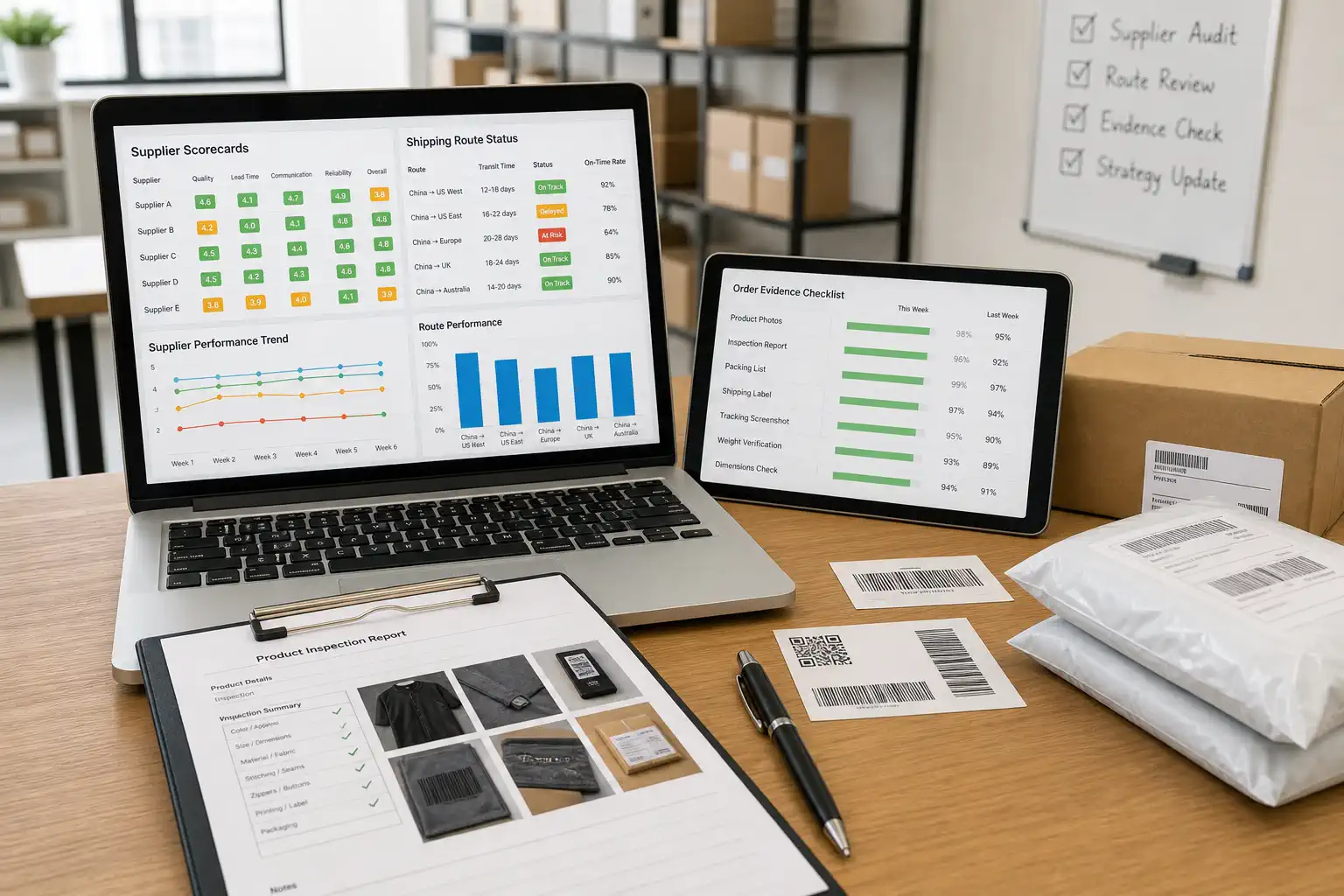
Your first recovery step is a fast supplier-and-route audit that identifies which partners, SKUs, destinations, and tracking patterns create the most refund risk.
Start with the last 14 to 30 days of orders, depending on your sales volume. Do not try to solve every order at once. Look for clusters. One supplier may be slow only on a specific product, one country may suffer from a route mismatch, or one shipping line may create tracking gaps before the first carrier scan.
Build a refund-pressure map
Export order IDs, product SKUs, suppliers, dispatch dates, tracking numbers, countries, support ticket tags, replacement orders, and refund requests. Then group by pattern rather than emotion.
Useful questions include which supplier appears most often in refund-related tickets, which products create “wrong item” complaints, which destinations show tracking gaps, which route has the longest gap between label creation and first scan, and which open orders can still be saved.
This map gives you a triage sequence. If most tickets are driven by a few SKUs and one route, you need targeted intervention, not a total business reset.
Stop sending new orders through known weak points
Once a route or supplier is clearly causing repeated issues, pause new exposure. That may mean holding new orders for verification, moving fresh parcels to a different line, replacing a supplier for one SKU, or requiring pre-dispatch photo confirmation for high-risk items.
This is where a dropshipping quality control workflow becomes useful. If the same SKU keeps creating wrong-item, damaged-item, or missing-accessory complaints, pre-dispatch checks can reduce the uncertainty before it reaches the customer and becomes a refund request.
Key Takeaway: Do not scale ads into an unresolved backend problem. Pause the specific supplier, SKU, route, or destination pattern that is producing refund stress before you spend more money acquiring orders that may become tickets.
Fix tracking visibility before customers assume the worst
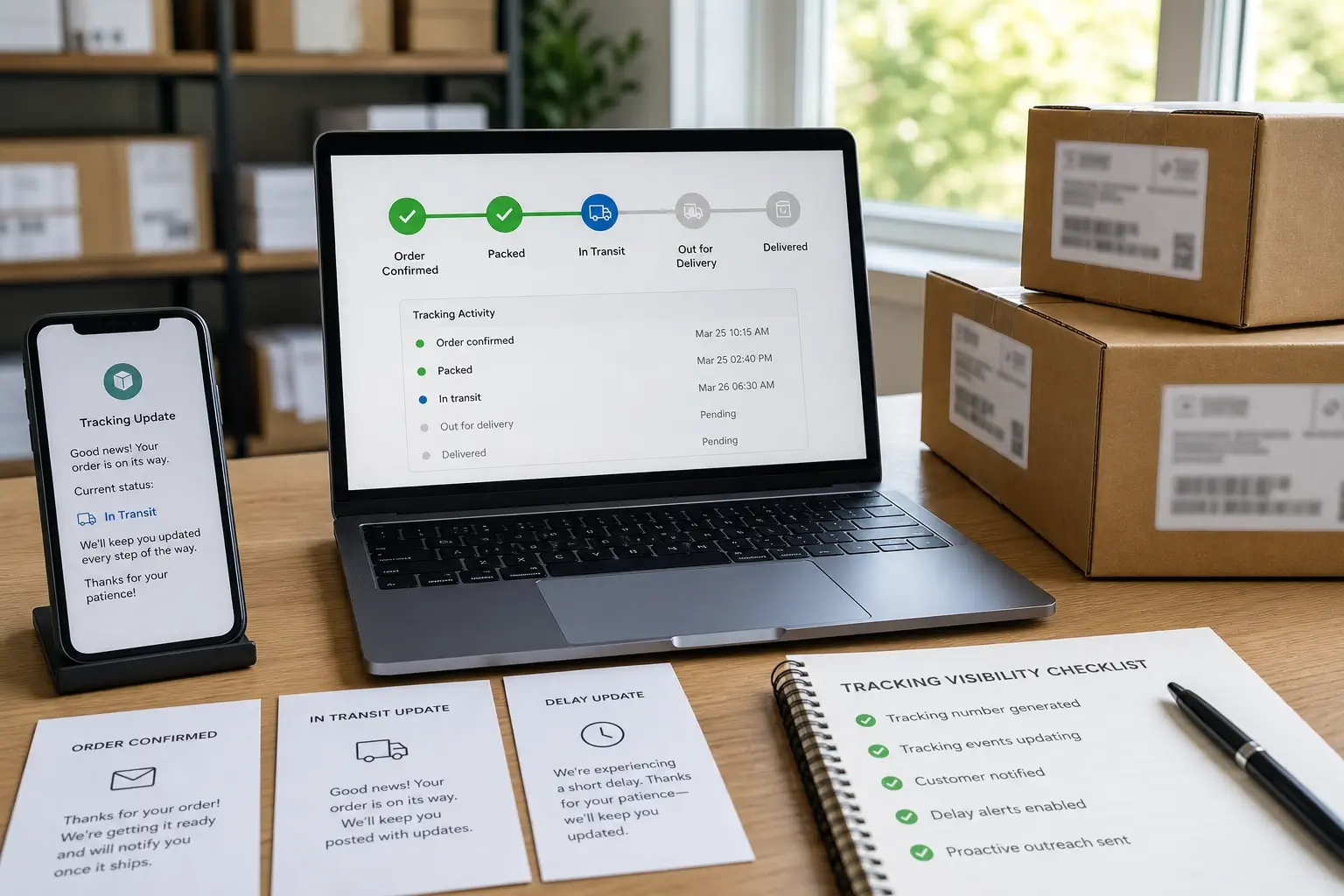
Tracking visibility matters because many refund requests begin when the customer cannot tell whether the order is real, moving, or forgotten.
A tracking number is not automatically useful. If the number is created but not scanned, the carrier name is unclear, or the first visible event appears too late, customers may interpret silence as a store problem. Your communication system must explain what is happening before the customer loses trust.
Label created is not the same as order moving
Many Shopify stores accidentally treat label creation as progress. Customers see a tracking email, click the link, and find no movement. If that state lasts too long, the support conversation starts badly.
Your internal dashboard should separate:
- order paid;
- supplier confirmed;
- item received or prepared;
- product and packing checked;
- parcel handed to shipping line;
- first carrier scan visible;
- destination handoff or last-mile scan.
This status ladder gives support agents better answers and helps you detect whether the problem is supplier readiness, processing, line-haul handoff, or last-mile visibility.
Use tracking updates as support prevention
Real-time tracking update support matters because customers should not discover a shipment problem before your team does. If a batch has no movement after the expected scan window, confirm the backend status first, then send a careful update instead of letting the customer guess.
Avoid vague reassurance. “Your order is on the way” is weak if the tracking page says otherwise. A better message explains the current stage, what your team is checking, and when the next update should be sent. Keep the wording conservative. Never invent carrier events.
Upgrade shipping routes only when the refund risk justifies the cost
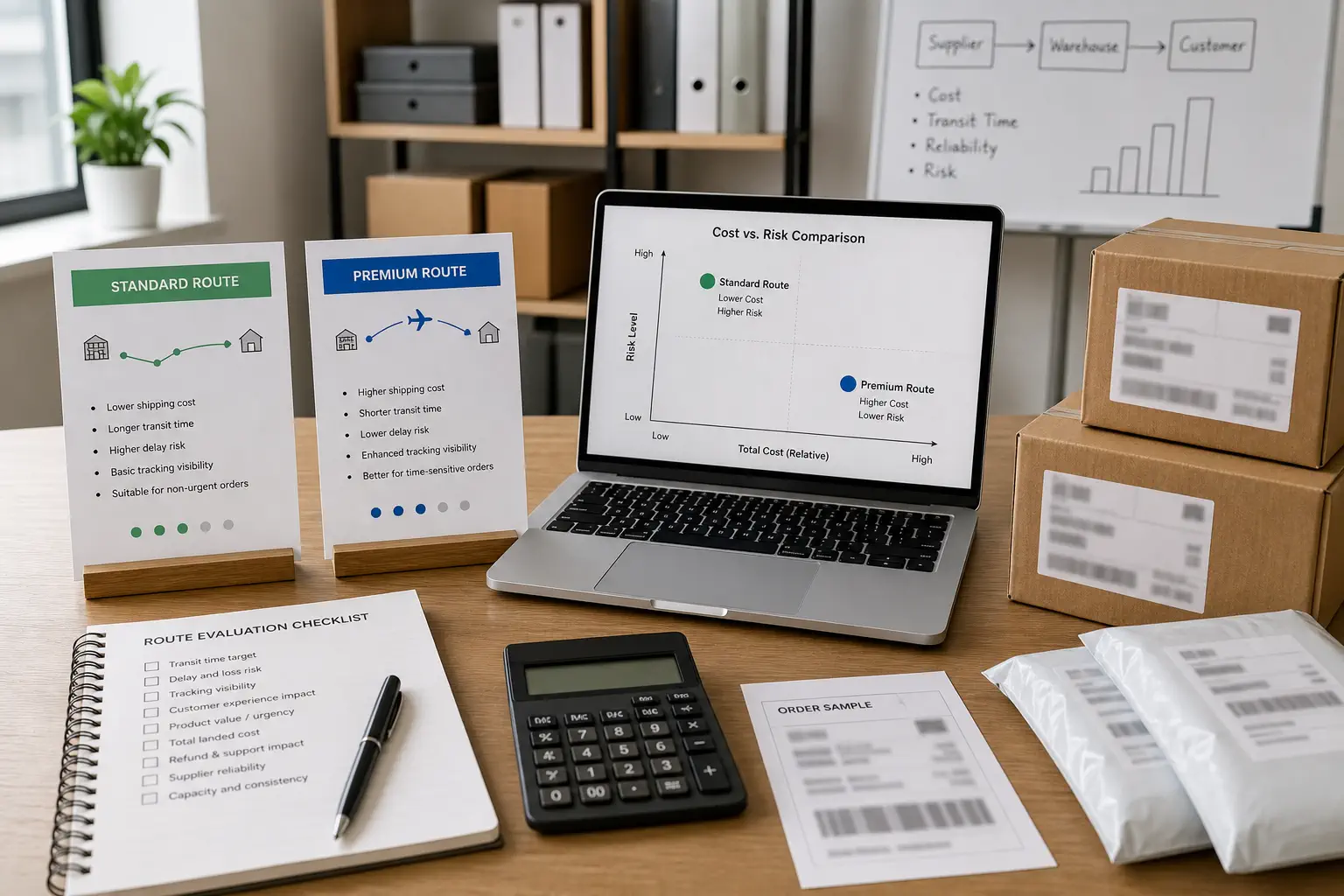
Moving to a more reliable shipping route can reduce refund stress when the current route creates repeated tracking gaps, long handoff delays, or poor destination fit, but it should be a targeted decision, not a panic reaction.
The safer way to think about this is not “premium shipping” as a label. The real decision is route fit: which line gives the product, destination, parcel weight, and customer expectation the best balance of cost, tracking visibility, and reliability?
When a route switch makes sense
Consider switching routes for new orders when first scans appear too late, customers ask if tracking is real, one destination group performs badly, parcels spend too long between export and last-mile handoff, support cannot obtain useful exception details, or the SKU is high-margin enough to justify safer handling.
This is not the same as promising fast shipping for every order. Match route upgrades to product economics and risk. Low-margin products may need better expectation-setting, while high-ticket products may justify safer handling.
Keep route upgrades tied to the refund problem
If the real problem is broad delivery speed, fast shipping dropshipping support is the better topic. Here, the decision is narrower: use a safer route only when refund pressure is already tied to tracking gaps, handoff delays, or destination-specific delivery failures.
Key Takeaway: Upgrade logistics where the risk is visible and measurable in tickets, tracking gaps, and dispute exposure. Do not turn a refund crisis into a blanket promise that every order will move faster.
Use emergency order execution support for damage control
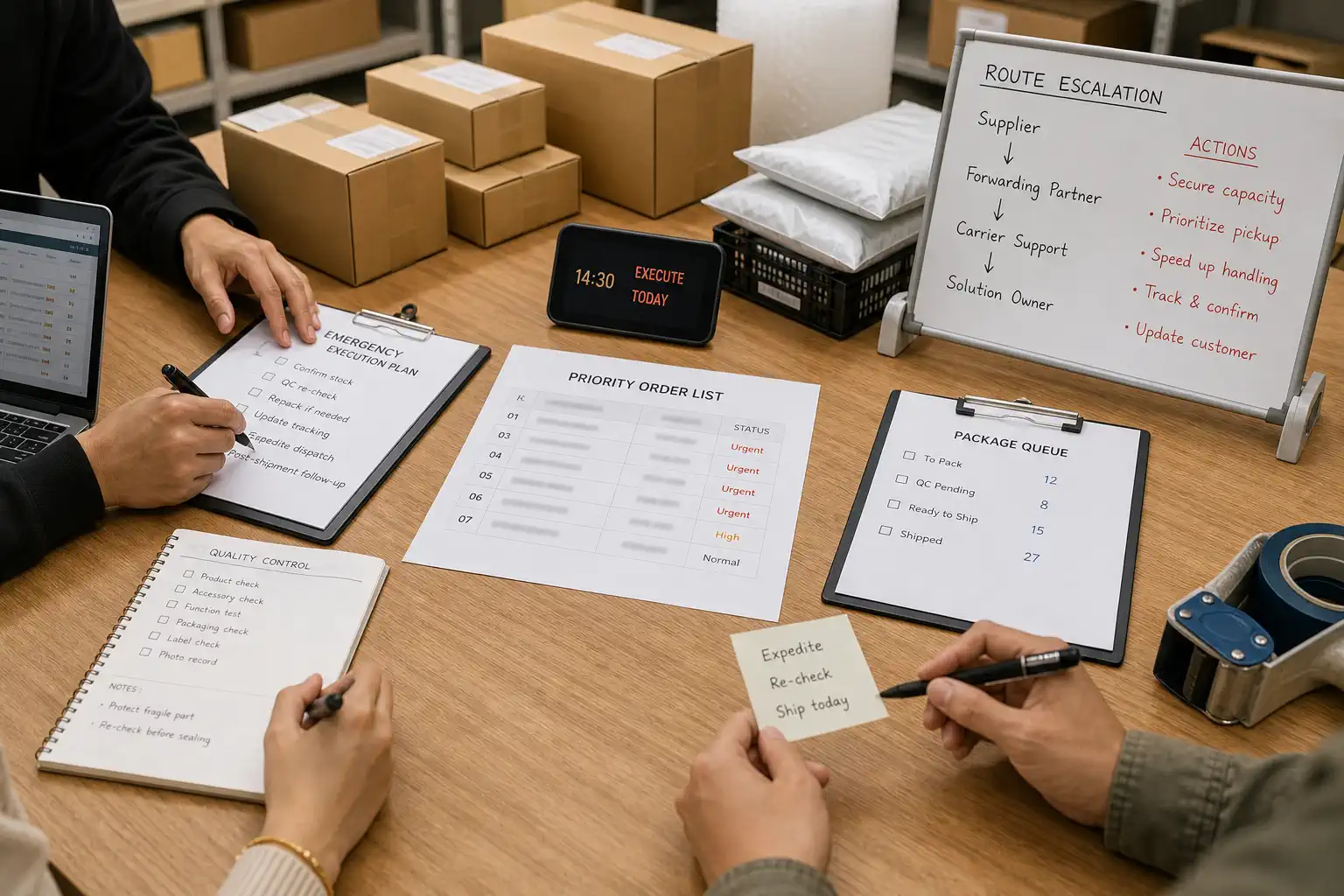
Emergency order execution support means temporarily tightening the physical order workflow so new mistakes stop entering the customer pipeline while existing exceptions are triaged.
In a stable period, your team can improve processes gradually. In a refund-pressure period, you need a short-term control room. That includes supplier confirmation, dispatch holds, photo proof for risky SKUs, replacement-stock checks, route reassignment, tracking validation, and daily exception review.
What the control room should review daily
For the first recovery week, review orders paid but not confirmed by supplier, parcels packed but not scanned by carrier, customer tickets without backend answers, wrong-variant risk, high-value orders that justify proactive support, and new orders connected to the same supplier or route that caused the crisis.
The goal is to stop the same failure from repeating while you rebuild confidence.
Why software alone cannot solve this stage
Shopify apps can sync order data, trigger emails, and update tracking fields. They cannot inspect a physical parcel, confirm whether a supplier included the accessory, negotiate a replacement before dispatch, or decide whether a route is unsuitable for one destination.
If refund pressure is already turning into Shopify dropshipping chargebacks, the issue has moved beyond normal support pressure. At that point, the logistics goal is still practical: make each order easier to verify, explain, rescue, replace, or document before the customer escalates.
Create temporary returns handling workarounds without making unsafe promises
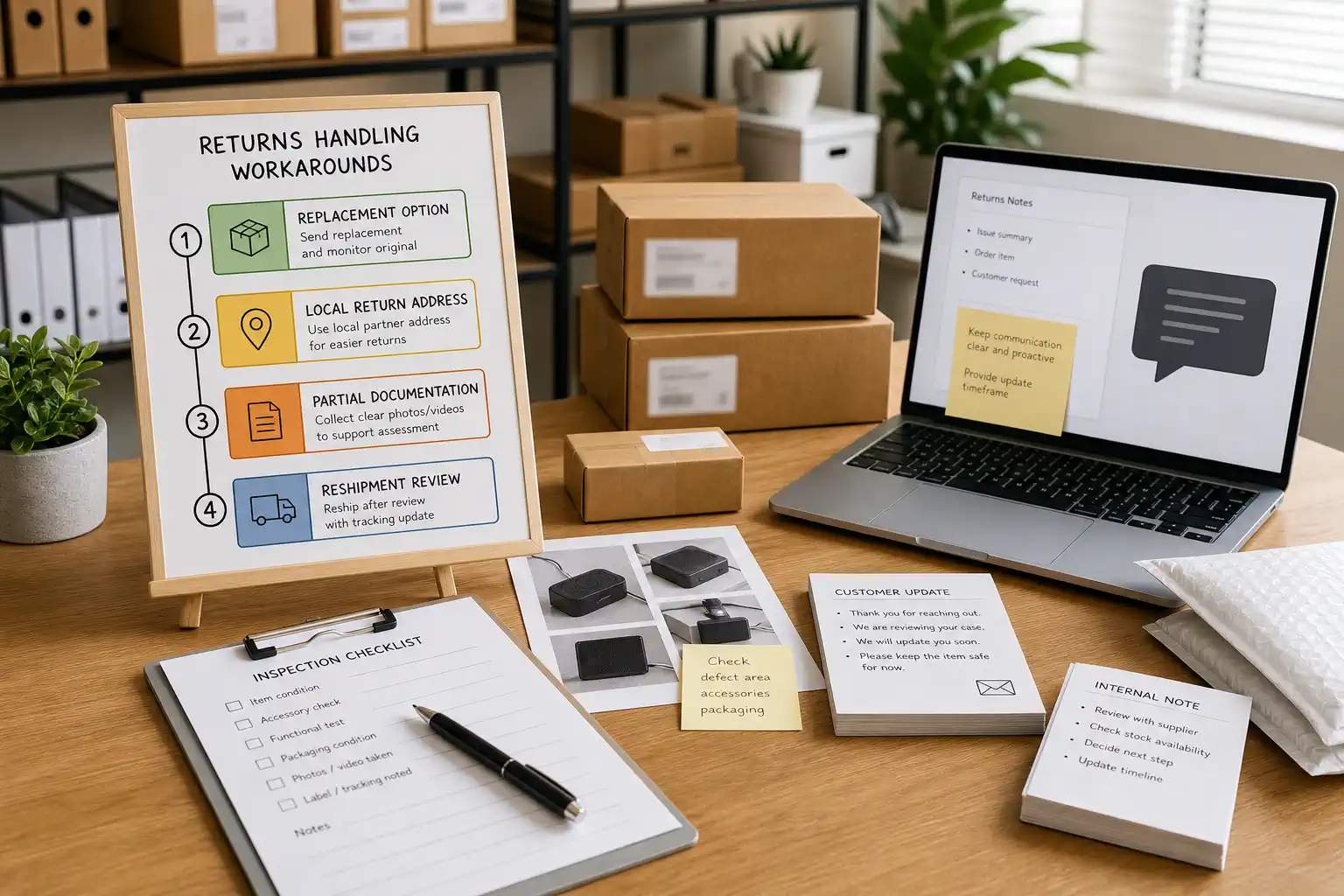
Temporary workarounds can help you resolve urgent customer issues, but they must stay evidence-safe, financially controlled, and aligned with your published policy.
A workaround is not a secret policy. It is an operational exception used to save a customer relationship or reduce escalation risk when the backend caused the problem. Examples include reshipping a missing accessory, replacing a visibly damaged item, holding a risky parcel before dispatch, or redirecting support to a documented status update.
Decide what can be saved, replaced, or refunded
Use a simple decision ladder:
| Situation | Operational response | Customer-facing risk |
|---|---|---|
| Tracking delayed but parcel likely moving | Confirm backend status and send a clear update | Low if communication is timely |
| Wrong variant not yet dispatched | Hold shipment and correct the order | Low if caught before carrier handoff |
| Missing accessory already delivered | Verify evidence and consider accessory reshipment | Medium if response is slow |
| Parcel likely lost or unrecoverable | Follow your policy and payment obligations | High if customer is ignored |
| Supplier cannot confirm order status | Stop new orders through that source | High if ads keep scaling |
Document the decision with order notes, tracking screenshots, supplier messages, and photo evidence where available. Those records help support agents answer customers consistently.
Keep emergency fixes separate from refund promises
Emergency fixes should not change what your refund policy promises. They should only help your team resolve a specific order problem with evidence: a delayed scan, a wrong variant caught before dispatch, a missing accessory, a damaged item, or a supplier that cannot confirm order status.
Set clear limits before support offers a workaround. A replacement, accessory reshipment, shipment hold, or customer update should be based on order notes, tracking screenshots, supplier messages, packing photos, or other available proof. If the parcel is likely lost or the customer is entitled to a refund under your published policy, do not delay the decision with vague logistics excuses.
This is where a documented returns management workflow becomes useful. It keeps emergency support decisions consistent, so your team knows when to reship, replace, inspect, restock, write off, or process the issue through your normal refund path.
A real case warning: delayed shipping can turn into refund pressure
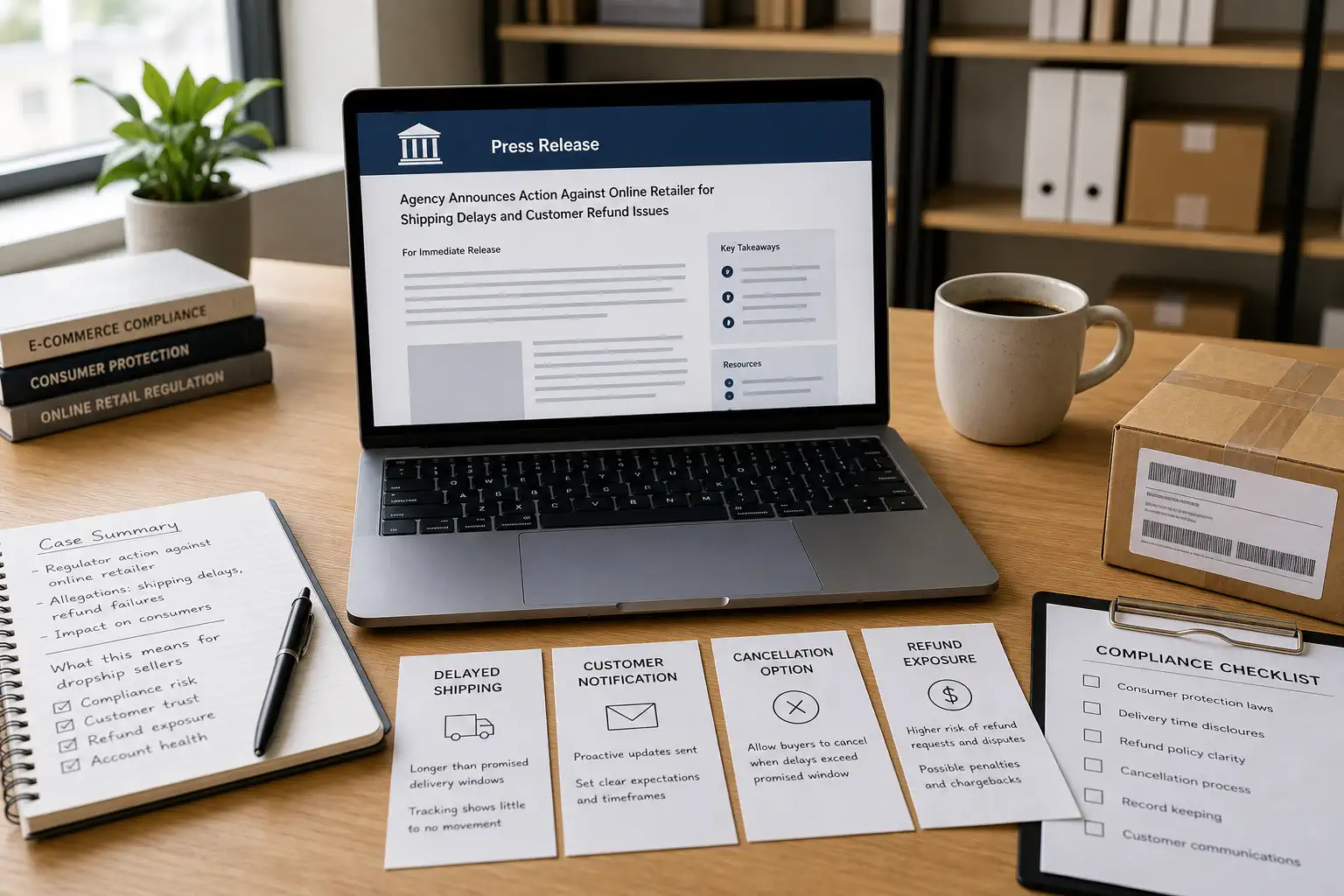
The Fashion Nova FTC case is useful here because it shows how delayed shipping, weak delay communication, and poor refund handling can turn an operations problem into a larger customer-trust problem.
In 2020, the Federal Trade Commission announced that Fashion Nova would pay $9.3 million for consumer refunds after allegations that it failed to properly notify customers about shipping delays, failed to give customers a chance to cancel delayed orders, and used gift cards instead of refunds for unshipped merchandise.
This is not a dropshipping-specific case, and it should not be used to suggest that every delayed Shopify order creates the same risk. The practical lesson is narrower: if your backend cannot support the shipping promise, your support team needs real evidence, timely delay communication, and a clear refund path instead of vague reassurance.
For Shopify dropshipping sellers, the safest operational rule is simple: do not advertise delivery promises your supplier, route, tracking visibility, and exception process cannot support. If refund pressure is already rising, fix the backend evidence before making another customer-facing promise.
Build a long-term logistics system that prevents future spikes
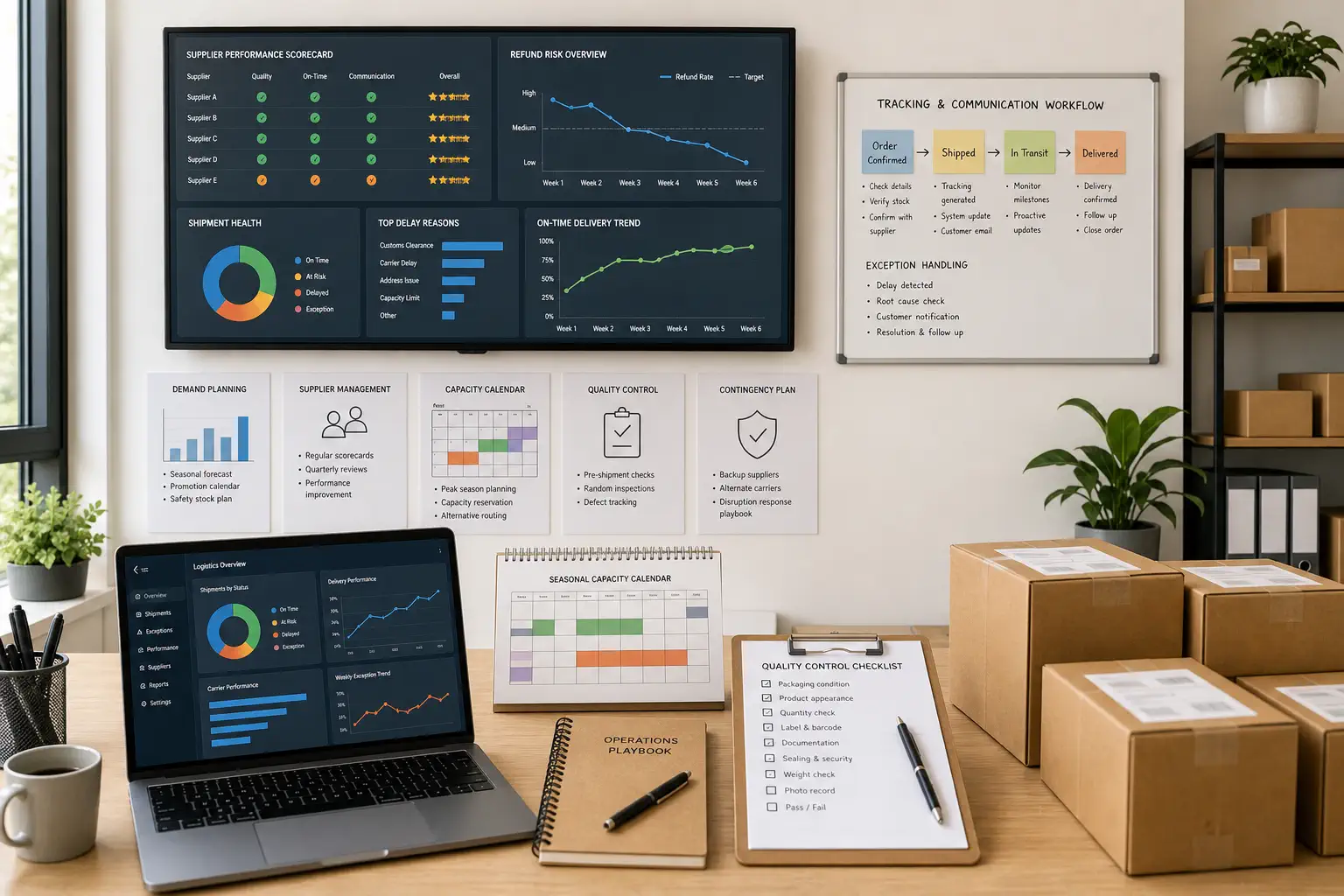
Long-term prevention comes from turning the emergency controls into a normal operating system: supplier scoring, route selection rules, tracking exception alerts, pre-shipment checks, and support scripts based on real order stages.
After the crisis week, run a postmortem. Identify which issues were preventable, route-related, supplier-related, or caused by overpromising on the storefront. Then convert the findings into rules.
Create route and supplier scorecards
A practical scorecard does not need invented performance statistics. It needs consistent fields: first-scan reliability by route category, support tickets by SKU and supplier, orders needing manual backend follow-up, recurring packaging or accessory issues, destinations requiring different expectations, and replacement or reshipment cost exposure.
Use the scorecard to decide when a supplier stays, when a SKU needs inspection, and when a route is no longer acceptable for a particular customer promise.
Connect customer-service scripts to backend evidence
Your support scripts should map to real statuses. A “label created” script, a “carrier handoff delay” script, a “line-haul wait” script, and a “replacement under review” script give your team faster, more accurate responses.
Work with a private-agent workflow when the gap is physical
If refund pressure is caused by physical execution, a private dropshipping agent can support the pieces software cannot own: supplier coordination, product checks before dispatch, packing confirmation, route selection, tracking follow-up, and after-sales communication. The evidence-safe benefit is better visibility and control over the order path that creates many refund requests.
FAQ
Can logistics really reduce refund requests?
Yes, logistics can reduce some refund requests when the requests are caused by tracking gaps, long delays, wrong items, missing accessories, or poor communication. It will not solve refund requests caused by weak product-market fit, misleading product pages, or a policy that customers do not understand.
Should I change my refund policy first?
No, not if the problem is clearly operational. Review your policy for clarity, but first identify whether customers are asking for refunds because orders are late, untracked, wrong, incomplete, or unsupported. Policy wording cannot fix a broken order path.
When should I switch suppliers?
Switch suppliers when the same supplier repeatedly causes delays, wrong items, missing parts, poor communication, or tracking uncertainty and cannot provide a corrective plan. For a high-volume store, you may also need a transition plan so open orders do not disappear during the switch.
Is a faster shipping line always the answer?
No. A faster or more expensive line helps only when route performance is the actual bottleneck and the product margin supports the cost. Sometimes the better fix is earlier dispatch, clearer tracking, supplier replacement, or more accurate customer expectations.
How does Runtodropship help with this kind of issue?
Runtodropship can support qualified Shopify sellers with sourcing coordination, pre-shipment product checks, packing confirmation, shipping arrangement, tracking follow-up, and after-sales handling inside a private-agent workflow. The right starting point is to review your current order problems, active SKUs, destinations, and refund-pressure pattern.
Conclusion
refund requests becomes dangerous when it is treated only as a support queue. The healthier response is to trace each request back to the physical order path: supplier readiness, packing accuracy, route choice, tracking visibility, exception handling, and customer communication. Once you know which part of the backend is creating distrust, you can pause weak routes, tighten checks, improve status updates, and decide whether replacement, reshipment, or policy-based refund handling is the right response.
For growing Shopify sellers, mentors, agencies, and operators managing multiple stores or client projects, this is where a private-agent model becomes useful. RuntoDropship helps qualified sellers build a more accountable backend workflow across supplier coordination, product checks, packing confirmation, route selection, tracking follow-up, and after-sales handling. If refund requests is already rising, review your latest order export, ticket patterns, supplier list, and destination mix before scaling the next campaign.