

Your product video gets shared, the views rise, and the order dashboard stays empty. Another week of posts will not show whether buyers reached the store, trusted the offer, or could check out. Even a first order can backfire if the supplier sends a different item. If you are trying to learn how to get sales dropshipping without paid ads, start by tracing the path to an order.
Connect one buyer problem to one suitable channel and an order you can deliver. Match the content to a credible product page, find the first break in the purchase path, and fix it before posting more. Unpaid reach still costs time and operating money.
What Must Be Ready Before Free Traffic Can Produce Sales?
Free traffic brings sales only when the product, checkout, delivery, and margin work. If you still need to choose an item, use this one-product organic dropshipping setup; the checks here assume a nearly ready or live store.
What does a test order reveal?
A test order shows what a new buyer will get, from phone screen to parcel. Buy the item on mobile at its public price, then compare the delivered sample with the listing: variant, included parts, packaging, and the time from payment to arrival.
- Can a buyer reach checkout without an unexpected fee or forced account?
- Do your own photos show the item and variant the supplier will send?
- Does the delivery window on the page reflect the route you tested?
A good video cannot repair a broken checkout or a misleading parcel.
Which costs remain without ad spend?
No advertising bill means little if the order loses money. Subtract product, shipping, payment, packing, and expected refund or replacement costs from the selling price. Include samples, tools, and content time when judging whether the business can sustain the work.
An order that cannot cover its variable costs will repeat the loss as traffic grows. Key Takeaway: validate the parcel and its contribution margin before treating an organic sale as proof that the offer works.
Which Unpaid Channel Matches Your Buyer’s Intent?
The best unpaid channel reaches people while they are considering your product. Search meets a buyer question. Video shows the product in use. A marketplace reaches shoppers already browsing.
Is your product searched for or discovered?
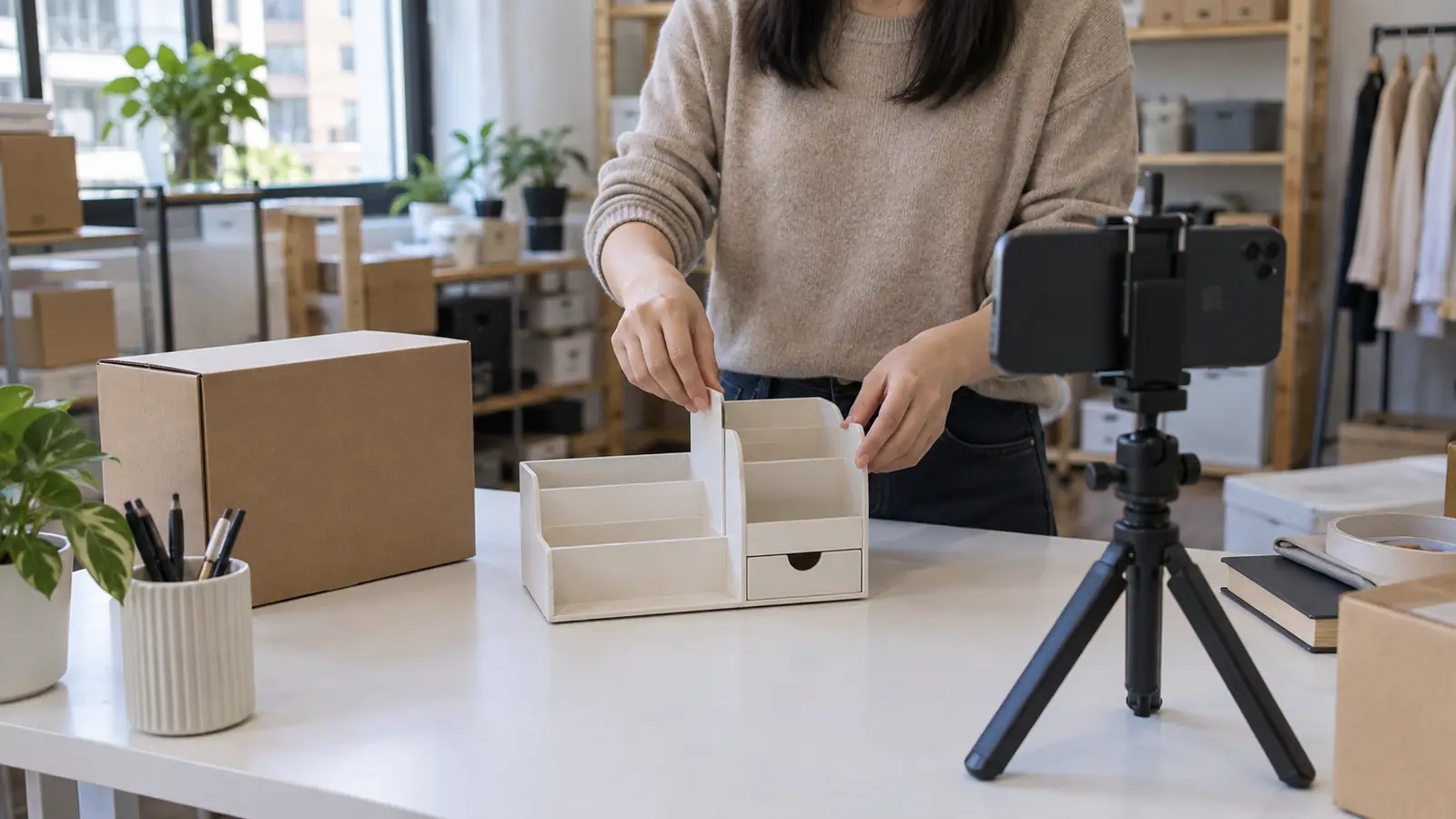
Ask how a buyer describes the need. A spare part needs clear specs in search. A desk organizer may need a short video. Marketplace visitors arrive ready to browse, though listing and fulfillment rules limit what you can promise.
Use this quick channel screen:
- Search: the buyer can name the problem, product, size, or comparison.
- Short video: the benefit becomes clear in an honest demonstration.
- Marketplace or community: buyers already discuss or shop for that need.
Which channel can you support consistently?
Choose one primary route you can maintain. Search needs useful buying answers, video needs an original demonstration, and a community requires participation under its rules. Keep a realistic publishing schedule instead of posting everywhere briefly.
If you cannot sample the product, answer questions, or handle orders, another channel spreads the problem. Key Takeaway: choose by buyer intent and operating capacity, then test one clear offer.
How Do You Turn Organic Views Into Qualified Visits?
Organic views become useful visits when the content makes a specific promise and leads to a matching page. People may enjoy a clip without wanting its product. Follow the path from views to clicks and product-page visits.
What promise earns a relevant click?
Show the product solving one problem and name any limitation a buyer must know. If a lamp fits a narrow shelf in the clip, show its dimensions and the exact variant on the page. A dramatic hook can attract viewers who will never buy.
- The buyer situation or question.
- The visible proof your sample can honestly provide.
- One next step, such as viewing the matching product specification.
The destination should continue the promise made in the content.
Where should that click land?
Send visitors to the product or comparison page that answers what they just saw. Match the variant, price, shipping statement, and main image. A generic storefront makes buyers search again.
Views, clicks, and store visits tell different stories. Use a trackable link where permitted, but a buyer may return through search or email before ordering. Key Takeaway: judge content by qualified visits to the right page, not views alone.
How Can Search Bring Shoppers Close to Buying?
Search can bring buyers close to a decision when pages answer their product and comparison questions. Make specifications and delivery terms easy to inspect; explain a problem before pointing readers to a relevant offer.
Which pages answer buying questions?
Build the pages your product needs, rather than a pile of generic posts:
- A product page with dimensions, materials, included parts, variants, and delivery terms.
- A category page when shoppers compare several genuinely different options.
- A short explanation that helps a buyer choose a size, use case, or compatible product.
Write a comparison only when you can explain a real choice.
What do search queries reveal?
Google’s Search Console Performance report shows queries, pages, impressions, and clicks. Check whether a page appears for buying questions, then inspect what visitors do after clicking. Search visibility does not prove that an order occurred.
The official Google Search Central ecommerce SEO walkthrough explains product variants, content breadth, and technical basics. Key Takeaway: improve a page that answers an observed buyer question before publishing another broad guide.
Why Do Visitors Leave Before Placing an Order?
Qualified visitors leave when the page or checkout fails to answer a purchase concern. Check price, fit, shipping, trust, and mobile function before changing channels.
Where does trust break?
A first-time buyer cannot inspect your stock. Show the delivered item through original sample media, accurate variants, specifications, contact details, and delivery and return terms. Avoid unverifiable reviews, false urgency, and guarantees your supplier has not accepted.
- Is the item in the post clearly the item for sale?
- Can a buyer find the total delivery expectation before payment?
- Does the page explain what happens if the order arrives wrong or damaged?
What blocks the mobile checkout?
Open the product page from the app carrying your post. Add the advertised variant, inspect the price with shipping, and complete a test payment. Record any hidden button, failed payment, or late fee.
A polished desktop theme can still lose a buyer on mobile. Key Takeaway: repair the first purchase obstacle before asking unpaid traffic to compensate for it.
What Do Your Funnel Numbers Tell You to Fix?
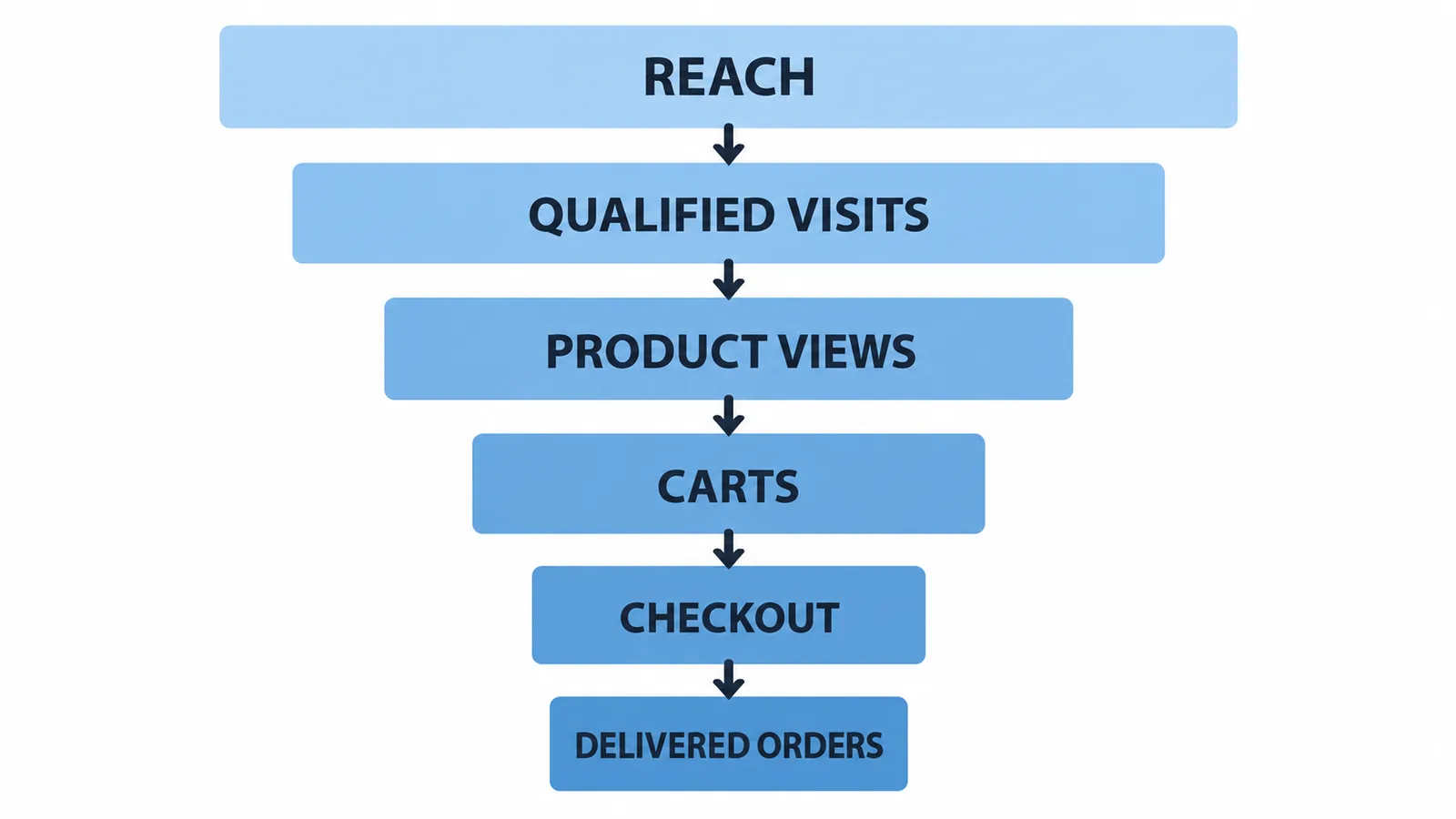
Funnel numbers show where to investigate. Separate platform exposure from store sessions, product views, carts, checkout, purchases, and delivered orders; each tests a different part of the offer.
Which stage loses qualified visitors?
Use Shopify’s acquisition reports for session sources and its online store conversion report for carts, checkouts, and purchases. Acquisition counts visits, not orders; keep order-source evidence separate and treat multi-visit attribution cautiously. On another platform, find equivalent events and verify that they fire. Diagnose one product and traffic source at a time.
| Signal | Question to investigate | Verify | Next test |
|---|---|---|---|
| Views rise, visits do not | Does the content reach possible buyers? | Link clicks and audience location | Sharpen the promise and destination |
| Visits rise, product views do not | Does the landing page match the post? | Entry page and product clicks | Send traffic to the matching item |
| Product views rise, carts do not | Is the offer credible and clear? | Variant, full price, sample media | Fix the strongest purchase objection |
| Carts rise, orders do not | Does checkout add friction? | Mobile test order and shipping fees | Repair the failing checkout step |
| Orders rise, complaints rise | Can fulfillment keep the promise? | QC, tracking, and support records | Fix the order path before scaling |
Read across the row where the gap appears before testing a fix; no row supplies a universal conversion target.
When is there enough evidence to change course?
High views with few visits point to a different problem from carts without orders. Before changing course:
- Confirm that events fire during a test order.
- Compare the same product over comparable periods.
- Change one thing at the weak stage, then inspect the next stage.
Ignore borrowed conversion benchmarks. Key Takeaway: follow the observed leak, then use the order record to confirm what was fulfilled.
How Can You Follow Up Without Buying Another Visit?
You can follow up without another ad when visitors choose to hear from you about a buying question. An email address is not permission for endless promotions.
What can visitors choose to receive?
Offer a clear, optional reason to subscribe: sizing help, care guidance, or relevant stock updates. For US commercial email, the FTC’s CAN-SPAM guide explains requirements including an opt-out path. Check the rules applying to your audience before sending.
Keep the signup simple:
- State what kind of message the buyer will receive.
- Record the source and choice where your system supports it.
- Make stopping future marketing easy.
How should a follow-up answer objections?
A useful follow-up answers the question the first visit left open: how to measure fit or when delivery is possible. A cart reminder repeating “buy now” adds nothing if those concerns remain.
Some visitors will still decline. Key Takeaway: preserve earned attention with permission-based answers, not promises of conversion.
Can Your Supplier Handle a Successful Organic Post?
A supplier can handle a hit post only when stock, product checks, shipping, and support keep pace. Content can spread faster than replenishment.
What must be confirmed before content scales?
Test the exact variant shown in the content. Confirm available units, order checks, tracking activity, and responsibility for wrong or damaged items. A catalog screenshot cannot prove current stock.
Use a short readiness list:
- Sample and batch match the product on camera.
- Stock confirmation has an owner and a date.
- QC, packing, first tracking event, and exceptions have clear handoffs.
What did a published store-growth experience reveal?
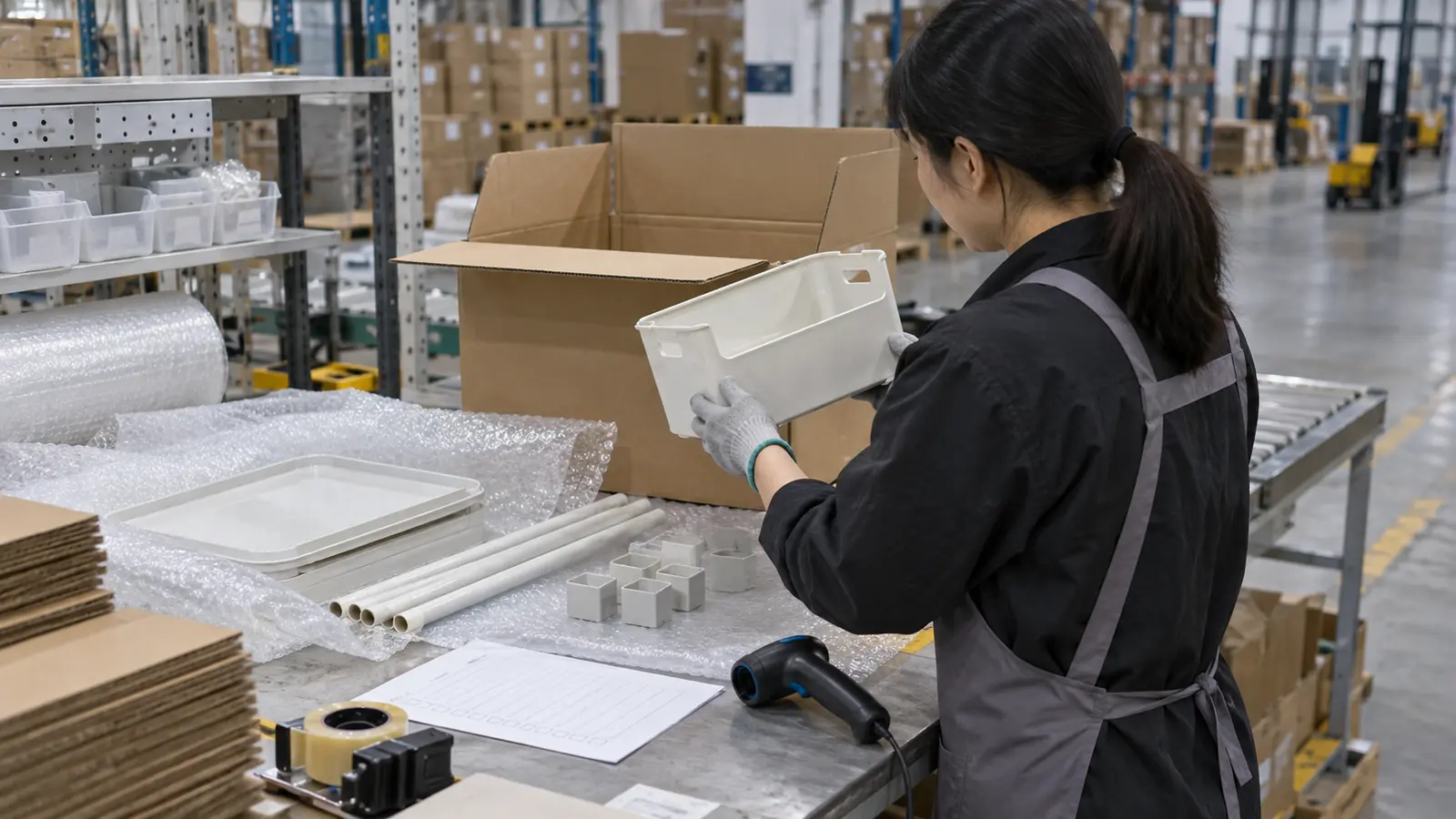
In a published store-growth experience, a seller with demand faced inconsistent quality, delivery, and packaging. The team tightened sourcing, QC, packing, and shipping. The source does not identify how customers arrived; the case illustrates fulfillment risk after demand appears.
Key Takeaway: check supply and dispatch before celebrating reach; the delivered item becomes the buyer’s evidence of your store.
How Do You Earn Another Order From the First Customer?
A second order starts with a first item that arrives as promised and gives the buyer a reason to return. Follow-up cannot rescue an unresolved complaint.
What earns a second purchase?
Start with how the customer uses the item. A compatible accessory, replenishment, or replacement part may help; a random catalog blast will not. If consistency is the issue, review what dropshipping quality control should verify before the next batch.
The practical sequence is:
- Confirm delivery and resolve any reported problem.
- Offer only a genuinely related next item or care instruction.
- Track repeat orders separately from first purchases.
When should you request a review or referral?
Ask after delivery and problem resolution, allowing an honest answer. Do not invent customer photos, hide a compensated comment, or promise a reward you cannot honor. Feedback can expose listing confusion or defects before more buyers see the offer.
Key Takeaway: accurate delivery and responsive service give buyers a reason to return or recommend the store without another paid impression.
How Will You Earn the Next Sale Without Paid Ads?
Choose one buyer need and one unpaid channel, then make the content, product page, and delivered item agree. Track the path from qualified visit to order, fix the first leak you can verify, and repeat the test before expanding. No ad spend is a constraint on acquisition, not a shortcut around product quality, operating costs, or customer service.
RuntoDropship is a Private Dropshipping Agent. When sourcing, product checks, packing, or shipping becomes the constraint on a store that already has demand, we can help assess that order path. We believe durable growth depends on making the promise in a seller’s content match the parcel a customer receives. To discuss an existing product and its fulfillment problem, contact us today.
FAQ
Can I share a product link in a niche community?
Only when that community’s rules allow it and your contribution answers a real question. Participate before promoting, disclose your connection to the product, and share a link when it is permitted and genuinely useful.
What if organic viewers are outside the countries I ship to?
Check where viewers live before judging the post. State shipping availability on the landing page and do not accept an order you cannot fulfill. Adjust the product, language, or channel to the market you can serve rather than promising that a hashtag will force geographic reach.
What should I do when a first-time buyer requests a return?
Follow the return policy you published and identify whether the item is defective, wrong, or simply unwanted. Confirm where a return can go and who pays before instructing the buyer; give a clear response and timeline without assuming the supplier will reimburse you. Record the reason so the next listing or QC check improves.
Can I test paid ads after organic sales begin?
Yes. First establish that the delivered order leaves enough margin and that stock, shipping, and support can handle more demand. A paid test is a separate decision; the steps above work without one.
How do I know whether a supplier’s tracking meets TikTok Shop rules?
Compare a real test order’s tracking events and dispatch path with the current US TikTok Shop fulfillment policy. Ask the supplier which carrier produces the first valid scan and when it appears. Do not rely on a forum deadline or a label that exists before a parcel moves.