
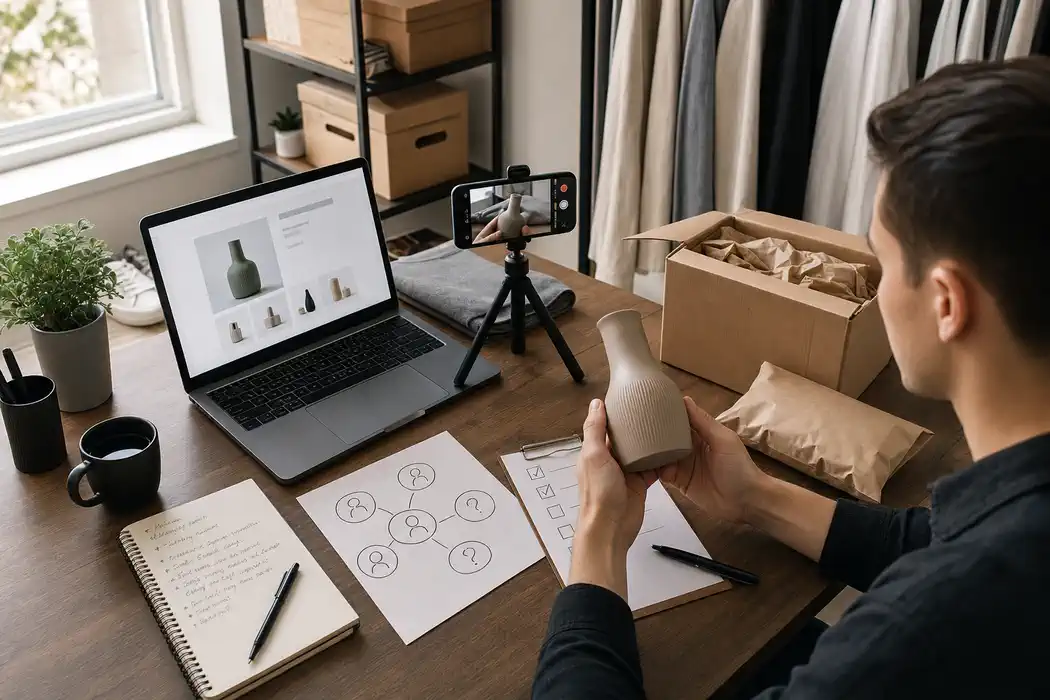
Organic dropshipping uses the standard dropshipping fulfillment model while earning customer discovery through non-sponsored search, social content, video, marketplace visibility, communities, and referrals instead of buying distribution through advertising. It can work, but it is not free or automatic: much of the advertising budget is replaced by product samples, original content, audience research, store work, tools, and time.
To start, define one buyer problem, choose and sample one product, validate the supplier and delivery route, calculate the economics, build a focused product page, select one discovery channel, and track a controlled content test through delivery. Each of those seven steps is completed below rather than summarized and left unexplained.
Here, “organic” describes customer acquisition. It does not mean the item must be natural, eco-friendly, or certified organic. The inventory model remains dropshipping: you sell the item, a supplier prepares and ships it, and you remain responsible for the customer promise.
What Is Organic Dropshipping, and Does It Work?
The model combines normal dropshipping operations with marketing that does not charge for each click or impression. A buyer might find a non-sponsored TikTok video, Google result, YouTube tutorial, unpaid shopping listing, community recommendation, or referral before visiting the offer and placing an order.
Yes, it can work when three conditions meet:
- the content reaches people who genuinely have the problem;
- the store gives those people enough reason and confidence to buy; and
- the product, delivery, tracking, and support match the promise that earned the order.
It fails when “free traffic” becomes the entire strategy. Views may come from people who enjoy a clip but do not want the product. Search impressions may come from broad questions with weak buying intent. Sales can also lose money after product cost, shipping, payment fees, returns, tools, samples, and support.
Organic Traffic, Email, and Marketplace Discovery Are Not the Same Thing
Organic traffic is a group of non-ad acquisition sources, not one universal channel. Google Analytics separates non-ad search, social, video, and shopping visits into Organic Search, Organic Social, Organic Video, and Organic Shopping. It classifies Email separately. That distinction is useful even when all five channels avoid pay-per-click advertising. Google Analytics documents these channel definitions.
Email is normally an owned follow-up channel. It can bring subscribers back without purchasing an ad impression, but it does not explain how those people first joined the list. Track the original signup source and later email sessions separately.
An unpaid click from a shopping site such as Amazon or eBay may be classified as Organic Shopping. Inside the marketplace, call it unpaid marketplace discovery rather than assuming it behaves like Google search. Sponsored placements, marketplace-native unpaid visibility, and visits to your own store should remain separate in reporting.
Organic vs. Paid Acquisition
The order model stays the same; the main difference is how attention is acquired.
| Decision factor | Organic acquisition | Paid acquisition |
|---|---|---|
| Main input | Time, original content, useful ideas, and consistency | Testing budget, ad creative, targeting, and campaign control |
| Early traffic | Often uneven and dependent on content or search visibility | Can begin faster when campaigns are funded and approved |
| Reusable assets | Search pages, videos, audience relationships, and an email list | Proven creatives, audience data, and campaign learnings |
| Main risk | Creating attention that never becomes buying intent | Spending before the offer and economics are proven |
This route fits a seller who can publish consistently, learn from uneven feedback, and wait for evidence. It is a poor fit when predictable traffic is required immediately or nobody owns the content workload.
Step 1: Define the Buyer Problem You Will Build Around
Start with one recurring situation that a specific buyer wants to improve. Your output is a one-sentence problem statement containing the buyer, context, unwanted result, and desired change.
For example: “Apartment cat owners want to remove loose hair from a fabric sofa without storing a bulky vacuum.” That statement is useful because it creates concrete research questions: Which fabrics cause difficulty? What methods do buyers compare? What do they dislike about current tools? What result can a small product demonstrate honestly?
Collect the buyer’s own language from search suggestions, product reviews, marketplace questions, social comments, and relevant community discussions. Group repeated statements by problem, current alternative, objection, and buying condition. Do not count one viral video as evidence that a durable problem exists.
For products described as evergreen, use long-term search patterns to separate recurring demand from short-lived spikes; our guide to using Google Trends for dropshipping also explains why search interest alone cannot prove buying intent.
Finish this step with three items:
- one problem statement;
- five to ten recurring buyer phrases; and
- a short list of alternatives buyers already use.
Those records become the product criteria and content vocabulary. If the evidence points to several unrelated buyers or problems, narrow the scope before choosing a product.
Key Takeaway: Do not select a product until you can name one buyer, one recurring problem, and the alternatives that buyer already considers.
Step 2: Choose a Dropshipping Product That Can Earn Attention
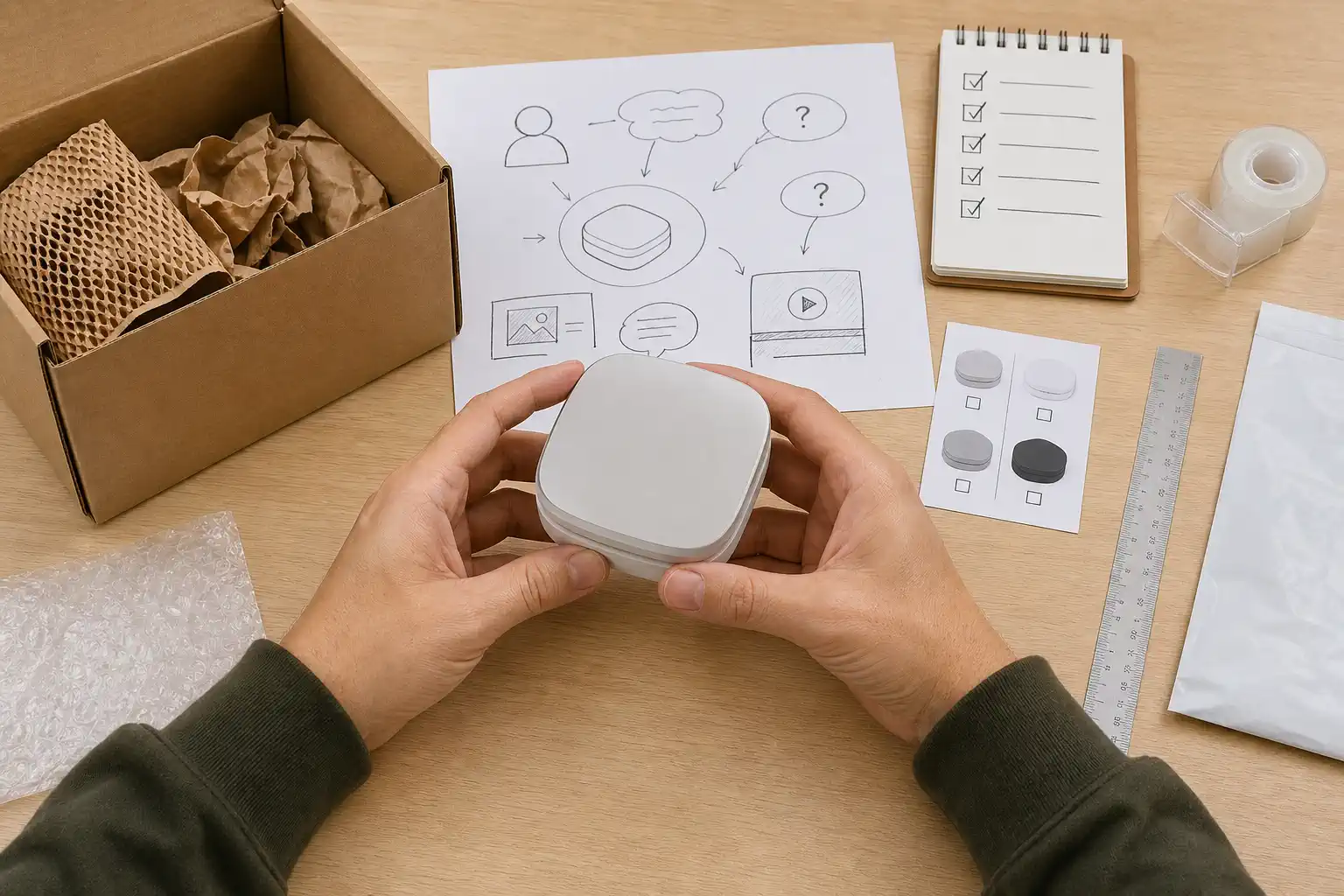
Choose a product that passes both a content test and an order test. A cheap or surprising item is not enough.
Content fit means the product supports several truthful ways to help the same audience: a demonstration, comparison, tutorial, mistake-to-avoid post, care guide, buyer question, or use-case explanation. If every idea depends on the same novelty reveal, the content supply is fragile.
Order fit means the exact SKU, variant, packaging, stock, and delivery route can remain dependable enough to sell. Check parcel size, damage points, return difficulty, destination restrictions, intellectual-property risk, safety concerns, and contribution after all variable costs.
The sofa-hair problem could lead to a reusable brush, a compact roller, or another simple tool. Compare candidates by suitable surfaces, cleaning method, replacement parts, parcel size, likely failure points, and what original footage can verify. Do not select one because a repost labels it a “winning product.”
| Product situation | Useful content evidence | Risk to check first |
|---|---|---|
| Compact cleaning tool | Original surface demonstration and method comparison | Exaggerated results or unsuitable surfaces |
| Desk organization accessory | Measured setup, dimensions, and use case | Material quality and variant mismatch |
| Travel packing accessory | Packing method and size comparison | Zippers, weight, and destination restrictions |
| Hobby tool | Beginner tutorial, comparison, and care guide | Safety, instructions, and skill-dependent results |
The dropshipping product research process can help you compare multiple candidates before committing production time.
Key Takeaway: Approve one product only when it supports repeated truthful content, manageable order risk, and a believable path to positive delivered-order contribution.
Step 3: Validate the Sample, Supplier, and Delivery Route
Order the exact SKU and variant through the route a customer is expected to experience. This step should produce first-hand evidence, not another supplier promise.
Inspect the item, instructions, included pieces, dimensions, visible finish, working condition, and packaging. Test it only under reasonable conditions. Record what the item can do, where it performs poorly, and which statements cannot be supported by the sample.
Build a small evidence pack:
| Evidence record | What it supports | What it does not prove |
|---|---|---|
| Dated sample photos and SKU/variant label | The exact sample received and inspected | Future stock will remain identical |
| Parcel photos, weight, dimensions, and packing notes | How this test parcel was prepared | Every future parcel will be packed the same way |
| Test-order tracking timeline | What happened on one route and order | A guaranteed delivery time for every customer |
| Supplier exception contact and written response | A named escalation route existed during the test | Every exception will be resolved successfully |
Ask the supplier how stock changes, substitutions, wrong variants, damage, address corrections, and returns are handled. Confirm who supplies tracking and when an exception should be escalated. A friendly conversation is not a substitute for the evidence records above.
Before publishing a delivery promise, confirm route matching and dispatch control for the product and destination—not only the supplier’s estimated transit time.
RuntoDropship’s owner-confirmed operating scope includes sample coordination, pre-shipment product inspection, packing checks, and photo confirmation. That support becomes relevant when a growing seller needs the same checks repeated across live orders; a beginner testing one item should first prove the product and customer route on a controlled scale.
Key Takeaway: Treat one sample and one test order as evidence about that exact item and route, then define the repeatable supplier checks needed before increasing order volume.
Step 4: Calculate Profit Before You Call the Model Viable
Calculate contribution from a delivered order, not revenue and not the absence of an ad bill.
Profitability depends on what remains after the full variable cost of a completed order and the operating inputs used to create demand.
selling price − product cost − shipping − payment fees − refund and return allowance − variable tools and support = contribution per delivered order
Then evaluate the operating result:
total delivered-order contribution − samples − content tools − editing or creator costs − fixed store costs = operating result before tax and owner labor
Track owner labor separately even when you do not initially pay yourself a wage. Researching, filming, editing, writing, replying, and analyzing are acquisition inputs. Hiding them inside unpaid evenings can make a weak channel look profitable.
Continue when the same buyer problem repeatedly produces qualified visits, some of those visits become completed orders, delivered orders leave acceptable contribution, and customer feedback matches the content promise. Revise the offer when attention is relevant but conversion is weak. Pause when quality, claims, returns, or economics remain unacceptable without ad spend.
Key Takeaway: Judge viability with actual completed-order costs and operating inputs. Views, revenue, and zero advertising spend cannot prove profit by themselves.
Step 5: Build a Store and Product Page That Match the Content
Build one destination that continues the same buyer problem, product, and evidence that earned the visit. A focused niche store or small product-led store can work; a crowded catalog is not required for the first test.
The first screen should identify the use case, show the exact product clearly, and give the visitor an obvious next action. The rest of the page should answer the practical questions discovered during the sample and buyer-language research:
- what is included and which variant is shown;
- dimensions, materials, compatibility, or suitable surfaces;
- how the product is used, cleaned, or maintained;
- realistic limitations and unsupported uses;
- delivery expectations, returns, and contact options; and
- a direct path to the correct variant and checkout.
For the sofa-hair example, a demonstration about one fabric should lead to a page that immediately shows the same tool and relevant surface. Do not send the visitor to a generic home page or show footage of a different variant. Original sample photos and video are stronger evidence than copied supplier media, provided they accurately represent the item customers can order.
Test the page on mobile, complete a test checkout, verify confirmation messages, and confirm that the order data reaches the correct supplier workflow. The output of this step is not a “finished brand.” It is a working, evidence-aligned path from the content claim to the correct order.
Key Takeaway: Publish only after the content, product page, variant, checkout, and supplier order data describe the same item and customer promise.
Step 6: Choose One Organic Traffic Channel
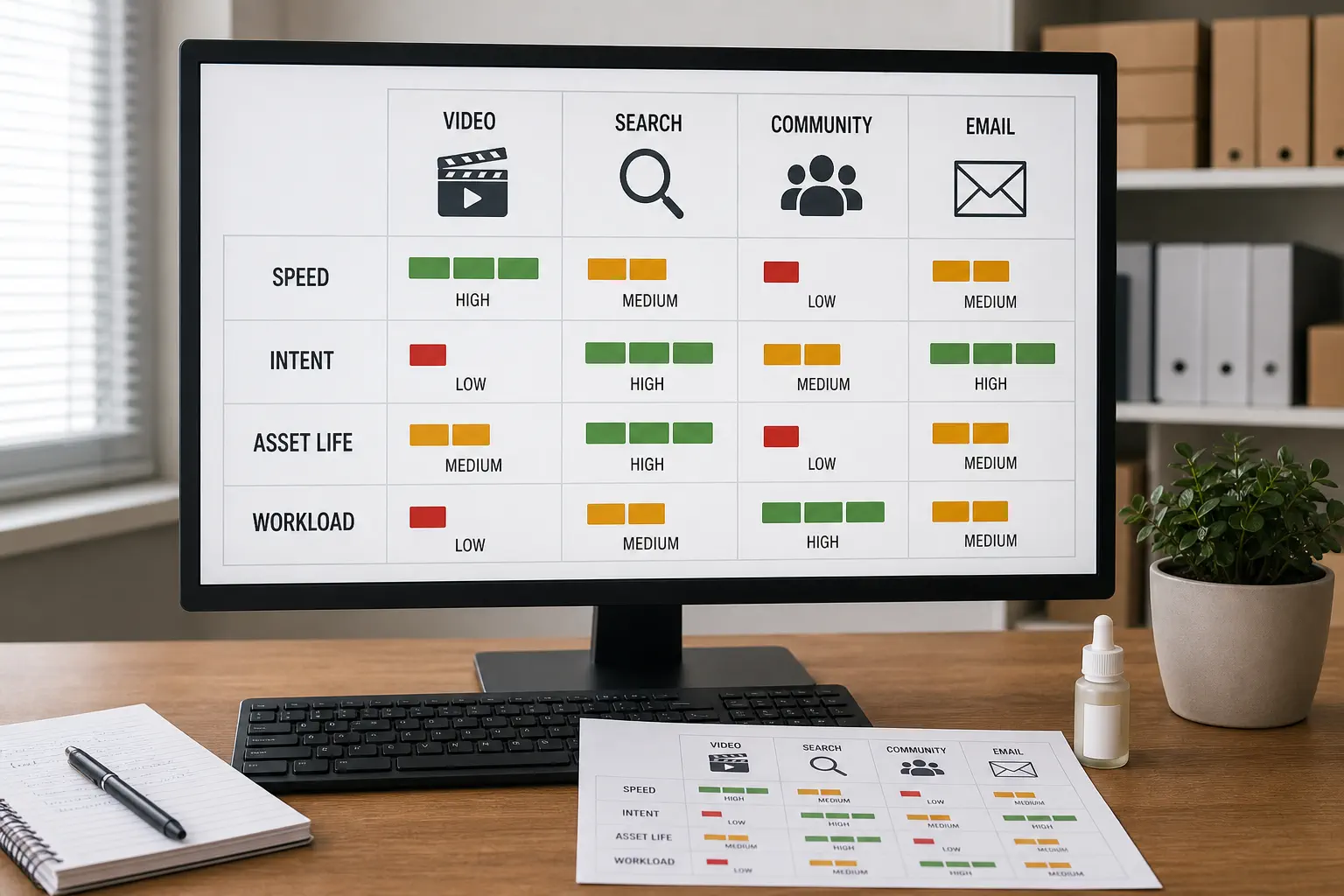
Choose the primary channel by how the buyer evaluates the product, not by the loudest success story. Keep email as a separate owned follow-up channel rather than treating it as the source of initial discovery.
| Channel | Strong fit | First controlled test | False success signal |
|---|---|---|---|
| TikTok or Reels | Visible problems and quick demonstrations | Three hooks showing the same verified benefit | Entertainment views without product interest |
| SEO | Specific questions and comparisons | One problem-solving page and one focused comparison | Broad impressions without qualified visits |
| YouTube | Setup, teaching, limitations, and fair comparison | Tutorial, use case, and alternatives video | Watch time from the wrong audience |
| Unpaid marketplace discovery | Products buyers already search for on a shopping site | Accurate listing, complete attributes, and clear variants | Visibility dependent on misleading titles or policy risk |
For a visual cleaning tool, a TikTok or Reels test could show one close demonstration, one fair alternative comparison, and one cleaning tutorial using the sampled product. An SEO test could answer how to remove hair from a particular surface and compare reusable methods. A YouTube test could add setup, limitations, and maintenance. A marketplace listing should use accurate attributes, dimensions, variants, and service terms.
Track each channel separately. Tag links where possible, distinguish Organic Shopping from Organic Search, and preserve the signup source when email later brings a visitor back.
Key Takeaway: Start with one discovery channel that matches the product’s evaluation task. Add email for follow-up only after you can identify how subscribers were originally acquired.
Step 7: Publish Content and Track the Complete Order
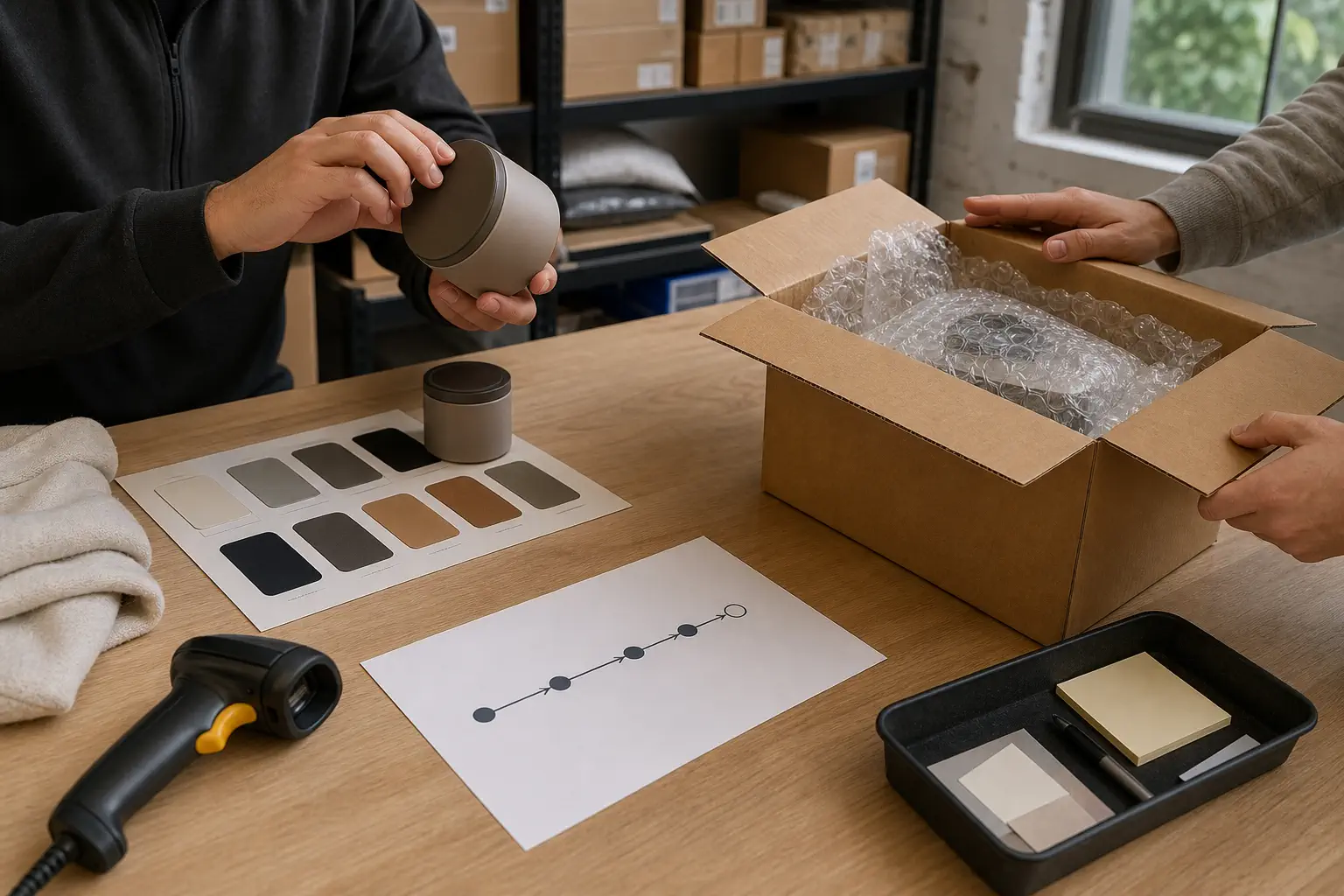
Publish a small group of original assets around the same problem, product, and destination page. The goal is to learn where the customer journey breaks, not to maximize posting volume.
A usable content brief contains:
- buyer situation and exact question;
- verified sample evidence;
- one benefit that can be shown honestly;
- a material limitation or condition; and
- the correct product-page next step.
Keep the product, audience, offer, and measurement definitions stable during the test. Follow the path beyond the click:
qualified view or impression → content engagement → product-page visit → add to cart → checkout → paid order → delivered order → refund, complaint, or repeat signal
A Client Lesson: Organic Growth Starts With the Product
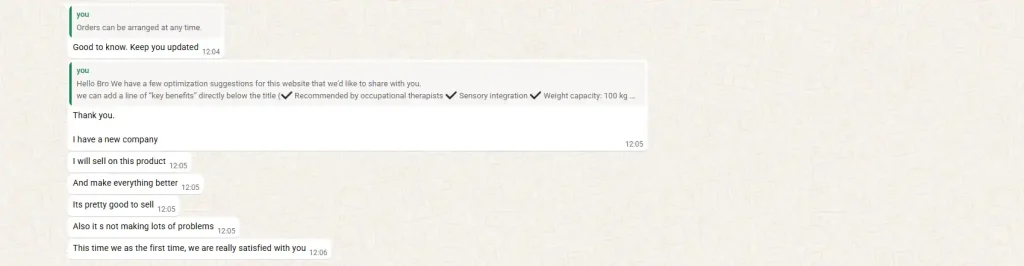
For one client, RuntoDropship sourced an everyday household product with long-term demand and recommended using paid traffic first to validate the offer before investing in social content and blog SEO. We then supported consistent product quality, faster delivery, and after-sales handling.
These operational controls do not create organic traffic directly. They help turn completed orders into repeat purchases, positive reviews, referrals, and branded searches—the customer signals that give long-term organic content a stronger foundation.
If the right people watch but do not visit, check the call to action and message. If qualified visitors arrive but do not add to cart, inspect product-page continuity, price, evidence, delivery information, and trust. If paid orders arrive but tracking, variants, damage, or support create complaints, return to the supplier and route controls established in Step 3.
Before increasing reach, confirm current stock, SKU mapping, packing requirements, tracking source, and exception contact. When defects or packing could contradict the content, a dropshipping quality control process should define what is checked and what happens when an item fails.
Key Takeaway: Optimize for the complete order, not the post. Increase reach only when content, conversion, contribution, delivery, and customer feedback tell a consistent story.
How Long Should You Test Before Changing Direction?
There is no reliable universal timeline. The channel, publishing quality, existing audience, competition, product-message fit, and definition of “result” all change the answer.
Short-form social may produce viewing and comment feedback quickly, but distribution is volatile and an early spike may not lead to sales. Search content usually needs more time to be discovered and evaluated. YouTube videos and unpaid shopping listings can continue attracting visits, but only while they remain useful and visible.
Use four checkpoints rather than a promised number of days:
- Discovery: Are appropriate people finding the asset?
- Interest: Are they watching, reading, asking buyer questions, or visiting the offer?
- Conversion: Do qualified visits become carts, checkouts, and paid orders?
- Delivery: Do completed orders leave acceptable contribution and customer feedback?
Choose a review window before publishing and compare a group of similar assets. Change the topic, hook, or channel when qualified discovery is absent. Investigate the offer and page when discovery exists but buying actions do not. Investigate the supplier and order process when failures begin after checkout.
FAQ
Can I start with no followers?
Yes. An existing audience is not required, but a new account or site has no guaranteed distribution. You still need original material, a clear buyer problem, a trustworthy offer, and enough controlled tests to learn what attracts qualified visitors.
Can I combine organic content with paid ads later?
Yes. Use the initial content work to learn which problem, message, and creative attract qualified interest. Make the paid-testing decision separately using contribution, risk, and clear attribution; do not assume an organically successful post will remain profitable when promoted.
Conclusion
If you are still testing one product and have no stable order flow, keep the system small: collect first-hand sample evidence, complete a test order, use one discovery channel, and diagnose the full customer journey before adding complexity.
When repeat orders, multiple stores, or several client projects make supplier coordination and order consistency harder to control, RuntoDropship can support sourcing, sample coordination, product inspection, packing confirmation, order execution, shipping arrangement, and after-sales handling through a private dropshipping agent workflow. Send the product link, current order volume, target markets, and the operational problem already appearing in live orders to discuss whether that support fits your growth stage.