

You find a product worth selling, then discover that its shipping quote, custom label options, and order workflow need separate checks. Searching for eprolo alternatives can feel like starting again, especially when a new app promises features that you cannot yet verify. A poor match leaves you repricing products or explaining delays after customers have paid.
Eprolo replacements include sourcing and fulfillment platforms, supplier networks, marketplace order tools, print-on-demand services, and private agents. Choose the option that covers your required jobs, then verify the exact product, written costs, branding scope, and order execution before moving sales to it.
Which Eprolo alternatives can replace your current setup?
CJdropshipping, Zendrop, Spocket, Syncee, DSers, and Printful are options to investigate, but they address different parts of an Eprolo setup. A private agent adds another route when you need agreed sourcing and physical fulfillment work. List the Eprolo functions you rely on, then check who will perform each one after a change.
What job does each option perform?
Current app listings describe catalog sourcing, product imports, order synchronization, fulfillment, or production to order. Features can vary by product, supplier, plan, and arrangement, so use the shortlist to decide what to verify. Before you compare subscriptions, list the jobs your store requires:
- Obtain the specified product and approve any substitute.
- Apply the agreed label, packaging, or printed design.
- Receive orders, handle stock updates, and return tracking.
- Resolve physical product and parcel exceptions.
| Replacement route | Reason to investigate | Proof needed before commitment |
|---|---|---|
| CJdropshipping | Sourcing, customization, and fulfillment | Exact product match, dispatch stock, and itemized quote |
| Zendrop | Catalog fulfillment and eligible branding or POD | Product/plan eligibility and the configured order workflow |
| Spocket | Products from a supplier network | Named product source, route, and supplier-specific terms |
| Syncee | Supplier discovery and product/order synchronization | Supplier approval, order responsibilities, and stock updates |
| DSers | Marketplace imports, supplier mapping, and order management | Who purchases, inspects, and ships under your arrangement |
| Printful | Printed or embroidered designs produced to order | Suitable blank product, decoration method, and fulfillment terms |
| Private agent | Agreed sourcing and physical execution | Written scope, approval records, and an accountable operator |
A print-on-demand partner suits a different purchasing job from a tool managing marketplace orders. Key Takeaway: Remove options that cannot document the job you need before comparing their headline fees.
Can a replacement supply the products you already sell?
A replacement supplier is suitable only if it can provide the specification your customers expect and explain how repeat orders will be supplied. Similar Eprolo product photographs can hide different fabrics, dimensions, finishes, or included accessories. Confirm the physical product before approving its store listing.
What belongs in an approved product record?
Give the provider a reference that it can check against incoming goods. For deeper written checks, use these questions to ask a dropshipping agent when the proposed replacement includes sourcing or inspection work. Record:
- Product reference and each sellable variant.
- Material, dimensions, finish, and included components.
- Sample photographs and the version you approved.
- The inspection points relevant to customer complaints.

How will you control substitutions and repeat orders?
A provider may locate another source when stock changes. Ask it to obtain your approval before changing the specification or sending a substitute; a matching image alone cannot approve that change. Keep the sample reference available to whoever checks the next batch.
Key Takeaway: A product approval record gives purchasing and inspection teams the same reference when supply changes.
What branding can you keep with a new provider?
You can retain branding only when the replacement confirms the required treatment for your actual product category. An Eprolo alternative offering custom packaging may still have different rules for garment labels, printed designs, or inserts. Specify the physical result you want to receive.
Do you need labels, printed designs, or branded packaging?
Start by separating the brand layers. A garment label, a design printed on a blank item, and a branded shipping bag require different materials and work. Ask which of these are available for the selected product:
- Sewn or applied garment labels and hangtags.
- Printing or embroidery on the product itself.
- Packaging, inserts, and packing documents.
- Parcel language and the sender information displayed.
What must you approve before a branded shipment?
Request a sample or clear approval evidence for each agreed layer, with artwork and material versions recorded. When evaluating private-label dropshipping requirements, check product eligibility and who obtains, stores, and applies the materials.
For covered US textile products, the FTC's labeling guidance explains fiber, origin, and responsible-business information; clothing care labels follow a separate rule. Include required information in the approval review alongside your brand artwork. Key Takeaway: Approve a category-specific physical pack before treating a branding feature as ready for use.
How do you compare the true cost of a fulfilled order?
Compare the amount required to fulfill the same product and destination under the same written assumptions. Eprolo’s current listing offers a free plan, optional paid branding plans, and materials billed per order. Include those costs when comparing a replacement’s quoted product, packaging, and shipping charges.
What makes two written quotes comparable?
Use one exact SKU, one unit, the intended US destination, and the agreed packaging as the baseline. Then ask each provider to identify the quote's date, validity, payment conditions, and any items awaiting confirmation. Compare:
- Product price and the selected shipping service.
- Brand materials and applicable handling or service charges.
- Plan costs tied to the features you will use.
- Any disclosed duties, taxes, or other route charges.
- Currency, payment fees, and conditions for price changes.
Learn With Shopify's supplier-sourcing lesson covers samples, commercial terms, and inventory responsibilities. Its wholesale discussion does not establish your dropshipping margin; use your own confirmed costs. Key Takeaway: Keep unquoted charges marked as unknown until the provider supplies the missing terms.
What evidence supports delivery promises to US customers?
A delivery promise needs product-specific dispatch and route evidence, including preparation before the parcel reaches the carrier. A replacement platform's warehouse country or advertised transit range cannot confirm that your SKU is available there. Separate the events you can observe.
Which fulfillment events should you record?
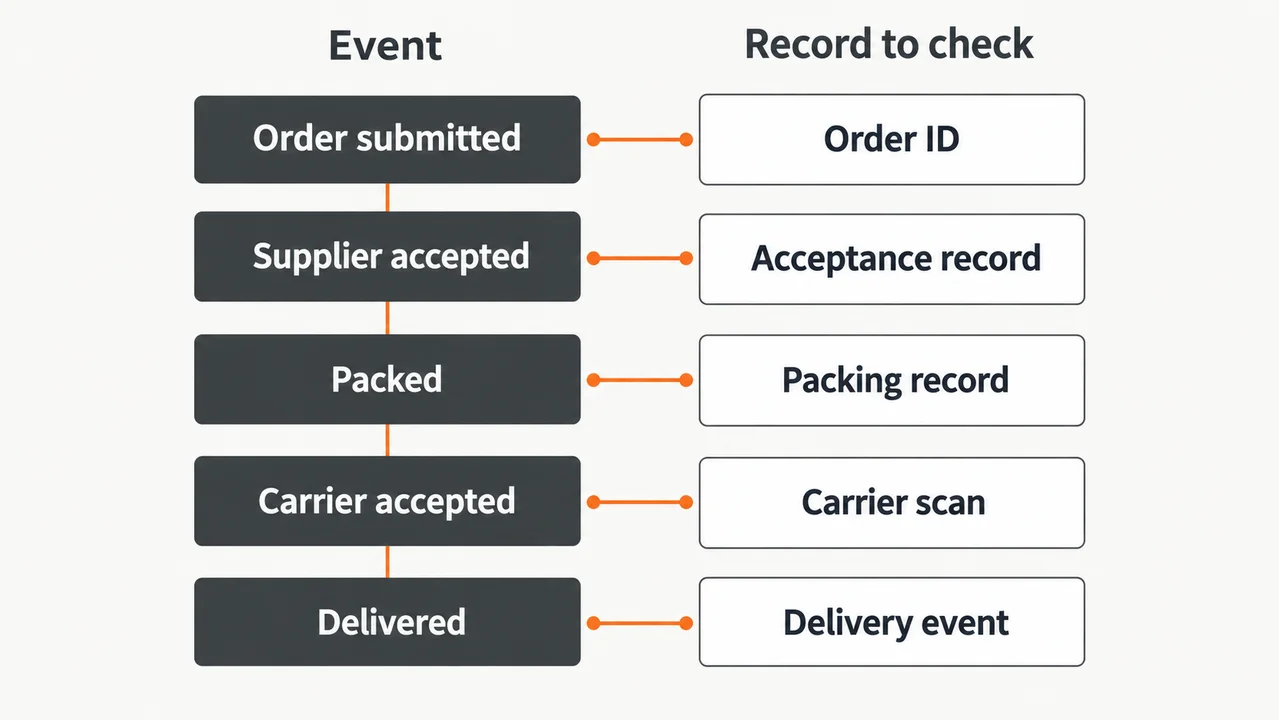
Order submission, supplier acceptance, packing, carrier acceptance, and delivery describe different stages. A tracking number or store fulfillment status alone cannot prove every physical stage has happened. Ask for the references needed to follow:
- The paid store order and provider acceptance.
- Preparation completion and dispatch origin.
- Physical carrier acceptance and subsequent tracking.
- Delivery or a documented exception.
What should a destination-specific pilot establish?
Test the approved product on the route you expect to use for US customers. Record the relevant dates and any delay before carrier acceptance, then discuss how changed stock or routes will be communicated. One successful order supplies a useful observation, not a guaranteed delivery range for future orders.
Key Takeaway: Use the event record to set a customer promise that includes preparation as well as transit.
Who resolves defects, returns, and missing parcels?
The replacement agreement should identify the available remedy and the party authorized to approve it for each exception. An Eprolo alternative's support channel may help with an app problem while another team handles goods or parcels. Confirm those responsibilities before relying on the service.
Which exceptions does the agreement cover?
Review the rules for the product category you are buying. A fashion return offer does not establish the policy for every product, destination, or reason for return. Obtain written answers covering:
- Evidence and reporting windows for defects or wrong items.
- Return authorization, destination, and relevant costs.
- Missing-parcel investigation and replacement conditions.
- Whether a remedy is a refund, replacement, or account credit.
Who can authorize the remedy?
Ask who can approve the action when the store platform and fulfillment provider disagree about an order. Keep the store reference, provider reference, and supporting evidence in one exception record so you can escalate without rebuilding the history. Confirm which team owns a transmission failure and which owns a physical shipment issue.
Key Takeaway: Agree the remedy authority before an exception leaves you funding a customer resolution yourself.
Will the store connection pass a real order test?
A replacement connection passes only when the required order and product data move correctly through your configured workflow. The current Eprolo Shopify listing is available; an old forum statement about app removal is not a reason to assume otherwise. Verify what the proposed connection does for your store.
Which data must survive the connection test?
Use the exact variant you approved physically and follow its digital references through the test. Shopify's fulfillment-app documentation explains that workflows vary: some apps require additional ordering steps. Check:
- SKU and variant match at the provider.
- Order receipt and acceptance in the intended workflow.
- Stock updates reflected in the store.
- Tracking returned to the correct customer order.
After a candidate meets those requirements, follow a controlled dropshipping-agent transition for the detailed handover. Keep the data test separate from the physical product and delivery checks; passing one does not establish the others. Key Takeaway: Approve the connector from observed order data before moving the operating workload.
When is a private dropshipping agent worth evaluating?
A private agent is worth evaluating when recurring product, inspection, or brand requirements need coordination that your present arrangement cannot document. Ask for a scope and quote based on your product and recurring tasks.
Which requirements need ongoing supplier coordination?
Prepare a brief that the proposed partner can scope and quote. Product sourcing, material approvals, incoming inspection, and packing instructions may involve different people, so identify the work you require:
- Locate goods that match the approved specification.
- Coordinate samples and product changes.
- Apply agreed inspection and packing instructions.
- Execute orders and provide the agreed shipment records.

What would make keeping your current setup sensible?
Keep the existing setup when it supplies the required products, supports the brand scope, and provides acceptable costs and execution evidence. If it cannot, evaluate another provider against those same requirements. RuntoDropship is a Private Dropshipping Agent coordinating sourcing and fulfillment; ask it to review your brief and document the proposed scope before committing.
Key Takeaway: Use the written brief to compare the agent’s responsibility with the work your current provider performs.
Conclusion
Choosing an Eprolo replacement means confirming which product, branding, cost, delivery, and order responsibilities the new arrangement will retain. The shortlist helps you identify candidates; approval records and a controlled test help you decide whether to use one.
RuntoDropship can review your sourcing and fulfillment requirements and coordinate the agreed work with suppliers. Share your product references, target market, and brand requirements when you contact us. Our view is that sellers should be able to check the scope before handing over orders.
FAQ
Can I keep Eprolo while testing a second supplier?
Yes, if your store and providers support the arrangement. Allocate each product or order line to a defined provider and test that a paid order triggers the intended request only once. A limited parallel trial does not require moving every product immediately.
How should I set shipping for suppliers with different origins?
Configure shipping profiles, origin groups, and destination rates, then test representative mixed carts. Shopify can combine rates from different profiles; the result depends on the locations and rate setup. Confirm the customer charge separately from what each supplier bills you.
Will a bundle use one parcel and one shipping charge?
No automatic rule guarantees that. Ask for a bundle-specific packing and route quote, including whether all items can be consolidated at one dispatch point. Multiple units can change parcel weight, dimensions, or the number of parcels even when sold together.
Can I contact the original supplier after importing a product?
Product import does not automatically establish access to the original merchant. Confirm who will source and sell the goods, whether direct contact is available, and which party holds your purchase agreement. An intermediary may source a replacement instead of ordering from the visible listing.
Can I keep a little stock and dropship the rest?
Yes, where your store supports separate fulfillment locations. Keep the stock you control distinct from the partner's availability, and assign who maintains counts, inspects goods, and ships your own orders. Allow for purchasing, storage, and handling costs before choosing that arrangement.