

The right questions to ask a dropshipping agent reveal who will handle your products, how orders move, what evidence you receive, which costs are variable, and what happens when something goes wrong. Do not hire on a low quote or a friendly sales call alone; ask for written answers, inspect the proof behind them, and run a controlled trial before moving live customer orders.
Quick Answer: Interview an agent as an operating partner, not a product directory. Confirm the responsible company and team, sample and inspection procedures, full landed-cost logic, Shopify order and tracking workflow, escalation path, and after-sales rules. Treat vague promises as unverified until a sample, record, screen share, or test order demonstrates the process.
A typical growing store reaches this decision after the easy workflow starts to crack. Several suppliers send inconsistent quotes, a winning SKU changes without warning, tracking arrives late, or a support ticket crosses multiple time zones before anyone takes ownership. Changing the person in the chat does not solve that problem. You need to establish who controls each physical and digital handoff, what they document, and how quickly exceptions reach someone authorized to act.
Questions to Ask a Dropshipping Agent Before You Compare Quotes

Before you compare prices, define the work you expect the agent to own and the evidence that will prove it happened. A low product quote means little if it excludes inspection, packaging labor, tracking updates, payment costs, or exception handling.
Write down your order volume range, target countries, active SKUs, product risks, packaging needs, store system, and the failures you most want to prevent. Giving every candidate the same scenario makes their answers comparable. If your Shopify workflow needs one-to-one sourcing, product checks, dispatch coordination, and tracking write-back, evaluate those responsibilities against a private dropshipping agent for Shopify sellers before accepting a generic sourcing proposal.
Do not send all 15 questions without context. Explain your situation, request proportionate proof, and note who owns the next action. The goal is a verifiable explanation, with sensitive customer or supplier details redacted.
Use three evidence levels:
- Statement: the agent describes a capability.
- Record: the agent shows a redacted checklist, workflow, sample report, quote breakdown, or system view.
- Test: the agent performs the task on your sample or controlled order.
Higher operational risk requires stronger evidence. A chat statement should not prove variant checks, packing accuracy, or end-to-end tracking.
Verify Who Will Actually Handle Your Orders

Start by identifying the legal and operational party that will receive your money, data, products, and escalation requests. The word “agent” can describe a solo coordinator, a small team, a platform account, or a company managing supplier-side work, and those models do not carry the same continuity or accountability.
1. What company or individual am I contracting and paying?
Ask for the contracting name, invoice issuer, payment recipient, business contact details, and the name of the person responsible for your account. These details should align. If payments go to an unrelated party, ask for a written explanation before proceeding.
You should know who accepted commercial responsibility and where written decisions will be recorded; do not request private identity documents over an insecure chat.
2. Which tasks does your own team perform, and which are outsourced?
Ask who sources the product, receives it, checks it, packs it, buys the shipping label, uploads tracking, and handles an exception. Outsourcing is not automatically a problem. Hidden handoffs are. A candidate should be able to name the boundary and explain how responsibility passes between parties.
When physical handling is central, request a live walkthrough or privacy-safe recording of the work area. Judge process rather than size: look for labeled locations, variant separation, scan points, packing instructions, and an exception area.
3. Who covers my account when my main contact is unavailable?
Ask for normal communication hours, urgent escalation channels, backup ownership, and the sequence for unresolved issues. A useful answer distinguishes routine questions from shipment holds, stockouts, wrong-SKU risks, and customer-facing emergencies.
Test Sourcing and Product Sample Confirmation
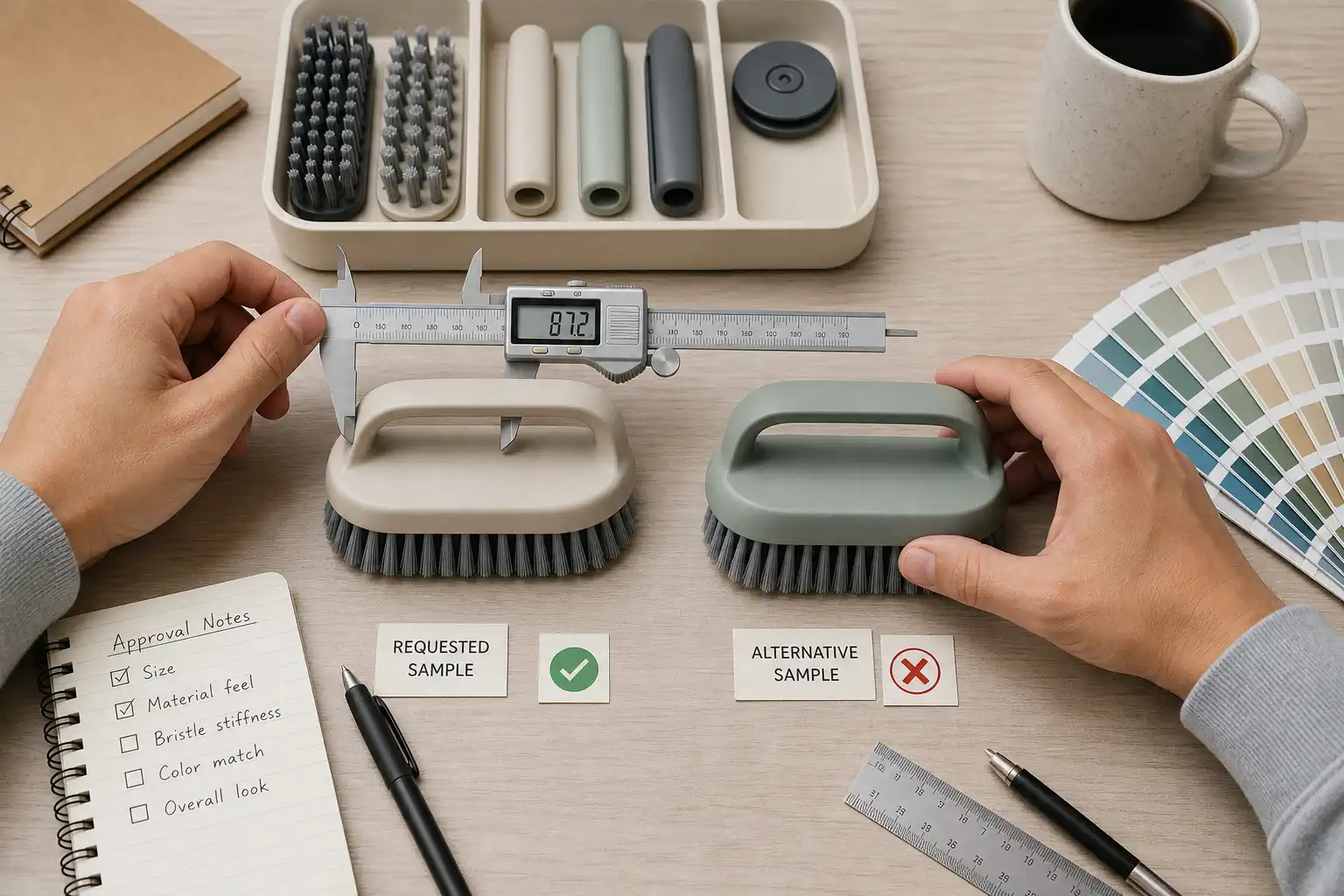
A sourcing quote should lead to an approved product specification, not merely a similar listing photo. The most important test is whether the candidate can turn your product requirement into a repeatable purchasing instruction.
4. How do you confirm that a sourced item matches my reference?
Ask what information they need: product link, dimensions, materials, functions, color reference, included accessories, plug type, packaging, and acceptable substitutions. Then ask how differences are reported before purchase. “Same product” is not specific enough when two factories use different components or packaging under similar photos.
For a meaningful SKU, request a sample comparison that records what was requested, what arrived, any deviation, and your approval decision. A physical sample is especially important when fit, color, material feel, function, fragility, or bundled accessories affect the customer promise.
5. What happens if the approved supplier changes the product or runs out of stock?
The safe answer is not “we will find another one.” Ask whether the agent pauses orders, requests approval, sources an exact replacement, or proposes an alternative with documented differences. Set a rule that no material substitution enters customer orders without your approval.
Ask how the agent monitors availability and whether proven fast-moving SKUs can use a reservation or small buffer, without treating either as an inventory guarantee.
Demand a Written Product-Check and Packing Protocol
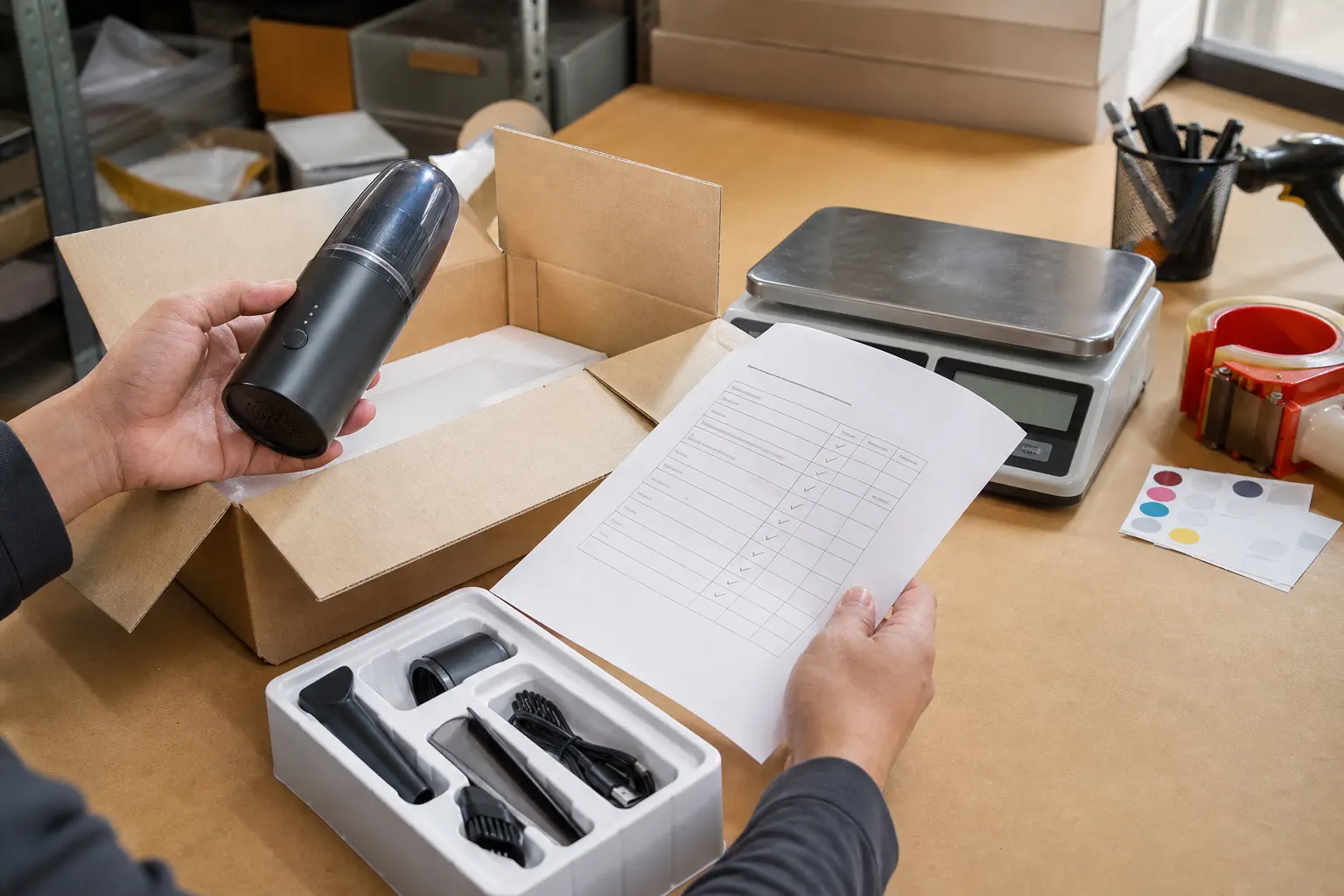
A credible inspection answer specifies the check, sampling scope, rejection rule, evidence, and corrective action. “We do quality control” is a label; it does not tell you what happens to your SKU.
6. What exactly do you check before dispatch for this product?
Ask the candidate to build a SKU-specific checklist. Depending on the item, it may cover model, color, size, quantity, visible damage, basic function, accessories, labels, inserts, protective material, and parcel condition. Clarify whether every unit receives a visual check or whether a sampling plan applies, and which defects trigger a hold.
The distinction matters because a cosmetic visual check cannot prove every internal function, and a random sample cannot support a claim that every unit was tested. The written scope should match what you tell customers and what the product risk requires. When visible defects, wrong variants, or missing accessories carry material risk, the broader dropshipping quality control process should define how evidence and corrective action work before dispatch.
7. What evidence do you keep, for how long, and how can I retrieve it?
Ask whether the agent can provide inspection photos, packing photos, weight records, scan logs, or short videos for defined order types. Then clarify the retention period, file naming, retrieval method, privacy safeguards, and whether evidence is routine or chargeable.
A generic packing video cannot prove every parcel. Agree on identifiers that connect evidence to a SKU, batch, or order without exposing unnecessary customer data.
Key Takeaway: Do not approve a generic “QC included” promise. Approve a written, product-specific check with honest limits, a hold rule, and evidence you can retrieve when an exception occurs.
Separate Processing, Shipping, Tracking, and Exceptions

Shipping answers become useful only when the agent separates supplier lead time, receiving, processing, carrier handoff, transit, and exception handling. One blended delivery estimate hides the stage that actually needs control.
8. When does processing time begin and end?
Ask when the clock starts: payment, Shopify order import, inventory availability, or receipt from the supplier. Ask what event ends processing: label creation, parcel handoff, or the carrier’s first physical scan. Also clarify order cutoff times, weekends, local holidays, made-to-order items, and out-of-stock handling.
This lets you distinguish an agent’s controllable work from carrier transit. It also reveals whether a quote assumes stock is already available when your actual workflow requires supplier purchasing first.
9. Which route would you use for this SKU and destination, and why?
Provide a real product profile and target country. Ask for the route name, chargeable-weight method, tracking coverage, typical handoffs, prohibited or sensitive-product limits, and the conditions that would change the quote. Request a recent privacy-safe tracking example for a comparable route, but do not treat one parcel as a guaranteed delivery time.
Ask how tracking reaches Shopify and what happens when the label exists but the first carrier scan does not. A useful answer identifies an investigation trigger, the person who follows up, and the update your team receives.
10. What is your written response to delay, loss, damage, or address failure?
Separate the agent’s investigation procedure from the carrier’s compensation rules and your store’s customer policy. Ask when an investigation starts, what evidence is required, who can authorize a reshipment, when a refund request is considered, and which costs remain conditional. Do not accept a promise of automatic compensation unless the exact terms are written and confirmed.
A real case shows why operational promises need evidence
In 2020, the U.S. Federal Trade Commission announced a $9.3 million settlement with Fashion Nova over allegations involving late shipments, inadequate delay notices, and gift cards used instead of required refunds. The FTC’s Fashion Nova case announcement concerns an online retailer, not a dropshipping agent, but the operating lesson is directly relevant: a seller remains responsible for promises made to customers. Your interview should therefore test how processing evidence, delay alerts, cancellation decisions, and refund information reach your team before a missed handoff becomes a customer-facing failure.
Key Takeaway: Never evaluate a shipping quote as one number and one time range. Require stage definitions, route conditions, tracking responsibility, and a written exception path that your store can act on.
Make Every Fee and Inventory Rule Visible

Compare candidates using the same cost scenario and the same assumptions. Unit price alone cannot show whether an agent is economical or even whether two quotes describe the same service.
11. Can you break down the total cost for one representative order?
Ask for product cost, domestic transfer, inspection, storage if applicable, pick-and-pack work, packaging materials, custom insert handling, international shipping, payment or currency-conversion treatment, and optional service fees. The quote should state its validity period and the variables that can change it, such as chargeable weight, destination, fuel adjustments, remote-area fees, or supplier price changes.
Pricing need not remain fixed forever, but its logic must let you reconcile an invoice with the agreed scenario. Product markup used instead of a separate service fee should be explained, not hidden behind “free service.”
12. What are the rules for MOQ, stored stock, packaging materials, and reconciliation?
Clarify stock ownership and ask who owns custom materials, where balances appear, how damaged or obsolete units are handled, whether stock can be returned to the supplier, and what happens when the relationship ends. Confirm whether an MOQ applies to product purchasing, supplier production, packaging printing, or service eligibility; they are different commitments.
If you use branded packaging, custom inserts, stickers, labels, or product bundles, ask whether these materials have a separate MOQ, lead time, storage rule, and remaining-balance record. This is especially important when your store is moving toward private label dropshipping, because packaging materials need their own stock rules, approval records, and packing instructions. The agent should also explain how packing instructions are attached to each SKU or order, so branded materials are not inserted into the wrong parcel or forgotten during scaling. If inserts are part of the buyer experience, review Shopify dropshipping custom inserts logistics before approving print runs, storage rules, or order-specific packing instructions.
Request a sample inventory statement showing inbound quantity, dispatched quantity, adjustments, and remaining balance. For stores with several variants, ask how physical counts are matched to Shopify availability and how discrepancies are investigated.
Key Takeaway: Select the quote you can reconcile, not automatically the cheapest headline price. Unclear cost and inventory ownership becomes expensive precisely when a SKU changes, a parcel is reweighed, or the relationship ends.
Confirm Shopify Data, Communication, and Security Boundaries
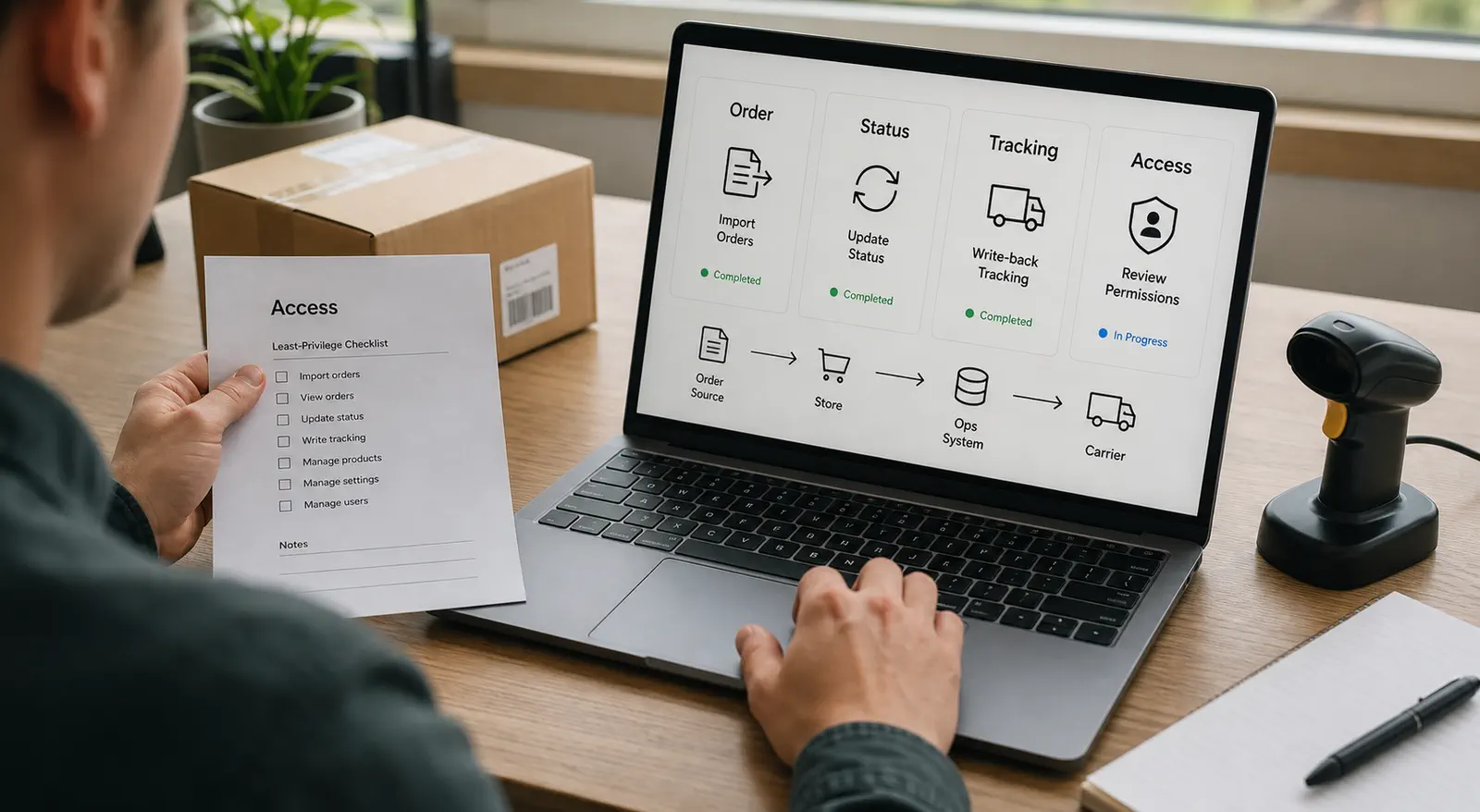
The agent should explain how an order enters the workflow, which fields are used, who can change status, and how tracking returns to your store. Automation is helpful only when responsibilities remain visible.
13. How do orders and tracking data move between Shopify and your system?
Ask whether the workflow uses an app, ERP connection, API, CSV, spreadsheet, or manual entry. Map the minimum required fields: order ID, SKU, variant, quantity, recipient details, shipping choice, special instructions, and tracking. Then test edits, cancellations, duplicate imports, partial fulfillment, bundles, and orders containing products from different sources.
Use least-privilege access. Review Shopify sensitive permissions, then ask which Shopify permissions are required, who receives them, how staff access is removed, and what happens to exported customer data after the working need ends. Do not share a store-owner password through chat. Access design should preserve your control of the store and its customer information.
14. How are urgent changes and unresolved exceptions escalated?
Ask the candidate to show the communication structure: daily channel, ticket or order reference format, responsible account contact, backup contact, and escalation threshold. Give a scenario such as “the customer changed the address after payment but before handoff” and ask the candidate to narrate the decision path.
Pay attention to the questions they ask you. A competent response should identify the order state, cutoff, carrier status, extra cost, and confirmation needed instead of saying “no problem” immediately. Clear supplier communication is valuable because it turns a message into a documented decision with an owner and deadline.
Ask What Happens After the Sale

After-sales support should be defined by issue type, evidence, decision authority, and financial responsibility. “We handle returns” can mean anything from forwarding a message to receiving products at a return address.
Red Flags to Watch for Before Hiring a Dropshipping Agent
Some weak answers can be clarified, but certain signals should pause the hiring process. Be careful if the payment recipient does not match the contracting party, the agent cannot explain which tasks are handled by their own team, “QC included” has no written checklist, shipping is described as one fixed delivery promise, Shopify access requires a shared owner password, or after-sales issues are handled only “case by case.”
A reliable agent does not need to expose other clients or private supplier contracts to prove competence. They should still be able to show redacted workflows, sample reports, route logic, order evidence, and a controlled test using your own product.
15. How do you handle defects, wrong items, missing parts, loss, and customer returns?
Ask for a separate process for each issue. Confirm the reporting window, required photos or video, investigation steps, supplier involvement, available remedies, and who approves a reshipment or credit. Then ask whether the agent can receive a returned parcel, inspect it, restock it, consolidate it, dispose of it, or only manage supplier claims.
Keep three policies separate:
- Your customer-facing return and refund policy.
- The agent’s service and evidence procedure.
- The supplier’s and carrier’s compensation terms.
They affect one another, but they are not interchangeable. Your store decides what it promises the customer; the backend agreement tells you what recovery may be available. If the candidate cannot explain that distinction, you may discover too late that “return support” does not include a return address, physical inspection, or reimbursement.
Before signing, simulate one after-sales ticket using a test order. The exercise reveals response quality, evidence requirements, handoff count, and decision speed without putting a real customer in the middle.
Score the Answers and Run a Controlled Trial
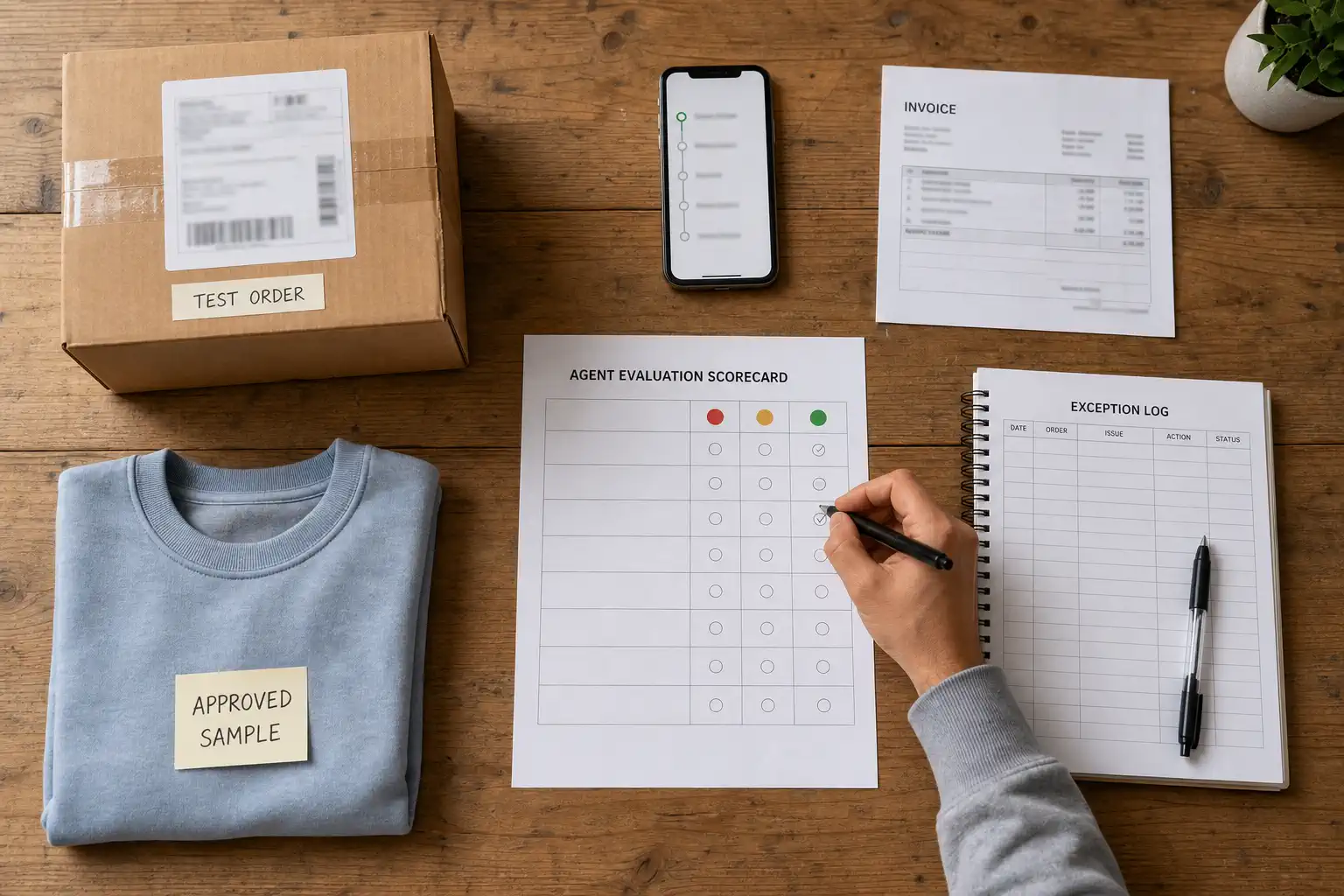
The final decision should combine documented answers with observed performance on a limited test. A polished interview can establish fit, but only execution shows whether the workflow survives real handoffs.
Use a simple red-amber-green scorecard. Weight the categories according to your product and customer promise rather than giving every question equal importance.
| Evaluation area | Green evidence | Amber signal | Red signal |
|---|---|---|---|
| Responsibility | Named company, owners, backups, and handoffs | Some roles still informal | Payment or operational party remains unclear |
| Product control | Approved specification and SKU-specific check | Generic checklist needs adaptation | Substitutions or checks are undefined |
| Shipping | Stages, route conditions, tracking, and exceptions are separated | Some thresholds need written confirmation | One vague delivery promise covers everything |
| Cost and stock | Reconciled breakdown and ownership rules | Variables are known but not yet documented | Hidden markups, balances, or exit rules |
| Systems and communication | Tested order flow, limited access, clear escalation | Manual step is workable at current volume | Shared passwords or no exception owner |
| After-sales | Issue-specific evidence and remedies | Supplier-dependent terms need clarification | “Case by case” with no process |
The table helps you compare evidence, not personalities. An amber answer can become green after a written clarification or test; a red answer should pause onboarding until the responsibility is resolved.
Run a trial with a representative product and several deliberately different orders. Include a common variant, an address edit before cutoff, a cancellation, a bundle or accessory check, and a destination central to your business. Observe sourcing accuracy, sample approval, order import, packing evidence, dispatch event, first tracking scan, update quality, and invoice reconciliation. If practical, simulate one defect or missing-accessory report using the trial parcel.
Do not move the whole catalog at once. Approve the workflow, then expand by SKU or order group with a clear cutover point. If you are replacing an existing supplier or agent, plan how to transition dropshipping agents before routing all live orders into the new workflow. Keep your previous route available until open orders, tracking ownership, stock balances, and customer support responsibilities are reconciled.
Key Takeaway: Hire on demonstrated control, not confident answers. A small trial should test the exact failure modes that matter to your store before the candidate receives live volume, broad system access, or prepaid inventory.
Frequently Asked Questions
Should I ask all 15 questions in one call?
No. Send your operating brief first, cover the highest-risk questions in a call, and request the remaining details in writing. This gives the candidate enough context while leaving a record you can compare later.
What proof can I reasonably request without exposing other clients?
Ask for redacted checklists, sample reports, privacy-safe tracking examples, a screen share, a live workspace walkthrough, and a test on your own product. Do not demand customer names, addresses, unredacted order records, or confidential supplier contracts.
Is the cheapest agent ever the right choice?
Yes, but only when the quote covers the required work and the candidate proves the controls you need. Compare total cost, conditions, exception responsibility, and evidence—not unit price in isolation.
How many agents should I interview?
For most stores, compare 2–3 qualified agents after filtering out obvious mismatches. That is usually enough to see differences in pricing logic, QC evidence, communication quality, and order workflow. Interviewing more than five usually wastes time unless your product is regulated, fragile, high-value, or operationally complex.
When should I sign a long-term agreement?
Only after you understand the terms and a controlled trial has validated the critical workflow. Longer commitments should define pricing changes, stock and packaging ownership, data access, service boundaries, dispute handling, and exit procedures.
Conclusion
The best agent interview replaces broad promises with named responsibilities, visible evidence, and a testable workflow. You should leave the process knowing who handles each order stage, how product and packing instructions are verified, what the full cost can change with, how Shopify data and tracking move, and what happens when an order becomes an exception.
For growing stores, mentors, agencies, and multi-store operators, that discipline also makes the workflow repeatable across SKUs and projects. RuntoDropship is a private dropshipping agent team that can discuss sourcing, sample confirmation, pre-shipment checks, order execution, shipping arrangements, and after-sales coordination within one accountable workflow. Reliable cooperation starts before the first live order: send your product link, target markets, current order range, packaging needs, and biggest operational concern to begin a practical evaluation.