

You agree on a product and shipment date, and the supplier says Alibaba Trade Assurance protects the order. After payment, the goods look different from the approved sample or the shipment record never appears. Now you need to show exactly what was promised, what happened and what remedy you are requesting. An unclear order can turn a purchasing problem into a difficult evidence problem.
Trade Assurance protects eligible orders placed and paid for through Alibaba.com. It provides a process for seeking resolution when shipment or product terms are not met. Your practical safeguards are the recorded agreement, the eligible payment route and evidence tied to the affected goods. Check those before releasing money or inventory.
What does Alibaba Trade Assurance actually protect?
Trade Assurance supports resolution of eligible orders placed and paid for through Alibaba.com when shipment or product terms are not met. A refund still depends on the claim and applicable conditions.
Which purchase problems does the program address?
Alibaba’s official protection overview describes payment, product and shipment protections. For a particular purchase, connect the problem to the order agreement:
- Identify the requirement the supplier accepted.
- Show the shipment or product mismatch.
- State the remedy you are asking the platform to consider.
A supplier’s reassurance cannot establish the result of a future claim. The order and supporting records still need to explain the failure.
Where does protection fit into a sourcing plan?
If you are also deciding how to source, hold stock and fulfill customer orders, review the broader process of sourcing and fulfillment through Alibaba.
Key Takeaway: Treat order protection as one purchasing control, supported by a specific agreement and records you can retrieve.
How can you check whether this order is eligible?
Check the actual online order and its applicable conditions before paying, rather than assuming a supplier’s profile settles eligibility for every purchase.
Which order details should you verify?
Start with the purchase in front of you. Confirm that the buyer, supplier and product details match the transaction you intend to fund.
- Check the order reference, quantities and accepted product version.
- Review the protection or service conditions shown for that order.
- Confirm the proposed payment route belongs to it.
Do not infer a universal minimum value or sample-order exclusion from an unofficial guide. Resolve those conditions for the proposed order.
What should you do if a condition is unclear?
Ask for clarification through the order process or official support before payment. When another party purchases or receives goods, document who is the buyer, who pays and where the supplier’s delivery obligation ends.
A China warehouse receiving the parcel and your customer receiving a later parcel are separate events. Do not assume that the second event controls the original supplier order. Key Takeaway: Make eligibility and the buyer’s identity explicit before introducing an agent, inspector or receiving warehouse.
What must you agree in writing before you pay?
Record measurable product requirements, the accepted revision, quantities, packaging and the shipment commitment in the order agreement before payment.
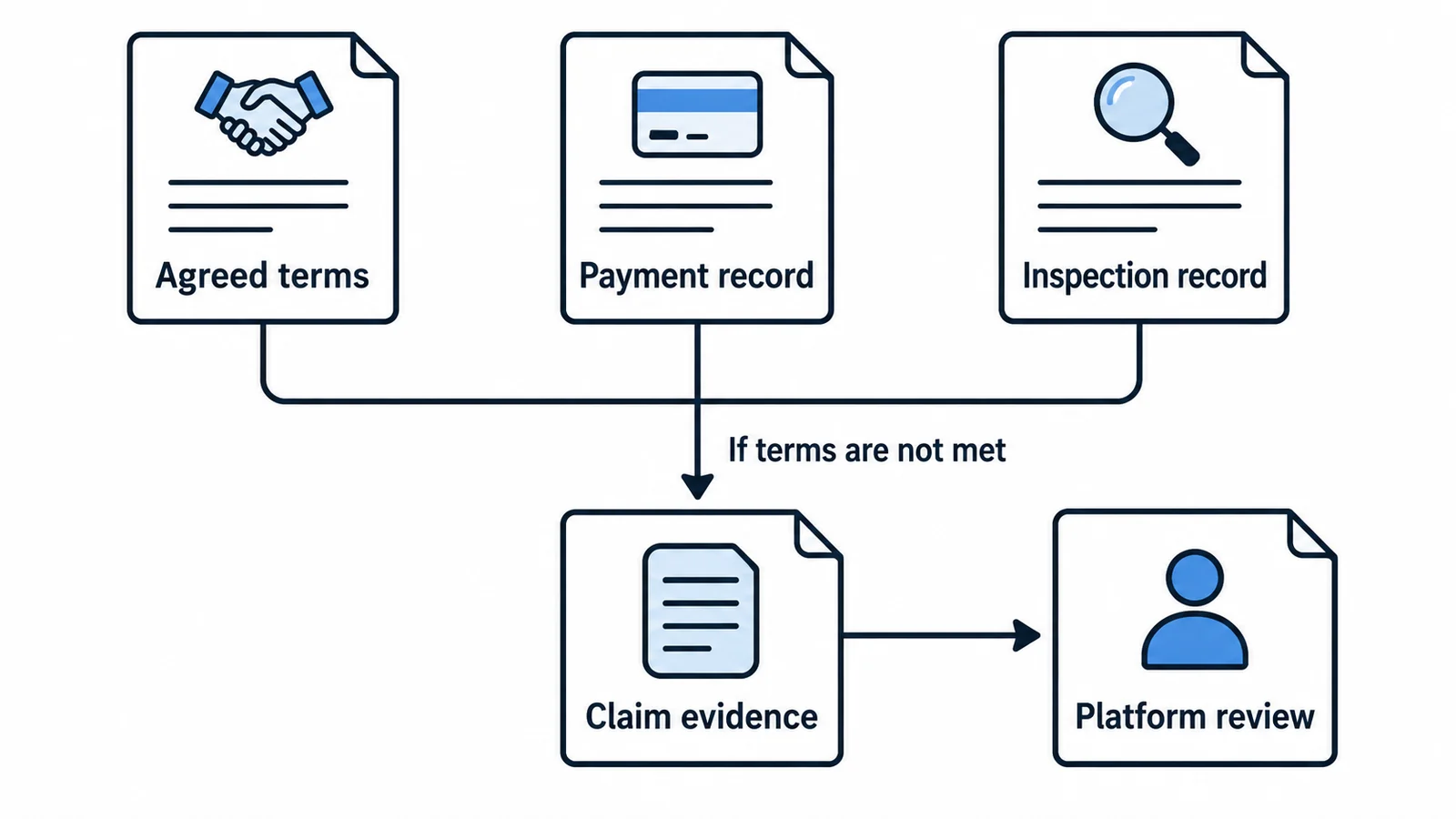
Which requirements need an objective acceptance test?
If the quote is still changing, first prepare a consistent Alibaba RFQ. Once terms are accepted, carry the final version into the purchase record.
- Replace “good quality” with a requirement someone can check.
- Identify the approved specification, sample or drawing revision.
- Define how quantity, packaging and basic function will be verified.
Keep changes dated and acknowledged. A later message should not leave two people working from different versions.
How should you record the acceptance plan?
Use a short plan before you pay. The owner is the person responsible for obtaining the record, not a promise that a platform will accept it.
| Order item | Acceptance requirement | Verification method | Record owner |
|---|---|---|---|
| Product version | Accepted model, material or revision | Compare identification and approved specification | Buyer |
| Dimensions or function | Agreed tolerance or operating requirement | Defined measurement or functional check | Agreed inspector |
| Quantity | Units by SKU or variant | Count against the order lines | Receiving team |
| Packaging | Accepted label, accessories and packing version | Compare with approved packing requirements | Receiving team |
If a row cannot be tested, settle it before payment. Key Takeaway: Establish the acceptance criteria now; record actual failures separately if a dispute develops.
How do you keep payment linked to the protected order?
Use the payment route provided for the protected order through Alibaba.com and retain records that connect the payment to that purchase.
What distinguishes platform instructions from a private transfer?
An official platform-provided bank-wire route differs from sending money to details supplied privately. Check where the instructions originated and which order they identify.
- Open the instructions from the order’s payment process.
- Match the order reference and amount before sending funds.
- Pause if a message requests a different recipient or route.
Do not assume that a familiar supplier name proves that changed payment details are legitimate.
Which payment records should you retain?
Keep the order confirmation, payment confirmation and relevant instruction history together. Reconcile any deposit or balance payment against the same order instead of relying on a screenshot that lacks its reference.
The records should identify the paid amount, purchase reference and payment instructions. Key Takeaway: Preserve a traceable payment-to-order connection before a supplier asks you to approve the next step.
What should you inspect before the goods leave China?
Inspect the agreed requirements and retain records identifying the product, lot, quantity and observed result before authorizing release.
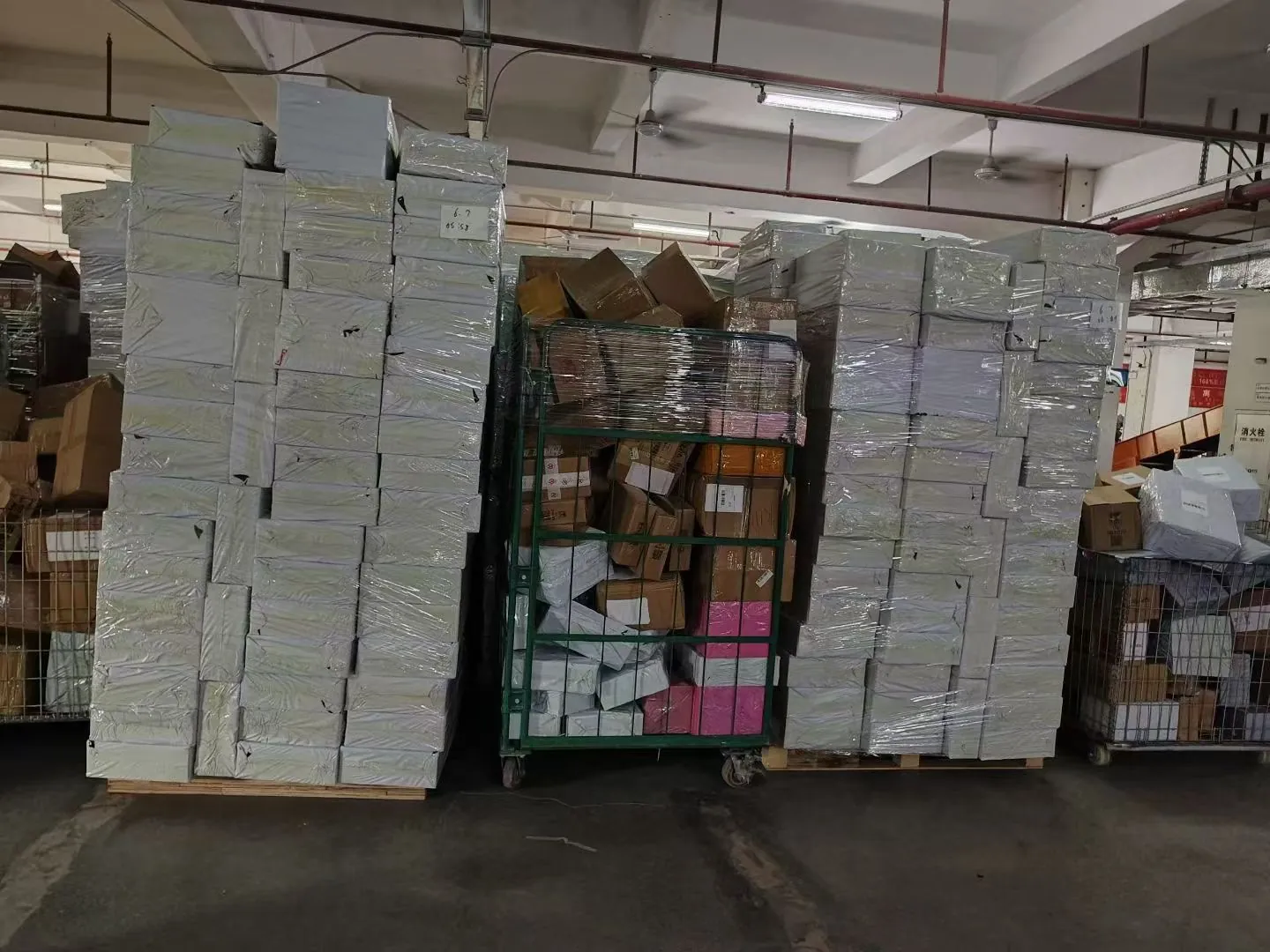
Which checks can a warehouse or inspector perform?
Agree on the scope first. A receiving team may perform specified quantity, appearance, packaging or basic function checks where it has the capability.
- Identify the lot or SKU being checked.
- Record the method and quantity inspected.
- Separate observed defects from assumptions about their cause.
Laboratory testing and regulated product approval require appropriate expertise and evidence. A warehouse photo does not establish either.
How should you handle a recorded mismatch?
Preserve the affected goods and evidence while seeking an agreed next action. If you arrange warehouse quality checks before dispatch, define who records the problem, who can authorize a hold and who decides release.
Keep the receiving report and supplier response together. Inspection can reveal a mismatch and document it; it cannot guarantee a refund decision. Key Takeaway: Assign the evidence and release decisions before goods move into international fulfillment.
Which deadlines should you record for this order?
Record the order’s shipment commitment, delivery or receipt event and claim-response deadlines separately, using the current order and official policy.
Which event starts each clock?
The promised dispatch date and expected destination arrival date describe different events. Alibaba’s published money-back policy describes refunds within 30 days of delivery, with 60 days for Enterprise and Enterprise Pro buyers.
- Save the agreed shipment date and actual dispatch record.
- Record the delivery or receipt status shown for the purchase.
- Check the applicable claim window on the order.
Apply the published conditions to your situation instead of using a deadline copied from another buyer’s experience.
How should you manage an open claim’s next deadline?
Keep a dated submission log and the next response requested in the case. A general customer-service conversation and a response submitted in the actual claim process are different records.
If the supplier promises a later shipment or solution, check how that affects the live order or case. Do not assume a message changes its deadline. Key Takeaway: Give each clock an event, an owner and a recorded next action.
What should you request when a supplier says it shipped?
Request transport records tied to the order and compare them with the agreed shipment event before relying on the supplier’s statement.
Which records can establish the shipment’s status?
Ask for the record appropriate to the transport arrangement. A parcel shipment and a sea-freight shipment will not necessarily produce the same documents.
- Match the shipment reference to your order.
- Request available dispatch or carrier-acceptance evidence.
- For relevant freight movements, request the transport document.
An uploaded tracking number alone does not explain whether the carrier accepted the goods. Record any missing information without declaring fraud from an unexplained delay.
When should you move from a promise to a documented request?
When the agreed event has passed or the evidence conflicts, state precisely what is missing. Request the transport record and a response through the appropriate order process.
Keep the supplier’s response alongside the agreed shipment term. This lets you distinguish a shipment claim, supporting evidence and an unresolved gap. Key Takeaway: Turn “it has shipped” into an order-linked evidence request you can follow up.
How do you prove a quality problem in a dispute?
Connect the agreed requirement to the observed failure, identify the affected goods and submit the supporting records through the current order process.

How should you organize the claim file?
Apply the acceptance plan to what you found. An evidence index should let another person follow the mismatch without guessing what each attachment proves.
- Name the requirement and accepted revision.
- Identify the affected SKU, lot and quantity.
- Attach dated photos, measurements or test records.
- Explain the requested remedy and supplier response.
Preserve packaging and arrival-condition records where relevant. Keep original files rather than relying entirely on edited screenshots.
What should you check when negotiating or escalating?
Use the current order refund controls and official dispute instructions. Describe the failure and requested outcome consistently as the discussion moves from negotiation to platform mediation.
Respond to the actual case requests and retain submission confirmations. Avoid copying another buyer’s legal argument or treating their outcome as a rule for your order. Key Takeaway: Make each alleged mismatch checkable against a specific requirement and identifiable goods.
How should you assess a refund or return proposal?
Compare the written proposal with the affected goods, usable remaining inventory, payment form, return obligations and documented costs before accepting it.
Which terms change the value of the proposal?
A refund, credit, repair or replacement can have different consequences for stock you cannot use.
- Identify the affected quantity and what remains usable.
- Confirm what will be paid or supplied, and to whom.
- Check the conditions attached to acceptance or case closure.
Explain any remaining mismatch with evidence. A lower offer is not proof that every additional cost is recoverable.
What must be agreed before you send a return?
Confirm the authorized destination, route or label, cost responsibility and records required before sending goods back. Alibaba’s local Easy Return service has product, country and order-value conditions; a US destination alone does not establish eligibility.
Keep the agreed return instructions and dispatch proof. Do not assume that an informal offer covers a different return route or expense. Key Takeaway: Compare the complete remedy and return obligations before committing inventory or accepting a settlement.
How can you make your next Alibaba order safer?
Make the next purchase conditional on clear order terms, an eligible payment record, agreed checks and someone responsible for preserving the evidence.
What should you clarify with a sourcing partner?
Before paying or releasing goods, identify each requirement, its check and the record owner.
- Share product requirements and the destination market.
- Identify the order stage and unresolved checks.
- Agree on inspection scope and release responsibility.
RuntoDropship is a Private Dropshipping Agent coordinating sourcing, agreed product checks and fulfillment. Discuss your sourcing requirements with RuntoDropship before ordering. We focus on documented requirements and clear release decisions. Key Takeaway: Resolve unclear conditions before payment or release.
Can I pay through PayPal and keep Trade Assurance?
Yes, if PayPal is available and you pay through Alibaba.com under the order’s protection conditions. Private transfers differ; do not assume separate PayPal protection covers every commercial purchase.
Does Trade Assurance add a separate fee for buyers?
Alibaba’s buyer FAQ says there is no additional Trade Assurance fee. Processing, currency conversion and other transaction costs may apply; check the checkout and payment-provider terms.
Does a supplier warranty extend the platform claim deadline?
Do not assume so. Check warranty terms separately and follow your actual order or open-case deadline unless an applicable extension is confirmed. Keep the warranty record.
Can I assume a credit card dispute will refund my order?
No. Your issuer or bank applies its own process. Ask which transaction evidence, conditions and deadlines apply to your purchase; another buyer’s chargeback result does not guarantee yours.
How do I challenge tracking that does not match my delivery?
Compare available carrier records with the order address and parcel. Ask the carrier to clarify discrepancies; save them and its response with the order. Do not assume access to recipient data.