
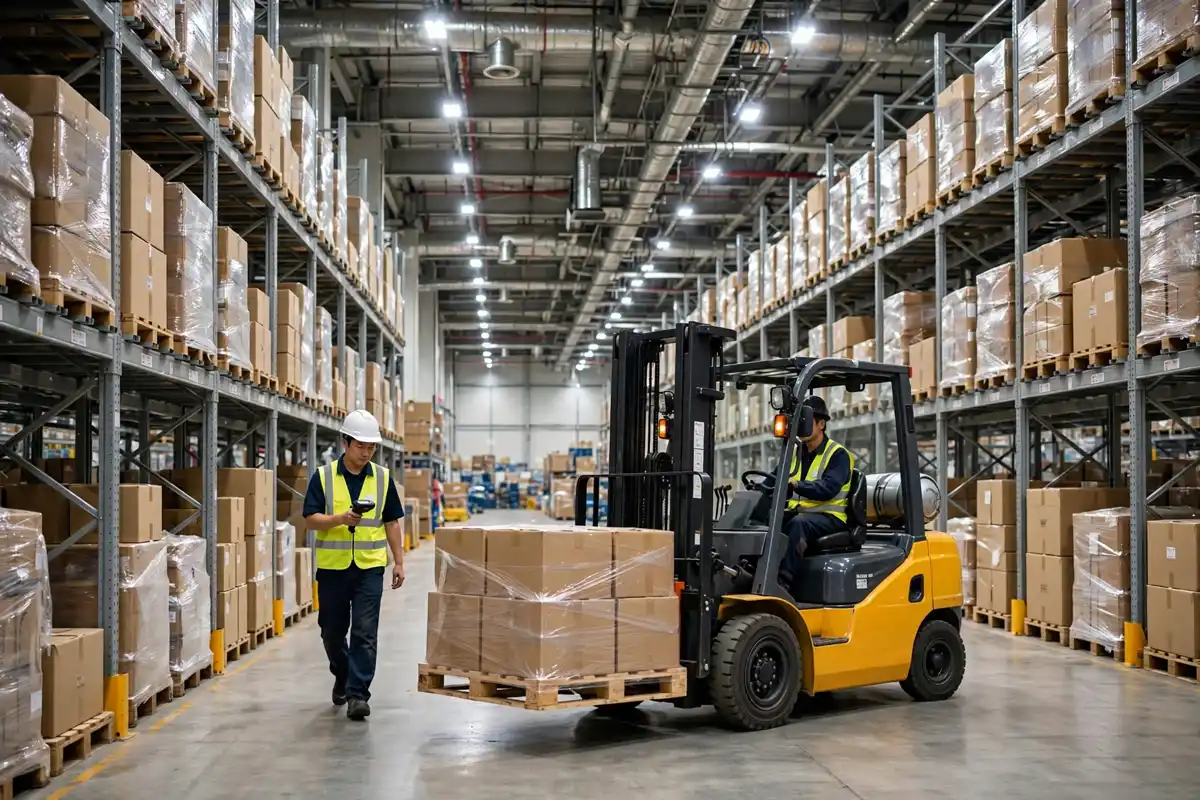
A supplier sells you products and ships them. A dropshipping agent runs the operation between the factory and your customer. That is the whole difference, and everything else in this dropshipping agent vs supplier comparison follows from it: who does the work, who answers when something breaks, and what each model really costs you.
We work as a private dropshipping agent in Yiwu and Shenzhen. Sellers usually ask us this question at a turning point. Orders are coming in, the supplier setup that worked at the start is creaking, and they want to know if an agent is the fix. Sometimes it is. Sometimes the honest answer is that a good supplier is enough. This guide gives you the three questions that decide it.
What is the real difference between an agent and a supplier?
In short, the difference is the width of responsibility. A supplier is responsible for the products it sells. An agent is responsible for a chain of work: sourcing, inspection, storage, packing, shipping, and the problems in between.
One more distinction matters. An agent can be a single person with a phone, or a company with warehouses and a team. The label tells you nothing about capacity. That is why choosing an agent deserves its own checks, separate from this comparison. We laid them out in our guide on how to choose a dropshipping agent.
Still, confusion starts because four different roles get mixed together in this industry. Articles and sales pages swap the labels freely. Here is what each role actually does:
- Supplier — a factory or wholesaler. It makes or stocks products and ships them to your customer. It answers for the product itself.
- Sourcing agent — a buyer on your side. It finds factories, negotiates, and arranges the purchase. Its job ends around the buying, not the daily fulfillment.
- Dropshipping agent — an operating partner. It sources from one or more suppliers, receives and inspects the goods, stores them, packs each order, and ships it. It answers for the operation.
- Platform or app — software. It automates ordering from supplier listings and syncs tracking. It answers for the tool, never for the goods.
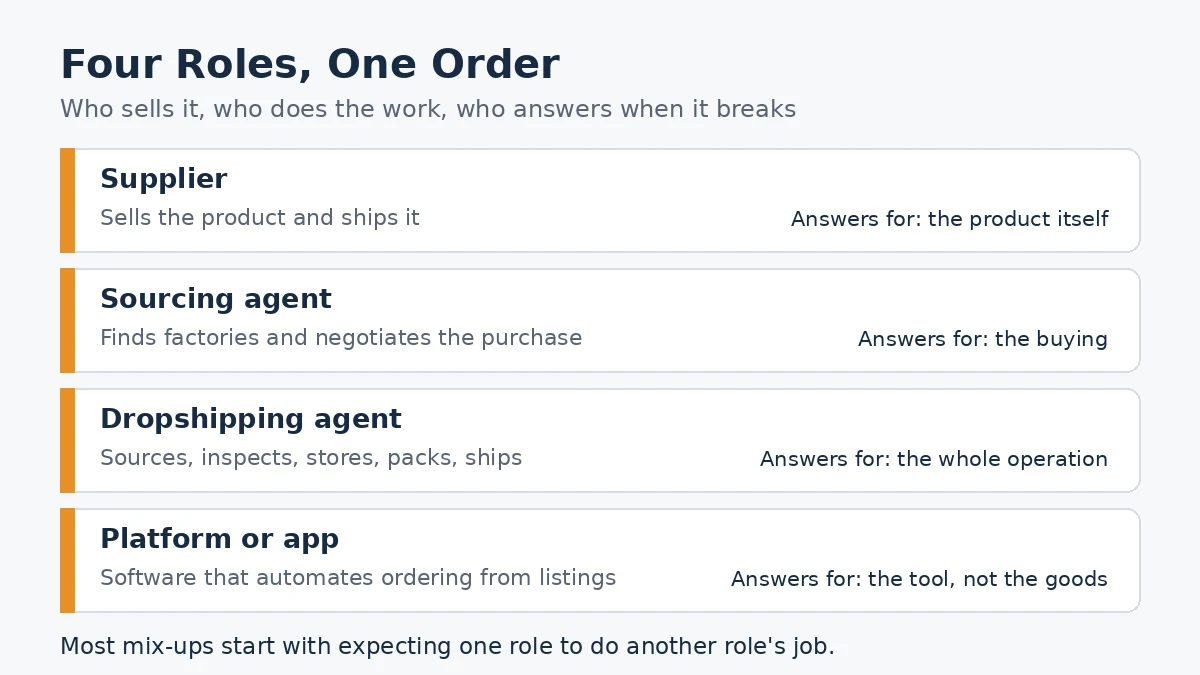
Indeed, most disappointment in this industry comes from expecting one role to do another role’s job. A supplier that ships the wrong variant has not failed as an agent. It was never checking anything. It was selling.
Agent vs supplier, side by side
| Area | Supplier | Dropshipping agent |
|---|---|---|
| What you buy | The product | The product plus the operation around it |
| Sourcing range | Its own factory or catalog | Many factories and marketplaces |
| Quality control | Checks its own output, if at all | Inspects goods on arrival, against your standard |
| Inventory | Its own stock, on its own terms | Your stock, received, counted, and recorded |
| Fulfillment | Ships what it sells | Packs approved stock from one or more sources |
| Packaging | Standard, take it or leave it | Custom boxes, labels, cards, and inserts |
| Shipping | The lines it has | Lines matched to the product and destination |
| When it goes wrong | Owns its product and its parcel, nothing more | Coordinates supplier, warehouse, and carrier |
Now, read the table as a division of labor, not a scorecard. A supplier is not a worse agent. It is a narrower promise. The question is whether the work outside that promise is getting done, and by whom. If the honest answer is “by me, every night,” you are already paying for an operation. You are just paying with your own hours.
What does each model really cost?
Instead, compare totals, not unit prices. Sellers in community threads say it bluntly: margin is the killer in this business, and every fee, refund, and return takes a bite. So count every bite, on both sides.
On the supplier side, the visible cost is the product price and shipping. The quiet costs sit below it. There is no inspection before dispatch, so a wrong variant is discovered by your customer, and the refund comes out of your margin. Your own time counts too: forwarding orders, chasing tracking numbers, settling disputes in supplier chats. There is the ceiling on packaging and shipping lines, which costs you conversions you never see.
On the agent side, the visible cost is a service fee on top of the product and shipping. What it buys back is named work. Goods are inspected within 24 hours of arriving at our warehouse. We send photo or video confirmation before dispatch. Orders sync through our Shopify app instead of being forwarded by hand. Stock sits in our warehouse at no storage charge, ready before the order lands.
However, neither column is automatically cheaper. A single proven product from a reliable factory is hard to beat on cost. A store juggling five suppliers pays for coordination somewhere. The only real question is whether it shows up as a service fee or as refunds and evenings.
When is a supplier enough?
A supplier is enough when the narrow promise covers everything your store needs. The conditions look like this:
- You sell one product, or a few, from a single source that holds stock.
- The product is simple, with few variants and little that can go wrong.
- Standard packaging is acceptable for your brand right now.
- Test orders arrive consistent in product, packing, and timing.
- The supplier answers for wrong items and failed deliveries under clear rules.
- Your order flow is light enough that handling it yourself costs little.
Also, notice that order volume is not on the list by itself. A busy store with one dependable supplier may never need an agent. A small store selling fragile bundles may need one early. Judge by the work your products create, not by a daily order count.
If your supplier meets these conditions, keep the setup and spend your energy on products and marketing. Just verify the supplier properly before you rely on it. That is a discipline of its own, and we cover it in our guide to choosing dropshipping suppliers.
What are the signs you need an agent?
An agent earns its fee when the work outside the supplier’s promise starts costing you money. These are the signals we see most often:
- Your products come from several factories. No single supplier can combine them, and your customer gets three parcels on three different days.
- Your orders are bundles. One order, three items, three sources. Sent separately, shipping is paid three times and one late item poisons the whole order.
- Your product needs a special line. Anything with a battery or a liquid needs a carrier that accepts it. Our lines with YunExpress and 4PX are chosen per product for exactly this reason.
- Batches drift. The second production run is not quite the first, and nobody checks before it ships to your customer.
- You have hit the packaging ceiling. The supplier can print a label and nothing more, while your brand needs a box, a card, and a consistent unboxing.
- Your evenings go to operations. Forwarding orders, chasing tracking, arguing exceptions. The store is growing, but so is the job you never meant to hire yourself for.
The bundle signal deserves a closer look, because it shows the structural gap. Say a customer orders a set: a main product from one factory, an accessory from a second, a gift box from a third. In the supplier model, that is three shipments, three tracking numbers, three chances to fail. In our warehouse, the three deliveries arrive, get logged against the same store, and are checked as they land. When the order comes in, the items are packed as one parcel. One shipment, one tracking number, one delivery. No supplier can offer you that, because combining goods is simply not a supplier’s job. It is the definition of ours.
Can you use both? The hybrid setup
Yes, and for many stores it is the smartest arrangement. You keep the relationship and the pricing you negotiated with your factory. The factory ships your goods to the agent’s warehouse instead of to your customers. The agent receives, inspects, stores, and fulfills from there.
The setup only works when the handover is agreed in writing before the first shipment. Decide who owns each problem in advance:
- Short quantities — the supplier replenishes or refunds; the agent’s arrival count is the shared evidence.
- Failed inspection — the goods are held, not shipped; the supplier replaces them under the purchase terms.
- Damage in the warehouse or a packing error — that is the agent’s side of the line.
- Returns — agree the route and who pays the freight before you need it, not during a dispute.
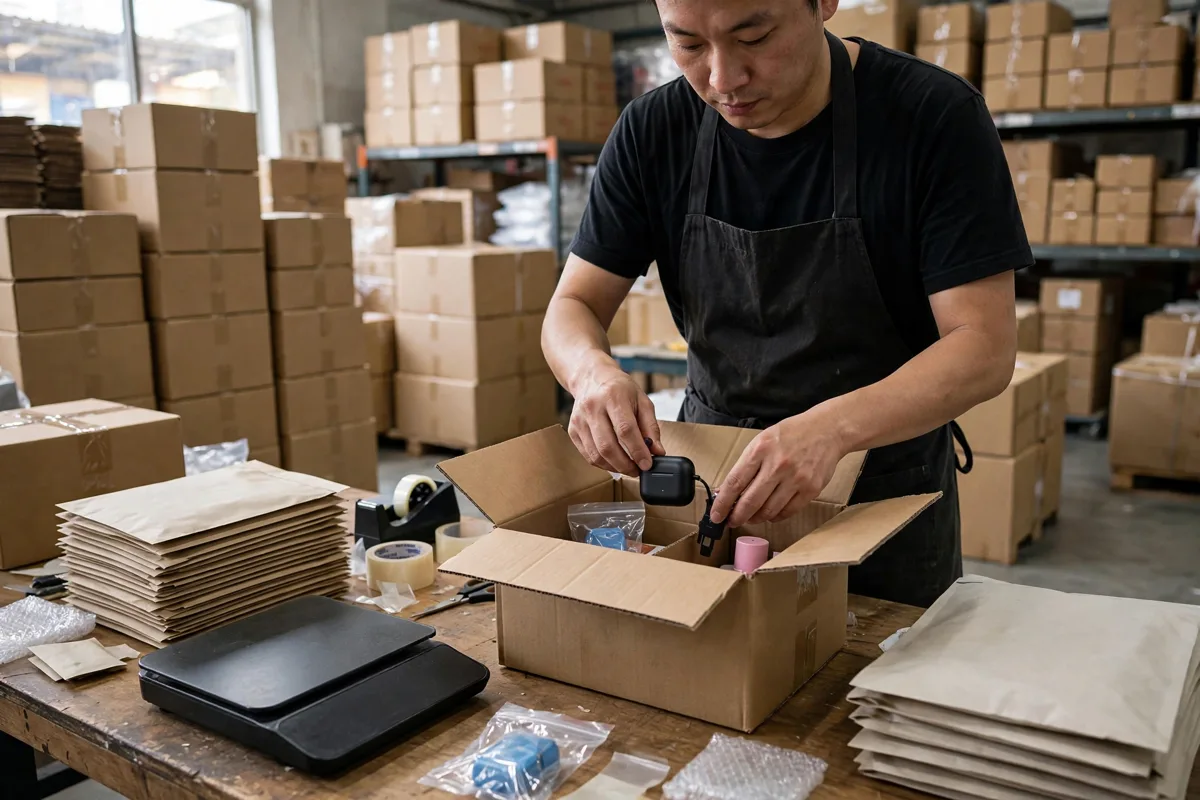
Our part of this is mechanical, and it should be. Goods are checked within 24 hours of arrival, counted into stock, and confirmed with photos before any of it is packed for a customer. Storage between arrival and sale is free. You keep your factory price and gain an inspection and fulfillment layer you did not have to build.

If you want to see how sellers weigh agents, suppliers, and 3PLs when they pick a fulfillment model, this overview is a useful companion:
How do you test the switch before moving real orders?
So, do not move your whole store on a promise. Test the new model the way you would test a product.
Start with one approved sample, documented: color, dimensions, parts, packaging. Then run a small batch of real orders through the agent and trace each one end to end. You should be able to see the arrival record, the inspection result, the stock count, and the first carrier scan. Our standard puts that first scan at 18 to 36 hours after the order is placed. If any link in that chain is invisible, the coordination you are paying for is not happening.
Test one failure on purpose, too. Ask what happens with a wrong item, and watch the exception get handled before real customers are involved. Two to four weeks of limited volume tells you more than any sales page. Then move the rest of the store in stages, keeping the old setup live until the new one has earned it.
Conclusion
First, run the three questions. Who does the work? Who answers when it breaks? What stage is your store at? A supplier answers the first two narrowly and honestly, and for a simple store that is enough. An agent answers them across the whole chain, and charges a fee for doing so. The hybrid takes the middle: your factory, your price, our operation.
If you are weighing the switch, RuntoDropship can run the test with you: one product, a small batch, every checkpoint visible. Start with a sample or a small test batch and let the records, not a pitch, make the case.
FAQ
Is a dropshipping agent the same as a supplier?
No. A supplier makes or stocks products and ships them. An agent sources from one or more suppliers and coordinates inspection, storage, packing, and shipping on your behalf. Some companies offer both roles. Ask for the service scope in writing so you know which one you are actually buying.
Is an agent always more expensive than a supplier?
Not on total cost. An agent adds a service fee, but the supplier model carries quiet costs: refunds for errors nobody caught, and your own hours spent forwarding orders and chasing tracking. Compare one delivered order on both sides, with every cost in the same column, before deciding which is cheaper.
What is the difference between a sourcing agent and a dropshipping agent?
A sourcing agent handles the buying: finding factories, negotiating, arranging the purchase. A dropshipping agent handles the ongoing operation after the buying: receiving, inspecting, storing, packing, and shipping individual orders. Some partners do both. The difference matters when a problem shows up three weeks after the purchase.
Can an agent handle only fulfillment, while I keep my own supplier?
Yes. That is the hybrid setup. Your supplier ships goods to the agent’s warehouse, and the agent inspects, stores, and fulfills your orders from there. Agree in writing who owns shortages, failed inspections, and return freight before the first shipment moves.
Can a supplier also act as my agent?
Some can, especially larger suppliers with their own warehouses. The test is not the label but the scope. Can they receive goods from other sources, inspect against your standard, hold your stock, and pack in your packaging? If they only ship what they sell, they are a supplier with good service, which may still be all you need.