

Dropshipping Australia can work when you treat it as a real retail business: choose products that suit Australian customers, verify how each item will ship, calculate the full order cost, and remain responsible for the customer experience even when another company dispatches the parcel.
Quick Answer: The model is legal and can be practical, but low startup inventory does not mean low responsibility. Before selling, confirm your business registrations, product safety, supplier accountability, delivery promise, return process, and margin after every order-level cost.
A typical seller finds a promising product, sees that a supplier offers delivery to Australia, and assumes the difficult work is finished. Problems appear later when stock changes without warning, a regional address costs more, tracking stops at a handoff, or a customer requests a remedy that the overseas supplier will not handle. A safer approach is to validate the product, shipping route, economics, and person responsible for resolving problems before increasing sales.
How Does Dropshipping Australia Work?

The model separates selling from physical order preparation. You run the store, set the price, collect payment, answer customers, and remain the retailer; a supplier or private dropshipping agent sources or holds the product, prepares the parcel, and arranges delivery to your customer.
A normal order follows five steps:
- An Australian customer orders from your store.
- The order details reach the company preparing the product.
- The item is checked, packed, and dispatched.
- One or more carriers move the parcel to the customer.
- You handle questions, delays, refunds, replacements, and other after-sales issues.
The key point is responsibility. Outsourcing the physical work does not outsource your relationship with the buyer. Your customer paid your store, so your operation needs accurate product information, a realistic delivery window, usable tracking, and a clear way to resolve exceptions.
Local, overseas, and private-agent models
An Australian supplier may provide shorter domestic delivery and simpler returns, but its range or unit cost may not fit every store. An overseas marketplace supplier can be useful for early exploration, although product consistency, communication, packaging, and shipping options can vary between seller accounts.
A private dropshipping agent provides a direct working relationship rather than a public product marketplace. The agent can coordinate sourcing, samples, product checks, packaging, order processing, shipping, and after-sales follow-up through one accountable contact. The right model depends on the product and the controls you need, not simply on where the supplier is located.
Is Dropshipping Worth It in Australia?
Dropshipping can be worth it in Australia when the product has enough margin to absorb delivery and customer-service costs, demand is validated before scaling, and the supplier can support the delivery promise shown to customers. It becomes much harder to sustain when the business depends on thin margins, uncertain stock, unverified products, or shipping times the seller cannot reliably control.
The model is more workable when the product is easy to verify and ship, the complete order cost still leaves a healthy contribution margin, and stock, processing, tracking, refunds, and replacements can be monitored through a clear process.
It becomes riskier when one shipping promise is applied to every Australian postcode, the seller has never tested the product or order journey, refund and replacement costs are ignored, or paid advertising is scaled before fulfilment problems are understood.
The practical question is therefore not whether dropshipping works in Australia in general. It is whether a specific product, supplier arrangement, delivery route, and margin can support the customer promise your store is making.
The practical question is therefore not whether dropshipping works in Australia in general. It is whether a specific product, supplier arrangement, delivery route, and margin can support the customer promise your store is making. A broader review of the pros and cons of dropshipping before scaling can help separate the advantages of the model from the operational risks that appear as volume grows.
Is It Legal, and What Are You Responsible For?

Dropshipping is legal in Australia, but it is not exempt from the rules that apply to other retailers. Your obligations depend on where your business is established, what you sell, your turnover, and where your customers are located, so use official guidance and professional advice for your situation.
Business registration and GST
An Australian Business Number identifies a business in dealings with government and other organisations. The Australian Business Register explains who is entitled to an ABN, while business-name and business-structure requirements depend on how you operate.
GST is generally 10% on most goods and services sold or consumed in Australia. The Australian Government states that a business generally must register when its GST turnover reaches AUD 75,000; different rules can apply to non-residents and particular activities. Check the current official GST registration guidance rather than copying tax settings from another store.
Consumer guarantees and truthful delivery claims
Australian Consumer Law can apply even when the stock is supplied internationally. Products must meet applicable consumer guarantees, and a store policy cannot remove rights that the law provides. The ACCC guidance on consumer guarantees explains the basic remedies for goods that do not meet those guarantees.
Your product page and shipping policy should accurately describe availability, origin, dispatch expectations, and likely delivery timing. The NSW Government’s consumer guidance on dropshipping specifically notes that businesses should provide information about stock availability, where stock comes from, and likely delivery timing.
Product safety remains a seller decision
Do not assume a product is suitable for Australia because it appears on a global marketplace. Check the Product Safety Australia mandatory standards and bans before listing products such as children’s goods, electrical items, cosmetics, or products with batteries.
If documentation, labelling, testing, or shipping eligibility is unclear, pause the listing. A lower purchase price does not compensate for an unsafe product, a rejected parcel, or a remedy you cannot provide.
Key Takeaway: Treat compliance as a product-selection filter, not paperwork to complete after launch. Confirm the business, tax, consumer, and safety requirements that apply before accepting orders.
How to Start Dropshipping in Australia
Starting a dropshipping business in Australia is easier when you follow a clear sequence instead of building the store first and solving operational problems later.
Step 1: Define your customer and market. Decide who you are selling to and what customer promise the product must support.
Step 2: Validate demand. Confirm that the product has credible demand in Australia and enough pricing room to justify further testing.
Step 3: Verify the product and supplier model. Check whether the product can be legally sold, reliably sourced, and delivered through a supplier arrangement that provides the level of control you need.
Step 4: Set up the customer-facing business. Complete the registrations that apply to your situation and prepare your store, payment setup, product information, shipping terms, and return process.
Step 5: Calculate the complete order cost. Include product, packaging, shipping, payment, advertising, refund, replacement, tax, and currency costs before deciding whether the product is commercially viable.
Step 6: Test the complete order journey. Place controlled orders and verify processing, product accuracy, packaging, tracking, delivery, and exception handling.
Step 7: Launch gradually and scale only after the process works. Increase volume only when the product, margin, delivery promise, and fulfilment process remain reliable.
Which Products and Supplier Model Fit the Australian Market?
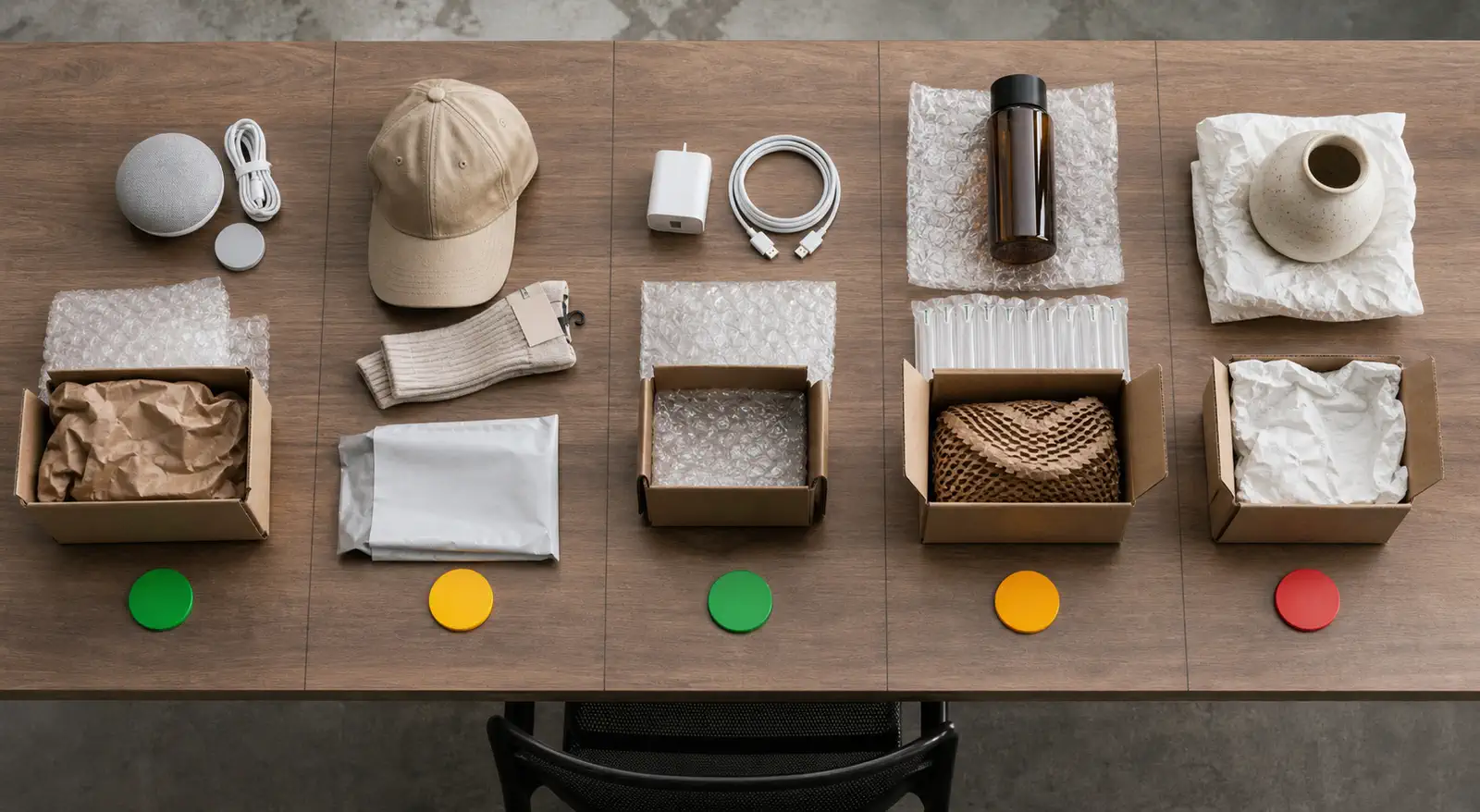
The best product is not merely one that attracts clicks. It must leave enough margin after delivery, survive the journey, meet applicable rules, and reach both metropolitan and regional customers within the promise shown by your store.
Validate Demand in Australia Before Approving the Product
A product that performs well globally is not automatically a good fit for Australia. Before evaluating the supplier, confirm that there is enough local demand and enough pricing room to support the full delivered cost.
Check whether Australian customers are actively searching for or buying the product. Tools such as Google Trends for dropshipping can help compare interest by market and season, but demand data still needs to be tested against realistic local selling prices and competition.
The product must also remain commercially workable beyond the largest metropolitan areas. If regional or remote delivery costs erase the margin or make the advertised delivery promise unrealistic, the product may need different pricing, shipping rules, or a narrower target market.
Start with five questions:
- Is the product compact enough to ship at a workable cost?
- Is it fragile, liquid, magnetic, powered by a battery, or otherwise restricted?
- Can you obtain a sample that matches the listing?
- Can the packing method protect it through multiple handoffs?
- Can one responsible contact confirm stock and resolve a failed order?
Lightweight, non-fragile products are often easier to test than bulky, delicate, or regulated goods. That is a practical screening rule, not a guarantee of demand or profitability.
Verify the supplier beyond the catalogue
A supplier check should include a sample, current stock method, product specifications, packing method, processing time, tracking availability, and written exception process. If the product is branded, also confirm that you have the right to sell it and use its images or intellectual property.
For products sourced from China, pre-shipment quality-control checks can identify visible differences, missing parts, or packing problems before the parcel is dispatched. They do not replace Australian safety testing or legal advice, but they add a practical control between sourcing and shipment.
Choose the operating model by responsibility
Use a local supplier when domestic stock, fast local returns, or a specifically Australian product range is central to the offer. A marketplace supplier may suit limited product exploration when you can tolerate variation and verify each seller separately.
A private-agent workflow becomes useful when you want direct communication and one accountable contact across product sourcing, sample testing, quality checks, packaging, order processing, shipping, and issue resolution. It can support both new-product tests and repeat-selling products; the advantage is coordinated execution, not a claim that every product or route will succeed.
Key Takeaway: Select a supplier model by the controls your product needs. Product fit, direct communication, packing evidence, shipping eligibility, and exception ownership matter more than a large catalogue.
What Will Each Australian Order Really Cost?

Real margin is the selling price minus every cost required to win, prepare, deliver, and support the order. Looking only at the difference between retail price and supplier quote can make a weak product appear profitable.
Use this planning formula:
Order contribution = selling price − product cost − packaging − shipping − payment fees − advertising cost − expected refund and replacement cost − applicable tax and currency costs
This is not an accounting substitute. It is a decision check that exposes costs commonly missed during product research.
Before scaling ad spend, know your break-even point per product, because Australian shipping costs can quietly erase thin margins.
Separate Sales GST From Import and Border Costs
GST on the customer sale and costs arising when goods enter Australia are not always the same issue. For low-value imported goods, GST may apply at the point of sale, while higher-value consignments can involve import declarations, GST, duties, and other border charges.
Before setting the retail price, confirm how the order is structured, whether GST applies to the sale, and who is responsible for any import or border costs. A margin calculation is incomplete if those costs can unexpectedly fall on either the seller or the customer.
Account for postcode and parcel differences
Australia is geographically large. A shipping quote that works for a metropolitan postcode may not represent a regional or remote address. Parcel size, actual weight, battery content, carrier coverage, and local delivery handoff can also change the available service or price.
Request quotes using the packed dimensions and weight, then test representative destinations before advertising one nationwide promise. If some areas require a surcharge or longer window, reflect that clearly in checkout and policy wording.
Protect the margin from preventable exceptions
Late dispatch, incorrect variants, weak packaging, and unclear tracking create support work and may lead to refunds or replacements. These are not theoretical overheads; they belong in the product decision.
When shipping speed is central to the offer, compare options by product and destination rather than using a universal “fast” label. Shipping arrangement for faster dropshipping orders still depends on route eligibility, parcel characteristics, and the delivery address.
Key Takeaway: Approve a product only after the packed parcel, representative Australian postcodes, and realistic exception costs still leave a usable margin.
How Do You Build a Reliable Test-to-Scale Workflow?

A reliable workflow uses the same controls for testing and repeat orders, with the level of commitment increasing only after the evidence improves. The goal is not to remove every risk; it is to discover problems while they are still small and assign a person to resolve them.
Test the complete order, not only the product
Order a sample and check the item, variant, instructions, labelling, and packaging. Then place controlled test orders through the same order path customers will use, including data transfer, processing, tracking, delivery, and exception communication.
Record what was promised and what happened. If the test exposes a mismatch, correct the product page, packing instruction, supplier arrangement, or shipping option before increasing sales.
Where Does the Data Layer End and Real Execution Begin?
Because dropshipping apps automate data, not execution — a plugin can import products, route orders, and sync tracking numbers, but it cannot inspect a factory batch, negotiate a better unit price, or choose which shipping line carries a parcel to Perth. Sellers often assume automation equals fulfilment, then find out the software faithfully transmitted an order to a supplier who packed the wrong variant in torn packaging.
Software ends at information transfer; execution covers sourcing decisions, pre-shipment quality checks, packaging standards, carrier selection, and after-sales handling.
Use one accountable contact across the workflow
One seller we worked with had already validated demand in Australia but was still managing orders through several marketplace suppliers. When stock, packaging or tracking issues occurred, the seller had to contact different accounts and often struggled to find someone who would take responsibility. The seller moved to one coordinated private-agent workflow with a dedicated contact overseeing product sourcing, sample testing, quality checks, packaging, order processing, shipping, and issue resolution. The same workflow also allowed the seller to test new products before scaling them, while keeping repeat-selling products consistently managed through one accountable team.
This example does not promise identical results for every store. It shows why direct communication and clear responsibility can matter when several physical steps affect the customer experience.
Scale controls with order complexity
As orders grow, track stock changes, variant accuracy, packing instructions, dispatch evidence, tracking exceptions, refunds, and replacements in one shared process. Mentors, agencies, and operators managing several stores also need rules that can be repeated across different projects without losing responsibility between accounts.
If scattered marketplace suppliers are creating inconsistent execution, a controlled move from AliExpress to a private agent requires product mapping, open-order visibility, test orders, and clear handover ownership—not simply replacing one account with another.
Key Takeaway: Test the full customer journey and give one person clear responsibility for follow-up. Scale only after product, packing, order, tracking, and exception controls work together.
A Practical Decision Before You Launch or Expand

You are ready to proceed when the product passes five connected tests: lawful sale, verified product, workable margin, credible delivery promise, and accountable execution. A weakness in any one of them can undermine the rest.
Use three possible decisions:
- Proceed: the evidence supports a controlled launch or the next growth stage.
- Revise: demand may exist, but the product, price, packing, route, policy, or supplier process needs correction.
- Stop: compliance, safety, shipping eligibility, responsibility, or economics cannot be confirmed.
Do not let advertising performance overrule an operational failure. Strong clicks cannot fix a product that cannot be shipped safely, delivered within the stated window, or supported after purchase.
For an existing store, review repeat-selling products first because they create the clearest operational pattern. New products can then enter the same sourcing, sample, quality, packaging, order, shipping, and after-sales workflow without being treated as an unmanaged side process.
Key Takeaway: Launch with a controlled decision, not optimism. Proceed only when compliance, product evidence, order economics, delivery expectations, and responsibility point in the same direction.
Frequently Asked Questions About Dropshipping in Australia
Is dropshipping legal in Australia?
Yes. Dropshipping is legal in Australia, but the business still needs to follow the rules that apply to retailers, including consumer guarantees, truthful product and delivery information, product safety requirements, and applicable tax obligations. Using a supplier or private dropshipping agent to fulfil orders does not remove the seller’s responsibility to the customer.
Do I need an ABN to start dropshipping in Australia?
You generally need an ABN when you are carrying on or starting an enterprise in Australia, but entitlement depends on how the business is actually operated. Check the Australian Business Register requirements for your situation rather than assuming every test store or small side project is treated the same way.
How do I start dropshipping in Australia?
Start by defining your target customer, validating demand, checking whether the product can be legally and reliably sold, and choosing a supplier model that gives you enough control over quality and fulfilment. Then set up the business and customer-facing store, calculate the complete order cost, test the full order journey, and scale only after the product, margin, delivery promise, and fulfilment process are working together.
Is dropshipping profitable in Australia?
It can be, but profitability depends on the complete economics of each product. Product cost, packaging, shipping, payment fees, advertising, refunds, replacements, tax, currency costs, and delivery exceptions can all affect the final margin. A product that looks profitable from the difference between the supplier price and retail price may not remain profitable after the full order cost is included.
How do I choose a reliable dropshipping supplier for Australia?
Choose a supplier based on the controls your product and customer promise require. Check product samples, stock visibility, specifications, packing method, processing time, tracking availability, shipping options, and how failed orders are handled. The best supplier model may be a local supplier, a marketplace supplier, or a private dropshipping agent; the key is whether the partner can provide consistent execution and clear responsibility when something goes wrong.
Conclusion
The Australian market can support a well-run dropshipping store, but the business must be built around retail responsibility rather than inventory avoidance. Verify what you sell, calculate the complete order cost, test the real delivery path, communicate honestly, and make sure someone is accountable when an order does not go as planned.
Our position is simple: dropshipping should compete on product quality and delivery experience, not on who tolerates the longest shipping times.
As your private dropshipping agent, Runtodropship can coordinate product sourcing, samples, product checks, packaging, order processing, shipping arrangements, tracking follow-up, and after-sales issues through one direct contact. Send us the product link, expected order volume, target Australian locations, and current difficulty so we can review the next practical test with you.