
Dropshipping in Colombia can work, but the operating model matters more than the absence of inventory. A seller using stock already available in Colombia faces a very different payment, delivery, return, and cost structure from one importing each customer order from an overseas supplier.
Quick Answer: If you want to sell to customers in Colombia, start with one product and one delivery route. Confirm your business and product obligations, compare local and overseas supplier options, place a paid sample order, test the payment and delivery process, calculate profit after failed deliveries and import costs where applicable, and set a stop rule before increasing advertising spend.
The model reduces the need to buy finished inventory before demand is proven. It does not remove your responsibility for product accuracy, customer information, delivery promises, refunds, payment risk, or supplier failures.
How Does Dropshipping Work in Colombia?
You sell through your own channel, while a supplier or private dropshipping agent prepares and sends each order to the customer. You still choose the offer, collect the payment, provide product and delivery information, support the buyer, and decide how problems will be resolved.
A typical dropshipping order has five steps:
- You publish a product and attract a potential buyer.
- The customer places an order with your store.
- You send the confirmed order to the company preparing the parcel.
- A carrier delivers the parcel and records its status.
- You handle questions, guarantees, returns, replacements, and refunds.
The main decision is not whether stock sits in your room. It is which supply and delivery path gives you enough control to keep the promise shown on your product page.
Three routes you may use
| Route | Best fit | Main trade-off |
|---|---|---|
| Supplier with stock in Colombia | Testing local demand and domestic delivery | A smaller catalog or higher unit price may limit your offer |
| Overseas supplier shipping to Colombia | Products not readily available locally | Import rules, longer routes, and difficult returns add risk |
| Supplier or agent serving another country | Selling from Colombia to customers abroad | Your store must match the destination market’s payments, delivery expectations, and rules |
These routes can coexist, but do not mix them inside one product test. A domestic cash-on-delivery order, a parcel imported for a Colombian buyer, and a shipment to a US customer have different costs and failure points.
Key Takeaway: Choose the customer destination first. Then select the supplier, payment method, and delivery route that can serve that destination consistently.
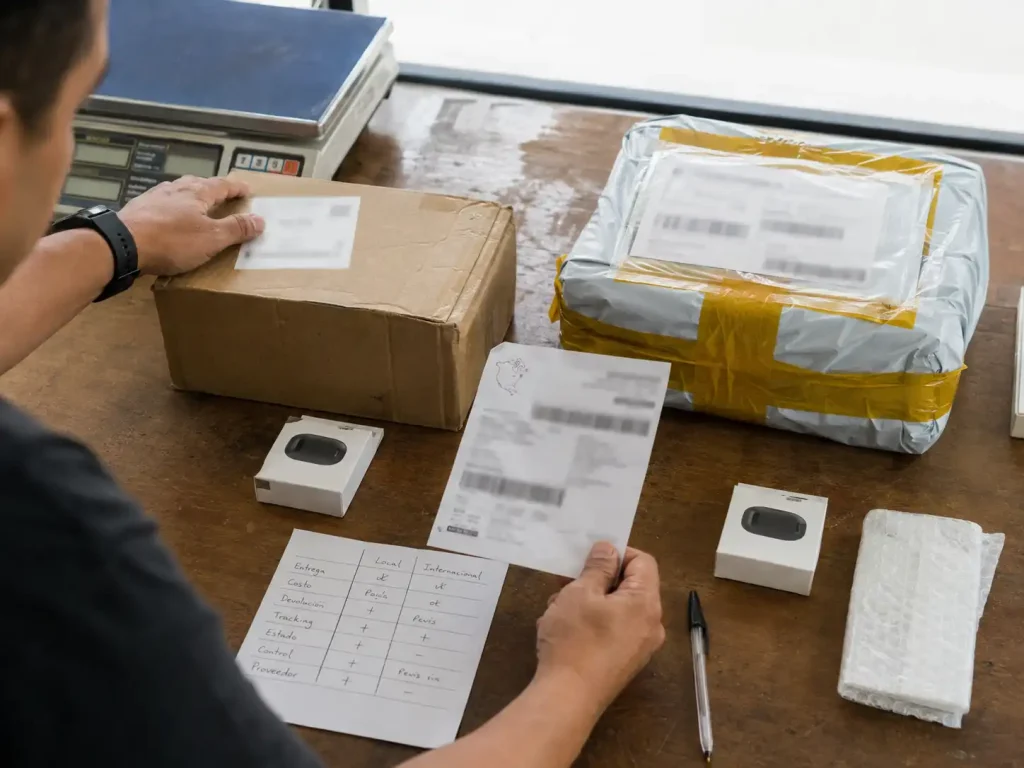
What Is Different About Ecommerce in Colombia?
Colombia already has a substantial ecommerce market, but market growth should not be confused with proof that a particular dropshipping product will sell. The Colombian Chamber of Electronic Commerce reported that the number of digital transactions grew by as much as 22.2% year over year in the first quarter of 2026.
Use that as evidence that online purchasing is active, not as a reason to skip product validation. Your product still needs its own evidence from Colombian search behavior, marketplace listings, competing offers, customer questions, achievable selling prices, and test traffic.
Three local operating factors deserve separate attention.
Payment behavior
Do not design a Colombian store around cash on delivery alone. In the Colombian Chamber of Electronic Commerce’s full-year 2025 data, bank-account debit or PSE represented 57.2% of online transaction value and 46.5% of transaction count, ahead of cards and cash.
Cash on delivery is still available in parts of the local dropshipping ecosystem, but it creates a different financial model because a confirmed order is not the same as a collected and successfully delivered order.
Delivery route
A product stocked inside Colombia avoids many of the uncertainties of importing every customer order. An overseas route may provide a larger catalog or more sourcing control, but the store must account for import treatment, customs delays, tracking quality, return difficulty, and the actual delivery promise shown to the customer.
Local evidence
Validate the offer using Colombian evidence rather than global product popularity alone. Compare local marketplace prices, Google Trends interest by country or city when useful, customer reviews and complaints, competing delivery promises, and the total price a Colombian buyer would actually pay.
A product should move into paid testing only when the demand evidence and the delivery economics point in the same direction.
Is Dropshipping Legal in Colombia?
The sales model is not a legal shortcut. If you operate as a merchant in Colombia, you need to check the same registration, tax, invoicing, consumer, data, and product obligations that apply to other online sellers.
This section is a practical starting point, not individual legal or tax advice. Your duties can change with your business form, revenue, products, location, supplier origin, and customer destination.
Register the business activity correctly
Colombia’s Ministry of Justice explains that merchants must register in the commercial registry and that a natural-person merchant completes the RUT and RUES forms as part of that process. Start with the official commercial-registration guidance, then confirm the right structure and economic activity with the relevant Chamber of Commerce and a Colombian accountant.
Do not assume that a social-media account or an overseas supplier removes the need to document your activity. Keep business and personal money separate from the beginning, and record sales, supplier payments, advertising, fees, refunds, and delivery charges.
Confirm whether and how you must invoice
The DIAN requires a current RUT before the electronic-invoicing setup and tells sellers to verify whether they are obliged to issue electronic invoices. Use the DIAN electronic-invoicing requirements to check your status instead of copying another store’s setup.
Your store remains responsible to the customer
Article 50 of Colombia’s Consumer Statute requires online sellers located in Colombia to provide clear and current identity, contact, product, price, payment, delivery, and contract information. The official text of Law 1480 should guide your store policies and checkout information.
The supplier may pack and ship the item, but the buyer purchased from your store. Before launch, write down who will answer a guarantee claim, pay for a return, replace a damaged item, and provide evidence when the product differs from the listing.
Know the delivery, refund, and withdrawal rules
For ecommerce sellers covered by Colombia’s Consumer Statute, Law 2439 of 2024 added and updated several rules that directly affect order execution.
Before checkout is completed, the seller must communicate the delivery period accepted by the consumer. If no delivery period is established, Article 50 provides a maximum of 30 calendar days beginning the day after the order is communicated.
If the ordered product is unavailable, the consumer must be informed immediately. A second delivery date may be arranged at the consumer’s request. If the agreed delivery period—or the statutory 30-day period where no period was agreed—is exceeded, or the purchased product is unavailable, the consumer may terminate the contract and obtain a refund without retention or discount. The refund must be completed within a maximum of 15 calendar days.
Separately, where Colombia’s statutory right of withdrawal applies to an ecommerce transaction, Law 2439 provides a maximum 15-calendar-day refund period once the consumer has exercised the right and fulfilled the applicable requirements.
Do not copy a generic return policy into the store. Confirm which withdrawal exceptions, guarantee rules, delivery obligations, and refund procedures apply to the exact product and transaction.
Screen the product before you list it
Products such as cosmetics, supplements, medical devices, food, seeds, children’s goods, electrical items, and battery-powered products may involve additional authorities, documents, labels, or import restrictions. Identify the exact product and its classification before you advertise it; a supplier’s willingness to ship is not proof that it can be sold or imported lawfully.
Key Takeaway: Complete the registration and product checks before taking orders. Outsourcing the parcel does not outsource your legal relationship with the customer.
Choose a Product and Supplier Route for Colombia
Choose a product by demand, complete delivered cost, delivery fit, and verifiability—not by a viral video or a large catalog. A product is testable only when you can describe the buyer, the problem or desire it serves, the realistic delivery promise, and the reason your offer is better than an easily found alternative.
Validate demand without guessing
Use current evidence from the market where you will sell:
- Review search trends by country and, when useful, by city.
- Inspect active ads and how long comparable offers remain visible.
- Compare marketplace prices, reviews, delivery promises, and complaints.
- Read customer questions under competing products.
- Run a small landing-page or content test before building a large catalog.
Demand is not proven by likes alone. Look for buying behavior: product-page visits, meaningful questions, checkout attempts, and paid orders at a cost your margin can support.
Prefer products that survive the route
Compact, non-fragile, easy-to-explain products are often simpler first tests than liquids, perishables, breakable items, regulated goods, oversized parcels, or products containing batteries. This is a screening rule, not a guarantee of sales.
Ask what happens during pickup, sorting, transport, delivery, and a possible return. If the parcel cannot survive that journey at a workable cost, the offer is not ready.
Verify the supplier with a real order
Supplier reviews and app integrations are useful discovery signals, but they do not prove the exact item or route. Place a paid sample order using the same product variation, packaging, and destination conditions you plan to offer.
Check the sample for:
- Product accuracy, visible quality, function, and included parts.
- Packaging protection and unbranded or approved branded presentation.
- Processing evidence, tracking, and delivery handoffs.
- Return address and written exception process.
- Stock, price, and product-change communication.
Use a written supplier checklist. These questions to ask a dropshipping agent help you confirm responsibilities before order volume makes a weak arrangement expensive.
Key Takeaway: Approve the complete product-to-customer order, not a supplier profile. If the sample, packaging, tracking, or exception process is unclear, pause the listing.
Build the Store and Choose Payments Around the Buyer
Your selling channel and payment mix should reduce buyer doubt without creating cash-flow problems you cannot carry. A polished theme cannot compensate for unclear contact details, copied product information, hidden delivery costs, or a weak post-purchase process.
Choose a channel you can operate well
A hosted ecommerce platform can provide a structured catalog, checkout, analytics, and app connections. A marketplace may provide existing traffic but gives you less control over the customer relationship and enforces its own seller rules.
Choose the channel only after checking:
- Payment options available to your business and target customers.
- Supplier or order-system integration requirements.
- Product and seller eligibility rules.
- Total monthly and per-transaction costs.
- Access to customer, order, and tracking data.
Use the platform’s current official terms and fee pages for the final decision. Plans, payment availability, and app support change, so a competitor’s old price table is not reliable evidence.
Decide between prepaid and cash on delivery
Prepaid orders usually provide clearer cash before shipment, but customers need enough trust to pay online. Cash on delivery can reduce payment hesitation, yet you may wait longer for funds and carry the cost of refused, unreachable, or returned parcels.
Do not choose cash on delivery because it is common in a sales video. Ask the carrier or platform for the current collection process, settlement timing, failed-delivery charges, return charges, coverage limits, and proof available for disputes. Then model those conditions in your per-order economics.
Make the store trustworthy before buying traffic
Show accurate product details, the total payable price, realistic delivery information, contact details, and clear guarantee, return, and privacy terms. Test the entire checkout on a phone, because a fast product page means little if the address, payment, or confirmation steps fail.
Calculate Full Order Economics and Startup Cash
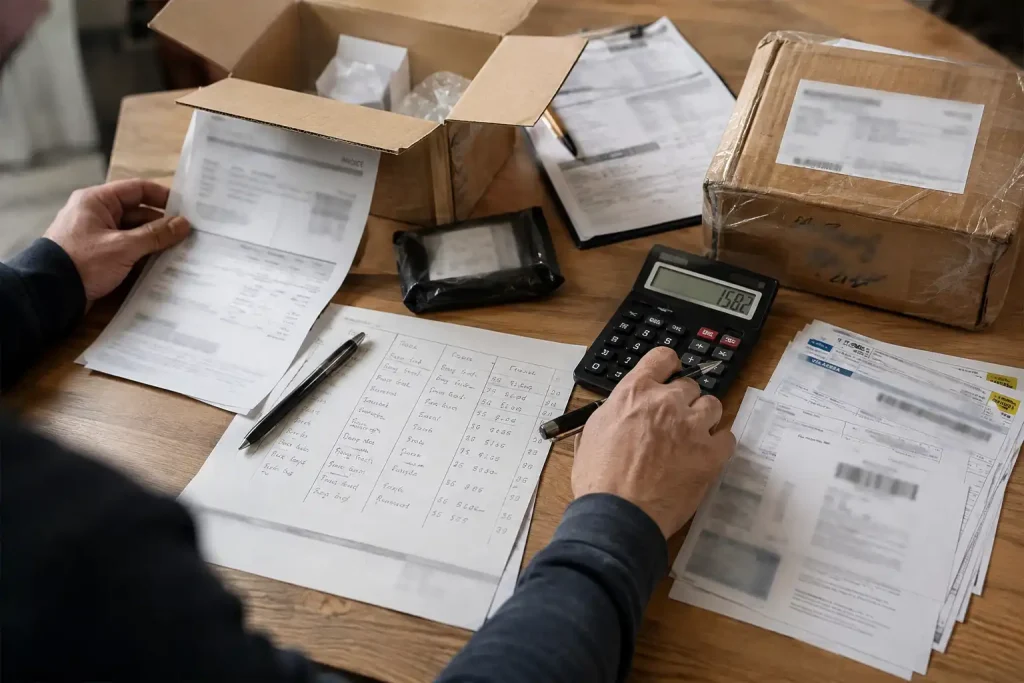
A store is viable only when a normal delivered order can leave a positive contribution and you have enough cash to run the test. Revenue and gross markup are not profit.
Calculate contribution per delivered order
Use this working formula:
Selling price − product cost − outbound shipping − payment or collection fees − platform allocation − advertising cost − expected failed-order and return allowance = contribution per delivered order
Run the calculation for at least three cases:
- A normal prepaid order.
- A normal cash-on-delivery order.
- A failed delivery, refund, or replacement.
If a single failed order consumes the contribution from several successful orders, change the price, product, payment method, delivery route, supplier terms, or advertising plan before scaling.
Keep startup cash separate from order profit
Avoiding a bulk inventory purchase does not make the launch free. Your test budget may include registration and professional advice, domain and store tools, samples, creative production, advertising, payment reserves, refunds, failed deliveries, and customer support.
Set a fixed test budget and a stop rule. For example, decide how many qualified visits, checkout attempts, and delivered orders you need before you continue, revise, or stop. Do not keep spending merely because the store is already built.
Key Takeaway: Judge the business on delivered-order contribution and available cash, not on sales screenshots or the difference between supplier price and retail price.
Start With a Seven-Step Validation Plan
Start narrow enough that you can identify why the test passed or failed. The goal is not to automate everything immediately; it is to prove demand and order execution together.
1. Define one market and customer
Write the customer destination, buyer problem, purchase reason, expected price range, and main alternative. Keep other countries and audiences outside the first test.
2. Research demand and competitors
Collect current search, marketplace, ad, review, and customer-question evidence. Record what customers value, what they complain about, and where competing offers leave room for a clearer promise.
3. Screen the product and rules
Identify product restrictions, required information, likely shipping issues, and return difficulty. Stop early if documents or responsibilities cannot be confirmed.
4. Approve the supplier and sample
Place the real test order and document the item, package, processing, tracking, delivery, and support response. If sourcing overseas, pre-shipment quality control can add a physical check before dispatch, but it does not replace Colombian product or consumer requirements.
5. Build the minimum trustworthy store
Publish one focused offer with original, accurate product information and complete customer policies. Test the order from a mobile device through confirmation and tracking.
6. Get the first qualified traffic
Choose one acquisition channel that matches the buyer. Use a small paid campaign, useful short-form content, marketplace discovery, search content, or a relevant creator test—but define one message and one measurable action.
The first objective is evidence, not scale. Record the cost and quality of visits, product questions, checkout attempts, confirmed orders, delivered orders, refusals, returns, and support workload.
7. Review the complete result
Compare your planned and actual product cost, delivery cost, advertising cost, failed-order cost, delivery experience, and customer questions. Continue only when the offer and backend process can repeat without hiding losses or unresolved risks.
Is the Model Worth It, and When Should You Scale?
The model is worth testing when it gives you a low-inventory way to validate demand while you can still control product information, delivery expectations, margin, and customer support. It is a poor fit when the offer depends on unverified quality, unrealistic delivery promises, regulated products you cannot document, or a margin that disappears after acquisition and failed orders.
Advantages and limits
| Potential advantage | Operational limit | What to verify |
|---|---|---|
| No bulk finished inventory before sales | Lower unit economics | Delivered-order contribution |
| Fast catalog testing | Easy-to-copy offers | Clear buyer and differentiation |
| Flexible supplier choice | Less physical control | Sample and repeatable product check |
| Ability to serve different markets | More route and rule complexity | One destination at a time |
| Easier transition between products | Customer support remains yours | Written exception and return workflow |
Know when you need more control
Early tests may work with a local platform, a direct supplier, or a marketplace connection. As stable orders grow, scattered supplier chats, changing product versions, inconsistent packaging, and separate tracking systems can become the real constraint.
A private dropshipping agent becomes relevant when you need coordinated sourcing, supplier communication, samples, product checks, packaging work, order execution, shipping arrangements, and after-sales follow-up through one accountable workflow. Moving from scattered marketplace orders to a controlled process requires a clear handover; use this AliExpress-to-private-agent transition plan when that situation applies.
Scale in stages: first the offer, then the complete order route, then the repeatable operating process. More advertising should follow proof, not substitute for it.
Key Takeaway: Scale only after delivered orders confirm demand, contribution, product consistency, delivery performance, and an exception process you can repeat.
FAQ
Can I sell through WhatsApp Business without a full website?
Yes. A messaging channel can be your sales interface, but it does not remove your duties as an online seller. Provide your identity and contact details, accurate product and total-price information, payment and delivery terms, and a way to receive complaints before the customer commits to the order.
What should I do if the supplier has no stock after the customer pays?
Tell the customer promptly and offer the remedy required by the applicable sales terms and consumer rules. Colombia’s Consumer Statute provides that when the ordered product is unavailable, the consumer may end the contract and receive a refund without retention or discount; do not replace the item silently.
When can a customer request reversal of an electronic payment?
Under Article 51 of Colombia’s Consumer Statute, reversal can apply to electronic payments in situations including fraud, an unauthorized transaction, non-delivery, a product that does not match the order, or a defective product. Build a documented complaint process and obtain professional advice for the deadlines and procedure that apply to the case.
Are commercial parcels under USD 200 automatically free of Colombian import tax?
No. The DIAN’s guidance distinguishes customs duty from VAT and limits exemptions by value, origin, treaty conditions, and whether the shipment is commercial. Because customer orders are commercial activity, never price an imported order on the assumption that every parcel below USD 200 is tax-free; confirm the product classification and treatment with DIAN guidance or a customs professional.
Do I need an API connection before accepting my first order?
No. Some suppliers support a manual process in which you submit each customer’s delivery details after the sale. Manual handling can work for a controlled test, but you must confirm stock, price, address transfer, tracking, privacy handling, and who catches duplicate or incorrect orders before increasing volume.
Conclusion
A strong Colombia launch starts with one customer destination, one verifiable product, realistic customer responsibilities, and economics based on delivered orders rather than hopeful markup. Validate the legal setup, supplier, parcel, payment method, and first acquisition channel before you automate or widen the catalog.
If you already have real or growing order needs and want one accountable private-agent workflow for sourcing, product checks, packaging, order execution, shipping coordination, and after-sales follow-up, RuntoDropship can help you review the product and route. Send the product link, target market, current order volume, and delivery requirements to discuss a sample or controlled test order.