
A package stuck in customs can leave you with a tracking update, a supplier asking when to ship the next batch, and no clear instruction for the goods already in transit. Start with the exact status, the most recent written request, and the party who issued it. Ask the carrier or broker to identify the shipment record and tell you whether it shows routine processing, a request for documents, or an official hold. If you have a formal notice, match it to this shipment and use the instructions and contact on the notice.
For a China-to-US shipment, prepare one record that connects the goods, the communication, and the person handling the next step. That record helps you respond to the actual request and update your team without committing to a delivery date you cannot substantiate.
What does a package stuck in customs actually mean?
A package stuck in customs is a description of a delay that can cover routine processing, a document request, or an official hold. The exact wording and its source determine what you can reasonably infer. A carrier tracking page reports an event in that carrier’s system, while a written notice can identify a specific decision or request. The customs clearance guide explains the earlier entry and release steps if you need to establish where the exception occurred.
CBP’s guidance on sending goods to the United States says USPS forwards foreign mail to CBP for examination. A mail update can reflect ordinary routing, while a detention or seizure needs separate confirmation through a shipment-specific official record. Check whether the latest communication asks for action before promising an update to a customer.
Which record should you look for first?
Save the report as it appeared and ask the sender what the event represents.
- Record the system that displayed the update and the shipment reference it used.
- Save any later written request separately, including its sender and date.
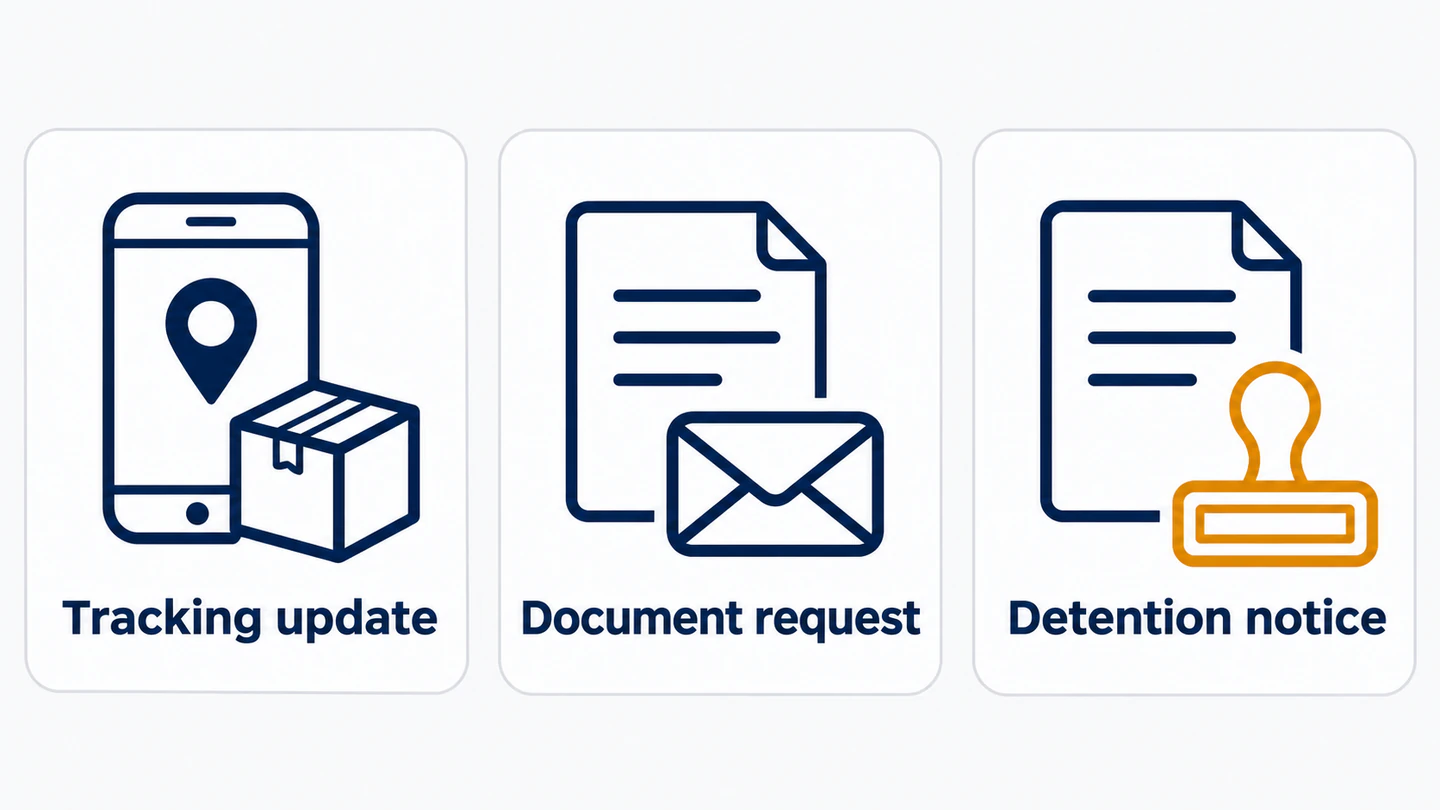
| What you have | What it establishes | Next check |
|---|---|---|
| Tracking update from the carrier | The carrier recorded or displayed an event for the shipment | Ask for the latest underlying event and whether anyone is waiting for your response |
| Written document request from a verified carrier or broker | A named party asked for a particular item | Match the reference and requested record to the shipment and confirm where to send it |
| Official notice linked to this shipment | An agency issued the decision or request described in that notice | Record the issuing office, named party, reason and response instructions |
When two records disagree, preserve both dates and ask which one the carrier or broker is using. Key Takeaway. Identify the latest record tied to the shipment and its issuer before deciding what anyone should do.
How can you tell a routine clearance delay from a genuine hold?
Look for an official decision or a shipment-specific notice before treating a delay as formal detention. A carrier may report that documents are being reviewed or ask for missing information. A reported hold still warrants follow-up when the reason is unclear. Ask the person handling the shipment which agency is involved, what record shows the hold, and whether the goods were presented for examination.
When do the formal detention rules apply?
19 CFR 151.16 treats goods as presented for CBP examination when an officer can view and examine them. Showing the officer only the vehicle or container carrying them does not meet that standard. The section excludes detentions CBP carries out for another federal agency that has authority to decide admissibility. Ask the broker about the examination event and the authority named in your records before using the timeline.
- Decision window. Once the goods have been presented for CBP examination, CBP has five business days to decide whether to release or detain them. Merchandise that remains unreleased at the end of that period is treated as detained under the rule.
- Notice window. CBP issues a notice to the importer or another interested party within five business days of a detention decision or failure to release during the initial window.
- Admissibility determination. The rule provides 30 days from presentation for examination for the final determination. Under 19 U.S.C. § 1499, a failure to decide by then, or within a longer period specifically authorized by law, is treated as an exclusion decision for protest purposes.
Those dates govern defined customs actions. A final determination can have outcomes other than release. Key Takeaway. Ask for the date of presentation for examination and the responsible agency before applying a formal detention time frame.
Who is responsible when a package stuck in customs needs action?
Start with the carrier or broker already assigned to the shipment. If the notice gives an instruction to a named party, follow that instruction with them. The carrier can explain its tracking event, and the broker can check the entry record and explain what the importer needs to provide. Give the named party the full notice and confirm who will respond.
CBP guidance for internet purchases explains that buying from a foreign source makes the buyer an importer in that context. For a commercial shipment, confirm which company and contact the broker has on file for this entry. CBP’s guidance on sending items to the United States assigns arrival notification to the carrier.
What should the first request establish?
- Ask the carrier for the current shipment reference, location it can verify, and whether a clearance team or broker is handling the shipment.
- Ask the broker for the last confirmed entry or examination event, any outstanding request, and the contact responsible for responding.
- If the record identifies the importer or another party, pass the full instruction to that party using the channel you already use for the shipment.
Give each contact the same shipment reference and retain their reply. When a forwarder hands the request to a broker, ask for a named person or team and a confirmation that the broker received the supporting records. For interpreting a live formal detention or an unclear instruction, consult a licensed customs broker handling the entry.
Key Takeaway. Record who can answer the status question, who can respond to the notice, and who confirmed the handoff.
What notices and documents should you collect before anyone acts?
Collect the exact tracking text, the complete notice or document request, a specific goods description, and invoice or value evidence tied to the same shipment. A detention notice starts a documented process. The notice itself leaves the final admissibility determination open. Preserve all its pages and identifiers so the assigned party can connect it to the entry.
CBP’s internet-purchase guidance says the agency can require a formal entry, including when important records such as an invoice or bill of sale are missing. The same guidance warns that giving inaccurate or misleading information about what the goods are or what they are worth is illegal. If the invoice, packing list and order describe different quantities or products, ask the supplier for the underlying records and have the broker identify what needs correction.
What belongs in the shipment file?

- Tracking record. Save the exact text, timestamp, tracking number, and carrier that displayed it. Include the last earlier event if it helps distinguish the new status.
- Request or notice. Keep the message or document in full, with its issuer, date, shipment or entry reference, named party, and response instructions.
- Goods and value evidence. Match the commercial invoice or other relevant value record to what was shipped. Add the packing list and a product description clear enough to identify the goods.
- Handoff record. Log who received the file, which items they acknowledged, and what is still missing. Preserve the source of any later correction.
For a shipment with several cartons, identify which goods or packages are covered by the request before asking the supplier to resend every document. Send sensitive information through a verified channel when the responsible party confirms it is required.
Key Takeaway. Use the entry or shipment reference to join the notice, goods and invoice. Record what was actually sent and who received it.
Which official sources should you check before you contact anyone?
Use the applicable CBP guidance and the specific rule identified in the notice. For a CBP detention under 19 CFR 151.16, read the rule together with 19 U.S.C. § 1499. General internet purchase or mail guidance helps identify the normal paperwork and arrival responsibilities. The actual notice and current shipment records show the issue you need to follow up.
What can an official record tell you?
- A rule describes the conditions and procedures that apply when its legal requirements are met.
- A shipment-specific notice can tell you which office acted, what it recorded, and what information it requests.
- A carrier or broker record can help you match the notice to the actual entry or parcel reference and identify what has already been sent.
In the Inspired Ventures opinion, the U.S. Court of International Trade records separate dates for the hold, presentation for physical examination and later seizure notice involving tire imports from China. The court was deciding a jurisdictional motion in that case. For a shipment file, the narrow point is practical. Record each event and its source separately, even if the carrier portal uses the same short status throughout.
Key Takeaway. Record the date and source of each event separately so a person reading the file can distinguish what happened from what remains unconfirmed.
What should a China-to-US or FBA shipper ask their forwarder?
Ask the forwarder for the official notice if one exists, the name of the party responsible for responding, and a list of the documents already on file. For a China-to-US order or an Amazon FBA replenishment, share the shipment reference and the exact missing item with the supplier. Keep the customs record attached to the freight file so warehouse or marketplace receiving updates can be tracked separately.
What should the forwarder confirm in writing?

- Which shipment is affected. Identify the entry, parcel or carton references and ask which product lines the request covers.
- Who handles the response. Ask for the carrier or broker team assigned to the case and the importer or other party whose action is needed.
- What remains open. Check which documents the team has received, which are still missing, and how it will confirm that someone acted.
Confirm who will carry the entry question to the broker. A China-side sourcing agent can help obtain missing product details from the supplier. Keep your FBA receiving date provisional, verify fee requests through your existing carrier contact, and ask for the official record before reporting a seizure. Use this China-to-US forwarder guide when you need to confirm which shipment records the forwarder and broker hold.
Key Takeaway. Put the current request, responsible party and next update in the same written handoff.
What should you avoid while goods remain under customs control?
Avoid turning tracking estimates into promises, paying a request through an unverified channel, or telling colleagues that goods were seized on the strength of a tracking message alone. The detention rule allows seizure and forfeiture where otherwise provided by law. Use the specific notice to distinguish the action taken and seek broker or legal guidance if the record identifies a formal action you do not understand.
How can you communicate the delay without guessing?
- State the latest confirmed event and say where the report came from.
- Name any documented request and who has agreed to handle it. Confirm a payment request with your known carrier or broker before you follow its instructions.
- Give the time of your next planned update if customers need one. Update an estimated delivery date when the status and carrier movement support it.
If you have only a general delay label, tell your team that you are awaiting confirmation from the carrier or broker. If you receive a notice later, save it with the earlier records and tell the person who will respond.
Key Takeaway. Send a status update that another person can trace to an actual record.
Conclusion
When you have a package stuck in customs, identify what the latest record establishes, collect the shipment documents, and confirm who can act before setting a delivery date. As a Private Dropshipping Agent, RuntoDropship can help organize sourcing and shipping records and coordinate the handoff to your carrier or broker.
Send us the product description, shipment reference, destination, and the request you received if you need help preparing that handoff. We start with the documents your logistics partners can verify.
FAQ
Does a USPS customs scan start the official detention clock?
A USPS scan alone does not establish that goods were presented for CBP examination under the detention rule. Save the scan and ask for the record confirming the examination event before using that date for a formal timeline.
If USPS will not intervene, is calling CBP always the next step?
No. First ask what status USPS can verify and whether it has a written request or notice tied to the parcel. If a notice identifies an office or directs a response from a named party, use that instruction.
Can a low-value marketplace package still be held in customs?
Yes. A low declared value does not prevent examination or a document request. Keep the purchase confirmation and an accurate item description so you can address a request for value or product information.
Does a prior CBP form explain a new customs-hold status?
An earlier form can help identify what you supplied before. Match the reference on the current request to the shipment and ask the broker whether the earlier document applies. A form accepted for one shipment does not establish what is happening to a later one.
Does a notice of detention mean the goods have been seized?
A detention notice records detention for further review. Read the notice for its stated action and request. If a later communication reports a seizure, give that communication and the earlier notice to the broker or adviser handling the case.