

You may be weighing Spocket alternatives after a product that sells repeatedly disappears from supplier stock. A customer orders the listed variant, the tracking number arrives late, and support has to explain a delivery promise it cannot verify. Replacing the app in a rush may leave paid orders with no clear owner and reproduce the same problem through another supplier.
The options include supplier marketplaces, order-automation apps, direct suppliers, and private dropshipping agents. The right choice depends on the job you need done: finding a different product, moving order data, controlling the physical parcel, or handling problems after dispatch. Compare one real SKU and destination before moving the rest of the catalog.
Why Are You Looking Beyond Spocket?
You should look beyond Spocket when a repeated order problem survives an attempt to fix the product, supplier, or workflow you use. Investigate a delayed parcel before attributing the delay to every supplier on a platform.
Which problem is a platform change meant to fix?
Look at recent paid orders and group the failures by cause. The useful question is whether your current setup lacks a needed capability or whether one source is performing badly. Before you cancel anything, separate these cases:
- A catalog gap means the exact variant or category is unavailable.
- A stock problem means availability changes after your storefront accepts an order.
- A delivery problem means processing, carrier handoff, or transit misses the promise.
- A service problem means nobody owns a defect, refund, or lost parcel.
If one SKU causes most complaints, test another supplier for that SKU before moving every listing. Storewide routing or stock failures make a broader change more likely to help.
What evidence should you gather before searching?
For that reason, use one representative product as your baseline. Record its variant, market, charge, shipping method, order-to-scan and delivery dates, and customer remedies. Key Takeaway: A failure pattern ties supplier evaluation to orders rather than a sales page.
Which Alternatives Solve Your Actual Bottleneck?
The main alternatives solve different parts of the same order, so compare them by responsibility before comparing features. A catalog tool can help find products while leaving product checks and parcel handling to other parties.
What work does each replacement model perform?
A supplier marketplace connects a store with product sources. Meanwhile, an automation app moves listings, prices, stock signals, orders, or tracking between systems. A direct supplier may produce or stock a specific product, while a private dropshipping agent coordinates several sourcing and fulfillment steps for the seller. The labels vary by provider, so ask who performs each action on your SKU:
- Who selects and pays the source supplier?
- Who holds stock and confirms the variant?
- Who checks, packs, and hands the parcel to a carrier?
- Who authorizes a replacement or refund when something goes wrong?
Still, some providers span several models. Check the service used for your SKU rather than relying on the company label.
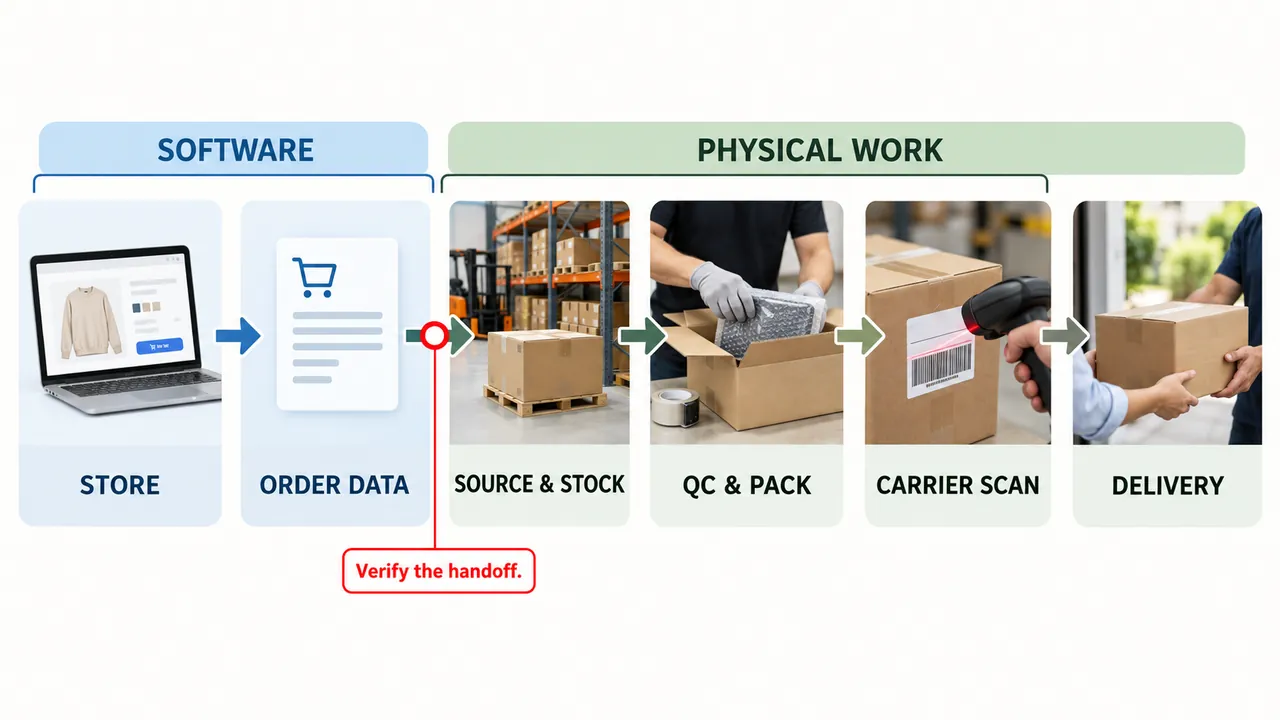
Where does software stop and physical execution begin?
A dashboard may report that an order was sent, but a warehouse still has to find the unit, check it, pack it, and obtain a carrier scan. Shopify’s product-sourcing guidance recommends sample runs to inspect communication, processing, packing, and delivery information. Your store still answers the customer. Key Takeaway: Choose the model that owns the failing step, then verify its handoff with an order.
How Should You Shortlist Apps, Suppliers, and Agents?
Shortlist alternatives by the exact product, sales channel, and fulfillment work you need, not by a general “best” ranking. A tool that imports more listings may be useful for testing but irrelevant if your real problem is damaged stock or unresolved returns.
Which capabilities match your SKU and sales channel?
DSers focuses on order automation; AutoDS combines automation with managed order services. Doba and Syncee offer marketplace or directory routes, while Zendrop and CJdropshipping offer sourcing and fulfillment services. A direct supplier or private agent may fit an established product that needs closer control. For each candidate, request proof specific to your store:
- The exact SKU and variant can be supplied to your destination.
- Your store can send orders and receive tracking without manual re-entry.
- Stock status, packaging rules, and return terms are visible before sale.
The Learn With Shopify supplier-selection walkthrough shows a useful starting check and a test-order step. Treat its examples as a method, then confirm each candidate’s current behavior yourself.
When does each model become a poor fit?
A research or importing app cannot inspect a physical batch unless another service does it. A private agent adds coordination that a seller testing one uncertain item may not need; one direct supplier may struggle with a varied catalog. Key Takeaway: Match the replacement to the product stage and missing responsibility.
What Does One Delivered Order Really Cost?
Compare the total cost of delivering the same variant to the same destination, including the expected cost of problems. Monthly plan prices alone cannot show which option leaves more margin per delivered order.
Which charges belong in the same comparison?
Start with a written quote for one SKU, one quantity, and one shipping service. Convert any monthly fee into a per-order amount using your own realistic order volume, then add costs that only appear when an order fails. Do not fill missing values with a vendor’s example margin. A useful worksheet asks for:
- Product and variant price, including any required minimum purchase.
- Picking, packing, labeling, and branded-material charges.
- Shipping, duty handling where applicable, and payment or platform fees.
- Replacement, return, lost-parcel, and customer-support exposure.
How do you test a quote before trusting the margin?
Then ask each candidate to quote the same item and service level, and confirm what happens if the source supplier changes. The questions to ask a dropshipping agent help turn vague pricing promises into written answers about ownership and remedies. Keep a blank in your comparison wherever a charge has not been confirmed.
| Cost or condition | Evidence to request | Decision use |
|---|---|---|
| Product and variant | Sample match and written quote | Compare like with like |
| Processing and packing | Fee schedule and packing rule | Find charges outside unit price |
| Delivery route | Service, destination, and charge | Compare the same customer promise |
| Failed order | Return, replacement, and refund terms | Estimate exposure before scaling |
Blank cells show which quotes still need an answer. Key Takeaway: A delivered-order worksheet lets procurement compare costs without treating unknown fees as zero.
Where Will Your Orders Actually Ship From?
Verify the stocked and dispatch location for the chosen SKU rather than relying on a supplier’s business address or a broad “US supplier” label. The route matters because processing and carrier handoff happen before the transit estimate begins.
What proves stock location for a specific SKU?
In particular, ask where the units available today are held, who controls that inventory, and which facility will dispatch your test order. A supplier may operate in one country while a particular item ships from another. The distinction should appear in the order record and the carrier’s first accepted scan. Check:
- The variant’s current stock location and date of the stock check.
- The dispatch facility and carrier service for your destination.
- The process if the local stock is unavailable after a sale.
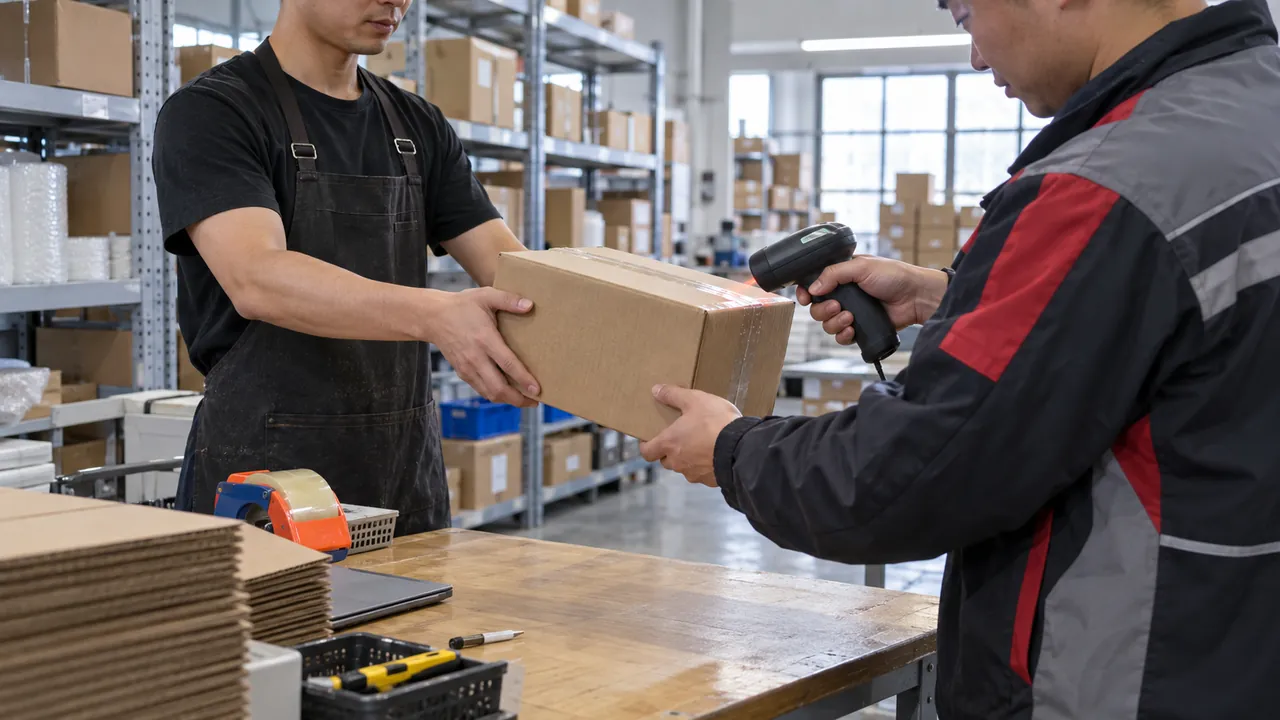
Which delivery stages should a sample order reveal?
Record order time, processing completion, first carrier scan, cross-border transit if any, and final delivery. Spocket’s order-status guidance says times differ by supplier. One sample cannot guarantee future performance, but it can expose a mismatch on the intended route. Key Takeaway: Use stage-by-stage evidence to set a delivery promise and choose a supplier, warehouse, or route.
How Can You Check Product Quality Before Switching?
Check a representative variant and its parcel before moving live demand to a new source. A product photo and a supplier badge cannot confirm what the customer will receive.
What should a representative sample test include?
So order your listed variant to a real customer destination. Inspect the product, accessories, finish, labeling, outer package, and any insert or invoice against the listing. Photograph mismatches and ask how the supplier would correct them on a paid order. A sample brief can include:
- Product identifier, selected variant, and approved reference image.
- Pass or fail conditions for completeness, damage, and packaging.
- Required evidence before dispatch and the remedy for a failed check.
Who checks the next batch and handles defects?
Who notices if a later batch changes? Request the checking point, its record, and the person authorized to stop a mismatched order. A dropshipping quality-control service fits when you need checks linked to sourcing and dispatch; ask for the protocol covering your product. Key Takeaway: A written acceptance rule lets procurement compare providers and customer support resolve defects.
Will Inventory and Order Data Stay Accurate?
Accurate order data requires a stable link between each storefront variant, the available stock, the fulfillment location, and the tracking record. A sync badge is only useful if you know what source it reads and how often that source changes.
What does the app synchronize, and from which source?
Ask whether the app reads supplier availability, allocated warehouse stock, or a feed that can lag behind physical counts. The answer matters when the same item appears under several supplier listings. Set a test that changes one variant’s availability and checks what the storefront shows. Your checklist should cover:
- The source and timestamp of stock for each variant.
- The location that receives the order and owns the inventory.
- Whether a supplier substitution changes the product identifier.
What happens when a SKU changes or stock runs out?
After stock changes, place a test order that reaches the intended provider and returns tracking to the same Shopify order. Ask what prevents an alternate source from claiming the same variant. Shopify’s inventory-location guidance explains how apps can act as fulfillment locations while stock is tracked separately by location. Key Takeaway: Variant-level and tracking tests show whether automation will reduce manual work or create new order errors.
Who Owns Returns, Delays, and Wrong Items?
Assign each exception to a named operating party before the first live order. A support inbox is not a remedy unless someone can investigate the parcel and authorize an action.
Which party makes each remedy decision?
Then map the merchant, app, supplier, warehouse or agent, carrier, and return destination. The seller still answers the customer, so the upstream partner must provide usable evidence and a response route. For each common failure, ask:
- Who confirms a wrong variant or damaged unit, and with what evidence?
- Who starts a carrier trace for a parcel with no movement?
- Who pays for a replacement, refund, or return freight under the agreed terms?

What belongs in the agreement before the first order?
Set the evidence needed, an escalation path, the decision maker, and the treatment of cross-border returns. For a low-value item, international return freight may exceed the item cost, so agree on the remedy before sale. Key Takeaway: Clear exception ownership makes supplier bids comparable beyond advertised features.
How Do You Move Live Orders Without Losing Control?
Move one representative SKU through a complete test, then transfer new demand only after the order, parcel, and tracking match your expectations. Existing paid orders should keep an identified owner throughout the change.
What should you test with one SKU first?
Use the exact variant and destination that exposed the problem. Keep the existing listing and route stable while the candidate receives a controlled test order. Compare the product, price, stock signal, processing, tracking, packaging, and remedy response. The test should answer:
- Did the correct variant reach the correct provider?
- Did tracking return to the right customer order?
- Could the provider explain a stockout or defect without a new sales promise?
How do you protect orders during the overlap window?
During a controlled overlap, export open orders with their current provider, fulfillment state, tracking, and issue owner. Set a cutover time for new orders and a rollback rule if the test fails. The dropshipping-agent transition checklist gives a fuller open-order ledger for stores moving physical fulfillment. Key Takeaway: A one-SKU cutover protects customers while you verify the new operation.
Conclusion
The useful replacement is the one that fixes your documented bottleneck on a real SKU. Separate product access from automation and physical fulfillment, compare the same delivered order, and test stock, parcel quality, tracking, and remedies before moving live demand.
RuntoDropship is a Private Dropshipping Agent for sellers who need coordinated sourcing, quality checks, inventory, fulfillment, shipping, and after-sales work rather than another product list. If that operating model fits your store, contact RuntoDropship with the SKU, target market, order pattern, and current failure point. Our view is that sellers should be able to inspect the work and name who owns each order.
FAQ
Is Spocket a legitimate dropshipping platform?
Yes. It has a Shopify App Store listing and published supplier rules. That establishes a real operating platform, but it does not verify the price, stock, or delivery of the particular product you plan to sell.
Can I keep two supplier apps installed while testing?
Yes, a Shopify store can use more than one fulfillment app for different products or locations. Assign each variant and new order a clear owner, then check shipping profiles and stock before both apps are active on live items.
Does uninstalling a supplier app cancel every charge?
No. Uninstalling generally stops future Shopify-billed recurring cycles, but a charge already generated may still appear on the next bill. A subscription billed outside Shopify may need separate cancellation with the provider; check both billing records.
Does “ships from the US” mean “made in the US”?
No. A product made abroad can be stocked and dispatched from the United States. Ask for manufacturing-origin evidence before making a “Made in USA” claim, and check the actual dispatch location separately.
Can an order using two suppliers arrive in separate parcels?
Yes. Different suppliers or fulfillment locations may create separate shipments with different tracking numbers and arrival dates. Check the extra shipping cost and tell customers when one order may arrive in stages.