
What is customs clearance, in official US terms? It is the set of filings and government decisions that can release imported goods from CBP custody so they can move inland. This page is a US meaning-and-choices guide, not a license, a ruling, or a promise about one shipment. Before cargo moves, you should know who will file, who stands as the importer, and whether the paperwork describes the same goods that actually shipped.
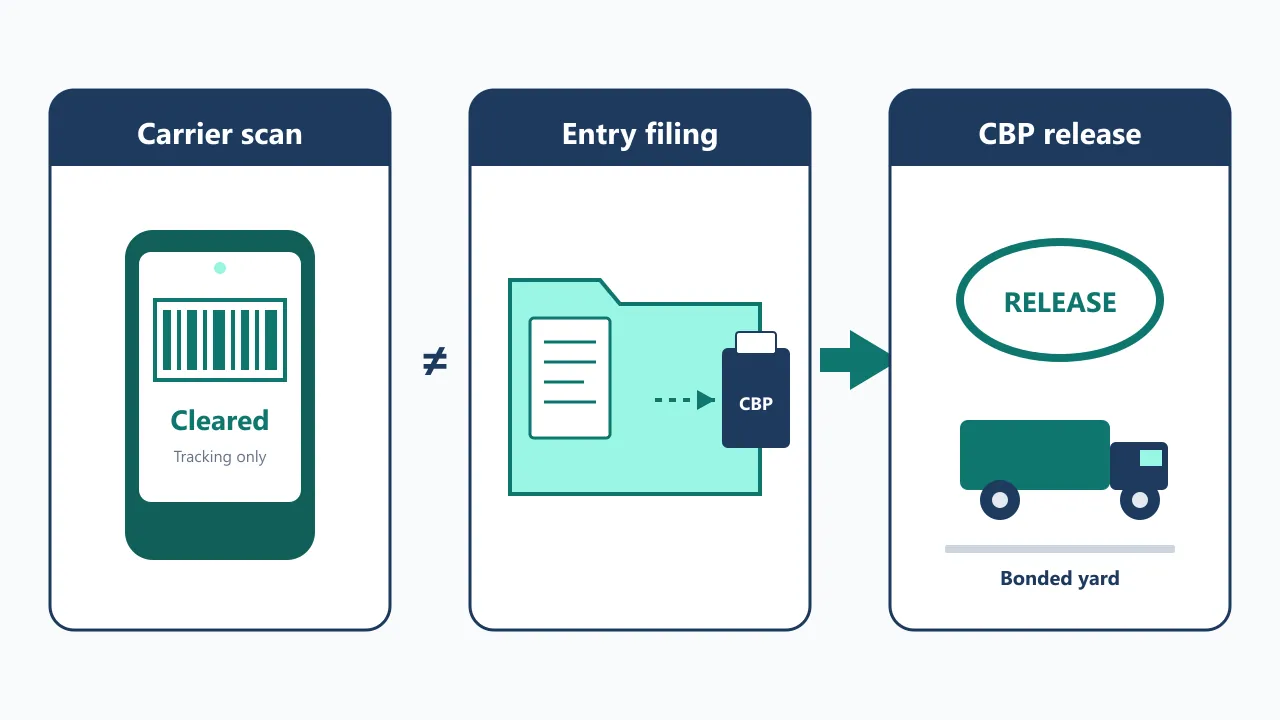
Safer choices also depend on how you read a tracking page. A carrier can print "cleared," "clearance in progress," or "clearance complete" long before you have an entry number or a release reference. Those labels are updates from a transport chain, not a substitute for the customs record.
The work here stays inside verified official wording and a few attributed commercial explanations. It does not quote a current blanket US duty, merchandise processing fee, or de minimis figure. It does not assign an HTS classification, walk through an in-bond movement, or offer a full playbook for a package that is stuck. Those topics belong on later pages in this cluster.
What is customs clearance, and what should you verify afterward?
What is customs clearance versus a carrier scan?
Under 19 CFR 141.0a, entry is the documentation or data filed with CBP to secure the release of imported merchandise from CBP custody, or the act of filing that documentation. That is the legal core of customs clearance: a filing that can get the goods out of CBP custody, not a sticker on a tracking site. The current official text appears in 19 CFR Part 141.
Under 19 CFR 141.0a, the entry summary is additional documentation or electronic data necessary to enable CBP to assess duties, collect statistics, and determine whether other legal requirements are met. Entry and entry summary are related, but they are not the same step. Release can happen on the strength of an entry; the entry summary is the fuller account that supports duty assessment and trade statistics.
All merchandise imported into the United States is required to be entered, unless specifically excepted. This page does not try to list every exception. If your goods require entry, someone eligible has to file. Treat a carrier clearance scan as a tracking update until you have an entry or release reference.
Commercial sites often use looser language. Tecex describes customs cleared as the final approval granted by a customs authority that allows a shipment to enter the destination country and proceed to final delivery. That is a useful plain-English picture, and it is still a commercial description. It does not turn a carrier scan into the official entry record, and it does not guarantee that delivery starts the same day.
What official time limit applies to entry filing?
Merchandise for which entry is required will be entered within 15 calendar days after landing from a vessel, aircraft or vehicle, or after arrival at the port of destination in the case of merchandise transported in bond. That sentence is the official time limit for making entry. It is not a promise that CBP will finish an inspection in 15 days, and it is not a service-level clock for last-mile delivery.
Congestion, exams, and missing paperwork can stretch the wait in ways no article can honestly reduce to one interval. Some commercial guides advertise a 2026 six-step CBP process or a typical one-to-five-day clearance window. Those are not official rules, and this page does not copy them as law. If you need a deadline, start with the official entry time limit, then ask the filer what was actually submitted and when.
What should you confirm after a customs release?
Released conditionally means any release from CBP custody before liquidation. Goods can leave CBP custody while later accounting remains open. If you only have a tracking label, you still do not know whether CBP has released the cargo. You also need to know whether the release is conditional, or whether an exam or document request is outstanding.
A release ends CBP custody for that movement. It does not, by itself, put the carton on a local truck. GoBolt states that once CBP releases a shipment, it moves directly into last-mile handover, and that clearance completion is one handoff point in a longer delivery timeline. Use that as a reminder to keep asking practical questions after the border step.
After a release, confirm who has possession. Also confirm any last-mile carrier or new tracking number, and whether any exam or document request remains open. A quiet page after a "clearance complete" scan is a handoff or last-mile question until you can prove otherwise. If the cargo is truly stuck in customs, that troubleshooting belongs on a later page in this cluster, not as a shortcut here.
Who may file the entry, and who is the importer of record?
Name the filer and the importer of record before the cargo moves. Only the importer of record has the right to make entry. The importer of record is the owner or purchaser of the goods, or, when designated by the owner, purchaser, or consignee, a licensed Customs broker. Those two sentences come from CBP's right-to-make-entry directive. They are the reason a house bill of lading or a carrier account name is not enough.
A nominal consignee may designate a Customs broker to make entry on his behalf but may not make entry on his own behalf. If you are only named as a notify party or as a delivery address, do not assume you can file in your own name. A licensed broker can file when properly designated, and in that case the broker appears as the importer of record on the entry.
Payment to a broker covering duties does not relieve the importer of liability if the duties are not paid by the broker. Handing money to an intermediary is not the same thing as a discharge of the debt to the United States. This page is not legal advice and does not appoint a broker for you. Get the names in writing before the goods land. Then a later invoice or carrier request is not your first notice of who was responsible.
Which documents and charges should you check before entry?
Match the invoice and packing details to the actual cargo, and ask for a line-item split between duties or taxes and carrier or brokerage fees. The commercial invoice, packing list, and the goods in the carton should tell the same story: the same description, quantities, and values. If they do not, the filing can stall even when everyone believes the shipment is "ready."
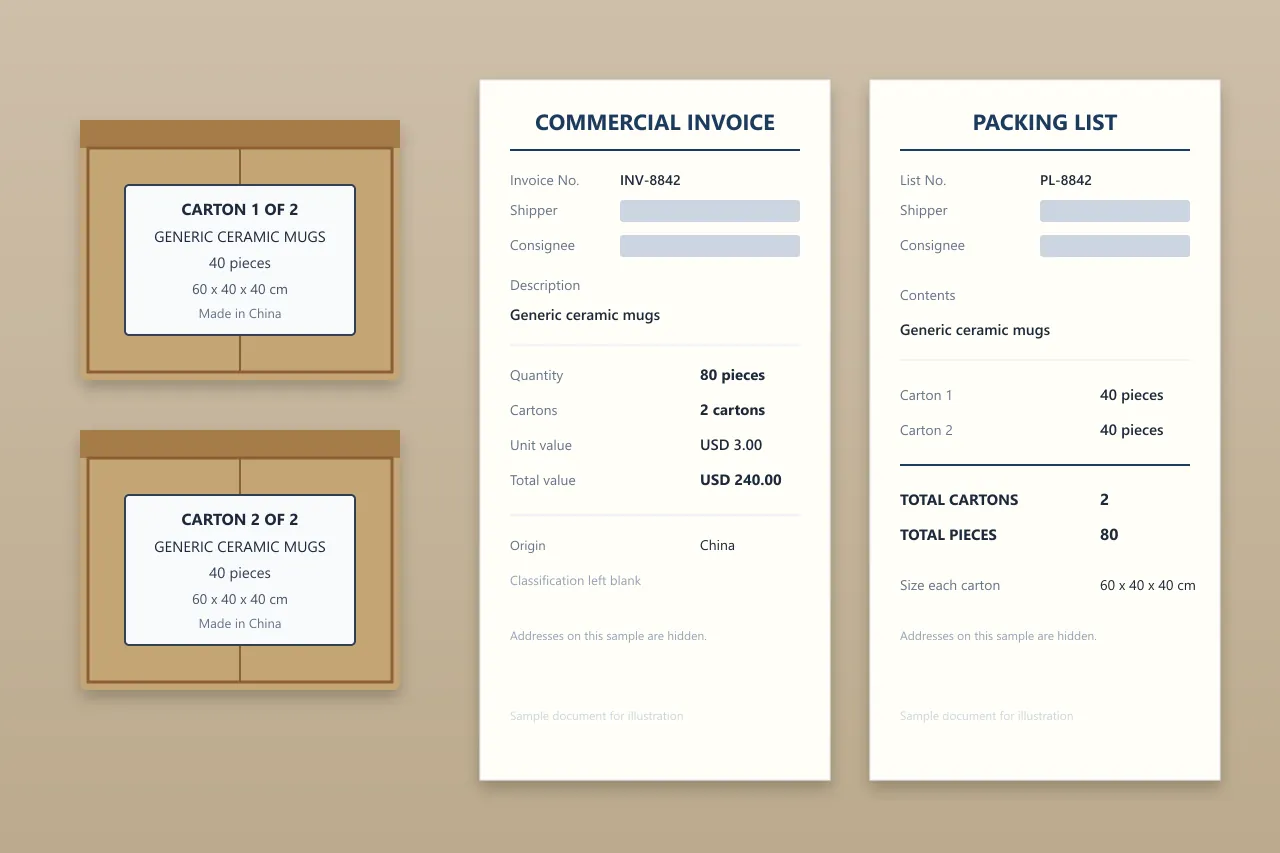
DHL states that missing, inaccurate or unclear information on documents like the Commercial Invoice or Air Waybill can cause delays. That warning is ordinary shipping advice, not a complete official document list, and it does not assign a legal classification. Classification questions belong on a later HTS page. Current China-to-US duty amounts belong on a later duty page. This article will not invent a rate card to fill that gap.
When a broker or carrier quotes a single "customs" number, ask them to separate government charges from their own fees. Keep the entry reference with that breakdown. You will need both if a bill arrives later and the totals do not look like the same job.
How do you choose a broker, a forwarder, or self-filing?
A freight forwarder and a licensed customs broker are not automatically the same party. The forwarder may book space, issue documents, and coordinate pickup. The right to file still sits with the importer of record, or with a licensed broker the owner, purchaser, or consignee designates. If a sales email blurs those roles, ask who will appear on the entry and who will only move the freight.
Self-filing is a real option only for a party that is eligible to be the importer of record. It is not a shortcut for a nominal consignee, and it is not a reason to skip the document check. If you need help with the China-to-US freight movement itself, a freight forwarder from China to the US can be the right party for carriage and coordination. Treat that relationship as a freight appointment, not as proof that the entry has already been authorized.
Write down the division of work before cargo is handed over: who books the move, who files, who pays government charges, and who receives notices. If those answers are vague, fix them on shore, not after a carrier message asks for an importer number.
What should you do if tracking stalls after a clearance scan?
Start with four facts, in that order. Was an entry filed, and do you have the reference? Has CBP released the cargo, or is there only a carrier status? Who has possession right now? Is a document request or an exam still open? Until you can answer those questions, a stalled tracking page is not proof of a customs hold. It is not proof that the parcel is already out for delivery.
Ask the party who arranged the filing for the entry or release reference first. Then ask the carrier where the freight is and whether it is waiting for a delivery order, a last-mile scan, or more paperwork. Do not invent a standard number of days for a hold. If the case is a true customs detention, use the later stuck-in-customs page rather than stretching this definition article into a case file.
How does customs clearance fit a China-to-US shipment?
Clearance is one legal gate inside a longer international move. For many readers, that move starts with a factory or a warehouse in China and ends at a US address, a fulfillment node, or another inbound dock. The border step still has to be filed correctly even when the rest of the route is already booked.
If you are mapping the wider lane, start with shipping from China to the USA and, when speed matters more than cost, air freight from China to the USA. Those pages cover routing and mode choices. This page covers customs clearance at the US border: who files, what the documents must match, and how to read a release.
An in-bond movement is a different arrangement and is reserved for a later article. Do not treat a bond or transfer scan as finished clearance for consumption. Keep the three checks from this page in mind as the goods approach the United States, so you do not improvise the filing after arrival.
What mistakes should you avoid when a clearance update appears?
The first mistake is to treat a carrier scan as a customs decision. The second is to leave the importer of record unnamed until a carrier or broker asks for documents under time pressure. The third is to rely on a blanket duty figure you saw on a blog or a sales deck, including any figure that does not appear on this page.
A fourth mistake is to assume that release means the goods are already out for delivery. A fifth is to pay a bundled "customs" invoice without asking which line is a government charge and which line is a service fee. Avoid those errors and you will still need a real filer and complete documents. You will at least know what question to ask next, and you will not have to unpick a story that the tracking page never actually told.
Conclusion
Customs clearance, in official US terms, is the entry work that can release goods from CBP custody, plus the later accounting that an entry summary supports. Name the filer and the importer of record before the cargo moves. Match the invoice and packing details to the actual cargo, and ask for a line-item split between duties or taxes and carrier or brokerage fees. Treat a carrier clearance scan as a tracking update until you have an entry or release reference.
Those three checks will not classify your goods or settle a dispute with CBP. They will keep you from confusing a transport label with a government decision, and they will keep duties and service fees from collapsing into one unexplained number. For a wider view of China-to-US fulfillment and shipping choices, see RuntoDropship.
FAQ
Does customs inspect every shipment that enters the United States?
This page records no official promise that every package is physically examined, and no official promise that none are. An accurate entry can still be required when no exam occurs. If a shipment is selected for examination, the delay is an exam issue, not proof that entry was never needed.
What does it mean when a shipment is declared at customs clearance?
Treat that phrase as a declaration or filing signal, not as proof of release and not as proof of delivery. Ask for the entry or release reference behind the status. Until you have that reference, "declared at customs clearance" is still a tracking label.
Why does a carrier say a formal entry is required?
A carrier can still switch a routine-looking shipment to formal entry. That usually means the carrier or its broker needs more importer information and a formal filing, not just a simple handoff scan. This page is not a complete informal-versus-formal manual and does not quote a dollar threshold for that switch. Ask who will appear as the importer of record and what additional documents they are requesting.
What should you ask if a carrier adds a customs fee after delivery?
Ask for a line-item split that separates duties or taxes from carrier or brokerage fees, and ask for the entry reference behind the charge. A single "customs" total is not enough to tell you what was paid to the government and what was billed as a service. This page does not quote a current official rate, and it cannot contest a specific invoice for you.
Who should you contact first if a package looks stuck in clearance?
After you know whether an entry was filed, whether a release issued, and who has possession, contact the carrier or the party who arranged the filing first. Contact the shipper if that party cannot explain the status or does not have the entry reference. This page cannot open a CBP file for you, and it is not a substitute for a full stuck-in-customs playbook.