
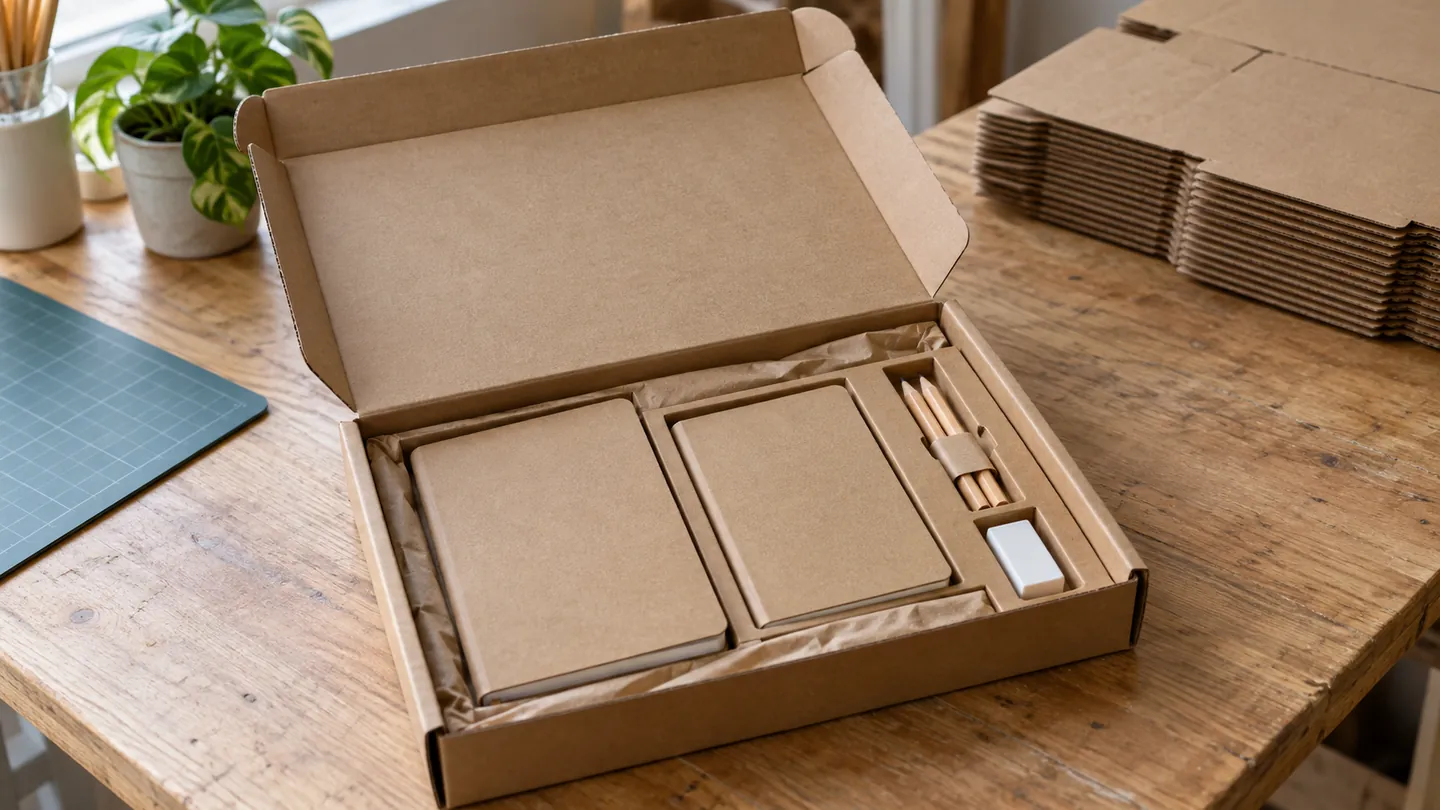
Your next box release is approaching. The subscriber report, supplier deliveries and packing instructions show different quantities, and a last-minute change has arrived after preparation started. You need to decide which boxes can leave, which need a correction and who can approve the remaining work. Subscription box fulfillment is the physical work of preparing and shipping products for recurring customer deliveries.
The handoff brief needs to make those open decisions visible. A workable release connects the boxes due now with their approved contents, usable materials and authorized changes, then accounts for what was prepared, held and handed over.
What does subscription box fulfillment involve?
It involves preparing the products and packaging for the deliveries due under your recurring program, through to the agreed shipping handoff. Place that work within the wider order fulfillment process so the seller, physical operator and carrier understand their responsibilities. The subscription plan supplies instructions; the physical brief needs to identify the boxes those instructions require. Recurring coffee orders from a roaster work differently: the roaster produces, packs and ships each order, so freshness should be managed as a visible order timeline rather than accepted as a supplier adjective.
Where does the physical work start and end?
Confirm whether the contents repeat, change between cycles or include customer-specific choices. Also identify the schedule you are working to: a shared release window or deliveries due on individual dates. A useful brief makes three responsibilities clear:
- The seller confirms the due work, customer choices and permitted exceptions.
- The operator accepts the agreed materials, assembly and packing instructions.
- The shipping arrangement identifies the handoff and the evidence returned.
Name who supplies each input before preparation begins. For example, an operator receiving a box specification still needs the seller's decision about which current customers receive that version. Keep plan management and physical preparation connected through identifiable instructions. Key takeaway: Define the physical assignment and its required seller inputs before committing the next release.
Which boxes are due in the current cycle?
Build the current cycle's shipment list from the fulfillments due now, and distinguish changes to existing orders from changes to future subscription contracts. An active subscriber count is a planning input; check the actual due work before turning it into a packing quantity.
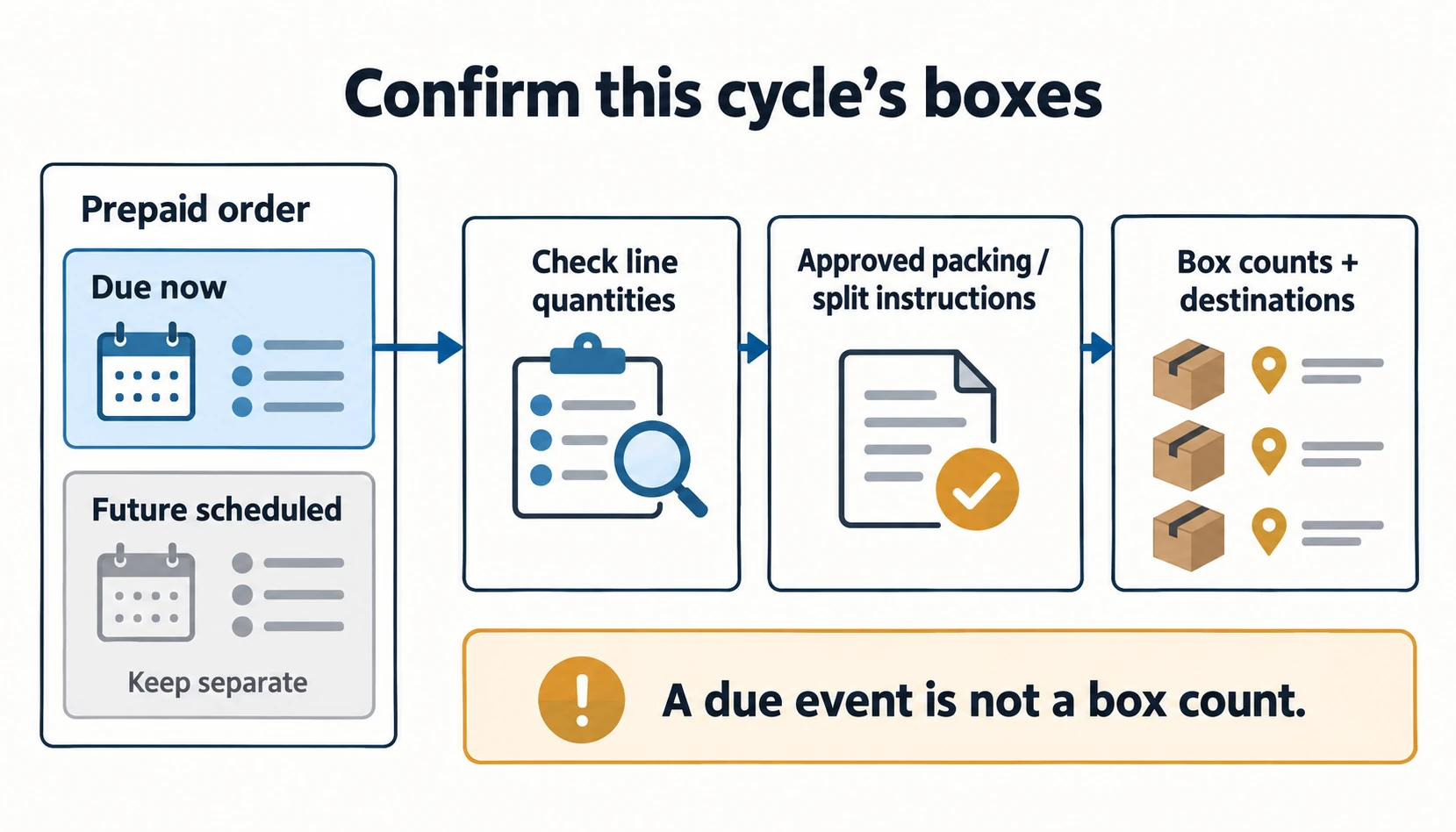
How should you read a prepaid order?
On Shopify, a prepaid subscription order can have multiple scheduled fulfillments under one order. For prepaid Shopify subscription orders, the status changes from Scheduled to Unfulfilled when a fulfillment date is reached. Shopify reserves inventory for each prepaid subscription cycle when its fulfillment date is reached, rather than reserving all cycles when the order is created. Check the physical kit components separately before authorizing preparation.
Confirm the physical units for this cycle
Confirm the physical box count and destination from due line quantities and the agreed packing or split instructions before handing over the cycle roster. The quantity needs a clear unit. Make the handover identify:
- The cycle and fulfillment records included, with their due quantities.
- The physical boxes and destinations required by the approved packing instructions.
- Excluded or held work, its reason and the person confirming the next decision.
An order header or a due event should not become a one-box assumption. Review quantities against the actual instructions, including any approved split, before using the list to calculate material needs. Key takeaway: Give purchasing and packing the same confirmed box list for this cycle.
Which configuration should each group of boxes follow?
Each group should follow the contents and packing version approved for that cycle. Here, a group means boxes sharing the same instructions; identify customer-specific additions separately. Describe a configuration through its products, quantities, materials and arrangement so the person assembling it can follow the intended version.
Which sample box are you approving?
Approve the physical sample box for its contents, cushioning and closure, and record the approved configuration before repeating it for the cycle. USPS advises protecting fragile items individually, filling empty spaces and reinforcing the closed box with packing tape. Its official packing demonstration explains those physical preparation steps.
- Match the products, quantities and additions to the approved version.
- Check the arrangement, protection and closure with the actual materials.
- Record the reference that the current packing instructions must follow.
Where a China-side project includes branded materials, connect approved private-label packaging and inserts to that reference. Identify which version is authorized for the current boxes, including what to do if the specified material is unavailable.
A public example of tailored subscription boxes
In its Form 10-K for the fiscal year ended March 31, 2026, BARK described monthly themed subscriptions tailored to a dog's size and play style. BARK said third-party logistics providers supporting its domestic operations handled receipt, warehousing, assembly, certain limited product inspections and outbound shipping coordination. It also said it placed manufacturer orders before receiving firm customer orders, using sell-through, demand forecasts and product ratings to manage inventory.
Key takeaway: Give the operator an approved configuration reference for each current group and its additions.
Are the components ready for every due box?
Compare the requirements for the confirmed boxes with the usable products and packaging available for this cycle. Keep the quantities in the same units and versions. A receipt expected later remains a dependency to resolve before approving work that needs it.
Match component demand to usable stock
For a kit sold under one SKU, list the physical components and quantity per box before calculating the cycle's stock requirement. For each component, multiply the boxes in each approved configuration by the pieces required per box, then add those requirements. Keep the full calculation tied to the same cycle's box list.
- Use the quantity confirmed as usable for this work.
- Show held material and expected receipts separately.
- Include the approved boxes, inserts and protective materials.
- Identify the affected group, any approved fallback or hold rule, and the decision owner for an unresolved shortage.
When a component is short, ask the seller to authorize the allocation or hold decision instead of substituting products or splitting a box without approval. If readiness depends on a recent delivery, resolve warehouse checks that make received stock available before assigning those units. Key takeaway: A shortage decision needs an affected group, an authorized action and a confirmed material quantity.
How should late changes reach the boxes being prepared?
Before implementing a late change in a cycle, identify the affected boxes, current physical status and seller approval, then confirm which records and work must be revised. Check the stage reached by the actual boxes before promising that an instruction can still be applied.
Check the current order and future contract separately
Editing a Shopify subscription order does not modify its subscription contract; use the subscription management app to update future fulfillments. Keep the requested current-cycle action identifiable while checking which changes the actual platform and physical arrangement permit.
- Identify the affected recipient, box group and instruction version.
- Check whether preparation or handoff has already occurred.
- Name who approves the change and who confirms its implementation.
- Record what was revised and what still needs a decision.
If the change affects whether one recipient's supplier items travel together, confirm the hold or split plan for a consolidated order alongside the revised instruction. A message sent to a partner is a request; obtain confirmation of the resulting work. Key takeaway: Close a change with a confirmed physical action and the correct record, or retain its unresolved status.
How do you account for every box in the cycle?
Reconcile the cycle at one snapshot using mutually exclusive box statuses, and show component consumption separately from box counts. Each box belongs in one current status column; use the same original box list when comparing the seller's list with the operator's results.
For the constructed example below, assume all other contents and packaging are available, with no splits, cancellations, losses, returns or rework in the snapshot. The seller authorizes preparing the standard boxes first.

Reconcile one clearly defined snapshot
In this constructed example, 80 standard boxes using one pouch each and 40 plus boxes using two require 160 pouches. With 152 usable pouches and the seller's stated allocation, 80 standard boxes and 36 plus boxes can be built, leaving four plus boxes waiting for eight pouches. At this illustrative snapshot, 120 due boxes equal 110 carrier-accepted boxes, six packed boxes awaiting handoff and four held boxes; the 116 built boxes are already included in the first two groups.
| Box group | Due boxes | Carrier accepted | Packed, awaiting handoff | Held |
|---|---|---|---|---|
| Standard | 80 | 80 | 0 | 0 |
| Plus | 40 | 30 | 6 | 4 |
| Total | 120 | 110 | 6 | 4 |
In this example, the 116 built boxes use all 152 available pouches, leaving none remaining. Read the table by group: the outstanding material decision affects the held plus boxes, while the packed boxes still need a confirmed handoff.
Which record proves the carrier handoff?
Agree what evidence counts as carrier receipt, and keep packed boxes separate from carrier-accepted boxes in the cycle reconciliation. USPS distinguishes a label-created status from “USPS in Possession of Item,” which means it has received or picked up the package. USPS also describes a received container or pallet whose individual packages are still awaiting acceptance processing.
- Record the receipt or status used for the count and what it covers.
- Keep unresolved handoff evidence visible for follow-up.
Key takeaway: Reconcile dispatch against the agreed evidence; an ambiguous parcel record still needs resolution.
What must a fulfillment partner confirm for your cycle?
Ask a proposed partner to confirm how it will receive your actual cycle instructions and return the agreed box-status and component records before committing the program. Use the requirements already defined for your boxes when discussing the proposed arrangement.
Check the handover against your actual program
Bring a representative cycle brief to that discussion. Ask the partner to explain how its proposed process would handle the actual configurations and exceptions, and agree the scope of any demonstration before committing work.
- Confirm the input format, transfer method and approval contact.
- Specify the box-status and material records you expect back.
- Match the quote to the configurations, quantities and included handling.
- Clarify how changes, rework and unresolved material constraints affect the quoted work.
For a program requiring China-side execution, discuss whether China-side pick, pack and shipping support fits the proposed assignment and returned records. Key takeaway: Obtain a specific confirmation for your recurring program before treating a broad service description as an accepted operating arrangement.
Conclusion
Before the next release, bring together the due physical-box list, approved contents, usable materials, authorized changes and handoff records. Review the unresolved items with the person able to approve each decision, then use the same cycle reference when checking the results.
As a Private Dropshipping Agent, RuntoDropship can discuss China-side sourcing and physical fulfillment for a subscription-box project. Share the box specification, current quantities and outstanding constraints with our China dropshipping agent for recurring-box sellers. Clear responsibilities and confirmed physical requirements guide the work we agree with a seller.
FAQ
What customs details should accompany a mixed-product box?
Use the actual contents and the documentation required for the shipment’s origin, destination and service. Recheck those requirements when the box contents change. For international parcels sent from the United States through USPS, its customs guidance requires detailed descriptions and a separate value for each item.
How should I record a one-off replacement after delivery?
Keep an agreed one-off replacement in its own record, linked to the original shipment. Record the approved item, quantity, reason and actual charge, and confirm any change to a future subscription separately.
What if tracking says delivered but a subscriber has no box?
For a USPS parcel marked Delivered, check the recorded delivery location and ask the recipient to check likely safe locations and other household members. If it is still missing, follow USPS’s current service-request eligibility and timing guidance before agreeing the remedy.
What should I agree before reshipping a returned box?
Before approving another delivery attempt, confirm the return reason, the box’s condition, the corrected address and the agreed terms for sending it again. For USPS parcels returned for Insufficient Address or No Such Number, USPS says to confirm that the delivery address is correct, complete and legible.
Can I leave prices out of a gift box’s packing slip?
Request a recipient-facing gift packing slip without prices, and preview an actual order before approving it. Shopify supports customized packing-slip templates and previews using a selected order. Keep buyer payment records and any required customs information accurate.