
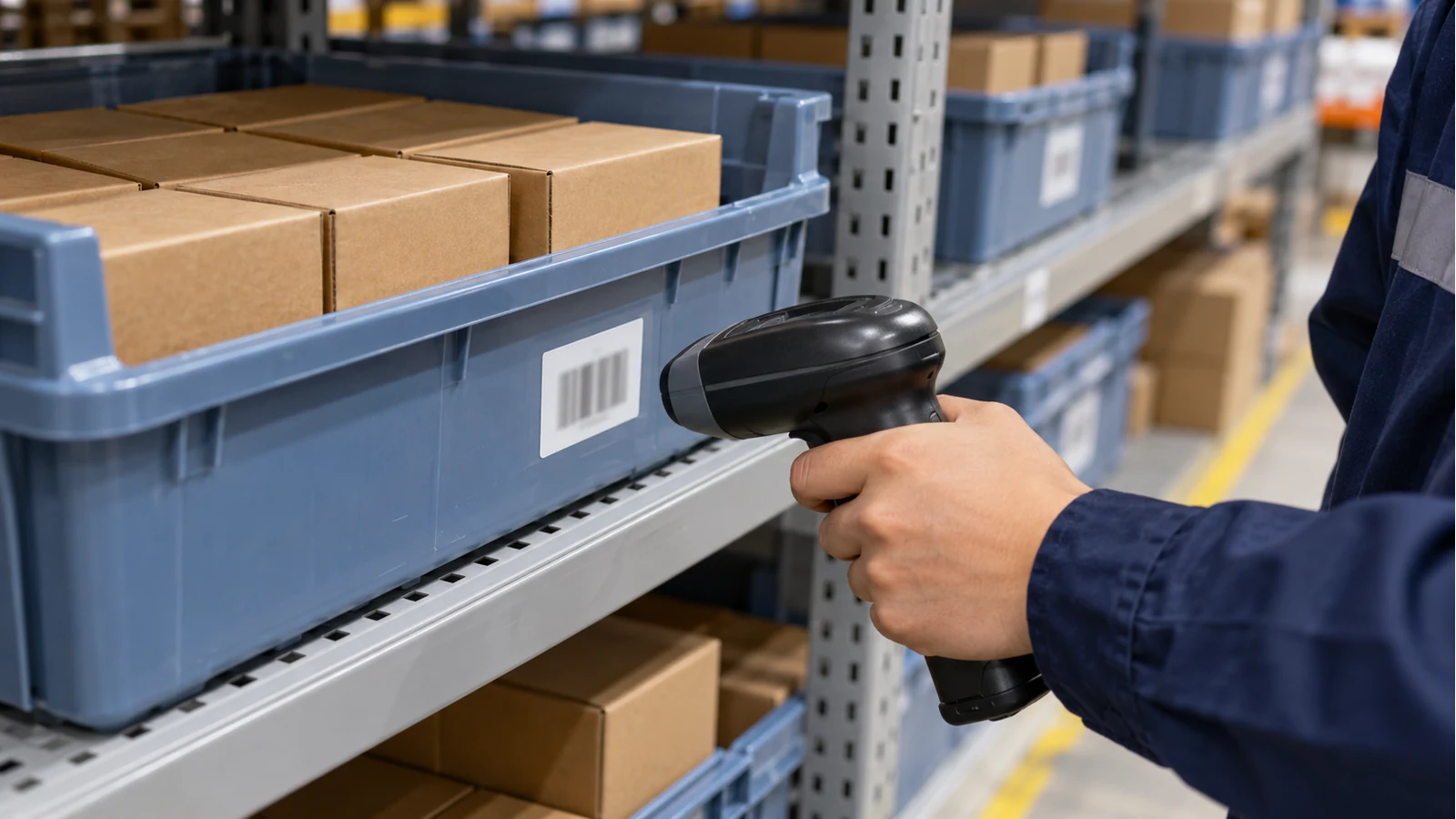
A paid order already has a shipping label. The customer asks where the parcel is, and your team has to establish whether it is packed, handed over or moving with the carrier. An unsupported answer can turn a routine inquiry into another promise you need to correct. Order fulfillment connects the inventory, preparation and delivery work behind that purchase, including agreed handling when goods come back. A workable process gives each stage an owner and evidence you can check before updating the customer.
What does order fulfillment include?
Order fulfillment moves a customer’s purchase through inventory handling, picking, packing and delivery, with returns work when needed. Shipping covers the transport portion of the fulfillment cycle. Fulfillment also sits within the wider supply chain, which includes how products are sourced and made available for sale.
Set the boundaries of the work
For a physical-goods business, the scope discussion starts with what must be ready for an order and ends with the agreed delivery and return work. Product procurement, stock readiness and the customer-facing return policy are connected, but a provider’s involvement in each needs to be specified. A parcel-shipping arrangement, for example, should not be read as an agreement to purchase products or decide customer remedies.
Your workflow can show the supplier’s preparation, the warehouse’s handling and the carrier’s transport without assigning all three to one company. This also leaves room for products that require purchasing or production after an order arrives.
How does an order move from checkout to delivery?
A typical stock-based flow receives and stores inventory, receives the order, picks and packs the items, ships the parcel and processes any return. After receiving the order, allocation assigns available stock to it; picking selects the required items, and packing prepares them for transport. A purchase-to-order or made-to-order arrangement needs its purchasing or production stage shown before goods are ready for dispatch.
Match each milestone to its evidence
A shipping label alone does not prove that the carrier is moving the parcel. A store’s Fulfilled status can precede customer delivery. The official carrier tracking definitions distinguish information received from the sender from a shipment received and moving in the network. Status wording and update timing depend on the actual carrier and store settings.
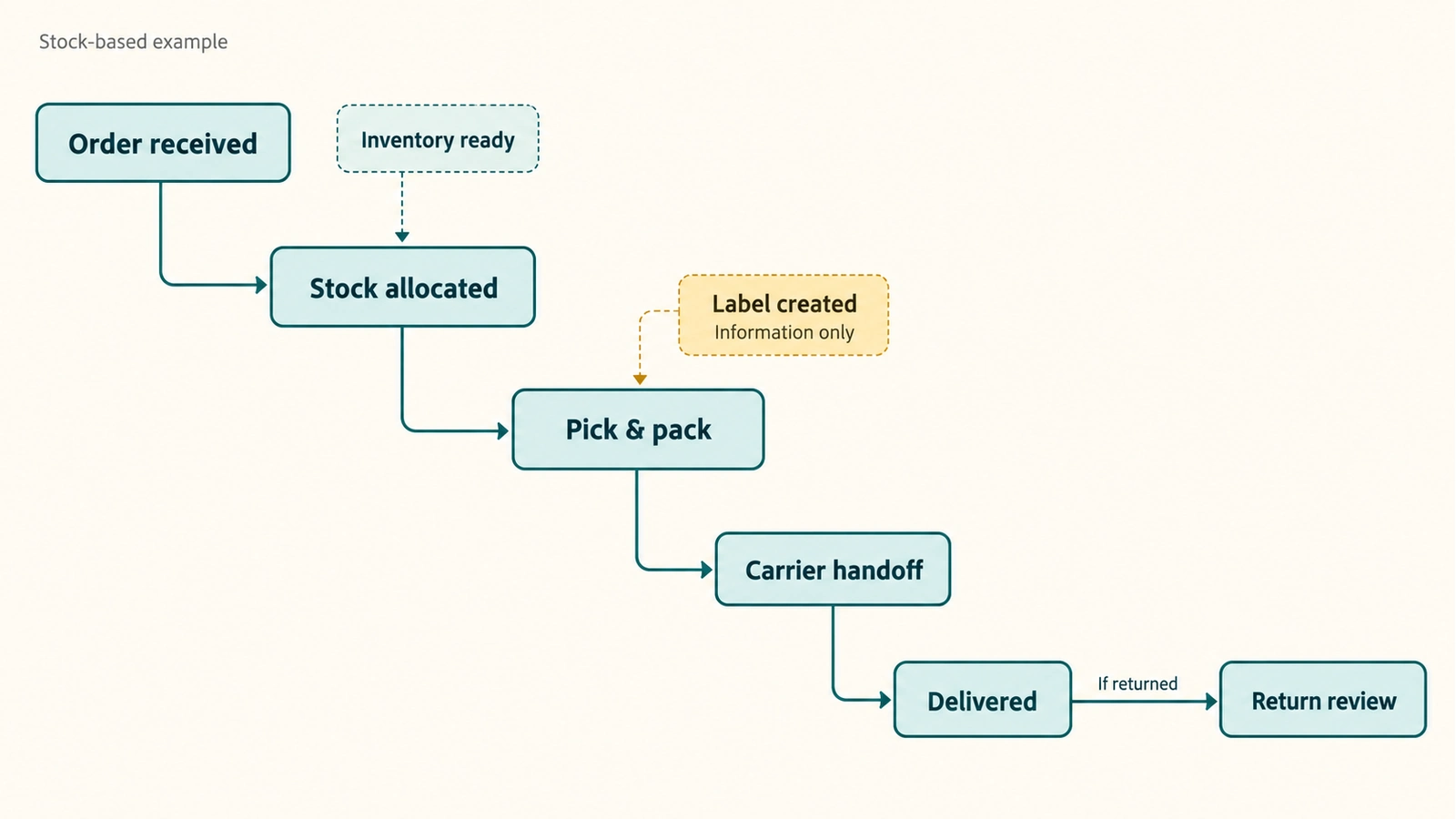
The sequence gives you separate questions to resolve: was stock assigned, was the parcel prepared, and what confirms the carrier stage? A packing record concerns preparation; a carrier movement record concerns transport. A first scan is useful evidence, but its timestamp should not automatically be treated as the precise moment of physical handoff.
Who is responsible at each fulfillment handoff?
Responsibility needs to be agreed between the seller, the party doing the physical work and the carrier. For each handoff, name who completes the task, what evidence confirms it and who handles an exception. A third-party logistics provider, commonly called a 3PL, is one possible operator; the merchant buying its services and the customer receiving the parcel are different parties.
Compare the responsibility split
This comparison describes typical arrangements. The final column contains decisions to assign explicitly in the agreement, rather than a universal legal allocation.
| Arrangement | Typical physical work | Decisions to confirm with the merchant |
|---|---|---|
| Self-fulfillment | In-house fulfillment uses the seller’s team to manage stock and prepare shipments. | Who purchases stock, releases held orders and resolves customer issues? |
| Stocked-inventory 3PL | A 3PL stores inventory and performs agreed fulfillment work on the seller’s behalf. | What inventory is supplied, which work is included and who approves exceptions? |
| Dropshipping | In dropshipping, the seller passes an order to a supplier that ships directly to the customer. | Which products and suppliers are approved, and who authorizes a remedy when something goes wrong? |
The agreement still needs named people for the retained decisions, even when another business executes the warehouse work.
Which fulfillment model fits your products and orders?
The suitable model is the one that can perform the required product work for your destinations with resources you can commit. Product size, handling requirements and customer locations affect the choice of fulfillment model. Choose the model by product needs, customer locations and available resources, then compare the actual scope of work.
Decide at product and order level
For self-fulfillment, the evaluation concerns your own people, storage and ability to prepare the required orders. For stocked inventory held by a partner, it concerns the work you want to outsource and the stock you will make available there. The guide to evaluating a 3PL provides a more detailed route for that outsourcing decision. If the work also involves China-side product sourcing and coordinated execution, evaluate the relevant dropshipping fulfillment arrangement against those specific needs.
A hybrid setup combines fulfillment methods and can use different methods for items in the same order. That makes product-level fit useful, while requiring the actual systems and operators to support the chosen arrangement. An official platform tutorial demonstrates self-fulfillment order checks, packing and label preparation for sellers assessing which work they would handle themselves.
What must be ready before an order is released?
Order release depends on usable stock and accurate customer and order information. Release an order only after stock availability, the required checks and the delivery details have been confirmed. These conditions need to match the product and arrangement; a made-to-order workflow needs readiness criteria appropriate to its production stage.
Check stock and the required release conditions
Inbound quality checks and order-accuracy checks address different risks. Checking received goods concerns their agreed condition or specification; checking the picked order concerns whether the intended items and quantities are being prepared. Quality control, or QC, therefore needs a defined scope suited to the product, rather than an assumption that every check covers every possible problem. An agreed release checklist can record:
- Available, usable stock for the exact item or SKU, the stock-keeping unit used to identify it.
- The ordered variant and quantity, together with the required packing instructions.
- Completion of the product and order checks that apply to this shipment.
- Complete delivery data and a named person who can resolve a hold.
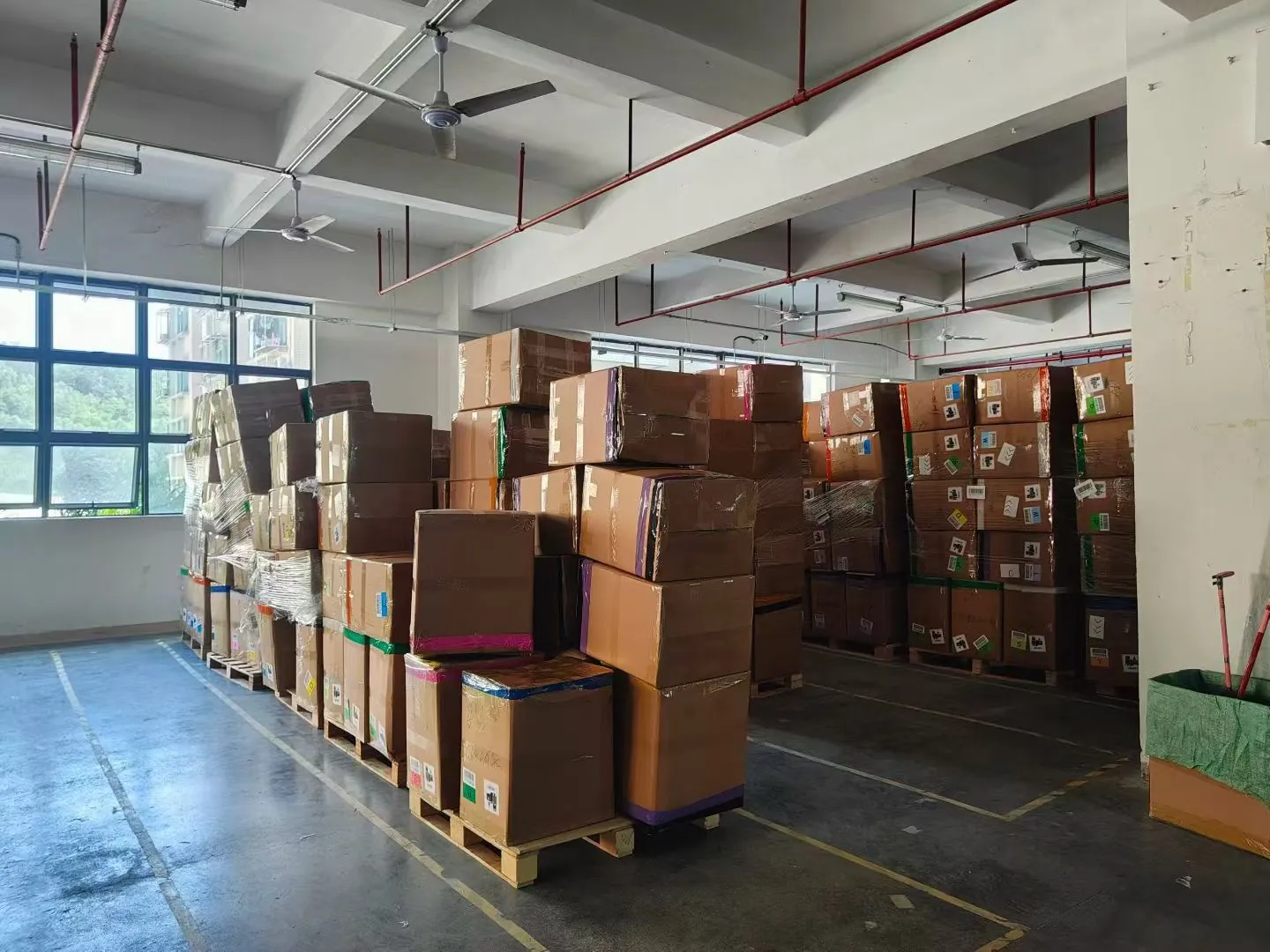
The storage photograph illustrates palletized cartons. For an individual order, release still depends on the relevant stock and check records; a warehouse scene cannot establish that a particular item is available or ready to ship. A hold should remain visible until its agreed release condition is satisfied.
How should you compare the full cost of fulfillment?
Compare costs using the same product, destination, package and service assumptions, allowing for handling, returns and other exceptions. A useful comparison describes both the work included and the work left for your team. Otherwise, a narrow parcel price and a broader operating proposal answer different questions.
Compare the same work and shipment assumptions
For an in-house scenario, the calculation can include the relevant staff time, storage space, packing materials and transport. For a partner proposal, it can include the applicable receiving, storage, order handling, packaging, shipping and return work. Each arrangement needs its actual included and separately charged items identified; not every proposal will use every category.
Use a representative order profile with the same product, packed parcel and destination assumptions on each side. The comparison also needs your chosen assumptions for work outside a routine order, such as an inspection or return. Keep those assumptions visible so a quoted total can be traced to the work it covers.
How can you spot and correct fulfillment failures?
Spot failures by comparing defined order events with their agreed deadlines, then assigning the mismatch to someone who can investigate it. Track order-to-handoff time separately from carrier transit and total delivery time. For the clocks used here, fulfillment time runs from the customer’s order to carrier handoff; transit time runs from carrier collection to delivery. Total delivery time includes fulfillment time as well as carrier transit time.
Define the measure before judging the result
These boundaries follow the official fulfillment terminology used for this explanation; a dashboard may use different events. A first-scan-to-delivery metric leaves out the customer’s wait before that scan. Any comparison therefore needs the actual timestamps, time zone and reporting period, rather than a label such as “fast fulfillment” with no defined clock.
Define an on-time handoff measure as orders handed over by their agreed deadline divided by all orders due for handoff in the same reporting period. For this measure, state how holds, cancellations and partial orders are counted, and apply that rule consistently across the period. A held order must not disappear from the denominator merely because it is difficult. This is a defined management measure for the decision, with no implied industry benchmark or delivery-performance result.
Give each exception an owner and a next action
For an order still waiting on allocation, the stock owner can check the available quantity and the unresolved hold. For a wrong item or quantity, the order-preparation owner can compare the order record with the picking and packing evidence. The next action should identify the mismatch to resolve and the person responsible for confirming the result.
When tracking has not moved, check the carrier record before telling the customer the parcel is in transit. The person investigating needs the relevant preparation and handoff evidence as well as the carrier record. An absent scan alone does not establish that a parcel is lost or explain the cause of the delay; the customer update should reflect what has been confirmed and what is still being checked.
What happens when customers return an order?
Returns can involve separate approval, inspection, inventory and refund tasks. A fulfillment provider can inspect returns under the seller’s rules while the seller decides refunds, replacements and stock disposition. The actual arrangement needs to identify which decisions the provider can make and which need the merchant’s approval.
Agree inspection and disposition rules
Agree return-inspection and disposition rules before returned goods are treated as sellable stock. Disposition means the agreed next step for the item after inspection, such as returning an acceptable item to sale or holding it for a decision. For outsourced handling, the returns management service scope should be checked against the inspection information and decisions your business needs. A parcel’s arrival or a refund record alone cannot establish the product’s sellable condition.
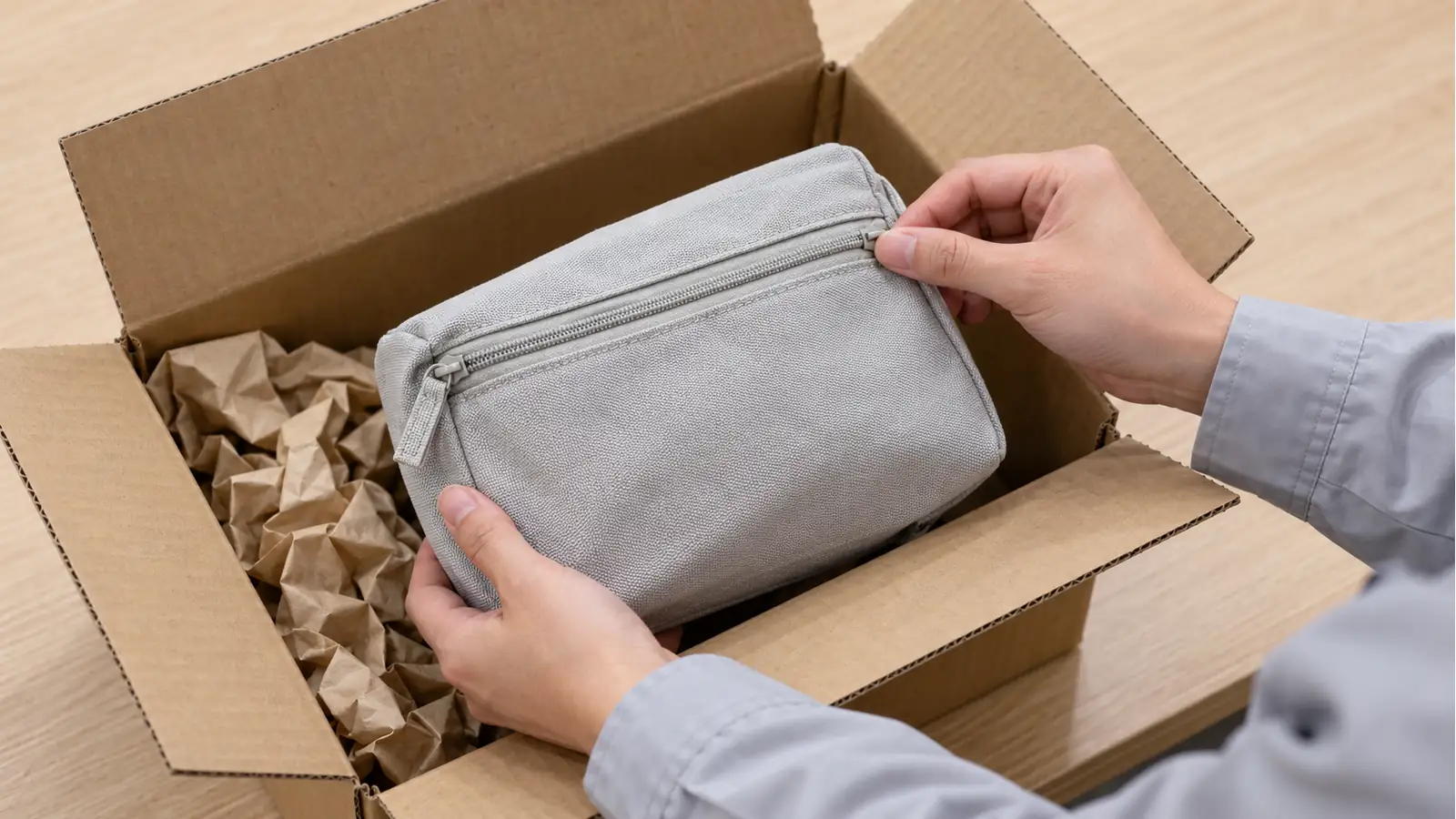
The illustration focuses on the condition check. Record the actual item received, its observed condition and the action authorized under your rules. That record connects the physical return to the merchant’s stock and customer decisions without assuming an automatic outcome.
Conclusion
A workable fulfillment arrangement connects each order to the required stock, physical work, event evidence and decision owner. It also gives you a basis for choosing between your own operation, a stocked-inventory partner, supplier dispatch or a combination that fits individual products. RuntoDropship is a Private Dropshipping Agent serving ecommerce sellers. RuntoDropship can coordinate product sourcing, QC, inventory, order fulfillment, international shipping and tracking.
Its service scope can also include branded packaging and returns support, with the arrangement confirmed for the product and destination. Our position is to put clear operating standards before promises of speed. To assess that fit, share your product details, order profile, customer destinations and the work you need covered with our China dropshipping agent for repeat-order stores. The next discussion can then focus on the responsibilities and release conditions your proposed arrangement requires. Recurring programs add another layer: for subscription box orders, confirm which boxes are due in the current cycle and their approved contents before preparation starts.
FAQ
Can I choose where returned stock is recorded?
Some systems let you choose a restock location while processing a return. Confirm that your platform and integration support the location you intend to use before recording stock. Agree separately where the parcel will physically go and who will receive it. Treat the software record and the physical return arrangement as separate checks.
Can I change an address after fulfillment starts?
Confirm the shipping stage with the fulfillment partner before promising an address change. Changing a label can require voiding and replacing it, while canceling accepted fulfillment can require the provider’s response. Check the conditions before making either change. For a shipped parcel, ask the carrier what corrections remain possible.
How do I check shipping charges added after label purchase?
A carrier can add a charge or credit after verifying a shipment’s details. Match the adjustment to the order and parcel, then compare the stated reason with the recorded weight, dimensions and service. Review the relevant billing entry and retain supporting measurements or photos before disputing a charge you believe is incorrect.
What should I tell customers when an order has several parcels?
Tell them which items are in each parcel, which items are still waiting, and how to track every shipment. Some storefronts support separate status sections for partial fulfillments. Check that the fulfillment connection sends every parcel record, then test the customer notification instead of assuming one tracking number represents the whole order. On WooCommerce, item-level fulfillment records can tie each split parcel to its tracking details where the feature is enabled, so check which WooCommerce shipment records your installed version supports.
Can a customer’s gift message appear on the packing slip?
It can, if the captured message reaches a supported packing-slip field. Gift-data support varies between integrations. Check the field mapping and print a sample gift order before launch. Confirm that the message appears on the document the packer actually uses, rather than relying on its presence in the store admin.