
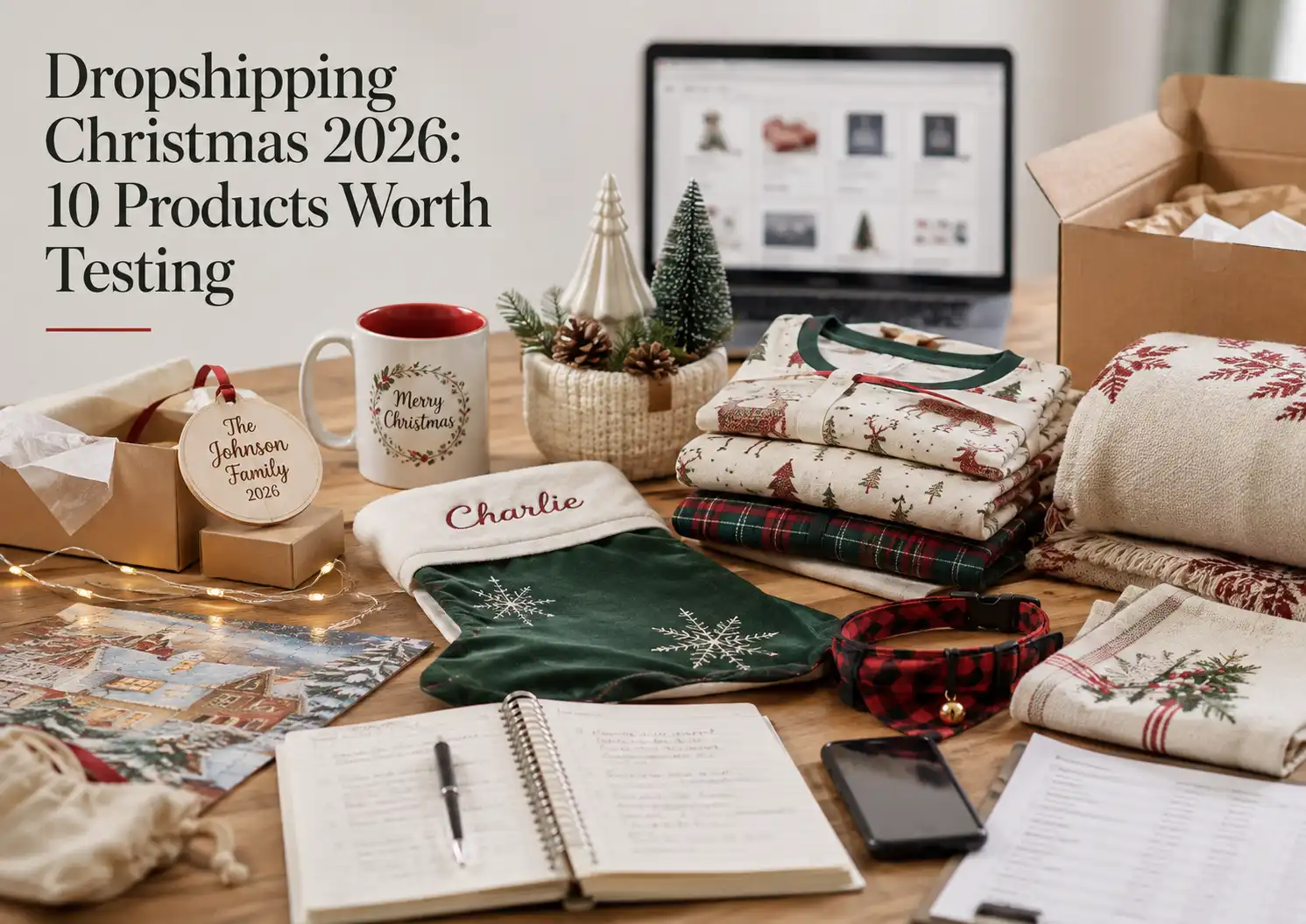
For most sellers, dropshipping Christmas works best as a controlled seasonal campaign, not a last-minute store full of random festive products. Start with a small group of giftable items, test the product and delivery path early, set an honest order cutoff, and stop promising Christmas arrival when your evidence no longer supports it.
The opportunity is real because people are actively buying gifts, decorations, party supplies, and small personal treats. The difficulty is that the selling window is short. A product can attract clicks and still become a bad offer if stock changes, personalization takes too long, or the parcel arrives after the celebration.
Dropshipping Christmas: Product Ideas Worth Testing
The strongest product ideas are easy to understand as gifts, simple to show in photos or short videos, and practical to ship. Use the directions below as a shortlist for testing, not as proof that any individual item will sell in your market.
For a first shortlist, test Personalized ornaments when the recipient and custom message are the offer, or LED string lights when a specific decorating use case and visual effect are the offer.
Personalized ornaments
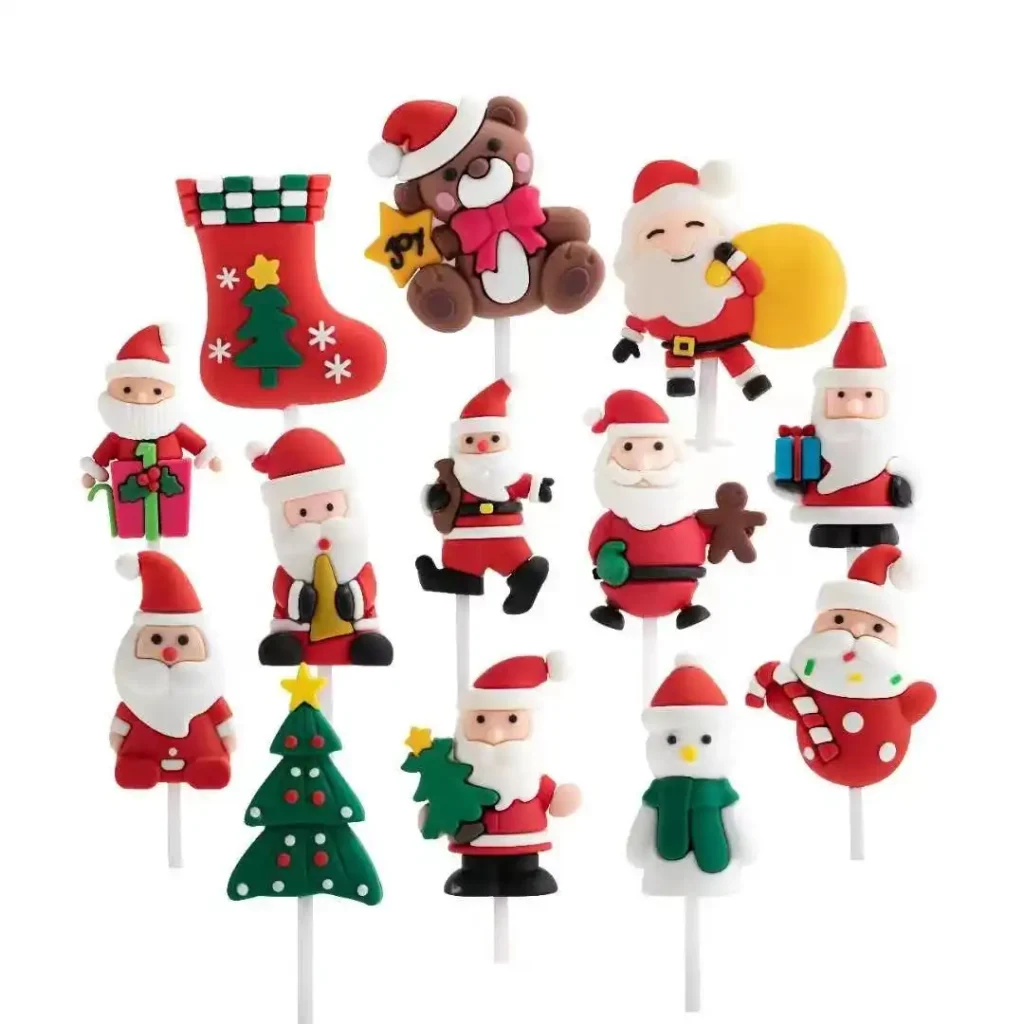
Personalized ornaments fit couples, new parents, pet owners, new homeowners, and families marking a milestone. Their clear recipient and occasion make the offer more specific than a generic box of decorations.
The limitation is production time: one wrong name or late order can make the item unusable as a gift. Before listing it, submit a difficult sample with a long name, inspect the print or engraving, and confirm the last time an order can still be edited.
LED string lights

LED string lights serve customers decorating bedrooms, windows, trees, party spaces, and small apartments. A distinctive shape, color effect, or use case can give the product a clearer reason to exist than a basic light set already sold by major retailers.
Electrical products need more checking than ordinary fabric decor. Order the exact model, test its controls and included parts, inspect the plug, voltage, battery information, instructions, and model identification, and verify the requirements of each destination market. For US sales, review the CPSC guidance for seasonal and decorative lighting products rather than treating a generic supplier certificate as proof for the exact SKU.
When the campaign includes lights or other powered items, a consumer electronics dropshipping workflow can help structure model, plug, accessory, basic-function, version, and packing checks before dispatch.
Ready-made decor bundles
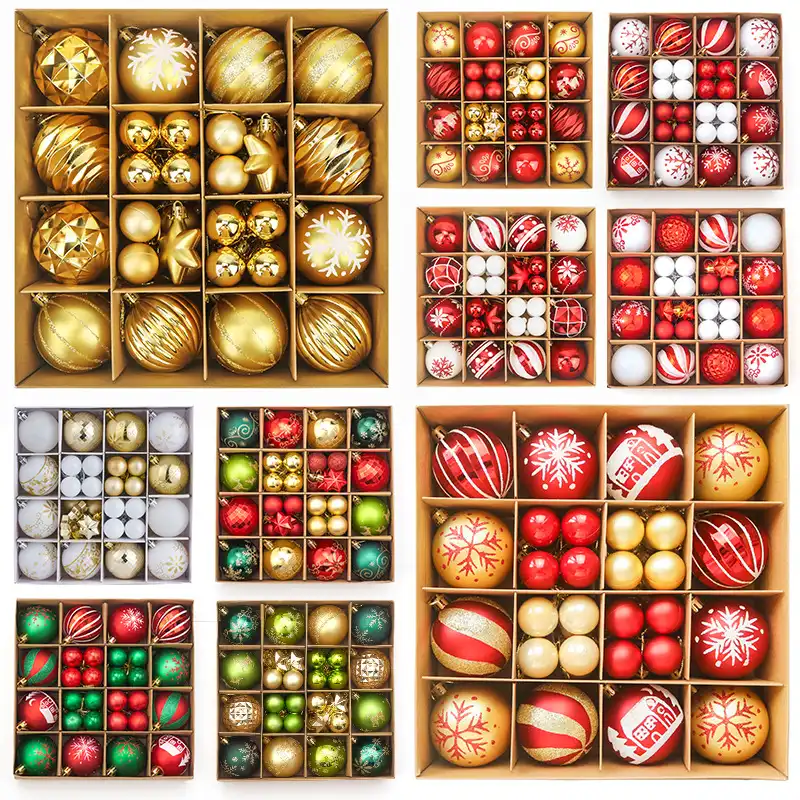
A decor bundle helps a buyer complete one job, such as dressing a small tree, preparing a dining table, or decorating a first apartment. It is most useful when every item follows one style and the set saves the customer from choosing pieces separately.
Bundles also create more ways for an order to fail because one missing component can hold up the whole set. Ask the supplier to pack and photograph one complete sample, then check the box size, item count, breakage risk, and replacement plan for a missing piece.
Tree skirts and stockings
Tree skirts and stockings are familiar, lightweight seasonal products that can work for families, new homeowners, and buyers refreshing existing decor. A clear size, material, and style choice makes them easier to compare than novelty products with no practical use.
Size confusion and thin material can cause disappointment. Measure a sample yourself, show the dimensions in context, test the stitching and print, and make sure the supplier does not silently substitute a different fabric or shade.
Personalized mugs
Personalized mugs can target coworkers, teachers, relatives, pet owners, or small group gifts. They work best when the design is tied to a specific recipient rather than using a generic Christmas slogan.
Ceramic products can arrive chipped, and custom text can be misaligned or misspelled. Send a sample through the normal delivery route, inspect the print after washing, and check how the mug is held inside the parcel before approving the offer.
Matching family pajamas

Matching pajamas serve family photos, Christmas morning, group gifts, and holiday gatherings. They can support a higher-value multi-item order because the buyer often needs several sizes at once.
The main risks are sizing, color consistency, and incomplete sets. Order more than one size, compare the measurements with the supplier chart, check whether every size uses the same fabric and print, and decide what happens if one family member’s size is unavailable.
For an offer containing several adult and children’s sizes, an apparel dropshipping workflow can help structure size, color, fabric, label, variant, and packing checks before the campaign scales.
Pet holiday accessories
Pet bandanas, bow ties, soft hats, and simple photo accessories appeal to owners who include pets in family celebrations. Small accessories are usually easier to ship than bulky pet beds or rigid costumes.
Fit and safety still matter. Avoid items that restrict movement or rely on unclear sizing, test the closure and material on a sample, and publish measurements that a customer can check against the pet rather than relying only on labels such as small or large.
Holiday kitchen textiles
Aprons, oven mitts, tea towels, and placemats fit home bakers, hosts, and practical gift buyers. They can be grouped around a visible use case such as cookie baking or a holiday dinner instead of sold as unrelated kitchen items.
Printed color, heat resistance, fabric weight, and washing performance can vary. Test the exact item for its intended use, review the care label, and remove any performance claim that the supplier cannot support for that product.
Throw blankets and pillow covers
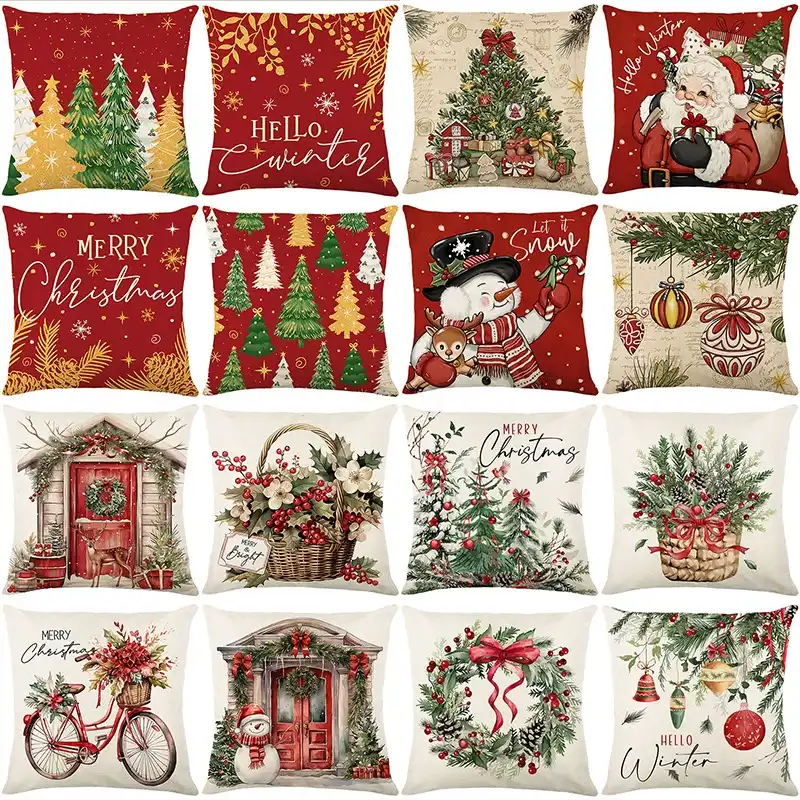
Soft home textiles can serve gift buyers who want a cozy, useful product that still feels seasonal. Pillow covers are usually easier to ship than filled pillows, while blankets can support a higher perceived value if the material feels good in person.
Product photos can hide thin fabric, weak stitching, or color differences. Order the exact size and material, weigh and measure it, wash it once, and photograph it in normal room light before deciding whether the supplier’s listing matches reality.
Puzzles and simple craft kits
Puzzles and craft kits can target families, classrooms, party hosts, and buyers looking for an activity rather than another decoration. The product has a clear job: give people something to do together during the holiday period.
Missing pieces, unclear instructions, or age-inappropriate parts can make the whole item unusable. Complete the sample yourself, count the contents, read the instructions as a customer would, and confirm that the age guidance and product information are suitable for your selling market.
These ten directions are deliberately different in recipient, use case, shipping profile, and failure risk. If you need a wider idea pool before narrowing the test, use a structured dropshipping product-idea process and keep the final Christmas collection focused on one customer and one buying occasion.
Before you spend money on samples or promotion, compare the product terms by target country and across several Christmas seasons. Google Trends can help you identify whether interest is recurring, regional, or concentrated within a narrow buying window.
Choose Products With a Holiday-Safe Scorecard
A Christmas product should pass the same six checks before you spend heavily on ads: buyer clarity, gift appeal, landed cost, delivery confidence, return risk, and life after the season. A trend signal alone is not enough.
Start with the broader profitable dropshipping products framework to compare demand, parcel risk, and complete-order economics. Then apply six Christmas-specific checks before spending heavily on ads: buyer clarity, gift appeal, complete order cost, delivery confidence, return risk, and life after the season.
| Check | What to write down | Stop signal |
|---|---|---|
| Buyer and occasion | Who receives it and why now | The answer is simply everyone |
| Offer difference | Why this version is worth choosing | It is identical to common local options |
| Complete order cost | Product, packing, shipping, payment, support, and expected problem allowance | The normal order has no workable contribution |
| Delivery confidence | Processing, personalization, route, and cutoff evidence | The date depends on an untested estimate |
| Return and damage risk | Likely reason for a complaint and response plan | One failure consumes several normal orders’ contribution |
| Post-season use | Evergreen angle, repeat occasion, or planned stop | The product has no purpose after the peak and no exit plan |
Use a simple contribution calculation for each normal order:
Order contribution = selling price – product cost – packaging – shipping – payment cost – promotion cost – expected support, replacement, and refund allowance.
Run the calculation for a normal order, a multi-item order, and a delayed or replaced order. If the offer works only when every parcel is perfect and every ad is cheap, it is not ready for a seasonal rush.
Key Takeaway: Shortlist products that still make sense after you include the cost and risk of a complete customer order. Reject anything that depends on a vague audience, an untested delivery estimate, or a perfect-order assumption.
Build the Campaign Backward From the Customer’s Date
Your Christmas timeline should begin with the date the customer needs the item, then move backward through delivery, dispatch, processing, sampling, and testing. Do not copy another store’s cutoff because supplier location, product preparation, destination, and shipping service can all change the answer.
Early preparation also reflects how customers shop. The National Retail Federation reports that approximately two in five holiday shoppers begin browsing and buying before November, although many continue shopping in December. This does not set a universal launch date, but it shows why product, supplier, and route testing should be completed before the peak buying window.
Before promotion
Start by ordering the exact product and package you plan to sell. Approve the product only after you have checked its visible quality, dimensions, included parts, packaging, tracking path, and delivery result.
Prepare the product page, customer messages, backup item, and stop rule before increasing promotion. If the product depends on names, prints, or bundled components, include that extra preparation time in the plan.
During the selling window
Watch actual processing time, stock changes, tracking starts, damaged orders, and customer questions every day. Replace estimates with your own order evidence as soon as it becomes available.
Use written Shopify dropshipping inventory management rules to define when a low-stock, uncertain, substituted, or unavailable variant is slowed, paused, or removed instead of allowing promotion to continue while the supplier confirms availability.
Scale only the product, audience, and creative combination that is producing usable orders and a repeatable backend result. A high click rate does not rescue an offer that is creating late parcels or support pressure.
Near the cutoff
Change the message as delivery confidence changes. Remove Christmas-arrival language first, then pause the product if the remaining offer no longer makes sense without the date.
The detailed route, backup, and communication work deserves its own Q4 logistics plan. Use that plan when your collection involves several destinations, suppliers, or shipping services.
Key Takeaway: Set the customer promise from tested processing and delivery evidence, then move the cutoff earlier when the evidence weakens. A truthful stop is safer than taking one more order with a date you cannot support.
Verify the Supplier and the Complete Parcel
A supplier is ready for a Christmas campaign only when the exact product, package, stock process, and problem response have been tested together. A large catalog or app connection does not prove that the order will arrive correctly during a seasonal peak.
Ask questions that produce usable answers
Ask for the processing time for the exact item, how personalization changes that time, how often stock is updated, what packaging is used, when tracking becomes available, and who handles a damaged, missing, or incorrect order. Put each answer beside the product name and selling destination so a general promise cannot be mistaken for a route-specific fact.
When a vague reply leaves the physical order unclear, use a more complete set of questions to ask a dropshipping agent before approving the campaign.
Test the parcel, not only the product
Send at least one sample through the normal route. Check whether the right variant arrives, whether the item survives the parcel journey, whether labels expose an unwanted supplier identity, and whether the tracking history matches what the customer will see.
For fragile, electrical, wearable, child-related, or highly customized products, add the checks that fit that exact risk. Do not use one successful sample as a promise that every destination or seasonal volume will behave the same way.
Prepare a backup and a hold rule
A backup is useful only when it has already passed the same product and parcel checks. Write a hold rule that stops new orders when stock, preparation time, package quality, or route evidence moves outside your approved range.
Your supplier should know the product and packing requirements before the rush begins. Your store should know when to stop sending orders before a supplier problem becomes a customer problem.
Key Takeaway: Approve one complete store-to-door order, then define the signals that pause it. Supplier answers are inputs; the sample, parcel, tracking, and problem response are the proof you can act on.
Protect the Customer After Checkout
Customers need clear delivery information, useful tracking updates, and a fair response when a seasonal order goes wrong. Holiday-themed design cannot compensate for a missing date, silent delay, or unclear support path.
Show the processing time and delivery range in plain language near the buying decision. For personalized items, explain when the design becomes final and whether the customer can still make a correction.
Prepare messages for four moments: order received, dispatched, tracking delayed, and delivery risk discovered. Each message should say what happened, what you are checking, when the customer will hear from you again, and which options are available under your store policy.
Do not wait for the customer to notice that a parcel is late. When the date is at risk, contact the buyer early and offer only choices your policy and order evidence genuinely support.
Keep the Seasonal Test Useful After Christmas
A good seasonal campaign leaves you with more than a short sales spike. It should produce a record of which audience, offer, creative, supplier, package, and destination worked well enough to test again.
Separate truly Christmas-only items from products that have an evergreen use. A personalized mug may become a birthday or teacher gift; a throw blanket may remain a winter product; a red-and-green tree skirt may need to stop completely after the season.
Record the reason for every refund, replacement, late parcel, and support request. Keep winning product pages and evidence organized for the next campaign, but stop paid promotion when the buying occasion disappears.
The goal is not to force a seasonal product to sell all year. It is to know which parts of the offer can continue, which should pause, and which should never be repeated.
FAQ
Is a standalone Christmas store better than adding a seasonal collection?
A seasonal collection is usually the safer first test when your existing audience already buys related gifts, home products, pet items, or clothing. A standalone store can make sense when the products share one clear recipient and style, but it also needs its own trust, traffic, and post-season plan.
Choose the structure that lets you explain one customer and one offer without making the rest of the store feel unrelated. Do not create a separate store only because the products use Christmas colors.
How many products should a Christmas collection start with?
There is no universal correct number. Start with the smallest collection that gives the customer a useful choice while allowing you to sample, calculate, and support every item properly.
For one seller that may be one strong product with a few variants; for another it may be a tightly matched set. If adding another item weakens the store’s message or leaves it untested, remove it.
Can Christmas products sell throughout the year?
Some can, but the year-round reason must exist without the holiday label. Home textiles, mugs, pet accessories, and craft activities may move into birthday, winter, family, or everyday use cases, while dated ornaments and strongly festive decor usually have a much narrower window.
Test the non-seasonal audience separately. Do not assume that a product keeps demand simply because the physical item can remain listed.
Is print on demand a good fit for personalized Christmas items?
Print on demand can fit low-inventory personalized tests because the design is produced after the customer orders. The tradeoff is extra production time and less room for last-minute corrections.
Approve the design file, print quality, edit cutoff, production schedule, package, and replacement process before promotion. It is a production model, not a guarantee that personalized gifts will arrive on time.
Should a store offer gift wrapping for dropshipped Christmas orders?
Offer gift wrapping only when the supplier can show the exact material, packing method, added preparation time, and final parcel appearance. A checkout option is not useful if the wrapping arrives damaged, exposes a supplier invoice, or delays the order beyond the customer’s date.
Order the wrapped version yourself and photograph the unboxing. If the result is not consistent, use gift-ready product presentation in the listing without selling an unverified wrapping service.
Conclusion
A strong Christmas campaign is built from a focused product idea, a complete cost check, a tested parcel, a realistic cutoff, and customer messages prepared before problems appear. Those controls help you decide what to test, when to scale, and when to stop.
For sellers with established orders, a growing store, or several client projects, RuntoDropship can coordinate sourcing, product checks, packing confirmation, order execution, shipping options, and after-sales support through one private dropshipping agent workflow. We believe seasonal growth should come from better control, not bigger promises; send the product links, target destinations, expected order volume, and required customer date to discuss a practical test plan.