
Your supplier lists a case at $48, but the price sheet does not say how many items are in it. You plan to sell the items one at a time, so you cannot tell what a saleable unit will cost. That missing detail can throw off your order size, your selling price and the space you need to receive the stock.
What is wholesale? It is a business purchase made for resale or business use. The buyer agrees to trade terms with a seller, receives goods in the agreed units and pays on the agreed schedule. To make sense of the offer, identify the seller, establish what one order line buys and check what happens between payment and receipt.
What is wholesale and how does it work?
Wholesale is the sale or arrangement of a sale of goods to another business for resale or business use. A store might buy stock to sell to shoppers, while a restaurant might buy ingredients it uses in meals. The U.S. Census Bureau’s wholesale trade classification includes goods for resale, durable business goods and materials used in production.
The same transaction looks different from each side. A wholesaler might buy cartons from several manufacturers and make them available to stores that need smaller quantities. A store can buy a selection without negotiating a separate production order with each manufacturer.
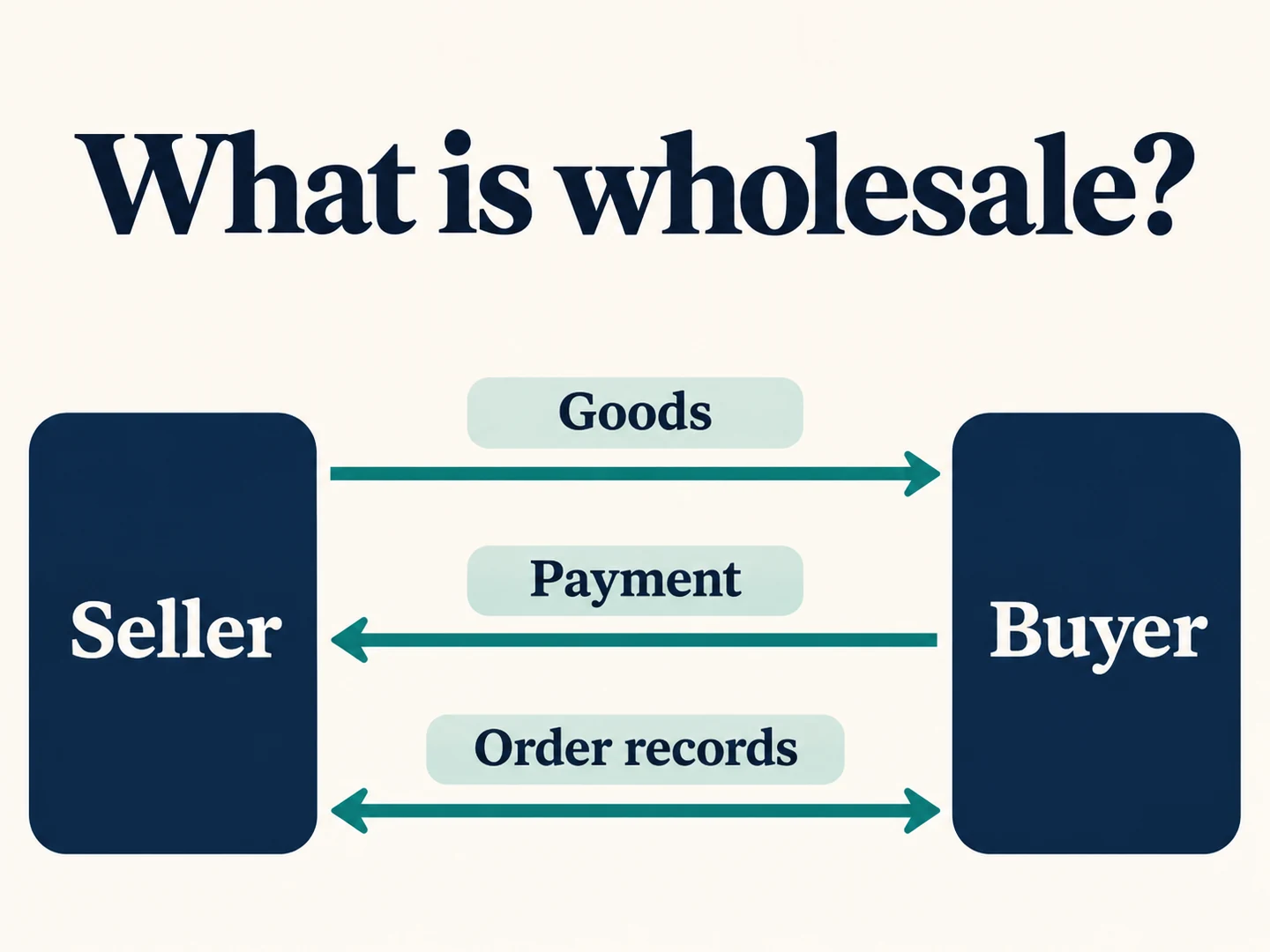
What passes from seller to buyer?
Follow three things through the transaction. They may move at different times or through different businesses.
- Goods. The seller sends the agreed products to your store or receiving warehouse. Confirm which location will dispatch them.
- Money. Your business pays the seller according to the invoice and payment terms. If a payment processor or intermediary collects the money, ask how it appears on the order record.
- Order information. The purchase order identifies what you requested. The seller’s confirmation says what it accepted, and the receipt records what arrived.
Key takeaway: Keep one order number across the confirmation, invoice and receiving record. You can use it to trace a discrepancy even when a warehouse handles the delivery.
Who sells and owns the stock?
The business named as the seller in the accepted order should be able to explain its role and who handles problems. A merchant wholesaler generally buys goods and resells them on its own account. A broker can arrange a wholesale sale without taking ownership of the goods. A manufacturer can sell directly, and a distributor may buy stock for resale or have a separate agreement to cover a particular brand or territory.
Job titles in a supplier directory are often broad, so you should confirm what each party handles. The company showing the line may be different from the one invoicing the order, and either may use a separate warehouse. Those differences are manageable once the names and roles match the paperwork.
Which name belongs on the invoice?
Ask who invoices the order, who controls stock, and where to raise a shortage before you pay. If the invoice names a different business from the quote, ask the original contact to explain the relationship in writing.
| Party you may deal with | What to verify on your order |
|---|---|
| Manufacturer selling directly | Which entity sells the goods and which location dispatches them |
| Merchant wholesaler or distributor | Which seller invoices the stock and handles incorrect or incomplete deliveries |
| Broker or marketplace | Which supplier enters the contract and what the intermediary handles |
| Retailer buying for resale | Which business buys the goods and where its staff can receive and check them |
A warehouse address can help you trace the shipment without identifying the seller.
- Match the seller’s legal name to the order confirmation.
- Record the business receiving payment and resolve any discrepancy with the seller.
- Keep the dispatch and shortage contacts next to the order record.
Key takeaway: Ask for the selling party and the dispatch party separately. You will know whom to pay and whom to call when the carton count is wrong.
How is wholesale different from buying in bulk at retail?
A bulk retail order can contain the same number of units as a wholesale order. The commercial purpose and the terms tell you which transaction you are making. A shopper buying several packs from a supermarket is making a retail purchase. A store opening a trade account to buy cases for its shelves is buying for a business.
An ecommerce seller can also buy a large quantity through a consumer checkout. The seller may then resell it, but the first transaction can still be on retail terms, with a retail receipt, public pricing and ordinary customer conditions. When your next decision is about who holds and ships stock to your shoppers, see the dropshipping and wholesale comparison.
When the business uses the goods itself
Fastenal’s 2025 annual report describes wholesale distribution of industrial supplies to businesses that use them in manufacturing or in their own operations. Parts can go into a finished product or support the work of the buying company. The public filing provides an example of wholesale with a business customer that uses the goods.
- Identify the seller’s sales channel and the terms it actually quoted.
- Check whether the buyer is acquiring goods for resale, production or another business use.
- Keep the quantity separate from the purchase description. A larger cart can still go through a consumer checkout.
Key takeaway: Explain the purchase in one sentence before you label it. For example, “Our store is buying cases from a supplier on trade terms to stock our shelves.”
How do you read a wholesale order?
Read a wholesale order by matching the product, the unit used for pricing and the number of units the seller agreed to ship. A wholesale catalog can set a minimum quantity, a purchase increment, or both. An increment is the size of each quantity step. With an increment of 12, you can order 12 or 24 pieces if the other requirements allow it.
Start by looking for whether the seller means one piece, one set or a full case. One line might say four cases, while the matching receiving record counts individual units. Get the case contents in writing before you approve the order. If you are sourcing overseas, use the bulk buying checklist for China orders for the additional supplier and shipping checks.
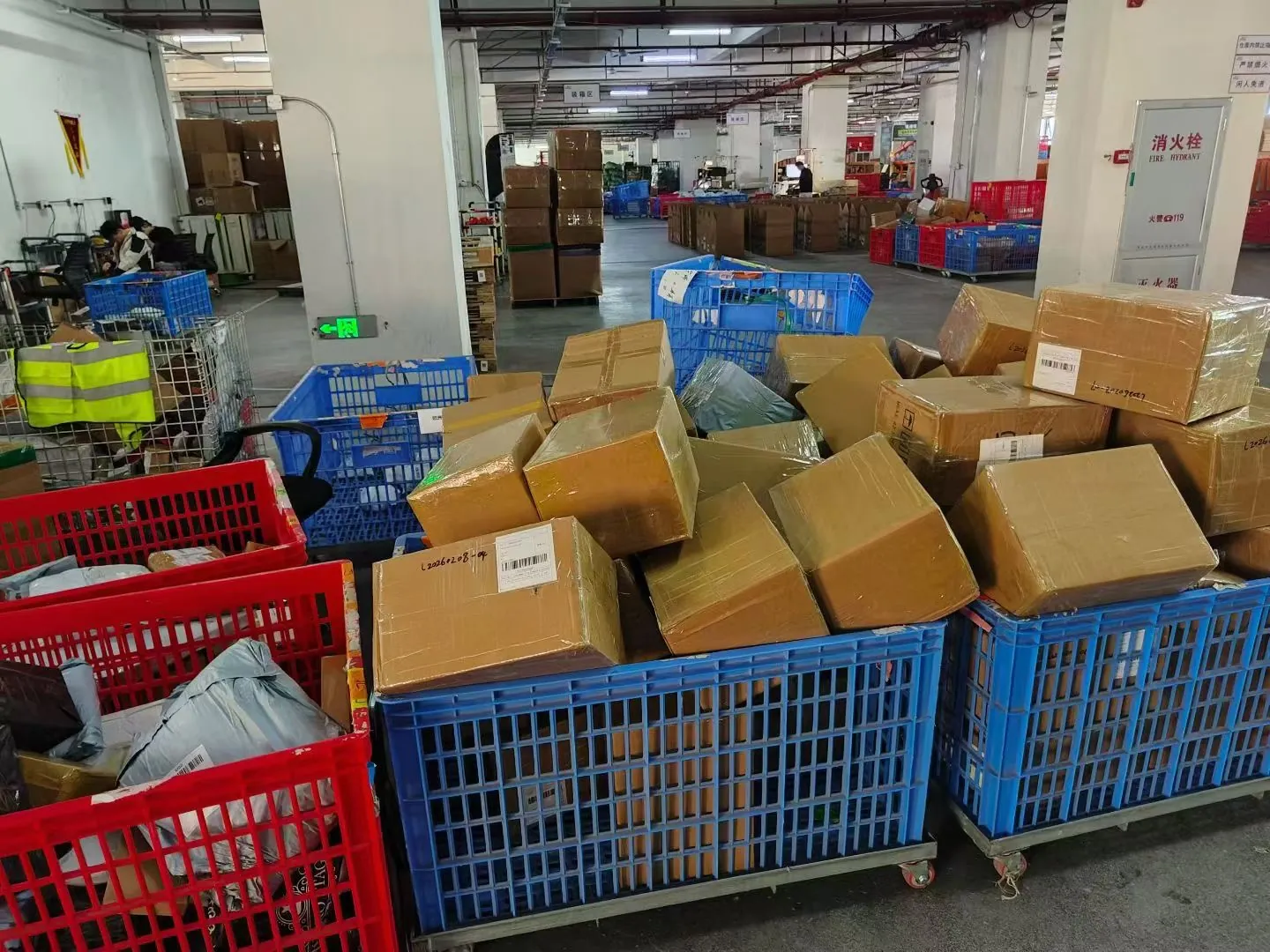
Match the order to the cartons
Write down what each carton contains and what counts as a wrong delivery. A two-pack sold as one set is one saleable unit for that listing. Counting loose pieces as separate saleable units can double the inventory your store thinks it has.
- Record the supplier’s item number, variant, order unit and number of saleable units per case.
- Confirm whether substitutions need approval and ask how long you have to raise a discrepancy.
- At receiving, check the outside carton count and the quantities and variants inside. Keep the labels and photos if the order differs.
Key takeaway: Put the agreed quantity and the received quantity on the same basis. For a shortage, send both counts with the order reference to the claims contact.
What does a wholesale price actually cover?
A wholesale price covers the quantity and unit shown on the offer. A price break changes the unit price when the agreed quantity qualifies. Delivery and handling may appear on separate lines, so the price per case does not by itself tell you what each saleable unit will cost at your receiving point.
Compare quotes on the same saleable-unit basis. For a first check, divide the payable cost for the agreed goods and delivery by the number of saleable units you expect to receive. Use equivalent products, quantities and delivery points. A total that includes shipment to your warehouse cannot be directly compared with a quote that ends at the supplier’s pickup dock.

How do two case prices compare?
In this hypothetical example, both suppliers offer the same 48 saleable units delivered to the same location. The first charges $48 for each of two 24-unit cases and $24 for delivery. The second charges $27 for each of four 12-unit cases and $6 for delivery. Their totals are $120 and $114, or $2.50 and about $2.38 per saleable unit.
- Identify which delivery charges and fees apply before you divide.
- Compare the same variant and saleable quantity across both offers.
- Compare the result with the price you realistically expect shoppers to pay.
Key takeaway: Calculate the payable total and the cost per saleable unit together. The result helps you compare the offers while the total shows how much cash the order uses.
Which terms matter after you place the order?
After you order, keep track of payment due dates, the seller’s shipping commitment and who handles the delivery handoff. Payment terms can call for a deposit first and a later balance. A dispatch date tells you when stock is expected to leave. If you need it by a particular day, get the expected arrival window and record who will flag a change.
The order confirmation and invoice may be issued at different points. Check the accepted order against the invoice before paying. If the seller can fill only part of the order, ask for confirmation of what will ship now and when the rest will be available. A partial delivery and a canceled line have different effects on what you can put on sale.
When is the balance due?
Record the time or event that starts each payment deadline. A term stated as a number of days needs a starting event. Ask whether the count starts at invoice issuance or from another event specified in the agreement.
- Record the deposit amount, balance, trigger and due date.
- Save the dispatch commitment and any instructions for partial shipments.
- Tell your receiving team where to send the count and which items should be held if the shipment differs from the accepted order.
Key takeaway: Keep the payment and shipping milestones beside the order. If an invoice arrives early or a shipment slips, you can check which obligation has changed.
When does buying wholesale make sense?
Buying wholesale makes sense when the expected demand, cash commitment and available storage fit the agreed lot size. Start with what your store can reasonably sell before the next purchase decision. If that amount is smaller than the lot a supplier will sell, check whether your budget and storage can carry the difference.
Availability for a second order also affects the decision. Ask if the same item and variant are normally replenished, and what the seller can actually confirm about the next available stock. A one-off lot may fit a short promotion. A product your store plans to keep listed needs a way to cover the next selling cycle.
Which stock decision can you afford?
Write down the amount you can put into the product while keeping money for freight, fulfillment and other orders. Compare that limit with the smallest acceptable order. Leave extra room if the product is seasonal, takes up substantial space or has yet to prove it sells at your expected price.
- Proceed when the first lot fits cash and space, the seller confirms the exact product, and the supply route suits how you plan to sell it.
- Reduce the stock commitment if the purchase depends on optimistic demand or if carrying it would leave too little cash for ordinary operations.
- Wait when the seller cannot confirm the product, the payable total or who will receive a shortage claim.
For a store that needs help coordinating China-side suppliers or handing stock into fulfillment, discuss the order requirements with a sourcing agent.
Key takeaway: Use your cash and sell-through plan to decide how much stock to take. A price break is worth comparing only once you can carry the larger order.
Conclusion
A workable wholesale order tells you who sells the goods, what a case contains, what you will pay and who can resolve a shortage. Before committing, compare the offers using the same saleable quantity and confirm what will happen at dispatch and receipt.
RuntoDropship is a private dropshipping agent that helps ecommerce sellers coordinate sourcing, product checks and order fulfillment. Our approach starts with the product, quantities and receiving requirements the seller can verify. Send your item details and the order you are considering to the RuntoDropship team to discuss where coordination would help.
FAQ
Can I buy wholesale without a physical storefront?
Sometimes. Some suppliers accept online businesses, and others require a physical shop or restrict the sales channels they serve. Ask whether they accept your type of store and which documents they want before you complete the application.
Can a reorder have a different minimum from my first order?
Yes. A vendor can set a separate minimum for reorders. Ask for the repeat-order terms in writing, including whether the minimum is an order value, a case count or a quantity per product.
Can I ask for a paid sample before a trade order?
Yes, if the seller offers samples. Ask what the sample costs, whether it matches the regular item and whether the charge can be applied to a later order. A separate sample transaction can have its own shipping terms.
Can I resell wholesale goods on an online marketplace?
Check before you order. The vendor’s terms may restrict sales channels, and the marketplace can have its own listing requirements for the product and your account. Confirm both the seller’s terms and the requirements for the intended listing.
Can I send back wholesale goods that do not sell?
Only if the seller agrees or your return terms allow it. Ask about any buyback or stock-rotation terms before paying. A seller that handles missing or incorrect units can have a separate policy for correctly delivered goods that sell slowly.