

Your warehouse offers a new software connection, but the next handling invoice looks unchanged. You still pay someone to check orders, and another subscription has joined the bill. You ask the provider, “How does 3PL services software help reduce logistics costs?”
Software can lower costs when it removes paid work, changes a chargeable quantity, or enables a less expensive eligible shipping choice. The seller benefits only after accounting for the charges and work that remain, plus implementation and continuing support. Start with the expense you expect to change.
How does 3PL software turn an action into a cost saving?
Software creates a saving when its action changes an expense you bear under the actual operating arrangement. If you need the wider service context, this explanation of third-party logistics separates the provider’s responsibilities from the work you retain.
Follow one action through to its financial effect
Warehouse management tools direct stock and warehouse tasks; order management tools coordinate order information; transport tools support shipping decisions. A product may combine these jobs, so ask what the proposed function changes in your workflow.
- Name the action, such as transferring an order without retyping it.
- Identify whose work disappears and the affected expense or charged unit.
- Find the record that will show the change, such as an approved charge removal or reduced paid correction work.
Decide what kind of benefit you are measuring
Cash avoided means an expense falls. Released capacity means staff can handle other work within the same paid time. Better service may mean fewer delays, even while spending stays level. Record these separately so that the same saved minute does not become both a wage saving and extra capacity.
A provider’s shared facilities or volume-based carrier terms may also lower costs, but those benefits need separate attribution. Key Takeaway: Credit software with a financial benefit only when you can follow its action to a changed seller expense.
When does order automation reduce handling costs?
Automated transfers lower handling costs when they remove repeated entry or work spent fixing new orders. Ask the person who owns the link which paid task it removes and whose time it saves.
Test ordinary orders and failed imports
Use orders that reflect your normal work, then check both the storefront and the system that receives them. Include failed transfers as well as orders that pass with no help. Record who steps in and how long each fix takes. Repeat the checks after a retry so you also count the time spent getting failed orders through.
- Record who types, checks or fixes each new order before the link is in place.
- Check that the received order has the right identity, items and unit counts.
- Retry a failed transfer and check that it does not cause the same business task to run twice.
Compare removed work with work that remains
Shopify’s delivery guidance explains that the same notice may arrive more than once and calls for steps that prevent the same task from running twice. A repeated message need not cause another shipment. Ask the person who owns the link to prove that behavior and show who checks for missing orders. A “received” reply alone does not prove that the next system did the work.
GS1 US’s video below explains shared supply-chain event data, such as what happened, when and where. These records can help with checks, while staff still have to pick and inspect the goods. Key Takeaway: Count the entry and fixing work removed, then keep the checks and failed-order work you still need in your cost test.
How can packing and shipping rules lower parcel costs?
Software can lower parcel costs by selecting a suitable packing or shipping option using accurate finished-parcel data and the required service. The selected option must still protect the goods and be available under the applicable account arrangement.
Compare the same parcel and delivery requirement
A product’s listed dimensions may describe the item rather than its shipping carton. Compare completed parcels so the displayed alternatives describe work the warehouse can perform. If a packing suggestion changes materials or adds handling, carry that work into the comparison before approving the new rule.
- Use packed weight, outer dimensions, destination and delivery requirement.
- Hold the eligible carrier account and service conditions steady.
- Include packaging materials, changed packing work and applicable adjustments.
Check the final charge against the selected option
USPS parcel standards explain that shape, dimensions and weight can affect pricing, with treatment depending on the mail class and conditions. A smaller carton therefore needs a parcel-specific comparison. Avoid assuming a universal dimensional-weight formula or that every smaller package costs less overall.
Reconcile the selected option with the final available charge, including provider markup rules and later adjustments. The broader hidden costs of Shopify dropshipping also belong in the margin review, but this test isolates the changed parcel decision. Key Takeaway: Use the final comparable parcel cost before crediting a cheaper displayed rate as a saving.
When does better inventory data reduce operating costs?
Inventory data can reduce costs when correct records trigger an agreed stock or operating action. Updating a dashboard leaves storage spending unchanged if the same goods remain under the same charging terms.
Connect stock events to an action
Start with the decision you expect better records to support, such as changing replenishment or releasing usable stock for an order. Then identify the expense that decision could change. For an avoided purchase claim, verify that the record arrived before the purchasing decision.
- Confirm the product’s stock-keeping unit (SKU) and agreed component or handling units.
- Distinguish goods physically present, reserved quantities and stock available to sell.
- Record the update time, the person authorized to act and the intended stock action.
Verify the physical and manual controls
Warehouse and inventory software still depend on correct receiving, identification and count records. Check who investigates a discrepancy and whether updates arrive soon enough for the intended decision. A regular spreadsheet transfer may leave manual reconciliation even though the systems exchange data.
Measure that remaining work alongside the proposed benefit. A stock report can justify investigation without proving that goods are usable or that an expense has fallen. Key Takeaway: Connect a reliable stock record to an authorized action and its cost consequence before assigning savings to visibility.
Which warehouse improvements will change your invoice?
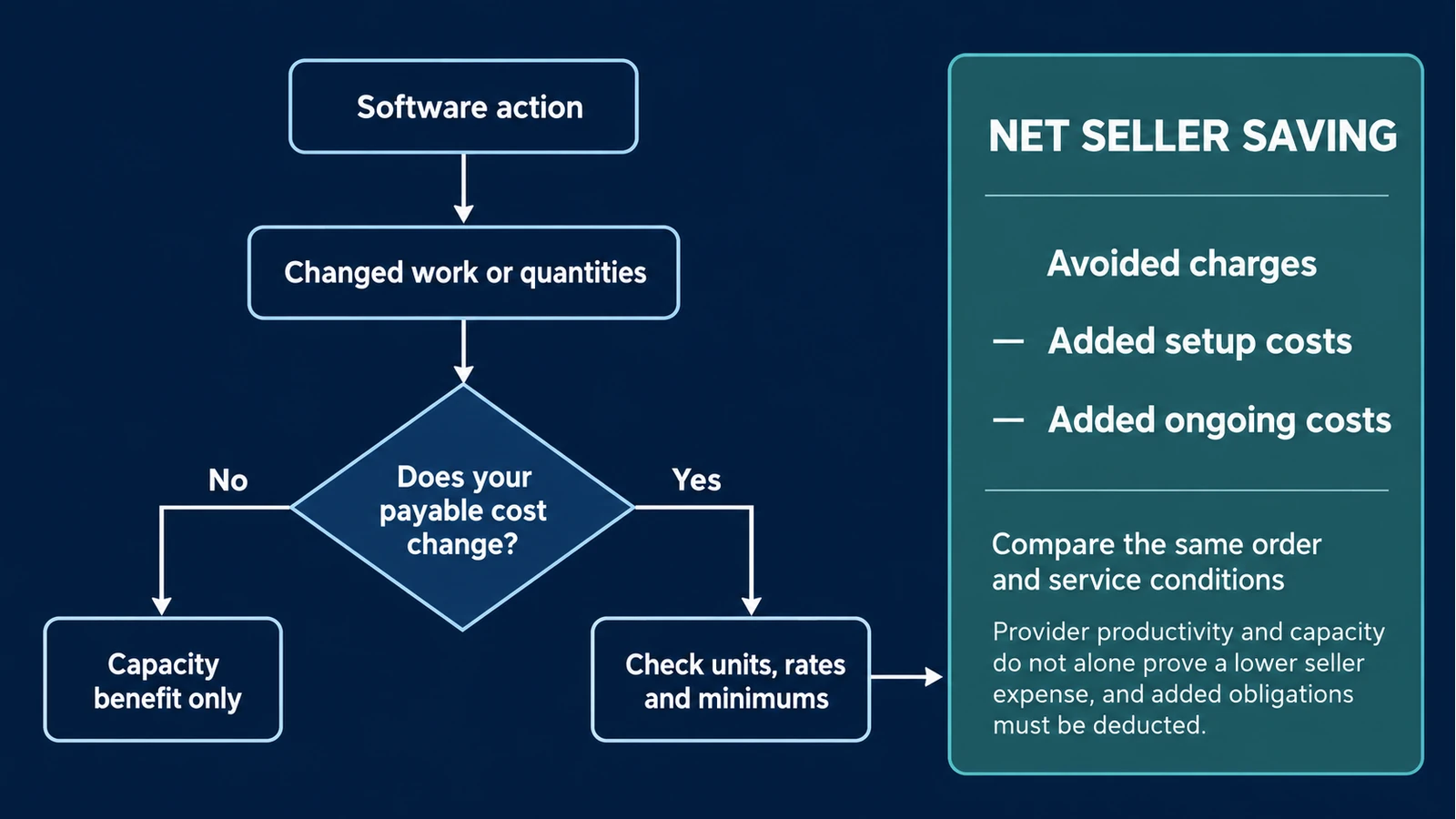
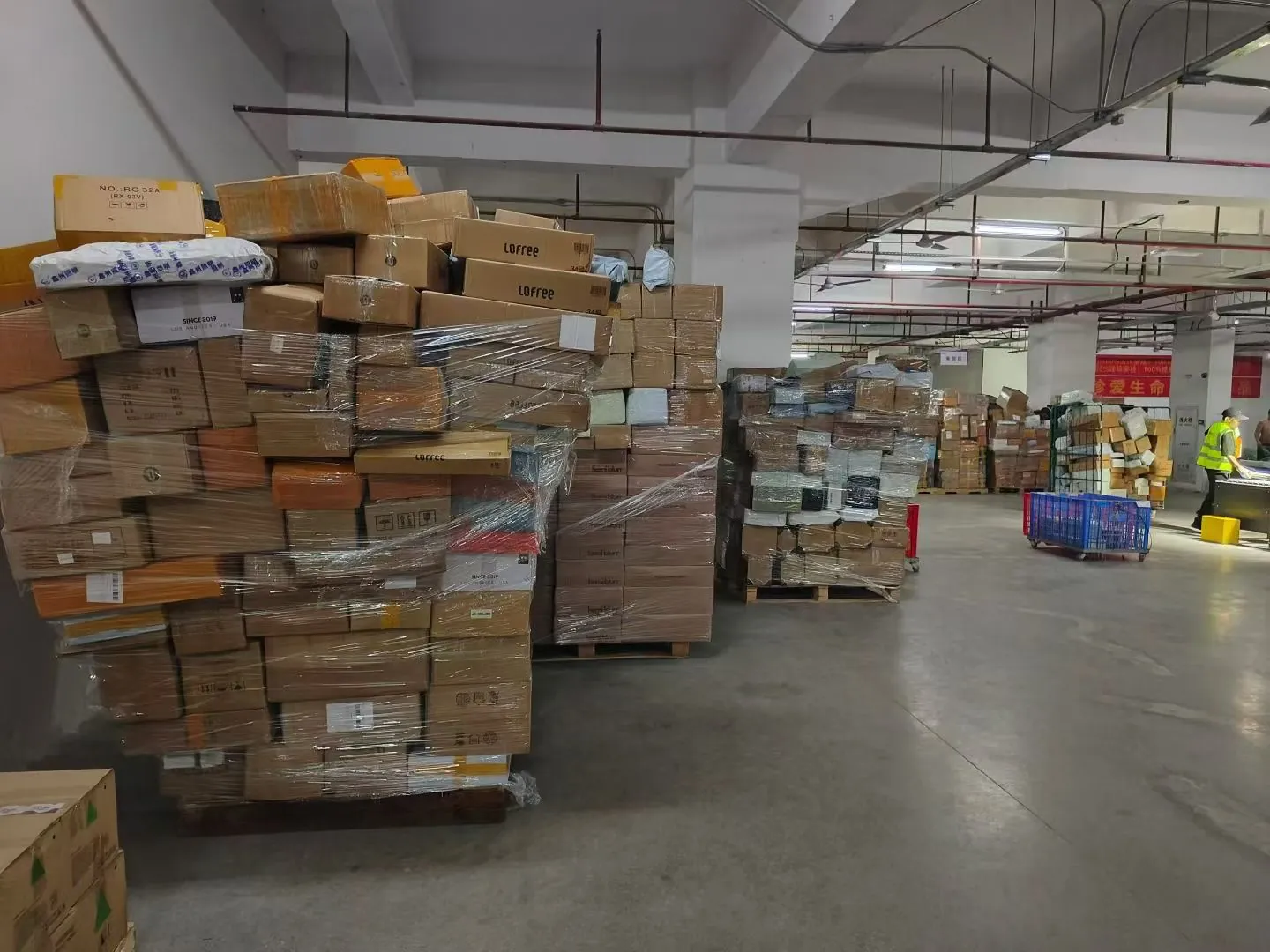
Your invoice changes when the agreed quantities, charged units, rates, commitments or approved fees change. Faster warehouse work can improve the operator’s capacity or margin while your per-order rate stays the same.
Follow the event into the agreed charge
Ask for a readable connection between operating records and the charge, without assuming an unfamiliar line item is an error. More complete billing can capture work previously missing from reports. Compare the service scope too, so a newly itemized included task is not counted twice.
- Match the charge to its event, quantity, unit and agreed rate.
- Check which work the base charge includes and whether a minimum applies.
- Obtain confirmation of a removed charge or revised rate before counting it.
Compare the fee conditions that govern the result
Use this conditional comparison with your agreement; the rows describe possible arrangements, not market prices or promises.
| Fee condition or unit | What software must change | Evidence to request |
|---|---|---|
| Handling charged per order | Agreed rate must fall for the same order workload | Approved rate change and matched invoice |
| Separately billed correction task | The billable correction must disappear | Exception log and corresponding charge |
| Storage charged by space and time | Occupied billable space or duration must change | Stock movements and storage calculation |
| Monthly minimum commitment | Eligible charges must change the amount payable under the minimum | Minimum terms and reconciled monthly total |
The same faster process can produce different seller bills under these arrangements. Establish the charge basis before valuing warehouse time; otherwise, you may price a benefit the operator retains. Key Takeaway: Verify the payable change under your terms, including minimums, rather than assuming provider efficiency passes through.
What will implementation and ongoing support cost?
Setup costs cover preparing data, testing and training; recurring charges and the work needed to keep the system running need their own budget. Cloud hosting still leaves someone responsible for the links and rules.
Price the actual transition
Ask each party to list its work before you accept a setup total. Find out what an unknown charge will be rather than putting it down as zero. For training, check that the named staff member can do the agreed tasks and knows who handles problems.
- Assign data cleanup, SKU mapping, link tests and staff training.
- Include physical needs, such as usable item labels and stock-count methods.
- Separate work covered by the provider’s quote from seller tasks and extra quoted work.
Assign the continuing work
Name who handles link updates, failed transfers and mismatched records, and who prepares reports or answers support requests. Check whether exported data still needs to be moved or sorted before billing or stock review. Keep that spreadsheet work and checking time in the cost test once the software is live.
For stock starting in China, discuss that scope before choosing systems. RuntoDropship is a Private Dropshipping Agent in China; use its dropshipping fulfillment service page to frame how work would pass between seller, supplier and fulfillment team. Key Takeaway: Agree who handles setup and the work that follows before you work out net savings.
How should you test whether net savings are real?
Test net savings by comparing the costs affected under matched terms, then deducting new setup, software and support costs, including added work. Keep cash savings separate from more staff capacity or better service.
Hold the comparison conditions steady
Define the planned change and the records you need before the trial starts. Two monthly totals alone can hide a change in the work done. Keep the order and charge records so another person can repeat the test with the same tasks and types of cost.
- Select similar order, parcel, service and stock workloads over stated periods.
- Record changes in volume, product mix, carrier rates, season and minimum charges.
- Measure the exact manual task, charged count or shipping choice the software should change.
Decide whether the benefit survives the new costs
Deduct new recurring costs from the drop in matched spending. Show setup and training apart from those costs, and state the period used to assess them. Record reporting and problem-solving work in both periods so you deduct only the increase. Count labor already covered by a provider fee only once.
Fewer working minutes save cash only if a paid cost can be avoided. Keep unknown charges or missing time records visible, rather than treating them as zero. Start with a small trial and expand only when its records support the choice. Key Takeaway: Leave net benefit unknown when you cannot separate the software’s effect from changed work or prices.

How should you evaluate software-driven logistics savings?
Evaluate savings by tracing software through changed work, payable charges and the new obligations needed to keep it running. Bring your China-side sourcing and fulfillment questions to RuntoDropship, with the product and order profile ready for discussion. RuntoDropship’s role as a Private Dropshipping Agent in China puts the China-side operating requirements first; ask for records and agreed responsibilities before accepting a saving claim.
Make the next step measurable
- Identify the workflow and expense you want to change.
- Bring the charge basis, current records and unresolved responsibilities.
- Agree a limited test and the evidence that will decide expansion.
Key Takeaway: Choose one payable cost change to verify before committing to a wider rollout.
FAQ
Can I use my own carrier rates through a 3PL’s system?
Possibly, if the carrier terms, provider workflow and actual connection support your account or supplied labels. Confirm whose account is connected, who buys the label and who handles adjustments or support. Having a rate in your storefront does not establish that the warehouse can use it.
How do I know if a refund has released reserved stock?
A refund alone does not prove that a reservation was released. Check cancellation or release acknowledgment, then compare reserved and sellable records across the connected systems with the physical quantity. Test the supported reversal flow. Escalate a mismatch before treating that stock as available for another sale.
What should I check before selling bundles or pallets?
Map the selling SKU to the underlying component or base SKU and agree the quantity deduction. Name the person approving that conversion. Test each selling unit against the expected change in the shared stock pool. Keep this inventory deduction separate from whatever the provider defines as a billable pick.
Can I change an order after the warehouse receives it?
Only if the warehouse’s current processing stage and accepted amendment process allow it. Confirm that the change reached the downstream order before the applicable cutoff, then obtain explicit acknowledgment. A storefront edit alone is insufficient evidence. Wait for acceptance before promising the customer that the change will happen.
Can one order ship from both my store and a 3PL?
It can if the connected systems support allocating lines and quantities between them and reporting each part’s completion. Test warehouse fulfillment followed by store completion of the remainder, including the remaining order and inventory state. Confirm this behavior in the actual workflow before offering it to customers.