

Two UK fulfilment proposals can look similar until one prices a consumer parcel and the other assumes retail cartons or preparation for Amazon. Choose on the headline fee, and your stock may arrive before anyone has accepted the work it needs. Comparing 3PL UK options means checking how a third-party logistics provider would handle your products, channels and intended stock location, then agreeing the service scope in writing.
Once you have defined that work, build a conditional shortlist, ask each operator to price the same workload, and verify the proposed site and responsibility handoffs. A provider’s service description identifies an option to investigate; your accepted specification and initial operating evidence determine whether that option fits.
Which UK 3PL providers belong on your shortlist?
3P Logistics, 3PLUK, Fulfillable, Staci UK, The FBA Prep and Whistl offer different documented starting points for a UK shortlist. Their inclusion here reflects their published service scope, without a performance ranking or a claim that every option accepts your business.
The general 3PL operating model explains the wider service relationship. For this UK decision, establish which operator, site and service would handle your actual orders.
What does each provider describe?
The table summarizes the providers’ own descriptions; current availability and quoted terms still need confirmation. Before requesting a proposal:
- Remove an option that cannot identify the UK service you need.
- Ask for the written scope behind each relevant service claim.
- Check any required certificate against the actual site and goods.
| Provider | Services described by the provider | Confirmation to request |
|---|---|---|
| 3P Logistics, trading as 3PL | Separate direct-to-consumer and tailored multichannel services, including wholesale and retail | Which Wigan depot and service path would accept your mix of consumer and retail orders? |
| 3PLUK | Established-brand, high-volume fulfilment; UK and Netherlands facilities | Which UK site, volume commitment and handling scope apply to your proposal? |
| Fulfillable | UK and US positioning; consumer and business fulfilment, Shopify and fast-moving consumer goods | Which UK operation accepts your products and store configuration? |
| Staci UK | Retail and point-of-sale work, business orders and ecommerce, with kitting, bundling and personalization | Which value-added specification and retailer requirements are included? |
| The FBA Prep | UK storage and consumer fulfilment alongside preparation for Fulfilment by Amazon (FBA) | Is the quote for consumer dispatch, FBA prep and forwarding or both? |
| Whistl | High-volume ecommerce fulfilment, carrier management and optional contact-centre support | Which site is proposed, and which fulfilment and customer-contact tasks are included? |
Because their service scopes differ, use the table to decide which enquiries deserve a detailed brief. Key Takeaway: Keep a candidate when its documented scope fits the work, and list what you still need to verify before committing stock.
Which provider fits your products and sales channels?
A suitable UK fulfilment provider must accept your goods and the required consumer, retail, business-order or Amazon-preparation work. A platform name on a website gives you an enquiry to make; ask the operator to demonstrate the order and stock updates your business needs.

Which handling and channel requirements must be accepted?
For example, shipping a parcel to your customer differs from preparing and forwarding stock into Amazon. The FBA Prep describes both paths, while Staci UK describes additional retail, point-of-sale and value-added work. Specify the job before comparing the offers:
- Stock-keeping unit (SKU) dimensions, weight, fragility and storage requirements.
- Any regulated-product or certificate-dependent handling.
- Retailer labels, packaging, bundles and their approved versions.
- The channels that allocate stock and release orders.
Once you have listed the handling requirements, ask who accepts each at the proposed site. Where certification matters, obtain current evidence covering the relevant premises, goods and activity.
What should the connection demonstrate?
A channel label becomes useful when ordinary orders and exceptions behave correctly in your configuration. Request evidence of:
- An accepted order, its stock reservation or deduction and dispatch record.
- Cancellation acknowledgement at the applicable operating stage.
- Tracking updates sent back to your store and the events your customer-service team sees.
- Relevant samples, backorders or other non-sales stock movements.
Because physical, on-hand and available quantities can differ, compare them and agree what each field means. Key Takeaway: Keep a shortlisted operator only when its accepted product work and required channel events match your operating brief.
Which UK site will hold and dispatch your stock?
Confirm the contracted operator, stockholding and dispatch site, destination coverage and carrier handover window for the UK service being offered. A UK office or a network map alone cannot establish where your inventory will sit.
Which routes and operating windows apply?
Request evidence for the proposed flow:
- The operating legal entity and receiving address.
- Dispatch origin and a representative customer-postcode sample.
- Remote-area, island and service exclusions.
- Great Britain, Northern Ireland and EU destinations and routes.
- Order-release deadlines and the corresponding carrier collections.
Official UK import guidance separates Great Britain from Northern Ireland and their applicable inbound routes. A UK facility also does not establish an EU stock location; check each geography in the proposal.
What does the dated Astley example tell you?
Wigan Council’s 2 September 2026 statement addressed operating restrictions at Astley Business Park. Whistl’s public notice, updated 25 September, says the PLP Astley yard’s 00:00–06:00 transport suspension began on 7 September, while overnight processing continued inside the depot. These statements concern that yard and do not establish a network closure, lost orders or a buyer-specific delay.
For that reason, use the documented example to ask about the current site and collection window in your own offer. Key Takeaway: Confirm the proposed facility’s handover and contingency before using its service in a customer delivery promise.
How can you compare UK 3PL quotes fairly?
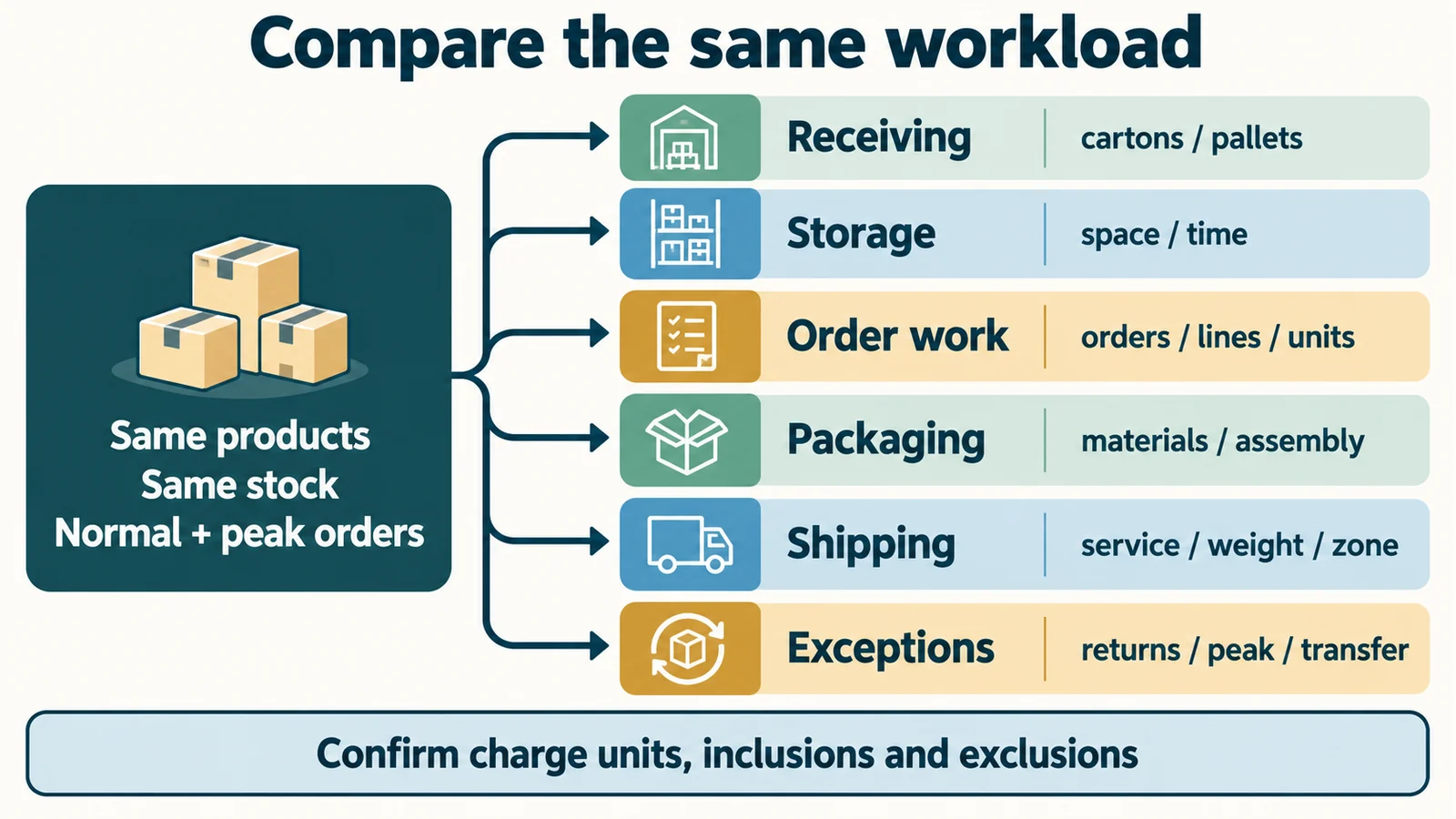
Ask shortlisted UK operators to price the same SKU, stock and order workload, with explicit charge units, assumptions and exclusions. A published pick-and-pack figure cannot establish your all-in cost when receiving, storage and extra work use different units.
Which workload and charge units belong in the request?
Use one operating profile so every bidder prices the same work:
- Inbound cartons/pallets, mixed-SKU receiving and expected frequency.
- Stored volume, occupancy basis, turnover and slow-moving stock.
- Orders, lines, units, packaging and destination/parcel mix, with shipping services, carriage charges and how each charge is calculated.
- Returns work, setup, minimum billing and peak handling.
- Transfer work and other separately approved activities.
The FBA Prep’s published tables separate inbound work, fulfilment, additional services and weekly storage. Use that distinction to reconcile units and inclusions; a supplier’s displayed figures remain subject to your current written quote.
How do minimums and peak assumptions change the comparison?
For example, a quiet month and a promotion can produce different invoices from one rate sheet. Request worked scenarios for both, including minimum commitments, accepted peak workload, extra-work approval and the assumptions that change charges.
Record unquoted items as unknown and ask which stock, order or parcel measurements drive the bill. Key Takeaway: Compare complete workload scenarios and charge units before treating a lower headline fee as a lower total.
Who handles UK import and seller obligations?
Assign warehouse service, customs representation, seller value-added tax (VAT) and product responsibilities before sending imported stock to a UK 3PL. The applicable duties depend on establishment, route, goods and sales model, so have the actual arrangement checked by qualified advisers.
Which scheme and representation conditions need checking?
The UK tax and customs authority, HMRC, sets out the Fulfilment House Due Diligence Scheme for specified storage of imported goods for overseas sellers, subject to conditions and exclusions. It is not universal warehouse certification or proof of delivery performance. Establish:
- Whether the storage/seller model falls within the scheme.
- The relevant operating entity and approval evidence where applicable.
- The importer and agreed customs representative.
- Required product-admission, VAT and supporting-record checks.
UK-stock direct sales and marketplace transactions can involve different VAT responsibilities. So obtain seller-specific confirmation; a warehouse’s scheme status does not settle your own position.
What should the inbound responsibility record contain?
HMRC’s customs-representation guidance requires written instructions identifying direct or indirect representation. Record who supplies product, valuation and origin information; who accepts instructions and submits declarations; who arranges duty/tax payment; and which site receives the cleared stock. Name the party handling rejected or missing documents before the consignment moves.
HMRC provides the video explanation below about customs-intermediary roles. Key Takeaway: Agree a route- and seller-specific division of inbound responsibilities alongside the warehouse service.
What proves a UK warehouse received your stock?
Obtain SKU-level receipt and discrepancy evidence for the consignment the selected UK site accepts, then reconcile the opening stock balance. That reconciliation needs more than a delivery signature or inbound booking, because neither explains unidentified cartons or a short receipt.
Which intake records close the first stock handoff?
Ask the operator to match the shipment to its intake records:
- Shipment notice and carton/pallet/SKU identifiers.
- Quantities received and dated condition evidence.
- Any shortage, damage or unidentified-unit record.
- Putaway status: whether units have reached their assigned storage locations, with the agreed opening balance.
- The documented point and scope of acceptance.
Resolve an opening difference before it becomes an unexplained trading balance. The broader warehouse receiving and stock-control checks help structure that reconciliation. Key Takeaway: Retain a matched shipment-to-receipt record for the selected UK site and agree the opening units before routine orders depend on them.
What must a limited UK 3PL pilot demonstrate?
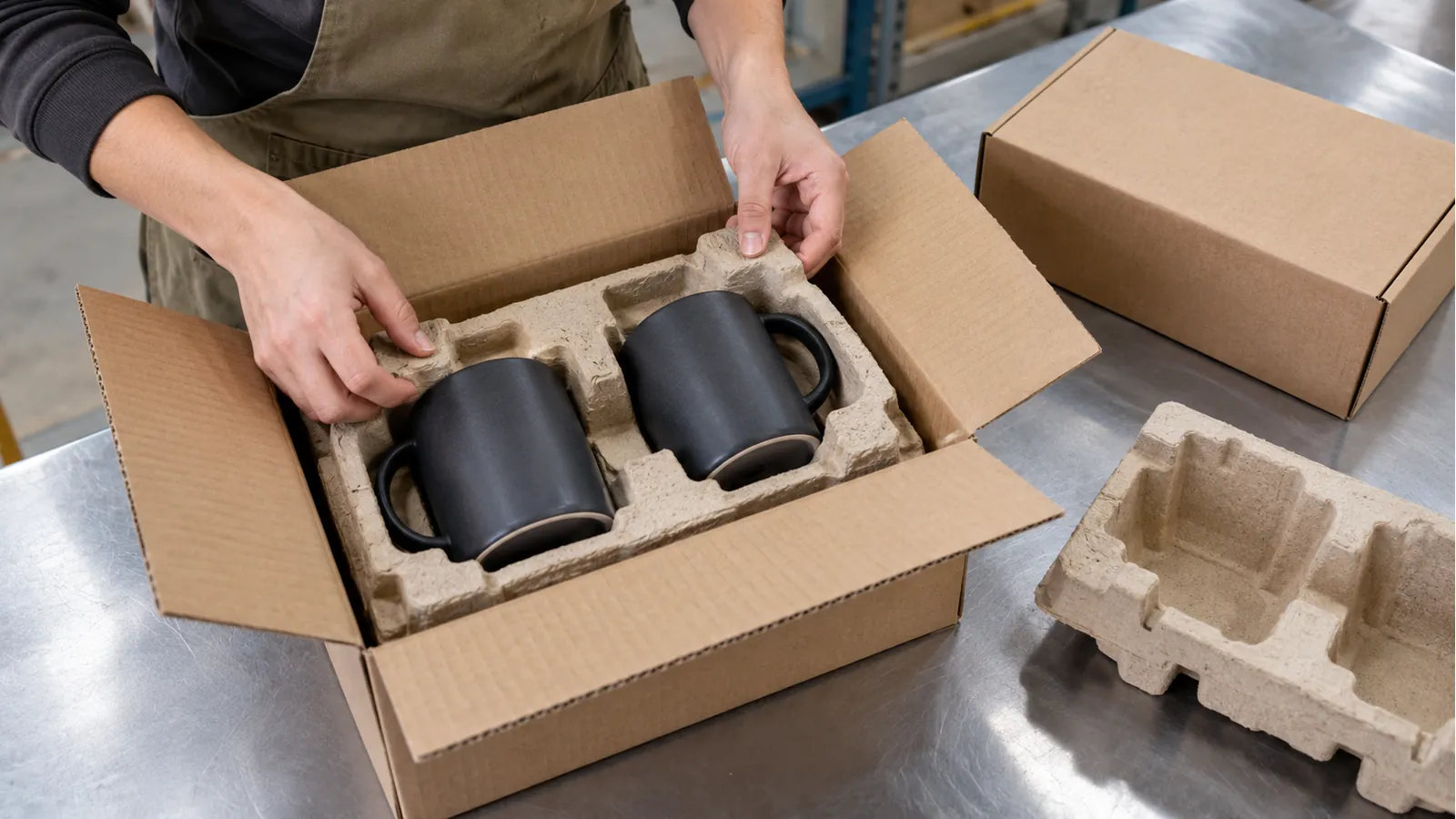
A limited trial must produce agreed evidence that the shortlisted UK service can execute the accepted job before you move the full workload. Choose representative goods and destinations, with written criteria for expanding, correcting or stopping the arrangement.
Which evidence supports an expansion decision?
Agree the pilot’s scope before it begins:
- A limited consignment and representative sample of orders.
- Accepted packing, channel and destination specifications.
- Matched receipt, order and carrier-handover records.
- An invoice reconciled to the quoted workload.
- Seller signoff, with existing stock arrangements and service retained as a fallback.
Then compare what happened with what the operator accepted. Keep any unresolved difference attached to the expansion decision; a connected portal alone does not demonstrate the complete physical flow.
How does China-side preparation join the agreed UK intake?
Where goods start in China, specify SKU/variant identity, counts, packaging, labels and shipment records for the China-side fulfilment handoff. The chosen UK operator must accept its own intake requirements separately.
RuntoDropship is a Private Dropshipping Agent that can discuss China-side sourcing, quality control (QC) and preparation against that receiving specification. Confirm onward transport and customs work separately. Key Takeaway: Expand after the selected UK flow and upstream stock records agree, with approval retained by your business.
How should you choose UK 3PL support?
Choose the option whose accepted UK site, product/channel job, workload quote and responsibility record fit your business. Use the six providers as conditional enquiry options, then expand after the required operating evidence agrees.
What is the next useful decision?
Turn the comparison into a manageable buying decision:
- Send the same operating brief to suitable shortlisted providers.
- Resolve material conditions and unanswered scope questions in writing.
- Approve a limited initial service before moving the full workload.
If your goods start in China, RuntoDropship can discuss sourcing, QC and fulfilment preparation needs against the intended UK receiving specification. Share your product, stock/order profile and that specification. Our position is that scope and evidence should be clear before a service outcome is promised.
FAQ
When does a returned item become available for resale?
It becomes available after the agreed inspection, approval to restock and physical putaway, once the system update releases the approved quantity into available-for-sale inventory. Ask for records linking the returned item to its system entry and your brand’s approval rule. Closing a return or refund record alone does not authorize restocking.
Can I use my own carrier account with a UK 3PL?
Only if the proposed site and service accept your account or labels. In that case, confirm label creation, manifest/collection handoff, delivery-claim ownership and related charges. Do not assume the warehouse supports every carrier-account arrangement.
What stock and account data should be released when I leave?
Before you leave, agree the deliverables: a usable product catalogue and stock-balance export, reconciled physical stock and remaining owned materials. Specify the recipient, format and evidence confirming release. Treat these as conditions to agree, rather than an automatic entitlement.
Who investigates an unresolved warehouse-system error?
First, agree a capable operations owner and an authorized technical liaison. They must be able to reproduce the error and take relevant records to the supplier responsible for the warehouse management system (WMS) or integration. Identify the backup route and how progress reaches your team. Confirm access and response conditions with the provider.
How can I confirm insurance for stock at a UK 3PL?
Have your broker check the actual policy against the goods, storage site, values and relevant transit legs. Supply the warehouse contract and confirm limits, exclusions, excess and claim evidence. The warehouse having insurance alone does not establish cover for your stock.