
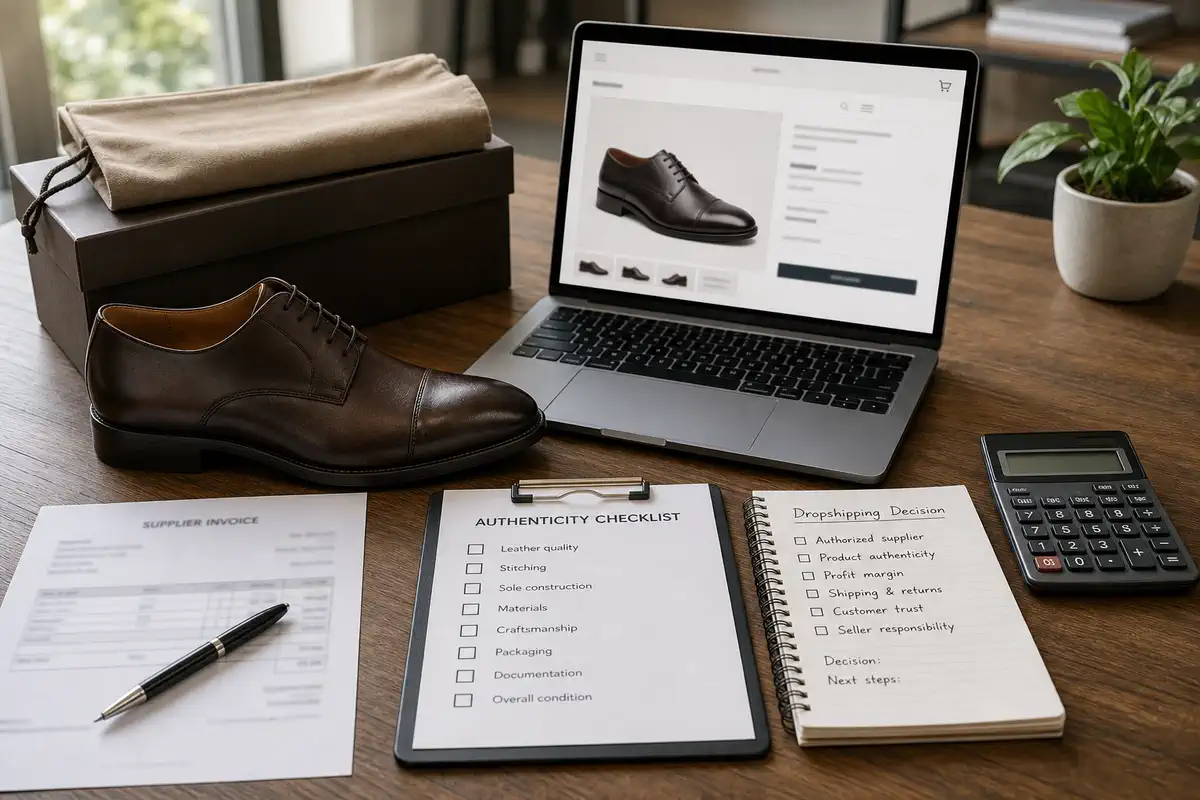
Dropshipping Berluti is not a practical model for most independent sellers. Berluti says its products are sold through brand stores, approved distributors, and its own ecommerce channel; its public terms do not offer an ordinary dropshipping program. Unless you can prove that every item is genuine, that your supply route is legitimate, and that your listings do not imply brand authorization, do not list the products.
The brand name is only one part of the risk. You also need enough margin after retail cost, payment fees, shipping, returns, authentication, and customer acquisition. Buying at consumer price after each order usually leaves no reliable reason for a customer to choose your store over the brand.
This is general business information, not legal advice. Trademark, resale, import, consumer, tax, and platform rules vary by market, so obtain qualified advice for the countries where you buy and sell.
Dropshipping Berluti: Is It a Viable Business?
The short answer is no for a normal retail-arbitrage setup. A seller who waits for an order, buys the item from Berluti at retail, and enters the customer’s address has no confirmed wholesale relationship, limited control over the parcel, and little room between acquisition cost and the price a buyer can see on the official store.
Berluti’s current legal pages say its products are sold through brand stores, approved distributors, and the ecommerce section of its website. They also warn that purchases outside those channels carry authenticity risk. That does not prove that every third-party resale is unlawful, but it means an unknown supplier, marketplace listing, or agent cannot be treated as an authorized source without evidence.
Use four stop conditions before you spend money on a store or advertising:
- You cannot obtain written proof of the supplier’s identity and right to sell genuine goods.
- You cannot trace each item to invoices or purchase records from a legitimate source.
- You need official product images, logos, packaging, or an “authorized” claim that you do not have permission to use.
- The complete order calculation leaves no workable margin or return reserve.
Key Takeaway: Do not build the offer first and investigate authorization later. If the supply route, authenticity evidence, listing rights, or complete order economics are unclear, stop before listing.
What Berluti’s Sales Terms Change
Berluti’s terms make a manual buy-after-sale model especially weak because the public ecommerce channel is described as a consumer sales channel, not a wholesale or reseller program. The terms can also vary by country: delivery destinations, order acceptance, returns, and personalized-product conditions are not universal.
The Berluti legal and sales information should therefore be your first current-source check. Ask the brand directly whether it offers an authorized commercial arrangement for your company, target market, intended channel, and order flow. Silence, a successful retail purchase, or a customer-service reply about an individual order is not the same as reseller authorization.
Retail access is not supplier approval
Being able to place an order on a public website proves only that the checkout accepted that transaction. It does not prove that you may copy website content, present your store as affiliated with the brand, rely on the brand to serve your customers, or use consumer return rights as your own commercial return system.
Country terms can break a global promise
A store that accepts customers in several countries needs a valid sourcing and delivery route for each destination. If the brand’s site serves one country but not another, using forwarding addresses or mismatched return locations can create additional contractual, customs, and customer-service problems.
Before listing, record the exact buying country, customer destination, invoiced seller, delivery address rules, return country, and who handles a failed or disputed order. If any link depends on an assumption, the route is not ready.
Separate Genuine, Unauthorized, and Counterfeit Goods
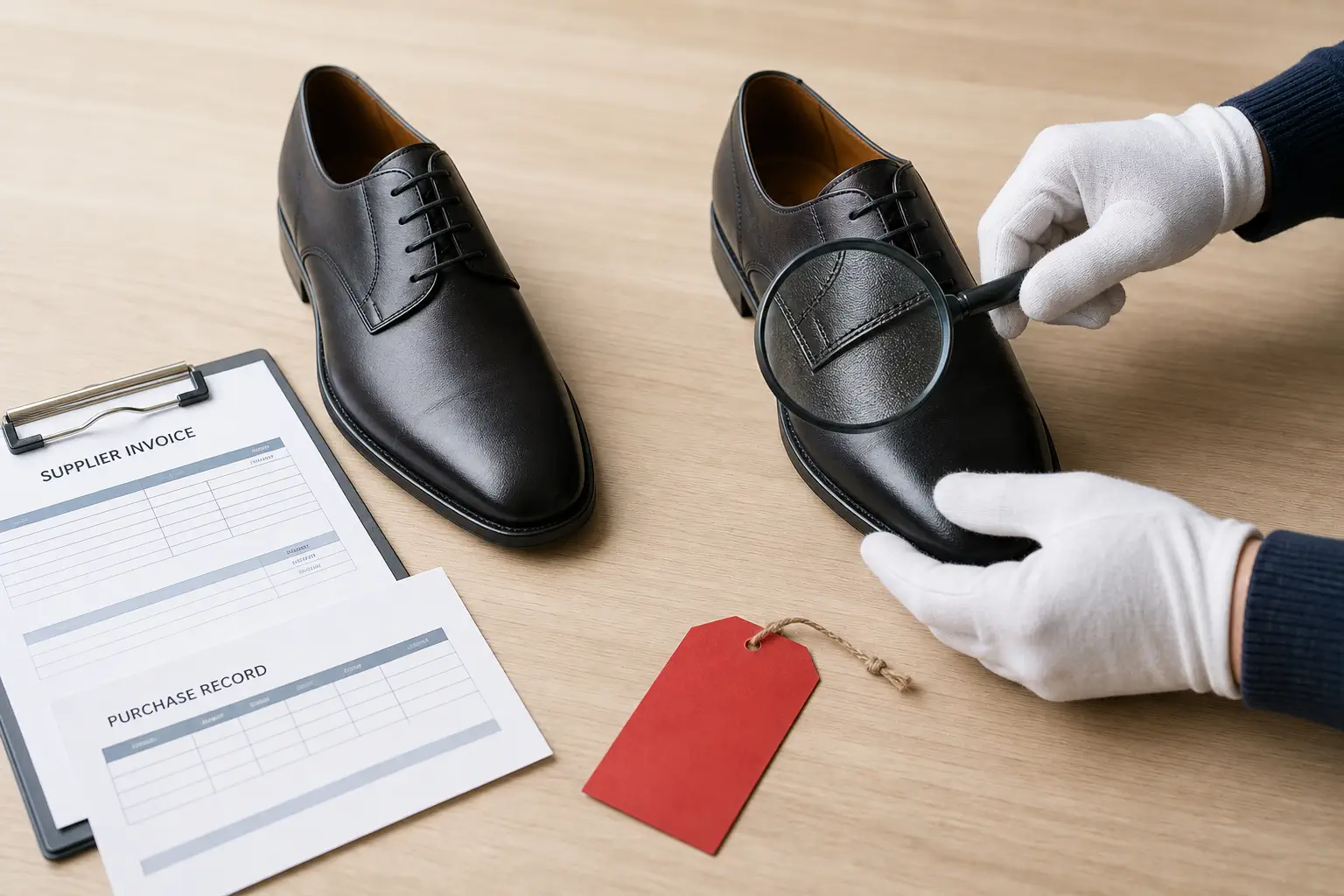
These are different situations, and calling all of them “luxury dropshipping” hides the decision that matters. The product, supply documents, listing language, and seller relationship must all agree.
| Situation | What you can prove | Main risk |
|---|---|---|
| Authorized supply | Genuine products plus a current agreement that covers your company, channel, and market | Operating outside the agreement’s territory or terms |
| Genuine but not authorized | Authentic goods and lawful acquisition, but no claim of brand affiliation | Local resale law, listing rights, warranty, returns, and marketplace proof requirements |
| Counterfeit or replica | The item was not made or authorized by the trademark owner | Trademark infringement, customs seizure, refunds, listing removal, and account action |
Counterfeit goods do not become acceptable because a listing says “replica,” “1:1,” “inspired,” or “not original.” eBay’s counterfeit policy says sellers should list only items they are certain are genuine, while Meta’s counterfeit guidance notes that a disclaimer may not make a counterfeit offer lawful.
Appearance is not authentication
A supplier video, attractive stitching, a serial number, or a certificate image can be useful evidence to investigate, but none should stand alone. The same evidence boundary applies when sourcing sensitive products: visible QC may confirm condition and packaging, while authenticity, authorization, composition, or legal status may require independent documentation. Keep invoices, supplier identity, payment records, item references, serial or product identifiers where applicable, and photographs of the actual product and packaging.
For higher-value inventory, use an authentication process that your target marketplace or qualified adviser accepts. Do not promise “100% authentic” when your only proof is the supplier’s own claim.
Listing content has separate rights
Even a genuine item does not automatically give you permission to copy the brand’s photography, descriptions, videos, logos, or site design. Create accurate original product content or obtain written rights. Describe your relationship truthfully and remove any wording or design that could make a buyer think the store is operated, approved, or sponsored by Berluti when it is not.
Key Takeaway: Genuine product evidence, resale rights, content rights, and truthful affiliation claims are four separate checks. Passing one does not automatically pass the others.
Verify the Supply Route Before You List
A defensible offer begins with documents and a physical sample, not a supplier’s catalog. A structured supplier verification and sourcing process can help compare supplier identities, samples, quotes, and operating capabilities, but it cannot substitute for Berluti authorization or item-level proof of origin. Treat any source that cannot identify the invoiced seller, product origin, and return responsibility as unsuitable for a high-risk branded item.
Ask for evidence you can independently check
Request the supplier’s legal business name, address, company registration, commercial invoice format, upstream purchase records, authorization status, product identifiers, and the territories and channels it is permitted to serve. Contact the brand or distributor through independently found details when authorization is claimed; do not use only the phone number or email supplied in the same document you are verifying.
Then check whether the invoice identifies the exact product and quantity. Use documented supplier communication for claims about origin, product references, authorization status, stock, substitutions, packaging, and return responsibility; an informal chat reply should not override contradictory invoices or commercial records. A generic letter saying a company sells “luxury goods” does not trace your item or prove that the signatory had authority to grant resale rights.
Video: How Marketplaces Evaluate Product Sources
Amazon Seller University explains how sellers should validate suppliers, maintain proof of purchase, and distinguish acceptable commercial sourcing from retail-to-retail fulfillment. The guidance is Amazon-specific, but it illustrates why a supplier name, marketplace conversation, or successful consumer checkout may not provide enough evidence for a high-value branded listing.
Inspect one complete customer-order path
Order the exact item through the proposed route and inspect what arrives. Check the product, accessories, invoice, packaging, sender identity, customs description, tracking, and return instructions. Confirm that no third-party retailer receipt, promotional material, or contradictory seller identity reaches your customer.
If a marketplace or payment provider asks for proof, you should be able to produce an understandable chain from your supplier to the listed item. A documented order-execution process should also connect the customer order to the exact supplier order, approved SKU, packing decision, dispatch event, tracking number, and any exception that occurred. A screenshot of a marketplace chat or a retail order placed after the customer paid is unlikely to provide the same evidence as a documented commercial supply arrangement.
Calculate the Complete Order Economics

Profit is what remains after the entire delivered order, not the gap between your listing price and a product-page price. A manual retail purchase starts with a consumer acquisition cost, while your store must still fund customer acquisition, payment processing, service, returns, and disputes.
Use current figures for the exact product and destination:
Expected order profit = customer payment − product purchase − shipping − payment and platform fees − duties or taxes you bear − customer acquisition − authentication − expected return, loss, and dispute allowance
Do not insert a guessed percentage for returns or advertising. Use your own controlled test data, current quotes, and the terms of the selling channel. Run a downside case in which the parcel is returned, the item needs authentication, or the customer disputes authenticity.
The customer needs a reason to buy from you
If the official store offers the same new product, visible pricing, brand service, and direct authenticity assurance, a higher-priced third-party listing has a difficult value proposition. A lower price is not automatically viable either; it can erase the small remaining margin or increase buyer suspicion.
Cash flow can fail before accounting profit
You may need to pay for the item immediately while a payment processor holds the customer’s funds. A return, chargeback, or authenticity review can tie up more cash. Model how many simultaneous orders and refunds you can cover without using money owed for other customer orders.
Key Takeaway: Reject the model unless the current, destination-specific calculation survives a realistic return or dispute. Gross markup is not usable profit.
Check the Store, Marketplace, and Customer Promise
Your selling channel does not legalize the product or replace supplier evidence. It adds another set of listing, payment, shipping, return, and intellectual-property rules that you must follow as the seller.
On Shopify, you control the storefront but remain responsible for lawful products, accurate policies, and customer disclosures. Shopify’s current dropshipping compliance guidance says sellers may still be liable for products and recommends explaining third-party shipment and shipping origin where appropriate.
On marketplaces, proof requirements and order-flow rules can be stricter. eBay prohibits counterfeit listings and may request authenticity documentation. Amazon requires a compliant dropshipping seller to remain the seller of record, remove another seller’s identity from packing materials, and handle returns; buying from a third-party retailer that appears to the customer can violate that policy.
For any channel, verify these points before launch:
- The product category and brand can be listed from your account and country.
- Your invoices and authentication records meet the channel’s current evidence requirements.
- Your product photos, descriptions, trademarks, and advertising are accurate and properly licensed.
- The parcel identifies the correct seller and matches the promised ship-from information.
- Your refund, return, warranty, tax, privacy, and customer-service terms match the actual route.
Account approval is not permanent legal clearance. Policies can change, rights owners can report listings, and a payment provider can ask for documents after sales begin.
Choose a Safer Leather-Goods Strategy

The safer opportunity is usually to sell products you are authorized to sell or build an original leather-goods offer that does not copy a protected brand. This gives you a clearer supplier relationship and a value proposition you can control.
Route 1: Use an authorized luxury distributor
Choose this route only when the distributor can prove authenticity and grant terms that cover your company, channel, territory, imagery, pricing obligations, shipping, returns, and customer service. Confirm the authorization directly and check whether dropshipping is actually included; wholesale access alone may not permit direct-to-consumer shipment.
Route 2: Build an original private-label product
Start from a customer need—fit, material, construction, care, packaging, or price position—rather than a famous product to imitate. For an original clothing or fashion-accessory line, apparel product and variant control becomes important when materials, sizing, finishes, packaging, and returns must remain consistent across orders. Use original shapes, naming, photography, packaging, and brand assets. Obtain a sample, agree a product specification, check the relevant design and trademark risks, and test a small order flow before scaling.
If you are moving from generic products toward a defensible brand, the practical work includes supplier selection, product checks, packaging, and repeatable order execution. The difference between branded dropshipping and copying a third-party brand is that your offer builds distinct customer value instead of borrowing another company’s identity.
For a validated product that needs original packaging or supplier coordination, private-label dropshipping can provide a more controllable route. It still requires legal review of your name, design, claims, and selling markets.
Key Takeaway: Compete through an authorized relationship or original customer value. Do not use a private agent to source replicas, conceal origin, or manufacture another brand’s identity.
What a Private Dropshipping Agent Can and Cannot Do
A private dropshipping agent can help execute an approved product and supply plan, but cannot create trademark rights or turn counterfeit goods into lawful inventory. The seller must define what may be sourced, which evidence is required, and where the product will be sold.Before assigning any high-value or branded SKU, verify a dropshipping agent’s evidence and responsibilities, including the contracting party, payment recipient, sample process, inspection limits, order records, and escalation path.
For an original or properly authorized product, an agent may coordinate supplier communication, samples, product checks, packaging confirmation, order preparation, shipping options, tracking, and after-sales investigation. Those actions make the physical workflow more visible; they do not replace legal advice, brand authorization, platform approval, or the seller’s responsibility to customers.
Give the agent a written do-not-source list that excludes third-party logos, copied packaging, protected designs, false certificates, and products with unclear origin. Require the approved SKU, specification, packaging, and evidence set to match every released order.
FAQ
Can I sell a “Berluti-inspired” shoe if I remove the logo?
Not automatically. Removing a logo may avoid one obvious trademark use, but a product can still create design, trade-dress, copyright, unfair-competition, or misleading-affiliation issues. Use an original design and ask qualified counsel to review any product intentionally modeled on a distinctive branded item.
Can my customer use Berluti’s return or warranty service?
Do not promise that unless Berluti confirms it for the exact item, market, and purchase route. Brand return terms commonly apply to purchases made through specified channels and may require the original receipt, country, packaging, tags, or security elements. Your store needs its own workable return and remedy process.
What should I keep if a platform asks for proof of authenticity?
Keep item-specific supplier invoices, upstream purchase or authorization records where available, payment records, serial or product identifiers, original photographs, sample inspection notes, shipment records, and supplier contact details. Check the platform’s current document requirements before listing because a document can be genuine yet still fail to prove the exact item or supply relationship.
Is selling second-hand genuine Berluti the same as dropshipping new products?
No. Second-hand resale normally involves a specific item that the seller or consignee possesses, photographs, describes, and can authenticate. A buy-after-sale arrangement for a new item depends on future retail availability and a third party’s parcel, so the evidence, stock control, returns, and platform rules differ.
Conclusion
The sensible decision is to avoid a manual retail-to-customer model unless you have a verified commercial supply route, item-level authenticity evidence, lawful listing assets, channel approval, and complete order economics. Never source replicas or imply authorization you do not have.
If you already sell an original or properly authorized leather product and need supplier coordination, samples, product checks, packaging confirmation, order preparation, shipping arrangement, and after-sales follow-up, Runtodropship can support the backend as your private dropshipping agent. Send your product specification, authorization evidence where relevant, target markets, current order pattern, and required packaging so the team can assess a compliant test workflow.