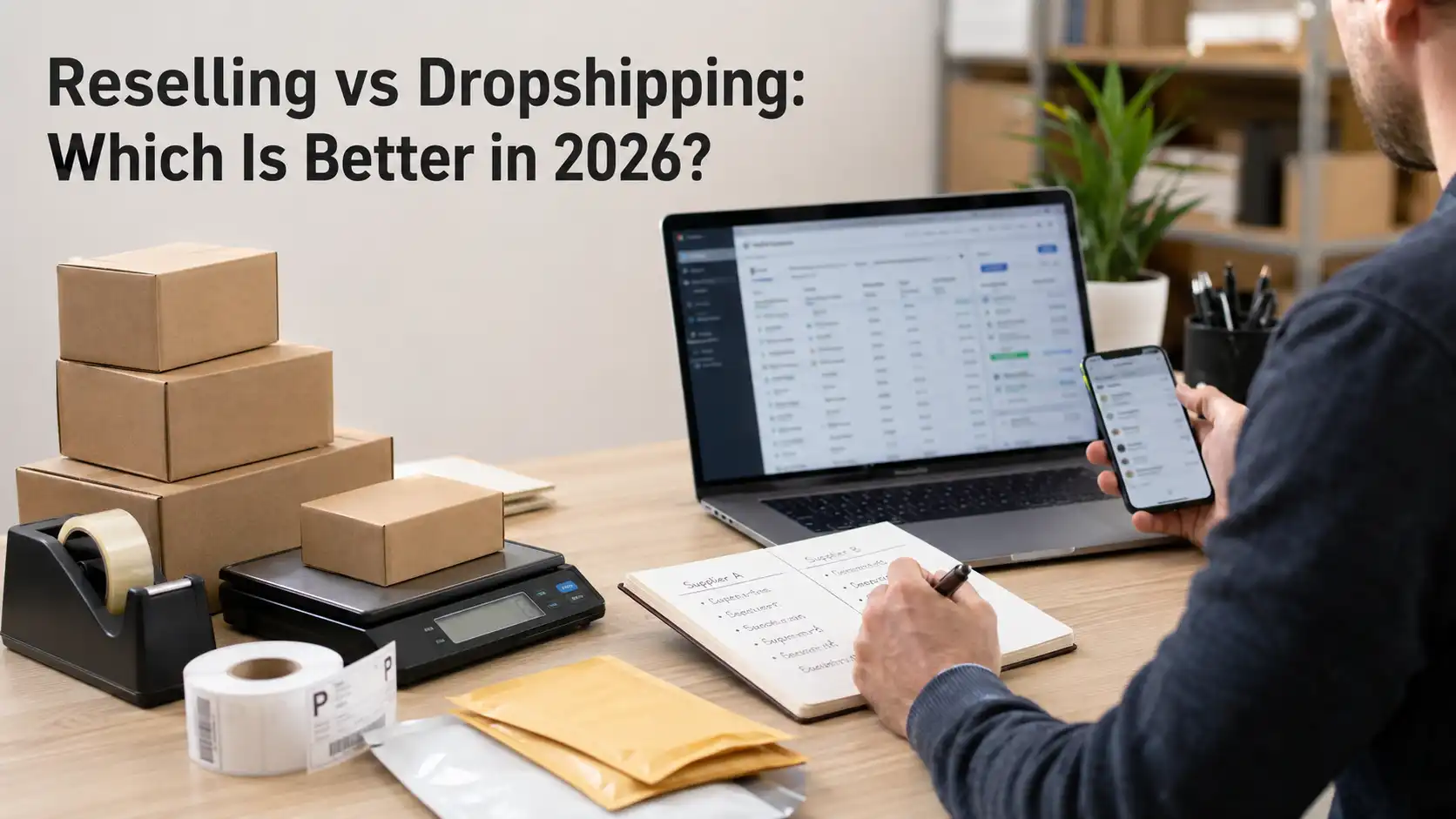
Reselling wins on margin control and brand ownership, while dropshipping wins on low startup cost and flexibility — the better model depends entirely on your capital, risk tolerance, and long-term goals. If you’ve been comparing Reselling vs Dropshipping for weeks, you’ve probably noticed the same frustrating pattern: you find a product you love, but you can’t tell whether buying stock upfront will trap your cash or whether shipping through a third party will wreck your reviews. That uncertainty freezes a lot of new sellers before they list a single item. This guide breaks both models down by cost, margin, risk, and fit, so you can make a confident decision instead of a hopeful guess.
1. What Is Reselling vs Dropshipping?
Reselling means you buy products upfront, hold inventory, and ship orders yourself, while dropshipping means a supplier ships products directly to your customer after each sale. The distinction sounds simple, but it changes everything downstream: cash flow, margins, quality control, and how fast you can test new products. Both models let you sell without manufacturing anything, which explains why they dominate beginner ecommerce conversations in 2026.
How the two models handle inventory
With reselling, inventory sits in your garage, a storage unit, or a rented warehouse until it sells. You control packaging and shipping speed, but your money stays locked in stock. With dropshipping, you never touch the product — your supplier holds it, packs it, and ships it under your store’s name.
| Factor | Reselling | Dropshipping |
|---|---|---|
| Inventory ownership | You own stock upfront | Supplier holds stock |
| Who ships | You | Supplier or agent |
| Upfront capital | Higher | Lower |
| Quality control | Direct, hands-on | Indirect, supplier-dependent |
| Product testing speed | Slow | Fast |
The table shows a clear trade: reselling gives you control at the price of capital, and dropshipping gives you speed at the price of oversight.
2. How Does Each Business Model Actually Work Day to Day?
A reseller’s day revolves around sourcing, storing, and shipping, while a dropshipper’s day revolves around marketing, supplier communication, and customer service. Inventory-based sellers hunt for underpriced stock — liquidation lots, wholesale deals, thrift finds — then photograph, list, and fulfill each order by hand. Dropshippers spend that same energy on ads, product pages, and answering “where’s my order?” emails.
You’ll want to understand this workflow difference before choosing, because it determines what your daily grind actually feels like. A typical order flow looks like this:
- Reselling: source stock → list product → customer pays → you pack and ship → you handle returns directly
- Dropshipping: list supplier’s product → customer pays → you forward the order → supplier ships → you mediate any issues
As order volume grows, some sellers add a China sourcing agent to compare suppliers, coordinate samples, and confirm repeat-order readiness before products move into QC and order execution.
3. Which Model Costs More to Start in 2026?
Reselling costs more to start — typically $1,000–$5,000 for meaningful inventory, while dropshipping stores commonly launch on $300–$800. The resale model demands cash before your first sale: stock, storage, packing supplies, and shipping materials all come out of pocket. Dropshipping shifts spending toward ads and store tools, meaning your biggest cost arrives only after you start marketing.
That gap also depends on how customers are acquired. Paid ads can make testing expensive, while organic dropshipping shifts more of the early investment toward samples, content, research, tools, and operator time rather than per-click media spend.
| Startup Expense | Reselling (typical) | Dropshipping (typical) |
|---|---|---|
| Initial inventory | $1,000–$5,000 | $0 |
| Store platform & apps | $30–$100/mo | $30–$100/mo |
| Ad testing budget | $0–$500 | $500–$2,000 |
| Storage/packing | $50–$300/mo | $0 |
| Sample orders | Optional | $50–$200 |
The numbers reveal that dropshipping’s real cost hides in ad testing rather than inventory.
Key Takeaway: If you have under $1,000 total, start with dropshipping — but budget at least half of it for product testing, not just store setup. Launching with $300 and no ad budget almost always fails.
4. How Do Profit Margins Compare Between Reselling and Dropshipping?
Neither model has a defensible universal profit margin. Compare the same product and selling price after product cost, shipping, payment or marketplace fees, customer acquisition, returns, replacements, packaging, and support. The same order-level logic used to evaluate profitable dropshipping products is more useful than comparing headline margin percentages.
Margin percentage is not the whole story; fulfillment capacity, labor, and backend execution matter too. A reseller can outsource fulfillment, while a dropshipper can still hit bottlenecks in sourcing, QC, packing, shipping, and support. This dropshipping store growth case study shows how backend execution can become the limiting factor after demand is already proven.

What a real margin shift looks like
One seller we worked with ran a pet accessories store on standard dropshipping margins of about 22%. After moving to bulk-purchased inventory held with an agent — a hybrid between the two models — her per-unit cost dropped 31% and her net margin climbed past 38% within two months. The lesson: the models aren’t mutually exclusive, and hybrids often outperform both pure approaches.
Key Takeaway: Don’t chase margin percentage alone. Calculate profit per hour of your labor — a 20% margin at high automated volume often beats a 50% margin that consumes your entire week.
5. Which Model Carries More Financial Risk?
Reselling carries more financial risk because unsold inventory is money you may never recover, while dropshipping’s main risks are reputational rather than capital-based. A reseller who misjudges demand ends up with dead stock, storage fees, and forced clearance pricing. A dropshipper who picks a bad supplier faces slow shipping, refund waves, and payment processor holds — painful, but rarely a total capital loss.
Before you commit either way, weigh which failure mode you can actually survive. Here’s how the risks stack up:
| Risk Type | Reselling | Dropshipping |
|---|---|---|
| Dead inventory | High | None |
| Supplier failure | Low (stock in hand) | High |
| Ad spend loss | Low | High |
| Account suspension | Moderate | Moderate–High |
| Cash flow gaps | High upfront | Moderate ongoing |
Neither column is “safe” — the models simply fail in different ways, and your job is choosing the failure you can absorb.
Key Takeaway: If losing $2,000 in stuck inventory would end your business, don’t resell yet. If a two-week supplier delay would destroy your only sales channel, don’t dropship from a single unvetted supplier.
6. How Do Shipping Speed and Quality Control Differ?
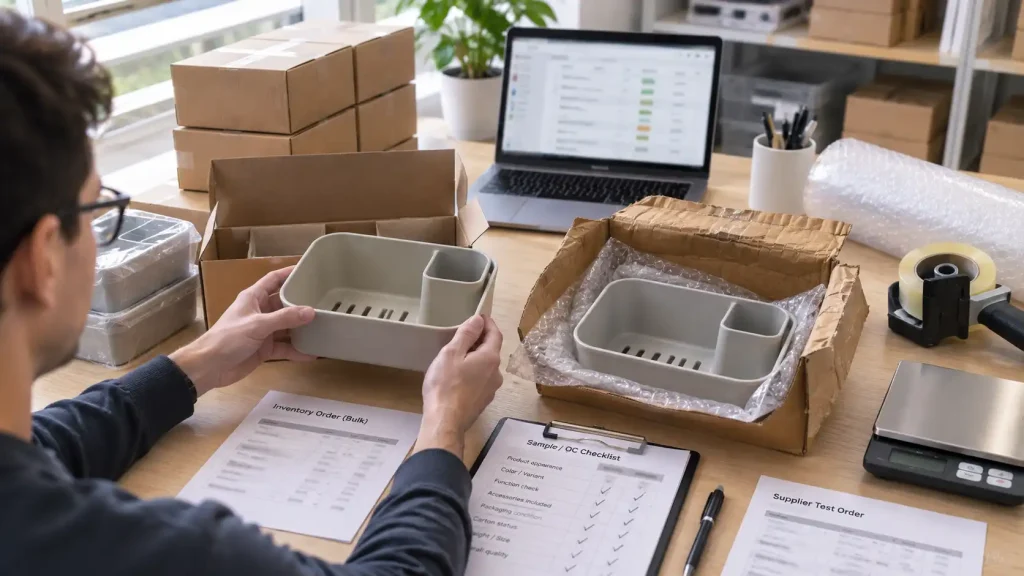
Resellers control quality and shipping directly, while dropshippers depend on whoever holds the stock — which makes supplier selection the single biggest variable in the dropshipping model. When you hold inventory, you inspect every unit, fix packaging issues on the spot, and ship same-day. When a supplier ships for you, you inherit their standards, their delays, and their mistakes, often without knowing until customers complain.
Can dropshippers close the quality gap?
Yes, largely — through pre-shipment inspection and dedicated fulfillment arrangements rather than pulling from open marketplaces. Sellers who route orders through branded dropshipping fulfillment with quality checks get inspected products, custom packaging, and 6–12 day delivery instead of the 20+ day timelines that damaged the model’s reputation years ago. The gap between reselling and well-managed dropshipping is far smaller in 2026 than most comparison articles admit.
7. Which Model Fits Your Situation Best?
Choose reselling if you have capital, storage space, and time to fulfill orders; choose dropshipping if you have limited funds, want to test products fast, or need location independence. There’s no universally superior model — only a better fit for your specific constraints. Your honest answers to a few questions settle the decision faster than any comparison chart.
Run through this checklist before committing:
- Capital under $1,000? → Dropshipping
- Have storage space and enjoy hands-on work? → Reselling
- Want to test 10+ products quickly? → Dropshipping
- Found a reliable underpriced stock source? → Reselling
- Traveling or working another job? → Dropshipping
- Building a long-term brand with custom products? → Hybrid: test via dropshipping, then bulk-buy winners
Key Takeaway: The strongest 2026 playbook isn’t picking a side — it’s testing products with dropshipping, then shifting proven winners into bulk inventory for higher margins. Treat the models as stages, not rivals.
8. What Hidden Limits Do Sellers Overlook in Both Models?
The most overlooked limits are payment processor holds for dropshippers and cash flow compounding traps for resellers — problems that rarely appear in beginner guides. New or higher-risk ecommerce accounts may face payment processor reserves, where part of transaction revenue is temporarily withheld to cover potential disputes, refunds, or other payment risks; the percentage and duration depend on the account and processor. Resellers face the opposite trap: every dollar of profit gets reinvested into more stock, so the business can look profitable on paper while the owner never actually banks cash.
Selling-channel rules can change which model is practical. For example, Amazon’s Drop Shipping Policy allows third-party fulfillment only when the seller remains the seller of record and meets Amazon’s fulfillment requirements. Resellers also need to consider product authenticity, invoices, and intellectual-property requirements when selling branded goods through marketplaces. Whichever model you choose, keep supplier and purchase records, monitor refunds and delivery performance, and understand the policies of every marketplace and payment provider your business depends on.
Key Takeaway: Budget for reserves and diversify channels from day one. The sellers who fail in 2026 usually don’t fail on product choice — they fail on cash flow mechanics nobody warned them about.
Final Thoughts
This guide answered the questions that stall most new sellers: what separates the two models, what each truly costs, where the margins and risks sit, and how to match the model to your reality. The short version — dropshipping for testing and low capital, reselling for margin and control, and a hybrid path for anyone serious about building past six figures. If you’re leaning toward the dropshipping or hybrid route, working with a private dropshipping agent like RuntoDropship gives you vetted suppliers, inspected products, and branded fulfillment without holding inventory yourself. We believe the future of ecommerce belongs to sellers who combine dropshipping’s speed with reselling’s quality standards — and our job is helping you get there.
FAQ
Q1: Can I do reselling and dropshipping at the same time?
Yes, and it’s often the smartest setup. Use dropshipping to test new products with zero inventory risk, then bulk-purchase your proven winners for better margins and faster shipping.
Q2: What’s the best model for a beginner with under $500?
Dropshipping, without question. Reselling with $500 buys too little inventory to matter, while $500 in dropshipping covers store setup plus a modest ad test on two or three products.
Q3: How do I know if my dropshipping supplier is reliable?
Order samples first — no exceptions. Then check their response time, ask for real tracking numbers from recent orders, and confirm they can handle your volume during peak season before you scale ads.
Q4: Can I build a real brand through dropshipping?
Yes, but not with generic marketplace suppliers. Branding requires custom packaging, consistent quality inspection, and stable shipping times, which usually means a dedicated agent rather than open-platform sourcing.
Q5: What’s the best way to switch from dropshipping to reselling?
Start with your single best-selling product only. Buy a small bulk batch of 100–300 units, compare your landed cost against dropship pricing, and expand to a second product only after the batch sells through.