

Yes—a dropshipping side hustle can be worth testing if you can protect regular work time, fund samples and customer acquisition, and respond when paid orders go wrong. It is a poor choice when you need predictable income quickly or expect a supplier or automation tool to own the retailer’s responsibilities.
Quick answer: Treat it as a controlled test, not passive income. Start with one audience, one offer, one selling channel, one verified supplier, a fixed loss limit, and a daily exception check. Continue only when delivered orders leave contribution after product costs, shipping, fees, customer acquisition, refunds, replacements, and support—and the workload still fits your main job.
The difficult part is rarely building the storefront at night. It is handling stock changes, failed order transmission, customer messages, refunds, and delivery exceptions when they appear during the workday. Design that response system before launch.
What Is a Dropshipping Side Hustle?
It is a part-time ecommerce business in which you sell products without routinely storing and shipping them yourself. A customer orders from your store or listing, you send the order to a supplier, and the supplier picks, packs, and ships it to the customer.
You do not remove the retailer from the transaction. You are still responsible for the offer, price, marketing, customer communication, refunds, and the promises made on your sales channel. The supplier performs physical order tasks, but the customer bought from you.
A normal order follows five handoffs:
- You publish an offer for a defined customer.
- The customer pays your store or marketplace account.
- You pay the supplier and transmit the correct order details.
- The supplier prepares and dispatches the parcel.
- You monitor delivery and resolve customer-facing problems.
That separation makes the model easier to start than buying a large inventory. It also creates dependency: stock accuracy, product quality, packing, shipping, and tracking may sit outside your direct control.
Is Dropshipping a Good Side Hustle for You?
It can be a good side hustle if you want to learn ecommerce, can protect recurring work blocks, have money you can afford to lose, and are willing to handle customer problems during busy weeks. It is a poor fit if you need immediate dependable cash, have no test budget, dislike marketing or customer service, or cannot respond when a paid order needs urgent action.
Treat the money committed to the experiment as risk capital: losing it must not threaten your housing, debt payments, or essential living costs.
Use this fit check before opening a store:
| Question | A workable starting condition | Warning sign |
|---|---|---|
| Why are you starting? | To test a specific ecommerce idea and build useful skills | To solve an urgent cash shortage quickly |
| How much time can you protect? | Repeatable sessions plus a short daily exception check | Only leftover time when you are already exhausted |
| What money can you risk? | A separate test budget and refund reserve | Rent, debt payments, or money needed for living costs |
| What work will you own? | Product judgment, marketing, store decisions, support, and measurement | An expectation that software or a supplier will run everything |
| What result will you accept? | Evidence that tells you to continue, change, or stop | A fixed income promise copied from a creator |
Advantages for a part-time operator
- You can test customer demand without committing to a large stock purchase.
- Your main income can reduce pressure to force an unproven product to work.
- A narrow catalog makes it possible to learn product research, merchandising, marketing, and customer service in one project.
- You can replace or revise a weak offer before buying inventory at scale.
Disadvantages you must design around
- Marketing and customer acquisition can consume more money and time than store setup.
- Several sellers may offer similar products, which limits easy price-based differentiation.
- Supplier mistakes become your customer-service problem.
- Thin order economics can collapse after a refund, replacement, chargeback, or delayed parcel.
- A full-time job limits how quickly you can investigate data, create marketing assets, or respond to exceptions.
For a broader comparison of inventory exposure, supplier dependence, margins, customer responsibility, and control, review the full pros and cons of dropshipping before committing money to the test.
Key Takeaway: Start part time only if you can protect your living expenses, maintain a real service response, and accept that the first useful return may be evidence rather than income. If you need fast, predictable cash, a service-based side job built on an existing skill is usually easier to control.
How Much Money Do You Need to Start a Dropshipping Side Hustle?
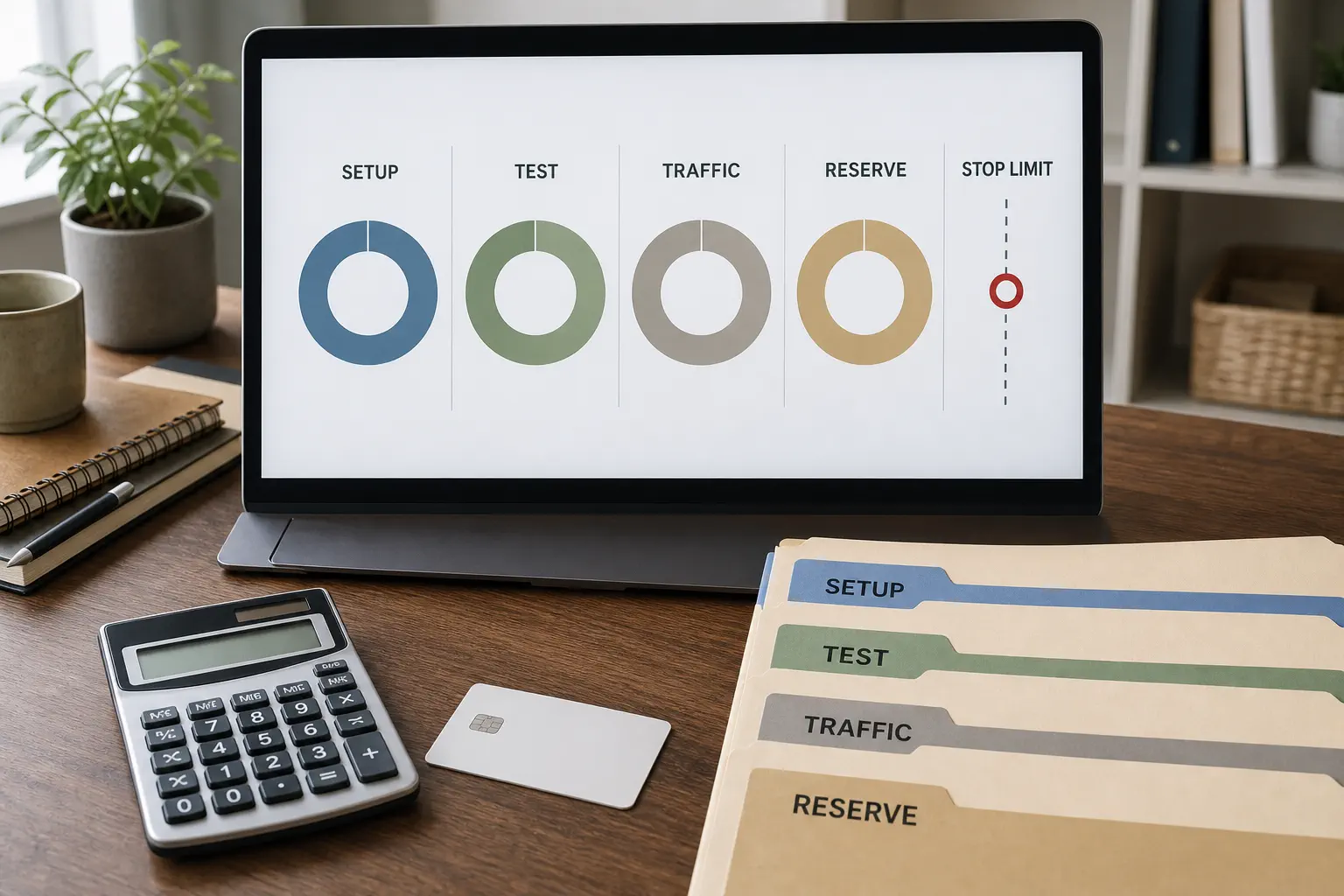
There is no honest universal minimum. Your test budget must cover four things: business setup, samples and delivery tests, one meaningful customer-acquisition test, and a reserve for refunds, replacements, chargebacks, lost parcels, or payout delays. A “zero-budget” launch is only realistic when you already own the required tools, traffic, creative skills, and cash buffer.
Minimum test budget = setup costs + sample and delivery tests + acquisition test + exception reserve
A responsible startup budget funds a complete learning cycle, not merely a domain and a storefront subscription. The amount varies by country, product, channel, acquisition method, and risk, so build it from current quotes instead of adopting a universal number from social media.
Separate the money into four envelopes:
| Budget envelope | What belongs in it |
|---|---|
| Business setup | Required registration, accounting, domain, store or marketplace tools, and payment setup |
| Product and delivery test | Samples, packaging checks, test orders, destination-specific shipping, and product documentation |
| Customer acquisition test | Creative production, content tools, advertising tests, influencer samples, or other traffic costs |
| Exception reserve | Refunds, replacements, chargebacks, lost parcels, payout holds, duties you bear, and supplier-payment timing gaps |
If Shopify is your primary channel, compare these four envelopes with the hidden costs of Shopify dropshipping, including payment fees, apps, failed orders, refunds, disputes, and operational leakage that a basic store budget can miss.
Keep startup capital separate from order profit. One tells you whether you can fund the test; the other tells you whether each delivered order contributes enough to support the business.
Write a stop-loss before launch. It should state the maximum cash you will commit, the end date of the test, the evidence you expect to collect, and the conditions that pause spending. The dropshipping business plan framework can turn these assumptions into a budget, owner, review schedule, and decision rule.
Key Takeaway: If you cannot fund samples, customer acquisition, and a realistic problem-order reserve without using essential personal money, delay the launch. Low inventory commitment is not the same as a no-money business.
Choose One Audience, Offer, and Selling Channel
Begin with a customer problem, not a supplier catalog. A focused offer answers four questions: who the buyer is, what outcome the product supports, why this version is credible, and what delivery promise you can actually keep.
Validate the market before polishing the store
Use several signals because none proves demand alone:
- Search language reveals how people describe the problem.
- Marketplace reviews reveal recurring complaints and expectations.
- Competitor offers show the price, delivery, and trust promises buyers already see.
- Social comments show questions, objections, and demonstrations that attract attention.
- A small landing-page, content, preorder, or advertising test can show whether the audience takes a measurable next step.
The dropshipping product research process helps connect demand signals to product risk, supplier availability, delivery, and complete order costs. Do not treat high view counts, marketplace order totals, or a trending video as proof that your version will sell profitably.
Pick a channel that matches your available work
An owned store gives you more control over presentation, customer data, and the offer, but you must generate traffic. Shopify is a common managed option; WooCommerce offers more technical control but also gives you more maintenance responsibility. A marketplace may provide existing buyer traffic, yet its listing, seller, product, and dropshipping rules can limit what you may sell and how orders must be handled. TikTok Shop can connect commerce with short-form content, but it also requires consistent content and platform-specific operating discipline.
Check current fees, product restrictions, payment availability, and seller rules for your country before choosing. Do not build a store around a payment method or product category you have not confirmed you can use.
Start with one primary channel. Adding multiple storefronts before you can maintain stock, prices, messages, and tracking on one channel multiplies failure points rather than diversifying risk.
Vet the Supplier and Run a Real Order Test

A supplier is not ready because the catalog looks professional or the quoted unit price is low. A reliable supplier is one whose exact product, variant, packaging, and delivery route can support your customer promise with evidence.
Ask each shortlisted supplier for:
- current product and variant availability;
- the packed weight and dimensions used for shipping quotes;
- processing steps and the event that counts as dispatch;
- available destinations, shipping times, methods, tracking, and restrictions;
- packaging options and whether supplier promotions or invoices appear in the parcel;
- defect, damage, missing-item, return, and replacement procedures;
- inventory-update and price-change procedures;
- product documents required for the category and destination;
- an escalation contact for time-sensitive order problems.
Then order a product sample yourself. Check the item against the listing, test the important function, photograph the condition, inspect packaging, record every tracking event, and measure the actual customer-facing experience. For an international route, send at least one test to the market you plan to serve; a supplier’s local test does not prove destination delivery.
Do not rely on one successful sample forever. Recheck after a material product, supplier, packaging, warehouse, or route change. If your store has validated demand but supplier coordination becomes the bottleneck, a dropshipping sourcing agent can help with supplier screening, quote comparison, samples, and repeat-order requirements.
Sellers testing products through fragmented public-platform suppliers can also review the AliExpress-to-private-agent transition case to see which recurring stock, dispatch, product, and tracking problems justify moving to a more controlled backend.
Key Takeaway: Do not publish a promise that the supplier and route have not demonstrated. A cheaper source is not better when it creates uncertain quality, weak tracking, or a return process you cannot explain to the customer.
Build the Store and the Customer Promise
Your storefront does not need to be elaborate, but it must make the transaction understandable. Publish accurate product information, total price, available destinations, realistic delivery information, contact details, and clear return and refund terms. Use original or authorized product media and avoid claims you cannot prove.
Before accepting orders, complete these controls:
- Confirm the business registration, tax, consumer-law, product-safety, import, privacy, and recordkeeping requirements that apply where you operate and where customers receive goods.
- Verify that your sales channel and payment provider permit the product and business arrangement.
- Connect orders to the supplier without exposing unnecessary customer data.
- Test payments, order transmission, variant mapping, confirmation emails, tracking updates, cancellation, refund, and support escalation.
- Write down who pays for each type of problem order and how quickly you will communicate with the customer.
Shopify’s current legal guidance makes the central responsibility clear: a merchant using this method must still comply with the laws that apply to the business and its customers. Requirements differ by jurisdiction, so use Shopify’s compliance overview as a starting checklist, not legal advice. In the United States, for example, the FTC’s merchandise-order guidance explains seller duties around having a reasonable basis for shipping claims and handling delays. Check the official rules for every market you actually serve.
How Much Time Does a Dropshipping Side Hustle Require?

There is no reliable universal hourly average. For planning purposes, protect both scheduled growth time and a daily exception window. A practical launch schedule might reserve 6–10 focused hours per week for product, offer, creative, and financial work, plus 15–30 minutes each day for paid orders, stock changes, tracking problems, and urgent customer messages. Content-heavy or aggressive advertising tests may require more.
These figures are planning examples, not an industry guarantee. The correct workload is the amount required to keep every paid-order promise during both normal and difficult weeks.
A sustainable schedule separates growth work from order-risk work. Growth tasks can wait for planned blocks; paid orders and customer exceptions may not.
Use two operating rhythms:
A short daily control check
- review paid orders and failed transmissions;
- check stock, price, and variant exceptions;
- inspect tracking delays or address problems;
- answer time-sensitive customer messages;
- record refunds, replacements, and chargebacks.
Focused weekly blocks
- Market and product review: examine demand signals, competitors, and supplier changes.
- Creative and merchandising: produce ads or content, improve the offer, and update product information.
- Numbers and decisions: reconcile revenue, costs, delivery outcomes, support load, and test results.
- Supplier review: resolve open cases and confirm upcoming stock, price, packaging, or route changes.
Batch similar work to reduce context switching. Automate order import, inventory alerts, standard tracking messages, and routine reporting where the automation is reliable, but keep human review for exceptions, claims, refunds, and supplier changes. Automation can move information; it cannot decide whether a damaged item, angry customer, or compliance question is safe to ignore.
Create a backup plan for travel, illness, peak periods at your main job, and unexpected sales spikes. A part-time business becomes dangerous when no one can pause marketing, stop a listing, contact the supplier, or refund an order during your unavailable hours.
Calculate Profit and Decide Whether to Continue
Revenue is not income. Calculate what remains after a delivered order and then compare that contribution with fixed business costs and the hours required to keep the system working.
There is no credible average income that applies to every beginner. Work backward from delivered-order contribution instead.
If one delivered order leaves $10 after variable costs, a $500 monthly contribution target requires 50 delivered orders before fixed costs and tax. If one order leaves only $4, the same target requires 125 delivered orders.
This is why revenue screenshots cannot show whether a dropshipping side hustle is profitable. The answer depends on delivered orders, contribution per order, fixed costs, tax, cash-flow timing, and the hours required to operate the store.
Expected order contribution = customer payment − product cost − outbound shipping − sales-channel and payment fees − customer-acquisition cost − taxes or duties you bear − expected refund, return, loss, replacement, and support allowance
Use current inputs for the exact product, packed parcel, channel, and destination. Also track cash flow: you may need to pay a supplier or issue a refund before the sales-channel payout reaches your account.
Review the test through four lenses:
Use all four together for a scale or stop decision; no single strong signal can cancel a failed customer promise or broken economics.
| Lens | Continue signal | Change or stop signal |
|---|---|---|
| Demand | The intended audience repeatedly takes the next step | Attention comes from the wrong audience or does not convert after meaningful offer tests |
| Economics | Delivered orders leave enough contribution under normal and problem scenarios | Profit exists only before ads, shipping, fees, refunds, or your support cost |
| Operations | Supplier, tracking, and support issues remain visible and recoverable | Stock, quality, delivery, or communication problems repeatedly break the promise |
| Workload | The schedule remains compatible with your main job and customer duties | Paid orders require attention you cannot provide reliably |
Do not quit your job because of one strong week or gross sales. Consider a larger commitment only after repeatable demand, verified order economics, a cash reserve, stable supplier execution, and a workload you understand across both normal and difficult periods. If the test fails, preserve the evidence: the audience response, creative results, cost data, supplier record, and customer questions can make the next decision better.
Key Takeaway: Scale only when delivered orders are profitable, problem orders are survivable, and the operating workload fits the service promise. If one of those conditions fails, repair it before adding more traffic or products.
FAQ
How long does it take to get the first sale from a dropshipping side hustle?
There is no reliable standard timeline. Your first sale depends on the offer, traffic quality, product page, price, delivery promise, and customer trust. A fast first sale does not prove that the business is viable, while a slow start does not automatically mean the product has failed. Set a fixed testing period and measure whether the intended audience is visiting the offer, taking meaningful actions, and completing purchases before deciding whether to continue.
Do I need ecommerce or marketing experience before starting?
No formal qualification or previous store experience is required, but you must be willing to learn the work the supplier does not perform. That includes product judgment, offer creation, customer acquisition, basic financial analysis, platform rules, customer communication, and problem-order handling. A narrow initial test is safer than trying to learn several products, channels, and traffic methods at the same time.
Can I start without paid ads or an existing audience?
Yes, but removing advertising spend does not remove the cost of customer acquisition—it usually replaces money with time. Organic short-form content, search-focused content, marketplace discovery, niche communities, and creator partnerships can attract buyers without an established audience. Choose one method, publish consistently, and track visits, product-page actions, and sales instead of treating views or follower growth as proof of demand.
Conclusion
A part-time ecommerce store is viable when you treat it as a controlled operating test rather than easy passive income. Choose one customer and offer, fund the complete test, verify the product and delivery route, build an honest customer promise, protect time for exceptions, and judge the result from delivered-order economics.
As demand becomes repeatable, the question changes from “Can I open a store?” to “Can the backend keep the promise as orders grow?” RuntoDropship is a private dropshipping agent for sellers and multi-store operators who already have orders or a validated offer and need more accountable sourcing, product checks, packaging, order execution, shipping coordination, and after-sales follow-up. Send your product link, target market, current order volume, and main operating constraint to discuss a controlled next step.