
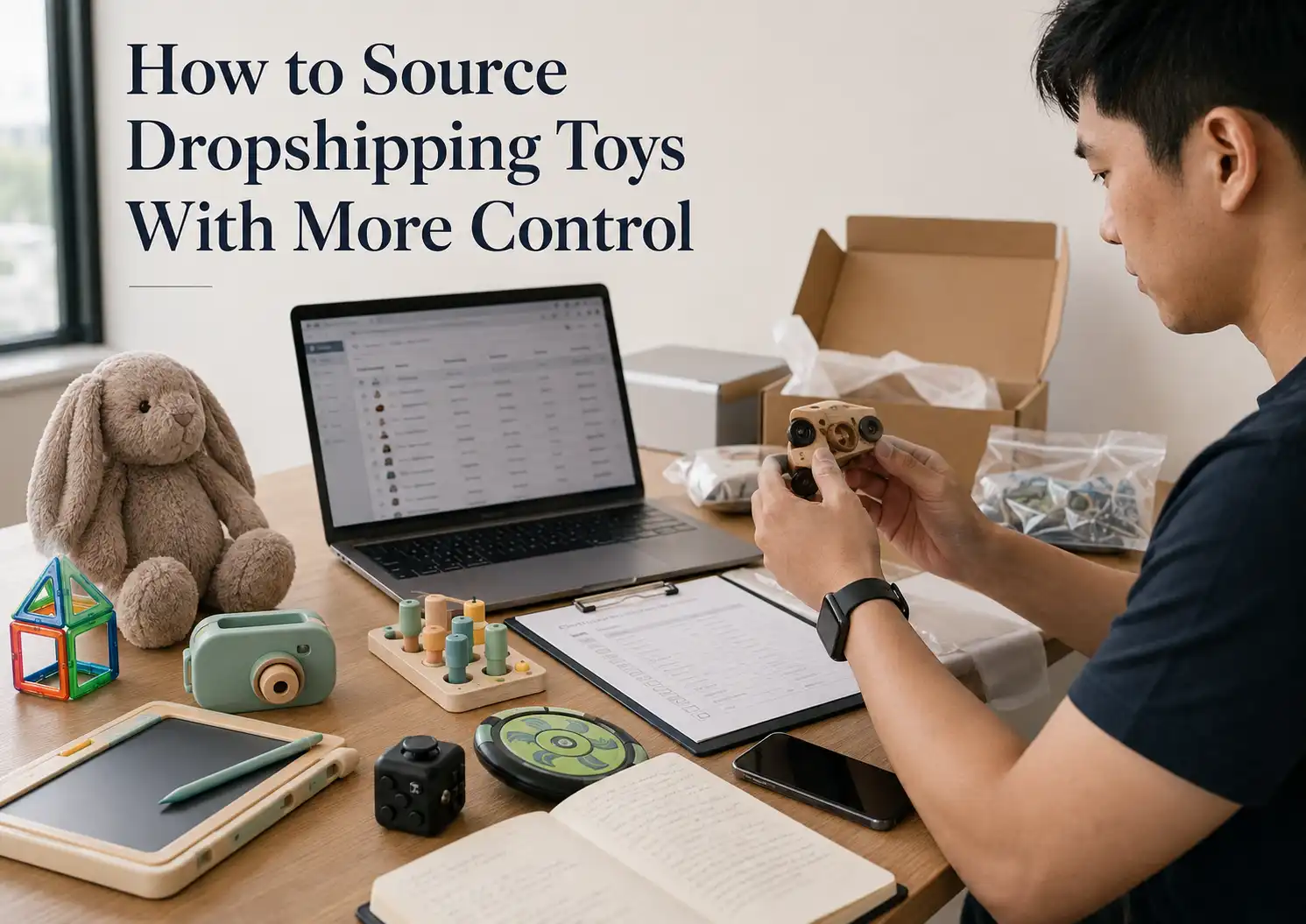
Dropshipping toys can work when you choose a narrow customer need, verify the exact product for the market where it will be sold, and test the supplier’s complete order path before scaling. The category offers strong visual appeal and many repeat buying occasions, but children’s products also bring safety, labeling, intellectual-property, packaging, and after-sales risks that a cheap catalog price does not reveal.
The practical goal is not to upload hundreds of toys. Start with one product direction, reject items whose risks or documents you cannot verify, order the real variant, and prove that the delivered order still works for the customer and for your numbers.
Dropshipping Toys: 7 Product Directions Worth Testing
The best starting direction is a recognizable play need with a product that is simple to explain, inspect, pack, and support. These seven directions are useful shortlists, not guaranteed winners; each still needs current demand research, a destination-market check, and a paid sample.
1. Simple educational and STEM activities
Basic science activities, counting tools, early coding games, and construction challenges can appeal to parents looking for a clear learning purpose. They are easier to position when the age range, activity, included parts, and adult supervision needs are obvious.
The main limitation is complexity. Avoid beginning with products that have unclear instructions, unverified learning claims, small components for young children, liquids, heating elements, or difficult-to-replace electronic parts. Validate the exact age grading, instructions, parts list, and customer demonstration before offering the item.
2. Drawing and craft play
Water-drawing mats, reusable activity boards, sticker activities, and simple craft sets can be lightweight and easy to demonstrate. They fit stores serving parents who want low-mess creative play or travel activities.
Check every included material, tool, cap, fastener, and warning for the intended age group. A supplier photo rarely shows ink transfer, odor, staining, missing parts, or weak packaging, so test the complete set as the buyer will receive it.
3. Pretend-play sets
Toy kitchens, doctor sets, tool sets, dress-up accessories, and role-play kits create an easy story for product pages and short videos. Their value comes from the whole play scene rather than one isolated feature.
Large sets can arrive with missing pieces, weak hinges, sharp molding edges, or confusing substitutions. Ask for a fixed parts list and packing layout, then reject any supplier that changes components without approval.
4. Puzzles and nonmagnetic building play
Puzzles, stacking games, shape sorters, and simple building pieces can support repeat purchases across age ranges. They also give you clear product-page information: piece count, finished size, material, age range, and storage method.
Fit changes quickly with piece size and construction. Start with a design whose pieces, finish, fit, and packaging you can inspect without specialized equipment, and treat magnets, button batteries, projectiles, or other higher-risk features as a separate review rather than a normal variation.
5. Plush and soft play
Plush animals, comfort items, puppets, and soft role-play products are giftable and visually expressive. A focused theme can be more defensible than a generic catalog of unrelated characters.
Inspect seams, loose accessories, fiber shedding, odor, filling consistency, care information, and packaging compression. Use original or authorized designs; a familiar character appearance is not proof that the supplier has permission to make or sell it.
6. Compact outdoor play
Lightweight toss games, foam play items, sand tools, and simple movement activities can give a store a seasonal or active-play angle. They work best when the activity is obvious in a short demonstration and the parcel remains manageable.
Outdoor use can increase wear, impact, weather exposure, and misuse. Confirm the intended environment and supervision information, then run a realistic durability and packaging test instead of relying on a polished studio video.
7. Hobby and desk toys for older users
Mechanical puzzles, model activities, desk toys, and beginner hobby sets can serve older children, teenagers, or adults. This direction may reduce the need to market every product as a toy for very young children, but the seller must use the product’s real intended audience rather than changing an age label for convenience.
Avoid vague age claims and complicated products with uncertain replacement parts. Confirm the user, purpose, instructions, materials, and after-sales plan for the exact SKU before launch.
Key Takeaway: Shortlist a product direction because its customer, play value, parcel, and first risk check are clear. Reject any idea that needs you to guess the age range, included parts, safety evidence, or supplier authorization.
Why Toy Dropshipping Needs More Control Than a General Store
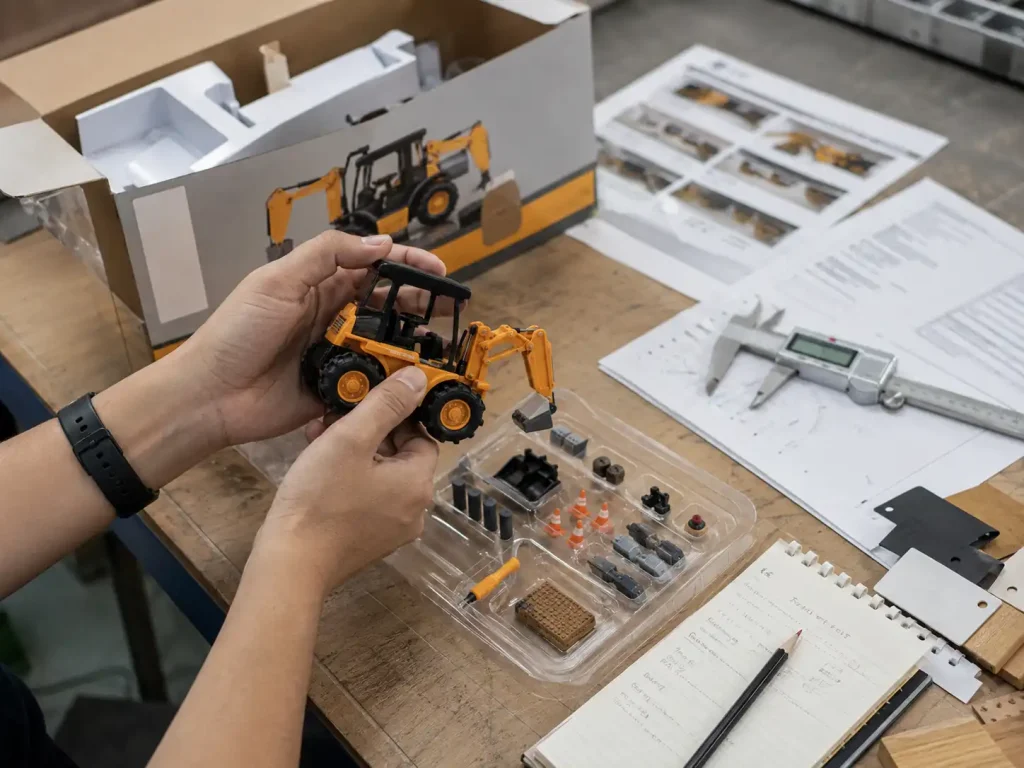
Toy retail places the seller between a child-facing product and the adult who decides whether to trust it. You may avoid buying a large inventory at the start, but you still own the customer promise, product page, support decision, refund, and response when the supplier makes a mistake.
The model has real advantages. You can test a focused range without committing cash to every item, replace weak ideas faster, and build a store around a particular age group or play need. A visually clear product can also be easier to demonstrate than an ordinary commodity.
The trade-offs are more serious than slow shipping alone:
| Advantage | Operational limit | What to do before launch |
|---|---|---|
| Low initial inventory commitment | Less control over live stock and substitutions | Get a written substitution rule and stock update method |
| Broad product choice | More SKUs create more documents, warnings, and part lists to verify | Start with one to three closely related products |
| Strong visual demonstrations | Videos can hide size, material, noise, fragility, or missing parts | Order the exact advertised variant |
| Gift and seasonal demand | A late parcel can miss the buying occasion completely | Test dispatch and delivery before the campaign window |
| Easy catalog expansion | Customer support becomes inconsistent across many suppliers | Use one product record and exception process per SKU |
This category is a poor fit when your plan depends on copying listings, chasing unlicensed characters, accepting any supplier document at face value, or promising an age range you have not checked. It becomes more workable when you can define the customer, approve a sample, keep product records, and stop a listing quickly when evidence changes.
Screen Each Toy for Its Destination Market
A safe product decision starts with the exact destination, intended age group, and product design—not with a generic certificate logo in a supplier image. Rules and responsible parties differ by market, so identify who manufactures, imports, and sells the item before accepting orders.
Start with the user and physical design
Write down the intended age range, normal play pattern, foreseeable misuse, materials, surface coatings, loose parts, cords, projectiles, magnets, batteries, liquids, heat, sound level, and required supervision. This is a first risk screen, not a laboratory assessment.
Reject the candidate when the supplier cannot provide a stable specification or when a feature requires expertise and evidence you do not have. Toys with magnets, button batteries, water beads, electrical functions, projectiles, or very small parts deserve a deeper product-specific review.
Ask for market-specific evidence
Do not ask only, “Is this certified?” Ask which exact model and production batch the report covers, which requirements were tested, who issued the report, who holds the original file, and whether the names, model numbers, materials, age grading, and photos match your sample.
For the United States, 16 CFR Part 1250 states that each toy must comply with the applicable provisions of ASTM F963-23. Use the CPSC’s product-specific business guidance to identify the other testing, certification, labeling, and tracking requirements that apply to the exact item rather than treating the standard as one universal checklist.
For the European Union, use the official Access2Markets product-requirements tools and the applicable toy rules for the destination. For Great Britain, the government’s toy safety guidance separates the duties of manufacturers, importers, and distributors and explains conformity, technical-document, labeling, and warning responsibilities.
These sources are starting points, not a universal approval. If the product, responsible party, destination, or evidence is unclear, pause the SKU and get qualified market-specific advice.
Match the listing to the approved item
Your product page should use the same model, age information, parts, materials, warnings, instructions, and functions that were reviewed. Do not add claims such as “non-toxic,” “educational,” “Montessori,” “sensory,” or “eco-friendly” unless you can support the meaning you give those words.
When batteries, liquids, powders, electronics, or other difficult features are involved, a sensitive-product sourcing process can help separate product evidence from shipping-route acceptance. A compliant-looking product can still be unsuitable for a chosen carrier or sales channel.
Key Takeaway: Approve one exact SKU for one intended market and user. A report for a similar toy, a logo in a listing, or a supplier’s general assurance is not enough to connect the product in your store to the evidence behind it.
Verify the Supplier, Sample, and Customer Order Path
A reliable toy supplier should prove the exact product and the complete customer-order process, not just provide a large catalog. Use the same written specification and test conditions for every candidate so the comparison remains meaningful.
Build one product record
Record the model, variant, dimensions, packed size and weight, materials, age grading, parts list, functions, warnings, instructions, packaging, evidence files, approved listing assets, and allowed substitutions. The record becomes the reference for samples, repeat orders, product checks, and customer support.
Order and inspect the advertised variant
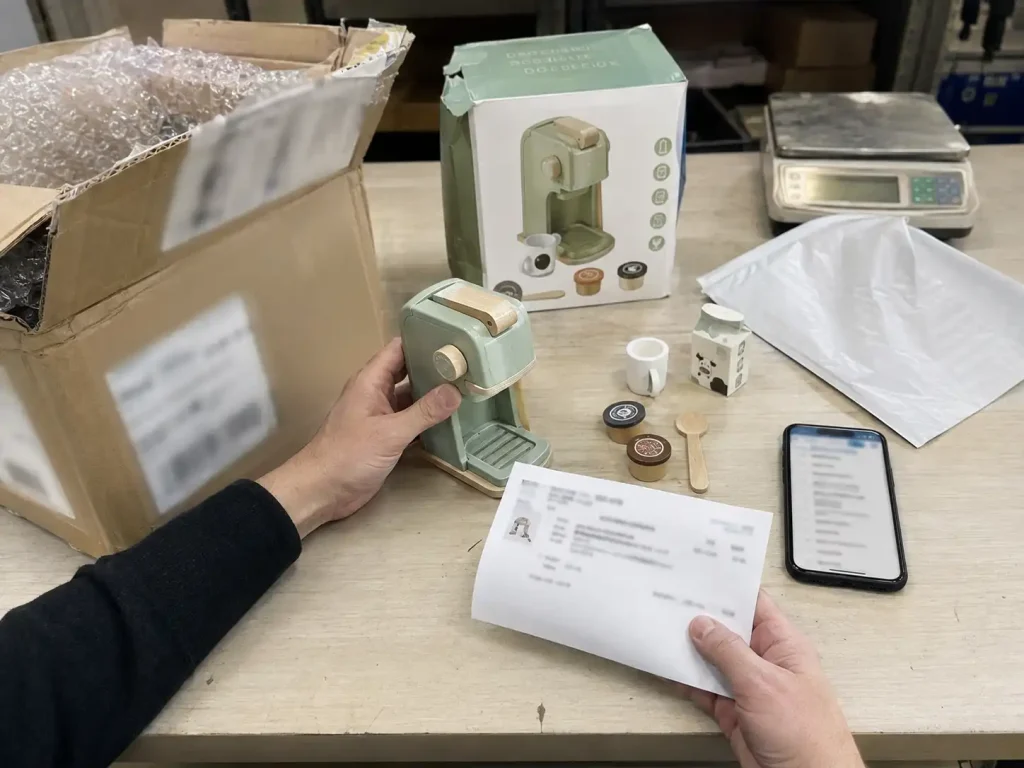
Buy the exact color, size, bundle, plug, language version, and packaging option you plan to sell. Compare the delivered item with the written record and planned product page, then photograph the product, labels, warnings, accessories, instructions, and parcel condition.
A sample cannot prove every future unit will match. It can reveal that the supplier’s current offer was never accurate enough to launch.
Test the parcel and exception process
Send a paid test order through the intended checkout, order transfer, packing, tracking, and delivery route. Record dispatch delay separately from transit time, and test what the supplier does when stock runs out, an accessory is missing, a package is damaged, or a customer needs a replacement.
Ask who can pause an order and who approves substitutions. The questions to ask a dropshipping agent provide a deeper evidence ladder for comparing statements, records, and controlled tests without turning this category review into a full supplier interview.
Decide how much control the store now needs
A catalog app may be enough for an early, low-risk test when the exact product, evidence, and route are clear. Direct suppliers can make sense when one factory controls the item and communicates consistently. A private dropshipping agent becomes more relevant for a growing seller that needs one accountable workflow across supplier coordination, samples, agreed product checks, packing instructions, individual orders, shipping options, and after-sales investigation.
That model does not make a risky toy acceptable or replace the seller’s market duties. It should still be tested against the written product record and real customer-order route.
Key Takeaway: Approve the product, supplier, parcel, and exception response together. A good sample cannot rescue unclear documents, unapproved substitutions, or a route that fails under a real order.
Build the Numbers and Run a Controlled Launch
A controlled launch should prove demand and delivery at the same time. Set the cost model, test size, campaign window, and stop conditions before increasing product count or advertising spend.
Calculate the delivered-order contribution
Use the amount left after the complete customer order, not the gap between retail price and the supplier’s item quote:
Order contribution = customer payment − product cost − packaging − product checks − shipping − payment and platform fees − customer acquisition cost − expected refund, replacement, return, and support cost
Add taxes, duties, currency conversion, storage, or other costs when your business bears them. Model a normal order and a problem order; gift timing, damaged packaging, missing parts, and replacements can make the exception case especially important for toys.
The broader profitable product selection method can help you set a contribution threshold and demand test without repeating the full framework here.
Launch in six practical steps
- Choose one audience and one of the seven product directions.
- Shortlist one to three exact SKUs and run the destination-market screen.
- Approve the written product record, evidence, sample, package, and listing.
- Place paid test orders through the real customer route.
- Run one controlled offer with a fixed budget, audience, and stop rule.
- Scale only when the same product arrives as promised and delivered orders leave acceptable contribution.
For seasonal products, work backward from the customer’s occasion. Leave enough time for document review, samples, listing work, test orders, corrections, and final delivery; a campaign that starts after this window is not rescued by higher demand.
Keep a simple go, revise, or stop decision. Go when the offer attracts the intended buyer and the order process repeats. Revise one identifiable weakness at a time. Stop when safety evidence, product accuracy, delivery, customer expectations, or economics cannot meet the condition you set.
Key Takeaway: Scale the verified order, not the catalog idea. The same SKU, evidence, package, route, customer promise, and exception process should keep working after the first sale.
FAQ
Will toys from different suppliers arrive in one parcel?
Usually not. They can arrive together only when the products reach the same approved dispatch point and someone has a written consolidation process for identification, packing, documents, tracking, and destination acceptance; otherwise show separate parcels and delivery expectations before checkout.
Do I need a separate store for every toy I test?
No. One focused store can test several products that serve the same audience and buying reason, while a one-product store may suit an item that needs a very specific demonstration and message. Choose the structure that lets customers understand the range without mixing unrelated age groups, play needs, and trust requirements.
What should I do if a toy is recalled after I list it?
Stop selling it, identify affected orders and batches, preserve supplier and customer records, and follow the instructions from the relevant authority and responsible business. In the United States, use the CPSC recall resources and reporting process; other markets have their own authorities, so do not substitute a supplier refund for the required safety response.
Can the supplier hide its invoice and branding from the customer?
Yes, when the supplier has a confirmed blind-shipping process for the exact account and route. Check the packing slip, return address, box markings, inserts, shipping documents, and required legal information separately; removing promotional branding must not remove information that the product or shipment is required to carry.
How do I know when a seasonal toy test is too late?
It is too late when the remaining calendar cannot fit evidence checks, the sample, corrections, paid delivery tests, customer-order processing, and final delivery before the buying occasion. Set the last safe launch date first, then stop or move to a later season if any critical step slips past it.
Conclusion
Toy dropshipping is most workable when you keep the first offer narrow, connect the exact SKU to market-specific evidence, test the real parcel, and judge profit after ordinary problems—not when you upload the largest catalog. That discipline helps you reject weak products early and gives each approved item a clearer customer promise.
When a growing store or multi-store operation needs stronger supplier coordination, samples, product and packing checks, warehouse-side order execution, shipping choices, and after-sales investigation, RuntoDropship can assess whether a private dropshipping agent workflow fits. We believe the backend should be as carefully designed as the customer offer; send the product link, target market, current order volume, and main concern to discuss a controlled sourcing and test plan.